

This post contains affiliate links. We may earn a commission if you purchase through these links, at no extra cost to you.
Spring grilling season is the moment most home cooks accidentally ruin good steaks with butter. Butter is delicious. Butter is also the wrong fat for direct grill heat, and the reason your last ribeye tasted faintly burnt under the sear was almost certainly butter solids hitting a 600 degree grate.
Beef tallow is the better default. Butter still has a job. Here is exactly where each one belongs, with the numbers and the cooking results to back it up.
The Smoke Point Numbers, Plainly
Smoke point is the temperature at which a fat starts to break down and release acrid smoke and bitter compounds. Past smoke point, flavor degrades fast.
- Unsalted butter, unclarified: about 302 degrees F (150 C)
- Salted butter: about 250 to 290 degrees F
- Ghee (clarified butter): about 450 degrees F
- Beef tallow, well-rendered: about 400 to 420 degrees F
- Refined beef tallow: up to 450 degrees F
A hot grill surface sits between 450 and 650 degrees F. A cast iron griddle on a side burner runs 400 to 550. Direct-flame sear zones can exceed 700.
Butter cannot survive any of those temperatures intact. Tallow can.
That single fact rearranges most of the rest of this comparison. When a fat smokes, milk solids burn (in butter) or trace impurities scorch (in tallow), and the food picks up bitter notes. Stay below smoke point, get clean cooking. Go past it, get carbon.
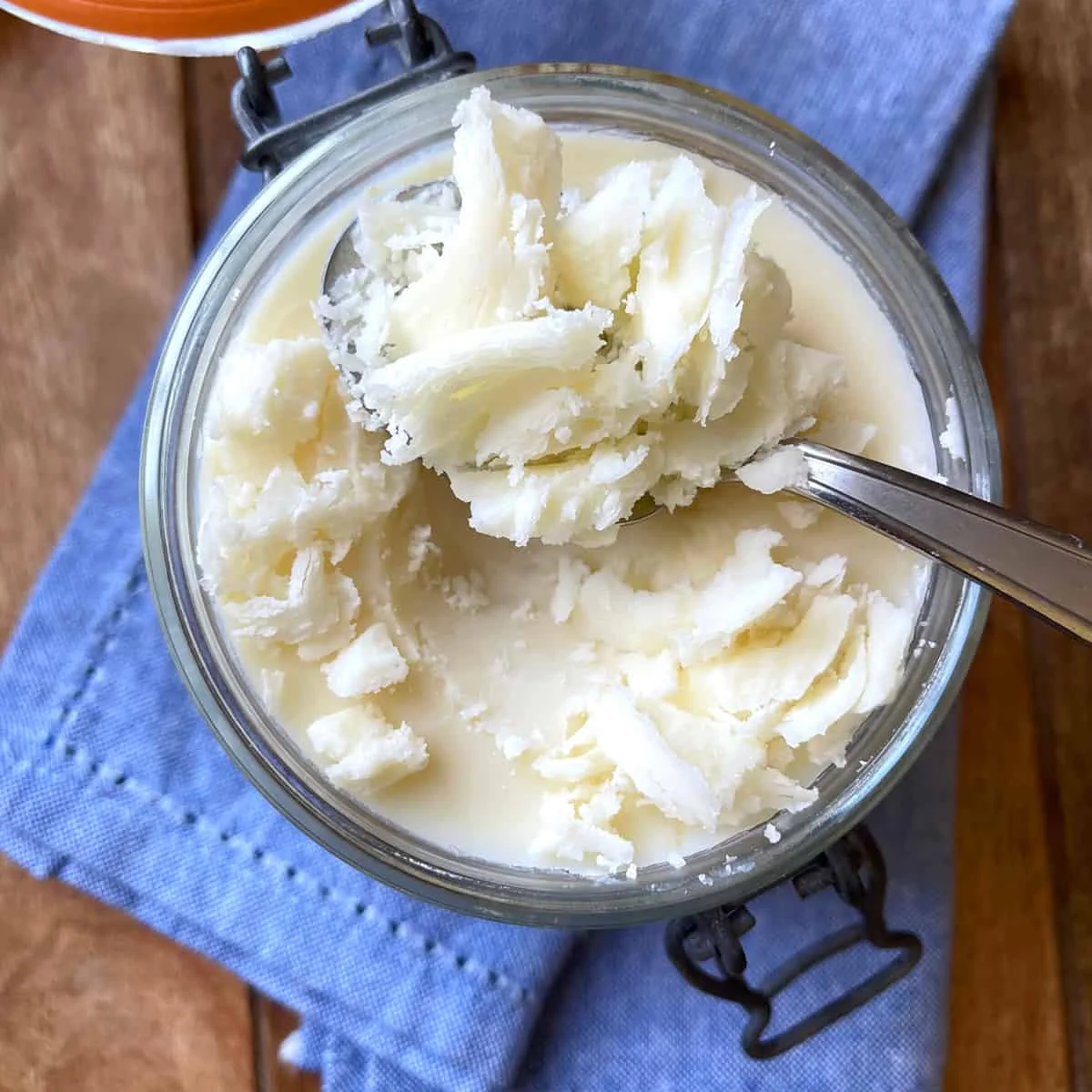
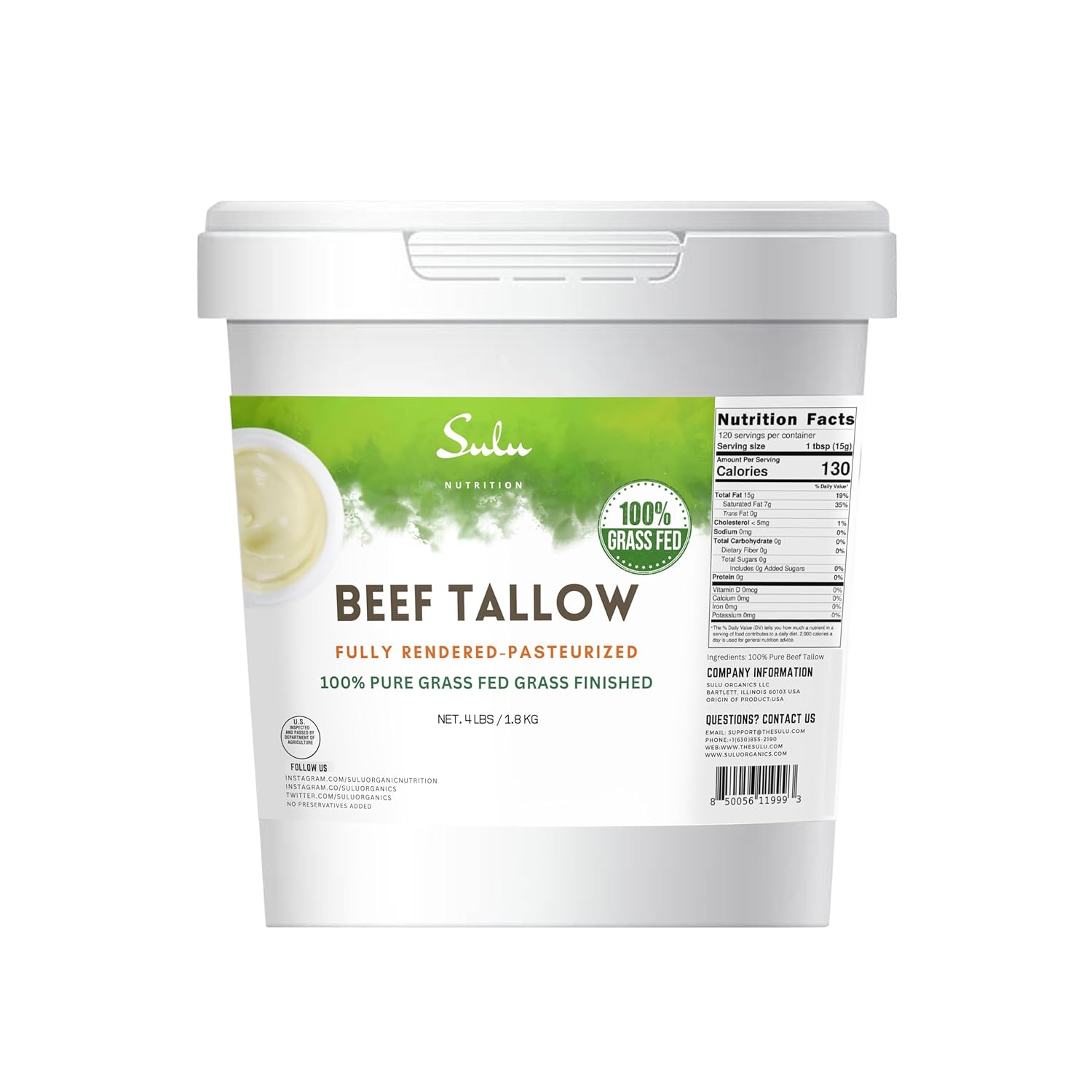
For grill-side use, a jar of 100% Pure Grass-Fed Beef Tallow lives on the cart all summer. It scoops easily at room temperature and holds at high heat without breaking down.
The Maillard Test: Browning Quality on Steak
The Maillard reaction is the chemistry behind every great seared crust. It needs three things: high heat, low moisture at the surface, and amino acids plus reducing sugars meeting at the surface.
Butter brings water (about 16 to 18 percent water content) and milk solids that burn before browning completes. Tallow is essentially pure fat with almost no water. That means a tallow-basted steak hits Maillard temperatures faster and holds them longer.
In side-by-side testing on a 1.25 inch ribeye, here is what happens:
Butter-Basted Ribeye
- Crust forms unevenly because water steams off first
- Milk solids burn dark brown to black in 30 to 45 seconds at sear heat
- Bitter notes show up on the edges
- Visual: shiny, slightly streaked crust
- Flavor: butter forward, with burnt-dairy undertone
Tallow-Basted Ribeye
- Crust forms evenly and quickly
- No water phase to evaporate first
- Browning continues steadily without scorching
- Visual: deep mahogany, uniform crust
- Flavor: pure beef, amplified, no off-notes
Tallow wins this test almost every time. The beef-on-beef flavor stacking is part of it. The bigger factor is that tallow lets the Maillard reaction run cleanly without burnt-solid interference.
For the grilling-specific use case, the cleaner profile of Traverse Bay Farms Beef Tallow (32 oz) works well because it is deodorized and does not add any extra flavor beyond mild beef fat richness.
Burgers: The Splatter and Flare-Up Test
Butter on a burger sounds great until you watch it happen on a hot grate. The water content flashes to steam, the milk solids drop through the grates onto the burner or coals, and you get flare-ups that scorch the crust before the inside cooks.
Tallow has no water. Drips from a tallow-brushed patty render slowly instead of exploding into flame. You get smoke, but it is clean smoke that adds to the flavor, not flare-up char.
For burgers specifically, the move is:
- Mix a tablespoon of soft tallow per pound of ground beef directly into the patty.
- Brush the outside of the patty with another light coat of tallow.
- Cook over medium-high direct heat.
Adding tallow into the grind boosts juiciness on leaner blends (85/15 or 90/10) without changing the flavor profile. Butter mixed into ground beef has the opposite effect: the water cooks out fast and the patty dries out as it grills.
Spring Vegetables: Where Butter Earns Its Place
This is where the conversation flips. Asparagus, snap peas, scallions, artichokes, baby carrots, fiddleheads, and ramps all get better with butter. Not because butter cooks them better, but because butter finishes them better.
The right move on spring vegetables:
- Toss them in tallow before they hit the grill (high heat, char marks, no burnt residue).
- Pull them off when they have color.
- Toss them in cold butter with flaky salt and lemon zest off-heat.
The butter melts on residual heat, never approaches its smoke point, and contributes dairy fat and salt directly on top of grilled-vegetable sweetness.
Butter as a finishing fat, after the heat is off, is one of the highest-leverage cooking moves in any kitchen. Butter as a primary cooking fat on a 500 degree grill is a mistake.
Smoke Point Recap By Cut
Here is the working chart for spring grilling.
| Food | Best Fat to Cook With | Finish With |
|---|---|---|
| Ribeye, strip, porterhouse | Tallow | Optional butter pat off-heat |
| Burgers | Tallow (in grind + on surface) | Optional compound butter on top after rest |
| Chicken thighs | Tallow | Compound butter or olive oil |
| Whole fish | Tallow | Butter and lemon off-heat |
| Asparagus, snap peas | Tallow | Cold butter + salt |
| Corn | Tallow brush during char | Compound butter after |
| Mushrooms | Tallow | Optional butter swirl at end |
| Hot dogs, sausages | Tallow (light brush) | Nothing needed |
The pattern is consistent: cook in tallow, finish in butter when finishing is warranted.
How to Use Tallow on the Grill (Practical Setup)
A few notes from a season of doing this every weekend.
Keep It Liquid or Soft
Tallow at room temperature on a 70 degree day spoons easily. Below 60 degrees it gets firm. Park your jar near (not on) the warm grill while you prep, and it will spoon cleanly.
Brush, Do Not Pour
A silicone brush dipped in melted tallow gives even coverage without flooding the grate. Pouring tallow on a hot grate causes flare-ups even though tallow alone is high-smoke-point, because excess fat will always combust at flame temperature.
Use a Two-Zone Setup
Sear over the hot zone with tallow. Move to indirect for finishing. Add butter at the table or just before serving, never over the flame.
Save the Drippings
After a steak rest on a board with tallow and salt, the board juices plus residual tallow are gold. Pour them over sliced steak as a sauce. This is the move most people miss.
For an all-purpose grill-side tallow that handles everything from steak to vegetables, the 4-pound grass-fed tub lasts roughly a full grilling season for a family of four.
Cleanup: An Underrated Tallow Win
Butter on a grill grate carbonizes into a sticky black residue that requires hot brushing while still warm. Tallow burns off cleaner because there are no milk solids to char. The post-cook grate looks closer to “lightly seasoned” than “burnt.”
If you season your cast iron grill grates the way you would a skillet, tallow is the better seasoning fat because of its higher smoke point and lack of water. A light coat of tallow applied to warm grates after cooking and wiped down extends the life of the cast iron significantly.
For more on rendering and storing tallow for cooking use, our tallow cooking guide covers the basics.
Flavor Stacking: Why Tallow on Beef Just Works
Cooking beef in beef fat is a tautology that happens to taste incredible. The flavor compounds in tallow are the same flavor compounds that develop in a well-rested steak. Cooking with butter introduces dairy notes that fight the beef rather than amplify it.
This is why steakhouses that take their craft seriously baste in tallow or wagyu fat, not butter, for the bulk of the cook. Butter shows up as a finishing pat (compound butter, herb butter, blue cheese butter) added to the resting steak, not during the sear.
You can replicate the steakhouse method at home with a $25 jar of grass-fed tallow and a cast iron skillet on the side burner.
What About Olive Oil and Avocado Oil?
Olive oil smokes around 375 to 405 degrees F depending on refinement. It is fine for moderate-heat grilling but loses to tallow on flavor stacking when grilling beef. Avocado oil has a higher smoke point (around 500 F) but contributes almost no flavor.
For pure utility at very high heat with no flavor input, avocado oil works. For flavor that matches the protein, tallow wins. For finishing, butter wins.
For more side-by-side comparisons of cooking fats, see our compare section.
Frequently Asked Questions
Can I use tallow on a gas grill?
Yes. Tallow does not damage gas grill components. Brush onto food rather than the grates to avoid flare-ups.
Is tallow better than ghee for grilling?
Ghee and tallow are close on smoke point. Tallow wins on flavor for beef. Ghee wins for South Asian cuisine flavor profiles where ghee is the expected fat.
What is the best beef tallow for grilling?
A clean grass-fed tallow without added flavoring. The 4-pound grass-fed tub is the workhorse pick. For a deodorized neutral option, Traverse Bay Farms works.
Can I mix tallow and butter together?
Yes, off heat or at the very end of cooking. A 50/50 melt as a finishing pour over steak gives you the beef richness and a touch of butter brightness without burning the dairy solids.
How do I store tallow during grilling season?
In a sealed jar at room temperature for short-term use, or in the fridge for long-term storage. Smell-test before each use. See our tallow storage notes for details.
Does tallow taste gamey on grilled vegetables?
Quality grass-fed tallow tastes mildly beefy, not gamey. On vegetables it adds depth that olive oil cannot. If you want zero meat flavor on vegetables, use a deodorized tallow or finish heavily with butter and acid.
Bottom Line
Tallow is the right primary fat for spring grilling because its 400+ degree smoke point lets the Maillard reaction run cleanly without burnt milk solids or dairy off-notes. Butter belongs as a finishing fat, off the heat, on the plate. Cook in tallow, finish in butter, and most of what makes restaurant grilling taste better than home grilling stops being a mystery.