Skip to content
King TallowKing Tallow
Southwest Region

Where to Buy Beef Tallow in Texas

Texas is the #1 cattle state in America with roughly 12.5 million head, so finding beef tallow is the easiest sourcing job in the country. Buy raw suet from any HEB or Central Market meat counter at $1.50 to $2.50 per pound and render it yourself, or pay $8 to $14 per pound for rendered grass-fed jars from ranches like 44 Farms and Roam Ranch. Farmers markets in Austin, San Antonio, and Dallas usually have at least one tallow vendor every weekend.

Last updated May 26, 2026 by Miles Carter

Cattle ranking
#1 in US
Head of cattle
12.5 million
Typical $/lb
$8 - $14
Best months
October to December
Grass-fed
common
Major cities
Houston, Dallas

Why Texas matters for beef tallow

Texas runs more beef cattle than the next two states combined. Tallow here is a byproduct of an industry that touches almost every county, which keeps prices low and quality variable, the cheapest raw suet in America sits next to some of the most expensive single-ranch rendered jars.

Sheer volume

USDA NASS counts about 12.5 million head in Texas as of the January 2026 inventory. Even at conservative trim rates that translates to tens of millions of pounds of suet moving through Texas processors every year. The downstream effect for consumers is that almost every butcher counter has scraps to sell, and most are happy to let you take suet trim home for $1.50 to $2.50 a pound.

Breed mix favors clean fat

Texas herds are dominated by Angus and Angus crosses, with significant Hereford and Brangus populations in the south and west. Wagyu programs have grown sharply since 2020, particularly in the Hill Country. These breeds carry firm, white kidney and leaf fat that renders into tallow with a mild, clean flavor and a pale ivory color, the kind cooks and skincare formulators both want.

Two distinct production systems coexist

The Panhandle and South Plains run high-volume feedlot operations finished on corn and sorghum. The Hill Country, Edwards Plateau, and East Texas hardwoods host a growing cluster of grass-fed and regenerative ranches. Buyers get a real choice: cheap commodity tallow from any HEB, or premium grass-finished tallow from a named ranch, both produced inside the state.

Local rendering capacity

Texas has more USDA-inspected small processors than any other state. Counties like Gillespie, Mason, and Bandera each have a butcher who will render your suet to clean tallow for a fee of $1 to $2 per pound, an option that barely exists outside the cattle belt.

Regional context

Climate

Hot, dry summers across most of the state, mild winters. Cattle finish on summer grass in the eastern third and on irrigated winter wheat or feedlot rations in the west.

Terrain

Coastal prairie in the southeast, brush country in the south, limestone Hill Country in the center, high plains in the panhandle, and pinewoods in the east.

Feed practices

Most commodity beef finishes on corn and sorghum silage at panhandle feedyards. Grass-finished operations rely on native bluestem, gamagrass, and improved bermuda pastures, often supplemented with winter rye.

In-state rendering

Small USDA processors in the Hill Country (Burnet, Fredericksburg, Mason) and the I-35 corridor render rancher-owned suet on contract. Large commercial renderers cluster around Amarillo, Lubbock, and Fort Worth.

Where to buy beef tallow in Texas

1

Local butchers and meat markets

HEB and its premium sibling Central Market are the default starting point. Most HEB meat counters in Austin, San Antonio, and Houston will sell you a pound or two of raw beef suet for $1.50 to $2.50 if you ask, even when nothing is on display. Central Market locations in Westgate (Austin) and Preston Royal (Dallas) usually stock rendered jars from a local ranch in the cooking-fats aisle at $11 to $15 for 14 ounces. Independent butchers like Salt and Time in Austin, Belmont Meat Market in Fort Worth, and Rosenthal Meat Center at Texas A&M sell rendered tallow in 8 to 16 ounce jars for $9 to $14. The phrase to use at the counter is 'kidney fat or leaf trim, white not yellow.'

2

Farmers markets

Austin: Mueller Farmers Market (Sundays) and SFC Farmers Market Downtown (Saturdays) both have at least one rancher selling rendered tallow most weeks; Richardson Farms and Dai Due are common vendors. San Antonio: Pearl Farmers Market on Saturdays at the Pearl Brewery is the strongest in the state for whole-animal vendors, look for Peeler Farms or Windy Hill Cattle Co. Dallas: Dallas Farmers Market on Saturdays has Burgundy Pasture Beef. Houston: Urban Harvest Saturday Market at St. John's School draws Yonder Way Farm and 44 Farms. Expect $12 to $16 per pound for grass-finished rendered tallow.

3

Ranches and direct-to-consumer

44 Farms (Cameron, TX) ships rendered tallow and also sells from their on-ranch store. Roam Ranch (Fredericksburg) runs a bison-and-cattle regenerative program and ships rendered tallow nationally. Burgundy Pasture Beef (Grandview) supplies several DFW markets and ships. Yonder Way Farm (Fayetteville) and Windy Hill Cattle Co. (Comfort) are smaller operations worth a direct call if you want suet by the case. Most Texas ranches will sell suet in 10 to 25 pound bulk for $1.50 to $3 per pound, much cheaper than buying rendered.

4

Specialty and natural grocers

Whole Foods locations in Austin (Lamar flagship), Dallas (Park Lane), and Houston (Upper Kirby) carry national rendered brands plus an occasional Texas label. Sprouts is widespread and stocks Epic and similar national tallow at $10 to $13 per 11 ounces. Natural Grocers has Texas locations in Dallas, Lubbock, and El Paso with a stronger curated lineup. Royal Blue Grocery in central Austin sometimes carries small-batch rendered jars from Hill Country ranches.

5

Online when local fails

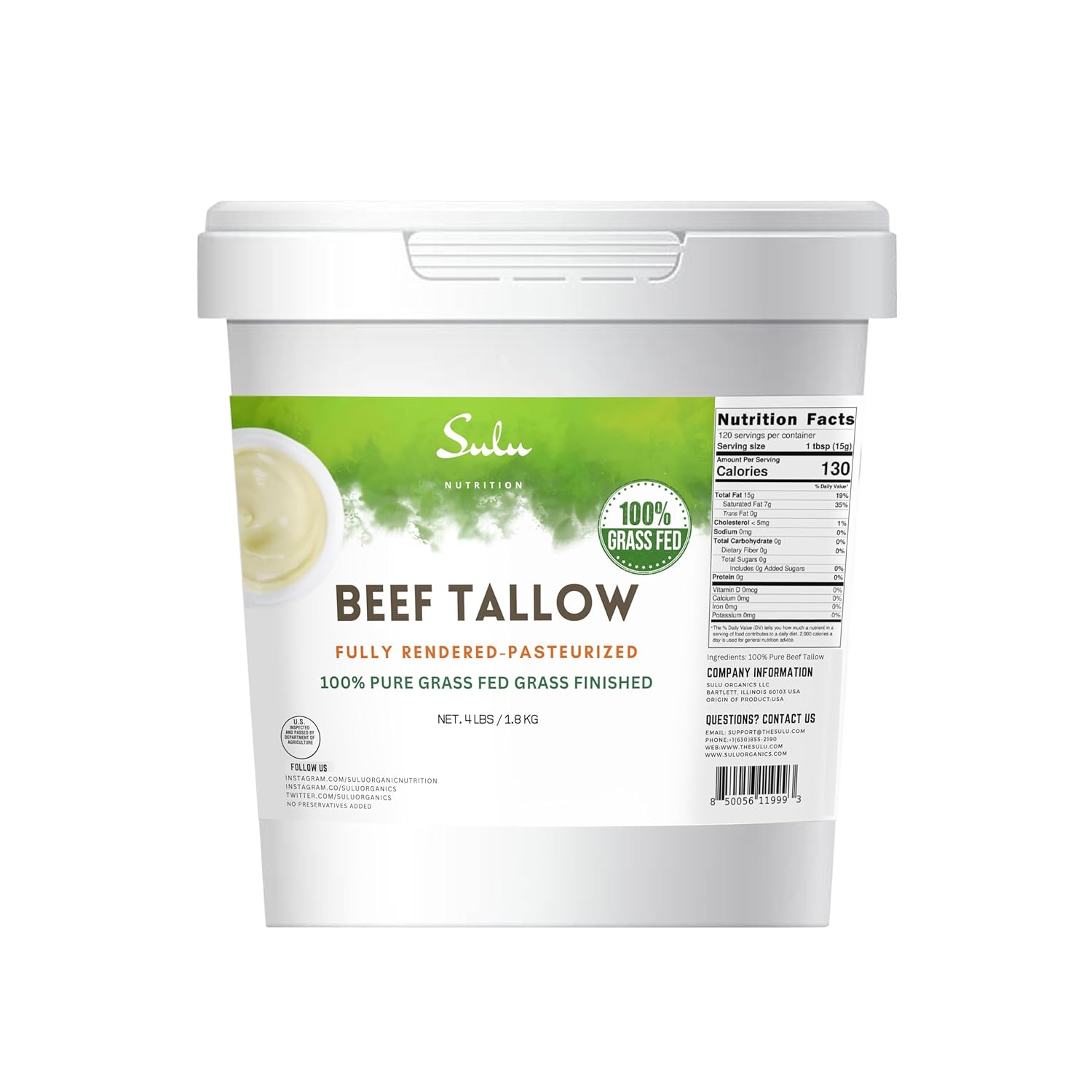
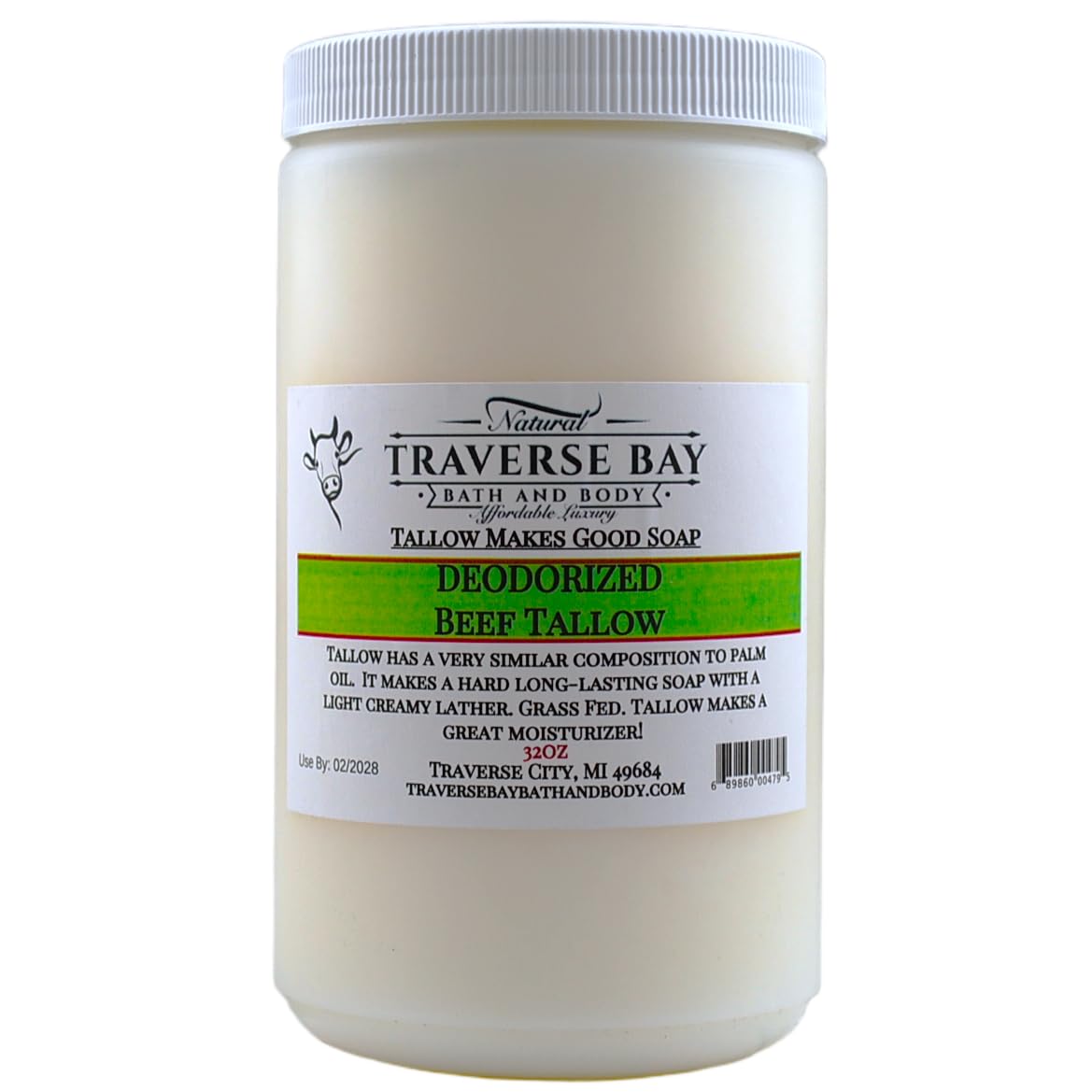
If you live outside the major metros, two Amazon options ship reliably to every Texas zip code in two to three days. The 100% Pure Grass-Fed Beef Tallow (4 lbs) is the best value for cooking and DIY skincare, and the Traverse Bay Farms Beef Tallow (32 oz) is a budget option for rendering-out tasks like soap or candles. Both arrive solid even in summer Texas heat thanks to insulated packaging.

Reliable online options that ship to Texas

We test and research the products we recommend. If you buy through these links we may earn a commission at no extra cost to you.

What to look for on the label

Texas labels can be looser than coastal states because grass-fed claims are not state-regulated. Read the actual feed and finishing description.

Label What it means
Grass-fed and grass-finished The animal ate only grass and forage for its entire life, including the last 90 to 120 days. This is the meaningful standard. 'Grass-fed' alone may still mean grain-finished.
USDA Organic Organic feed, no antibiotics, no synthetic hormones, access to pasture. Less common in Texas than in California but growing.
Certified Regenerative (ROC) Regenerative Organic Certified, used by Roam Ranch and a small group of Hill Country operators. Adds soil-health and animal-welfare requirements on top of organic.
Certified Texas Beef and GO TEXAN GO TEXAN is a Texas Department of Agriculture marketing mark indicating in-state origin. It is a sourcing label, not a quality label, useful for buying local but tells you nothing about feed.
Pasture-raised vs feedlot-finished Most Texas commodity beef is pasture-raised but feedlot-finished on corn and sorghum. Pasture-raised by itself does not mean grass-finished.

What it actually costs in Texas

Texas has the widest tallow price spread of any state because it produces both the cheapest commodity suet and some of the most expensive single-ranch jars.

Tier Per pound
Direct from rancher (raw suet) $1.50 - $3.00
Local butcher rendered $6 - $10
Farmers market premium $12 - $16
Specialty grocer $14 - $20
Online national brands $8 - $14

When to buy

Texas slaughter peaks in fall and winter, which sets the rhythm for suet availability.

Spring (Mar-May)

Calving season, fewer animals harvested. Raw suet harder to find, rendered jars still on shelves.

Summer (Jun-Aug)

Grass-finished beef peaks in the Hill Country. Farmers markets carry the most rendered tallow now. Heat makes shipping rendered fats trickier, prefer in-person.

Fall (Sep-Nov)

Heaviest slaughter window. Raw suet is plentiful and cheapest. Best time to buy 10 to 25 pound batches for home rendering.

Winter (Dec-Feb)

Rendered tallow demand spikes for holiday cooking and tamale season. Stores keep deeper inventory. Prices hold steady or rise slightly.

Where to look outside Texas

Texans rarely need to look out of state, but two neighbors are worth knowing.

Oklahoma

3 to 5 hours from DFW

Stockyards City in Oklahoma City has multiple butchers selling rendered tallow at $7 to $11 per pound, often cheaper than Texas equivalents.

Try: Stockyards City Main Street butchers, Oklahoma City

New Mexico

4 to 6 hours from El Paso

Grass-finished operations on the high plains. Useful for West Texas residents.

Try: Sweet Grass Co-op, Las Cruces

Arkansas

4 hours from East Texas

Ozark grass-fed operations with lower prices than DFW farmers markets.

Try: Grass Roots Farmers' Cooperative

Render it yourself

Most Texas butchers will sell raw suet for $1.50 to $2.50 per pound. Rendering it yields 8 to 12 ounces of finished tallow per pound of suet, which means a $15 batch of suet produces about 80 to 120 ounces of clean rendered tallow, the equivalent of seven or eight 14 ounce jars off the Central Market shelf. The method is two hours of low-and-slow on the stove or in a slow cooker, then a single straining step. Read /blog/how-to-render-beef-tallow-at-home-step-by-step-guide/ for the exact temperatures and yields, and use the surplus for /make/soap or /make/face-cream.

How locals cook with it in Texas

Texas cooks have used beef fat for centuries, and the modern revival mostly recovers techniques the cattle culture never really lost.

Brisket-fat tortillas

Hill Country pitmasters render the trimmed brisket fat cap and use the resulting tallow to fold into masa for flour tortillas. The result is a soft, browned-edge tortilla that holds up to barbecue without tearing.

Chicken-fried steak in tallow

Old-school diners in Central Texas still fry chicken-fried steak in pure beef tallow for the deeper crust and higher smoke point compared to seed oils.

Tallow-roasted potatoes

Hatch chile festivals in West Texas often serve roasted potatoes finished in tallow with green chile, a quiet staple at Marfa and Alpine diners.

Frito pie base

Texas Frito pie traditionally used beef tallow in the chili base for body and gloss. Most commercial versions have moved to vegetable oil; the homemade tallow version is the original.

Chuckwagon biscuits

Tallow biscuits, sometimes called chuckwagon biscuits, were the original cowboy bread on the Goodnight Loving Trail. Several Hill Country bakeries have brought them back as a menu item.

Local & Regional Brands

44 Farms

Roam Ranch

Texas Tallow Company

Texas Sourcing Tips

  • Visit local ranches directly - many sell rendered tallow
  • Check HEB grocery stores for Texas-sourced options
  • Austin and Dallas have thriving farmers market scenes
  • Look for 44 Farms and other Texas beef brands

Major Cities in Texas

Houston Dallas San Antonio Austin Fort Worth

These cities typically have the best selection of local butchers, farmers markets, and specialty stores carrying beef tallow.

Frequently asked questions

Is grass-fed tallow easy to find in Texas?
Yes, more easily than in any state except California. Every major metro has farmers markets with at least one grass-finished ranch selling rendered tallow, and Central Market plus Whole Foods carry both Texas and national brands. Outside metros, you can usually call a local ranch directly and arrange pickup. Expect to pay $12 to $16 per pound for true grass-finished. If price matters more than the grass-fed claim, conventional Texas tallow from HEB or rendered yourself from suet is excellent quality and runs a third of the price.
What is the cheapest way to buy tallow in Texas?
Buy raw suet from an HEB or Central Market meat counter for $1.50 to $2.50 per pound, then render it at home. One pound of suet yields 8 to 12 ounces of finished tallow, so the all-in cost is roughly $2 to $4 per pound of rendered tallow, about a quarter of the cheapest shelf jar. Bring a cooler to the store, ask the butcher for kidney fat or leaf trim, and request white pieces with minimal red meat attached. Most Texas butchers will set aside several pounds with a day's notice.
Can I get raw suet at HEB or Central Market?
Yes. HEB does not typically stock raw suet in the case, but the meat counter will sell trim from the back if you ask. Central Market keeps suet more visible, especially around Thanksgiving and Christmas when shoppers ask for it for pie crust. Pricing is usually $1.50 to $2.50 per pound. Some HEB locations in smaller towns are even more willing to set aside larger quantities. Ask for kidney fat for the cleanest, mildest rendered tallow, or leaf fat as a near-equivalent.
Are there halal-certified tallow sources in Texas?
Yes, Texas has the largest Muslim population in the South and a mature halal supply chain. Houston-area butchers like Madina Halal Meat Market and Aladdin Halal Meat in Richardson sell rendered halal beef tallow or will render to order. Dallas-Fort Worth has several halal-certified processors who supply rendered tallow to restaurants and will sell direct in bulk. Expect prices similar to specialty grocers, $12 to $18 per pound. Confirm certification with the individual store, halal does not automatically mean grass-finished.
What about kosher tallow in Texas?
Kosher tallow is rare in Texas because Jewish dietary law restricts the use of certain beef fats and there are few full-service kosher butchers in the state. Kosher Palace in Dallas and Houston Kosher Brisket can sometimes source it. Most observant buyers special-order from out of state, typically Grow and Behold (NY) or KOL Foods, both of which ship to Texas.
How does Texas tallow compare to Nebraska or Kansas?
Texas tallow is broadly similar in quality to Nebraska and Kansas tallow because all three are dominated by Angus genetics on similar feed. Texas has more grass-finished options because of the Hill Country regenerative cluster, while Nebraska and Kansas have cheaper rendered prices because their commodity processing is denser. If you want grass-finished, Texas is a stronger market. If you want the cheapest commodity rendered tallow per pound, Nebraska usually wins by $1 to $2 per pound.
Which Texas farmers market has the most tallow vendors?
Pearl Farmers Market in San Antonio, held Saturdays at the Pearl Brewery, has the deepest concentration of whole-animal ranchers. Mueller Farmers Market in Austin is a close second. Both routinely have two or three ranches selling rendered tallow on any given weekend, with several more selling raw suet on request. Dallas Farmers Market has Burgundy Pasture Beef most weekends. Houston's Urban Harvest Saturday Market is strong in summer but thinner in winter.
Is it cheaper to render my own tallow?
Substantially. Raw suet from a Texas butcher runs $1.50 to $2.50 per pound and yields 8 to 12 ounces of rendered tallow, so finished cost is about $2 to $4 per pound. The cheapest shelf-stable rendered tallow in Texas is about $8 per pound, and grass-finished rendered tallow runs $12 to $20. Home rendering also lets you control the source breed, the trim quality, and the rendering temperature, which matters if you want cosmetic-grade pale tallow for skincare.
Does Texas have rendered tallow brands worth ordering online?
Yes. 44 Farms ships rendered tallow from Cameron, TX in 8 and 16 ounce jars. Roam Ranch (Fredericksburg) ships regenerative-certified tallow nationwide. Force of Nature Meats, based in Austin, distributes a tallow line through Whole Foods and direct online. All three are competitive with national premium brands on quality and pricing.
Can I ship raw suet across state lines?
Technically yes, but practically no. Raw suet needs to stay below 40 degrees Fahrenheit and most home shippers cannot meet that reliably. The cost of overnight insulated shipping usually exceeds the cost of the suet by 4 to 5 times. The smarter move is to buy raw suet from a local Texas source and ship rendered tallow, which is shelf-stable, or to source raw suet only in person.
What is the best tallow rendering service in Texas?
Small USDA processors in the Hill Country are the most flexible. Mason Locker Plant, Burnet Locker, and Wittner's in Fredericksburg will render customer-supplied suet for $1 to $2 per pound finished. Bring 20 to 50 pounds of suet for the best per-unit pricing. Larger commercial renderers in Amarillo and Lubbock generally do not work with retail customers.
Do any Texas H-E-B stores stock rendered tallow?
Some. Larger HEB Plus and Central Market locations carry Epic Provisions tallow and occasional Texas labels in the cooking-fats aisle, usually $10 to $14 per 11 ounce jar. Smaller HEB stores in rural Texas may not stock rendered tallow at all but will reliably sell you raw suet for rendering. The Central Market on Westgate in Austin has the strongest selection in the state.
Is Wagyu tallow available in Texas?
Yes. The Hill Country and East Texas have a fast-growing Wagyu cluster, and several ranches sell Wagyu tallow at a premium. HeartBrand Beef (Akaushi cattle, based in Yoakum) renders Akaushi tallow, which has a notably higher monounsaturated fat content than standard Angus tallow. Pricing runs $18 to $28 per pound. Worth trying once for the unusually creamy texture in skincare and confit work.
What is the difference between Texas grass-fed and California grass-fed tallow?
Texas grass-fed tallow tends to be firmer and whiter due to drier summer pastures and less leafy greens in the forage. California grass-fed tallow, particularly from Marin and Sonoma counties, is often softer with a faint yellow tint from richer year-round pasture. Functionally both work the same in cooking and skincare. Price-wise Texas typically runs 15 to 25 percent cheaper for equivalent grass-finished quality.

Sources

  1. [1] USDA NASS Cattle Inventory, January 2026 Read source →
  2. [2] Texas Department of Agriculture, GO TEXAN program directory Read source →
  3. [3] Texas Beef Council, industry statistics and producer directory Read source →
  4. [4] Texas A&M AgriLife Extension, Beef Cattle Production resources Read source →
  5. [5] USDA Economic Research Service, Cattle and Beef Statistics Read source →