Why does my recipe need exactly 2.1 oz of lye? ▼
Beef tallow has a saponification (SAP) value of approximately 0.140, meaning every 1 gram of tallow needs 0.140 grams of NaOH to fully saponify. For 16 oz (453 g) tallow: 453 × 0.140 = 63.4 g of NaOH for full saponification. We use a 5% superfat (intentional 5% excess fat for skin mildness): 63.4 × 0.95 = 60.2 g ≈ 2.13 oz. ALWAYS run any modification through a lye calculator like SoapCalc, SoapeeQ, or Bramble Berry's Lye Calculator before mixing, different fats have different SAP values, and a wrong calculation produces either a harsh lye-heavy bar (dangerous) or a soft rancid bar (unusable).
Can I make soap without lye? ▼
No, saponification is, by chemical definition, the reaction of a triglyceride (fat) with a strong base (NaOH for bar soap, KOH for liquid soap). There is no chemical pathway to true soap that does not involve this reaction. So-called 'lye-free soap' kits use a pre-saponified melt-and-pour base, meaning the lye reaction happened at the factory and they removed the residual lye by hand-cutting and washing. You can use melt-and-pour bases for crafts, but you cannot make true cold-process soap without lye.
How do I know when the cure is done? ▼
Three indicators: (1) The bar has lost approximately 10-15% of its original weight from water evaporation. (2) The 'zap test', touch the bar lightly to your tongue tip; a cured bar tastes neutral or faintly soapy with no sharp sensation. An undercured bar gives a definite electric 'zap' (rinse mouth immediately). (3) The bar feels hard and dry, not soft or sticky. Minimum cure is 4 weeks; 6 weeks is safer; 8+ weeks produces a noticeably milder, longer-lasting bar.
Can I use coffee instead of water? ▼
Yes, brewed black coffee, fully cooled to room temperature, can replace 50-100% of the distilled water. Add coffee grounds at trace for an exfoliating bar. The lye reaction will turn the coffee liquid dark brown to black; the cured bar will be brown. Skip if your coffee has any added sugar, syrup, or dairy, those will affect the saponification. Caffeine is largely destroyed by the saponification reaction's pH/heat, so don't expect a 'caffeinated' soap to deliver caffeine.
Why does my soap have a 'soap' smell even though I added essential oils? ▼
True cold-process soap has a faint sweet-savory base aroma from the saponified fats themselves, this is the smell people associate with 'real soap' (think Ivory or any old-fashioned hand soap). Essential oils add scent on top but rarely fully mask this base note. Citrus EOs in particular fade significantly during the 4-6 week cure. To get strong scent retention, use 6-8% EO load (vs typical 3-5%), choose stable EOs (lavender, peppermint, tea tree, patchouli, vetiver), or use soap-rated fragrance oils.
Do I need to add a preservative? ▼
No, true cold-process soap does not need a preservative. The high pH (9-10 even after cure) and low water activity inhibit microbial growth. What you can add is an antioxidant (rosemary oleoresin extract at 0.5% or mixed tocopherols at 1%) to slow rancidity of the unsaturated fatty acid fraction, but this prevents oxidation, not microbial spoilage.
Why did my soap turn orange/yellow with spots a few months later? ▼
Those are DOS, Dreaded Orange Spots, and they're the visible sign of fatty acid oxidation (rancidity). Causes: (1) the original tallow was already partially oxidized; (2) tap water was used instead of distilled (trace metals catalyze oxidation); (3) the bar was stored in a humid or warm environment. Discard affected bars, the rancid fatty acids are skin-irritating and the smell is unpleasant.
Why does cold-process need to be temperature-matched at 100-110 °F? ▼
Saponification works at any temperature above 75 °F, but matching lye and oils within ±10 °F gives the smoothest reaction. If oils are 130 °F and lye is 90 °F, the saturated fats start solidifying as physical wax (false trace) before the chemical reaction completes, you get separation, soda ash, or a grainy bar. 100-110 °F is the sweet spot where tallow stays liquid, saponification proceeds at a manageable speed, and you have 5-10 minutes of working time before trace.
What is 'trace' and how do I know I've reached it? ▼
Trace is the point where the soap batter has emulsified enough that a drizzle from the stick blender 'traces' a temporary trail on the surface before sinking back in. Light trace = drizzle holds for 1-2 seconds (the consistency of warm pancake batter). Medium trace = drizzle holds for 5+ seconds and forms soft peaks (consistency of pudding). Heavy trace = thick like frosting, hard to pour. Pour at light-to-medium trace for the smoothest bar; heavy trace is hard to get into the mold without air pockets.
Can I rebatch a failed soap? ▼
Yes, grate the failed soap into shreds, place in a slow cooker on low with 2-4 oz of water per pound of shreds, and heat for 1-3 hours stirring occasionally until it forms a thick mashed-potato consistency. Add fresh EOs (the originals will have evaporated), pack firmly into a mold, and cure 2-3 weeks. Rebatched soap is rustic-looking but usable. Note: this only works if the original batch was correctly calculated, a lye-heavy batch must be discarded entirely.
Why grass-fed tallow specifically for soap? ▼
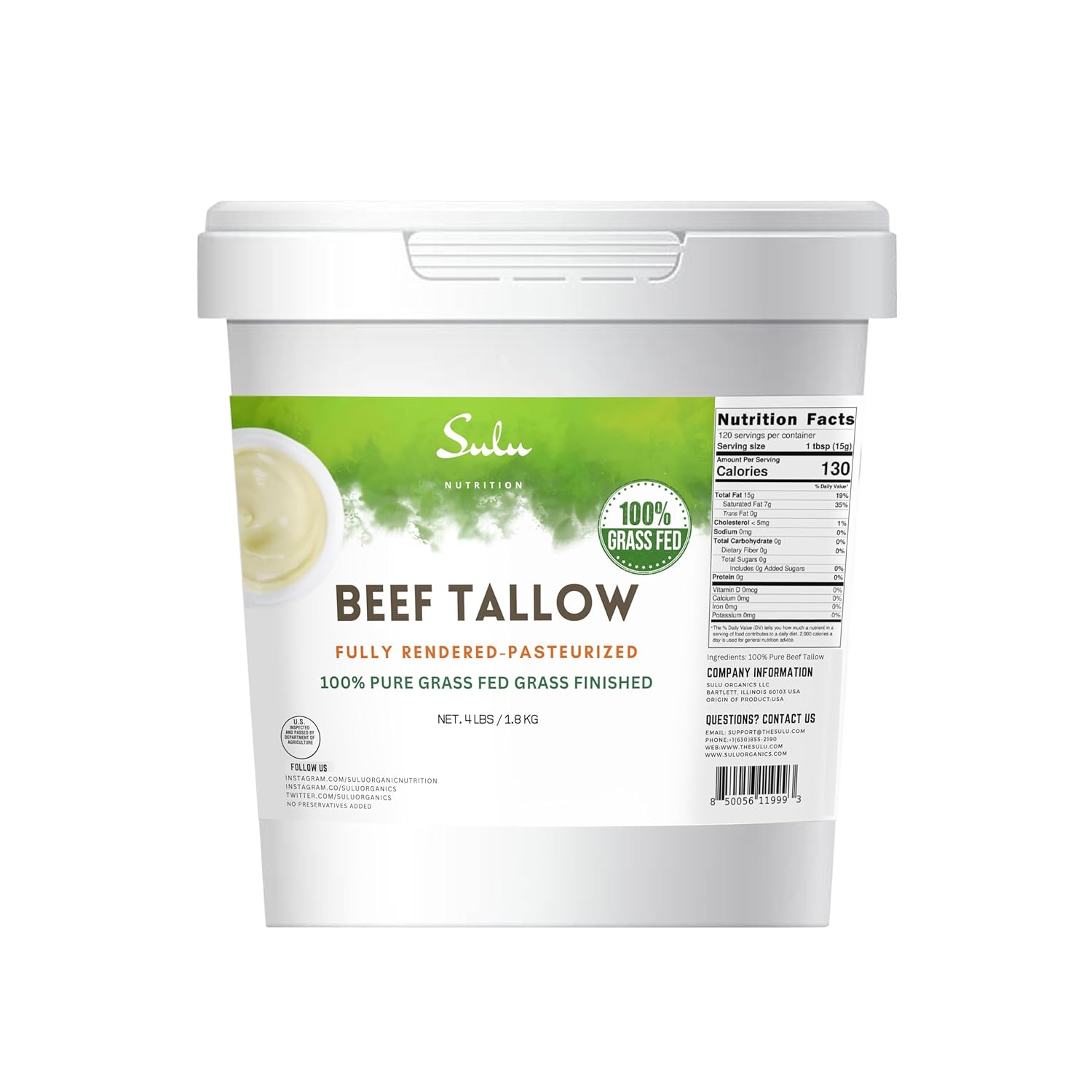
Grass-finished tallow has a different fatty-acid profile (slightly higher CLA, slightly higher palmitoleic acid, more beta-carotene) than grain-finished feedlot tallow. The differences are small but real: grass-fed tallow soaps tend to have a marginally creamier lather, a softer color (pale yellow vs bone-white), and a fainter savory aroma during cure. From a sustainability standpoint, grass-fed pasture systems are also a closer match to traditional regenerative agriculture than industrial feedlots.
How long does each bar last in the shower? ▼
A properly cured 4 oz tallow bar lasts 4-6 weeks of daily showers when stored on a draining soap dish between uses. Sitting in a puddle of water cuts that to 2-3 weeks. To maximize longevity: use a soap dish with airflow on all sides; allow the bar to fully dry between showers; cut bars slightly thicker (1.25 inches instead of 1 inch) for longer life.
Can I use this bar on my face? ▼
Yes for most skin types after the bar is fully cured (6+ weeks). Tallow's biomimetic lipid profile makes it one of the gentlest soaps for facial use. For acne-prone skin, the charcoal variation works well; for sensitive skin, use the unscented variation. Always follow with a moisturizer (the tallow face cream from this site is the natural pairing).
What's the difference between cold-process and hot-process soap? ▼
Cold-process (CP) lets saponification complete during the 24-48 hour mold rest and the 4-6 week cure. Hot-process (HP) drives saponification to completion in a slow cooker at 170-190 °F for 1-2 hours, after which the soap is technically usable immediately (though a 1-2 week cure improves quality). HP gives a more rustic appearance and faster turnaround; CP gives a smoother bar with better essential-oil retention.
How is this different from melt-and-pour soap? ▼
Melt-and-pour (MP) is a pre-saponified glycerin or coconut-oil base that you melt, customize, and re-mold, no lye handling required. It's safer for beginners and great for crafts but produces a softer, shorter-lasting bar with a different texture than true cold-process. CP gives you total ingredient control and a vastly superior bar; MP is a craft activity, CP is soap-making.
Why is my bar softer than expected after curing 6 weeks? ▼
Three possibilities: (1) the recipe used too much water (try a 'water discount', reduce water from 6 oz to 4.5 oz next batch); (2) too high a superfat (8%+ produces a soft, oily bar, drop to 5-6%); (3) the cure environment was too humid (target 50% relative humidity or below).
Can I add sugar / honey / milk for more lather? ▼
Yes, but each addition changes the chemistry. Sugar (1 tbsp dissolved in the lye water before adding lye) boosts bubbles. Honey (1 tbsp at trace) adds humectancy and bubbles but speeds the gel phase, refrigerate the molded soap. Milk (replacing some or all of the water, frozen first) adds creaminess but requires careful temperature management to prevent scorching the milk sugars to brown. Each addition takes a learning curve, master the basic recipe first.