Best Beef Tallow Hand Cream for Gardeners: Tested Through April Yard Work
Independent reviewFive beef tallow hand creams tested on real gardening hands through April yard work. Ranked by absorbency, durability, scent, and price for cracked, dirty hands.

This post contains affiliate links. We may earn a commission if you purchase through these links, at no extra cost to you.
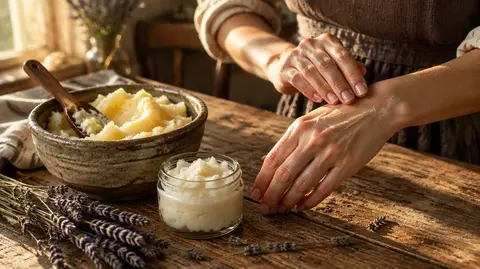
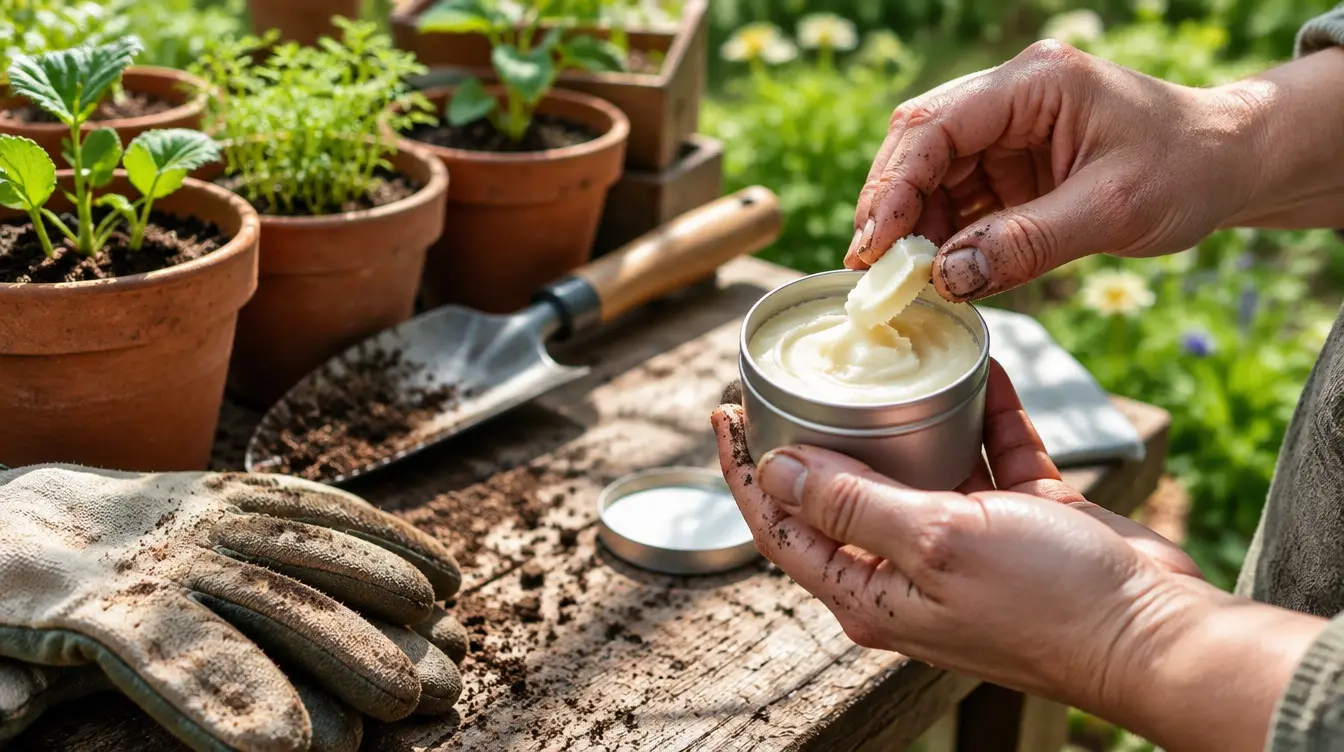
Gardening hands are a specific category of skin damage. You’re not just dry. You’re dry, cracked at the knuckles, callused on the palms, and stained brown in the lines no matter how hard you scrub. Add wet soil, sun, repeated hand-washing, and the occasional thorn, and you have a use case that most commercial hand creams simply do not survive.
I spent the first three weeks of April testing five beef tallow hand creams under real conditions: prepping garden beds, transplanting seedlings, pruning rose canes, pulling early weeds, and the inevitable five-times-a-day hand washing. My ranking criteria were practical, not aesthetic. How fast does it absorb so I can pick up tools again? How many hand-washes does it survive? Does the scent interact with what I’m doing outside? And is the price defensible for something I’m going to burn through fast?
Here’s what I learned. The winner surprised me.
How I Tested
For three weeks I applied a different cream to my left hand and a control (plain rendered tallow) to my right, alternating which cream got which hand to balance for whatever I happened to be doing. I tracked:
- Absorbency: minutes until I could grip a tool without slip
- Hand-wash durability: how many washes before reapplication was clearly needed
- Scent profile: notable in either direction, and whether it interfered with garden work
- Price per ounce: because gardeners go through hand cream
- Crack repair speed: visible improvement on existing knuckle cracks after seven days
I’ll be honest about one thing: none of these are double-blinded clinical trials. They’re real-world tests on real hands doing real work. Take the rankings as a starting point, not gospel.
The Five Products Tested
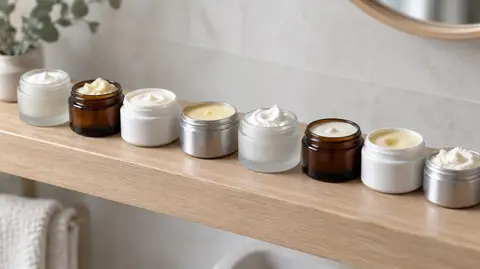
The lineup:
- Vanman’s Tallow Balm - the heavy hitter
- Amallow Unscented Whipped Tallow Balm - the daily driver
- Organic Tallow Skin (4 oz) - the budget pick
- Terra Lotus Organic Unscented Tallow Balm - the minimalist
- Santa Cruz Paleo Beef Tallow Moisturizer - the three-ingredient pick
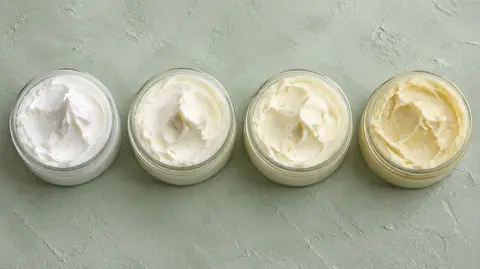
All five are grass-fed. All five are unscented or near-unscented. Where they differ is texture, density, additional ingredients, and price.
Ranking 1: Vanman’s Tallow Balm
Best for: deeply cracked knuckles and end-of-day repair
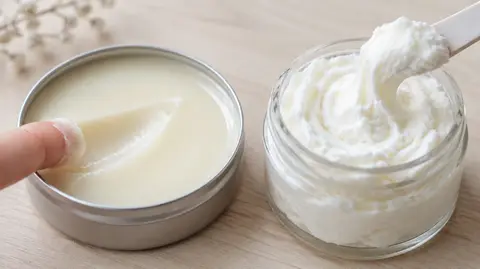
Vanman’s Tallow Balm is the densest of the five. The texture is closer to a hard salve than a cream. You scoop it with a fingernail, warm it between your palms, and work it into the cracked areas.
Scores:
- Absorbency: 6 minutes (slowest in the lineup)
- Hand-wash durability: 4 washes before reapplication
- Scent: barely detectable, faint tallow note
- Price per ounce: $$$
- Crack repair speed: noticeable improvement at day 3, mostly closed at day 7
This is the cream I reach for at the end of a long gardening day, not during. The density is too much for daytime use because tools slip and gloves feel weird. But applied at night, sometimes with thin cotton gloves over the top, it closes knuckle cracks faster than anything else in the test.
The downside is the price. At roughly $1.50 per ounce more than the budget pick, it’s the most expensive of the five. For occasional repair use, that’s fine. For daily slathering, it adds up fast.
Verdict: best evening repair cream for serious crack damage. Not the daily driver.
Ranking 2: Amallow Unscented Whipped Tallow Balm
Best for: midday reapplication and people who hate greasy hands
Amallow Unscented Whipped Tallow Balm is the opposite end of the texture spectrum from Vanman’s. It’s airy, light, and absorbs faster than I expected from a pure tallow product.
Scores:
- Absorbency: 2 minutes
- Hand-wash durability: 2 washes before reapplication
- Scent: truly unscented
- Price per ounce: $$
- Crack repair speed: subtle improvement at day 3, fully closed at day 10
This was my surprise pick of the test. The whipped texture means I could apply it after lunch, get back to transplanting tomato seedlings, and not have everything slip through my fingers. The trade-off is that it doesn’t survive hand-washes as well as the denser options. By the second wash, I needed to reapply.
For somebody who’s in and out of the garden multiple times a day, that’s actually fine. You’re keeping a jar by the kitchen sink anyway. Two washes between reapplications is a reasonable rhythm.
Verdict: the daily driver for active gardening hours.
Ranking 3: Organic Tallow Skin (4 oz)
Best for: budget-conscious gardeners who burn through hand cream
At the price per ounce, Organic Tallow Skin (4 oz) wins on value clearly. The 4-ounce jar is roughly twice the size of most competitors at a similar or lower price point.
Scores:
- Absorbency: 3 minutes
- Hand-wash durability: 3 washes before reapplication
- Scent: very mild tallow note
- Price per ounce: $
- Crack repair speed: moderate improvement at day 5, mostly closed at day 10
The texture sits between Vanman’s and Amallow. Denser than whipped, lighter than salve. The performance is solid across every category without excelling at any one thing. It’s the cream you keep in the garage, the truck, and the mudroom because you don’t feel guilty using a lot of it.
For a household where multiple people are gardening, or for somebody who’s doing serious daily yard work for two months straight, this is the volume buy that makes sense.
Verdict: best price-to-performance ratio. The cream you keep in three locations.
Ranking 4: Terra Lotus Organic Unscented Tallow Balm
Best for: sensitive skin gardeners who react to most products
Terra Lotus Organic Unscented Tallow Balm is a minimalist formulation aimed at people who can’t tolerate added ingredients. For sensitive-skinned gardeners (and I know a few who break out in hives from pollen-plus-fragrance combinations), this is the safer bet.
Scores:
- Absorbency: 3 minutes
- Hand-wash durability: 3 washes before reapplication
- Scent: genuinely unscented, no detectable note at all
- Price per ounce: $$
- Crack repair speed: subtle improvement at day 4, mostly closed at day 10
The performance is similar to Amallow but slightly denser. It survives one more hand-wash on average. The reason it ranks behind Amallow for me is the texture isn’t as enjoyable to apply. That’s a personal preference, not a flaw in the product.
If you have any history of skin reactions to fragranced products, this is the one to start with.
Verdict: sensitive-skin gardener’s first choice.
Ranking 5: Santa Cruz Paleo Beef Tallow Moisturizer
Best for: ingredient purists who want exactly three ingredients
Santa Cruz Paleo Beef Tallow Moisturizer keeps the ingredient list to three items: grass-fed tallow, beeswax, raw honey. That’s it.
Scores:
- Absorbency: 4 minutes
- Hand-wash durability: 4 washes before reapplication
- Scent: faint sweet note from the honey
- Price per ounce: $$
- Crack repair speed: noticeable improvement at day 3, mostly closed at day 8
The honey-and-beeswax addition genuinely helps hand-wash durability. Beeswax creates a more persistent occlusive layer, and honey is a humectant that pulls moisture back to the skin between applications.
The reason this ranks fifth is not performance. It’s that the faint honey note made my hands smell mildly sweet, which felt out of place when I was actively working with soil and compost. Not a deal-breaker. Just a preference. For winter or indoor use, this might be my pick over Amallow.
Verdict: best ingredient profile, slight scent mismatch for outdoor gardening.
Summary Table
| Product | Absorb | Durability | Scent | Price/oz |
|---|---|---|---|---|
| Vanman’s | 6 min | 4 washes | minimal | $$$ |
| Amallow Unscented | 2 min | 2 washes | none | $$ |
| Organic Tallow Skin | 3 min | 3 washes | mild | $ |
| Terra Lotus Unscented | 3 min | 3 washes | none | $$ |
| Santa Cruz Paleo | 4 min | 4 washes | sweet | $$ |
If I could only have two: Amallow for daytime, Vanman’s for nighttime repair. That combination covers 90 percent of gardening hand care needs across the season.
DIY Alternative: Make Your Own
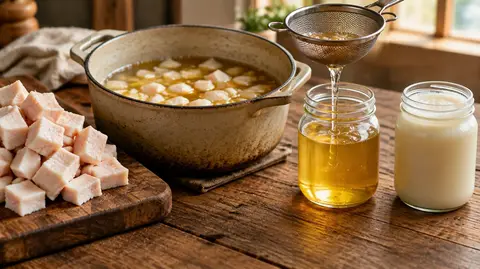
If you’re going through a jar a month, the math starts pointing toward making your own. A pound of rendered tallow plus a small amount of beeswax produces roughly four 4-ounce jars of hand cream for under twenty dollars total in ingredients.
The full recipe is at /make/hand-cream/. It’s a one-pot melt-and-pour process that takes about twenty minutes from start to jar. Ingredients you need:
- 100% Pure Grass-Fed Beef Tallow (4 lbs) as the base, this is enough for roughly sixteen jars of hand cream
- Beeswax pellets (a small bag from any natural foods store)
- Optional: a tablespoon of jojoba oil per cup of tallow for a lighter texture
- Optional: a tablespoon of raw honey if you want the Santa Cruz Paleo style finish
The advantage of DIY is total control over consistency. Want denser for nighttime use? Add more beeswax. Want lighter daytime cream? Skip the beeswax and whip the cooled tallow with a hand mixer instead.
For broader DIY context, /make/body-butter/ and /make/foot-balm/ use the same base ingredient, so one tallow purchase covers three recipes.
What About Gardening Gloves?
A reasonable question. Why not just wear gloves and skip the hand cream?
The honest answer: you should wear gloves for tasks where they make sense, like thorny pruning or pulling stinging nettles. But gloves create their own problem. They trap sweat against your hands, soften the skin in a way that makes it more vulnerable to cracking later, and reduce the dexterity you need for transplanting small seedlings or sorting seeds.
Most experienced gardeners I know use gloves for maybe 30 percent of their tasks and bare hands for the rest. Hand cream is what bridges the gap. You’re going to have hands in dirt no matter what.
Application Timing Through the Day
Here’s the rhythm that worked through three weeks of April testing:
Morning, before gardening: thin layer of Amallow Unscented. Let it absorb for three minutes. Sunscreen on the backs of hands. Out the door.
Midday, after first hand-wash: another thin layer of Amallow if I’m continuing to work outside.
End of gardening session: heavy layer of Vanman’s Tallow Balm worked into knuckles and any specific crack sites.
Before bed: another layer of Vanman’s, sometimes with thin cotton gloves overnight for very dry conditions.
For deeper context on tallow for hands specifically, /tallow-for/hands/ goes into the use case in more detail.
Frequently Asked Questions
Will tallow hand cream survive dishwashing?
Survive is the wrong word. It will be partially washed off by surfactants and hot water. Plan to reapply after any hand-wash that involves dish soap. The denser balms (Vanman’s, Santa Cruz Paleo) hold up better than the whipped ones.
Does grass-fed actually matter for hand cream?
For hands specifically, the difference is smaller than for face or sensitive skin areas. Grass-fed tallow has higher CLA and fat-soluble vitamin content, which matters more for thin facial skin than for thick palm skin. That said, grass-fed costs only marginally more, so default to it.
Can I use tallow hand cream on gardening tool handles?
Yes, and you should. A thin layer of tallow on wooden tool handles every spring prevents drying and cracking the same way it works on your skin. The Vanman’s density is overkill for this; use whatever leftover tallow you have. There’s a related guide at /tallow-for/wood/ on using tallow for wood care generally.
Do I need separate products for hands and face?
Not strictly, but you’ll want different textures. The same Amallow whipped balm works on both. The denser Vanman’s is hand-and-cuticle only for most people, not face. If you only want one product across your whole spring routine, Amallow Unscented Whipped Tallow Balm is the most versatile.
What about callus prevention versus repair?
Tallow does not prevent calluses, and you actually want some callus formation for gardening grip and tool resistance. What it does is keep the callused skin pliable so the calluses don’t crack at the edges, which is where they hurt and bleed. Apply tallow to the perimeter of calluses, not the center.
How long does a 4-ounce jar last during active gardening season?
In my testing, a 4-ounce jar of any of these creams lasts roughly three to four weeks of daily heavy gardening use. If you’re gardening on weekends only, you’ll get two to three months out of the same jar. Plan to buy two jars at the start of spring if you’re a serious gardener.
Bottom Line
For most gardeners, a two-product approach works best: Amallow Unscented Whipped Tallow Balm for daytime use during yard work, Vanman’s Tallow Balm for end-of-day repair on cracked knuckles. If budget is the priority, Organic Tallow Skin (4 oz) covers all uses adequately at the best per-ounce price. If you’re going through more than a jar a month, switch to making your own with the recipe at /make/hand-cream/.
Explore more tallow guides
Browse our collection of recipes, comparisons, reviews and DIY tutorials.
View all guidesKing Tallow is reader-supported. We research and test the products we recommend, and when you buy through links on this page we may earn a commission at no extra cost to you. See our affiliate disclosure.
Published