Beef Tallow Lip Balm Showdown: 5 Products Tested Through Allergy Season
Reader-supported5 beef tallow lip balms ranked after a brutal allergy-season test. 4-hour wear, mask feel, taste, ingredient list, and price per ounce. Honest winner and losers.

This post contains affiliate links. We may earn a commission if you purchase through these links, at no extra cost to you.
Spring allergy season is the worst time of year for lips. Pollen counts spike, antihistamines dry you out from the inside, and most of us spend half the day breathing through our mouths because our noses gave up around April. My lips have been chapped since the first oak bloom in March.
So I bought five beef tallow lip balms and ran them through the same five-test battery on the same set of lips during the same six weeks. Same person, same conditions, same allergens, same coffee, same laptop, same dry office air. This is not a roundup of products I have heard about. This is a side-by-side I actually did.
If you would rather skip the rankings and make your own, the recipe lives at /make/lip-balm/. For everyone else, the winner surprised me, and the loser is one of the bigger brands on Amazon.
The Test: 5 Criteria, Same Lips, Six Weeks
I scored each balm against five things that actually matter when you wear lip balm during allergy season.
1. Lasting Power (4-Hour Wear Test). I applied the balm at 8am after coffee. I logged how it felt at 12pm, with no reapplication and no eating in between. A balm that disappears in 90 minutes is not a balm. It is a lip oil.
2. Feel Under a Face Mask. I wear an N95 a few hours a week (woodshop dust, mostly). A balm that sweats off, smears the inside of a mask, or feels gross on a humid mouth fails this one fast.
3. Taste. Tallow has a faint, mild fat-smell when it gets warm. Some brands cover it with essential oils. Some leave it alone. Some try to cover it and fail. Your lips end up in your mouth dozens of times a day. Taste matters.
4. Ingredient List. I want to be able to read every line. Tallow, beeswax, a carrier oil, maybe an essential oil for scent. Anything that needs a Wikipedia tab gets points off.
5. Price Per Ounce. Lip balm pricing is a mess. A 0.15 oz tube can cost the same as a 2 oz balm. I converted every product to price-per-ounce so you can see what you are actually paying for.
Quick Rankings: Best Beef Tallow Lip Balms (Spring 2026)
| Rank | Product | Best For | Standout |
|---|---|---|---|
| 1 | Vanman’s Tallow Balm | Severely chapped lips | All-day wear |
| 2 | Santa Cruz Paleo Tallow Moisturizer | Ingredient purists | 3-ingredient list |
| 3 | Amallow Unscented Whipped | Mask wearers | Light texture |
| 4 | Organic Tallow Skin 4 oz | Budget buyers | Price per ounce |
| 5 | Traverse Bay Farms 32 oz | DIY base only | Pure tallow |
Full breakdowns below.
1. Vanman’s Tallow Balm
Vanman’s was not designed specifically as a lip balm. It is a heavy, dense, cracked-skin formula meant for hands, elbows, and the kind of dry winter face that has stopped responding to lighter products. That heaviness is exactly what won the lasting-power test.
4-Hour Wear: Best in the test. I applied a small amount at 8am and my lips still felt conditioned at noon. No flaking. No reapplication needed.
Mask Feel: Slightly heavy at first. The thick texture settles in within 10 minutes, and once it does, the mask does not pull it off the way it does with waxier sticks. After about an hour of mask wear it felt completely normal.
Taste: The most neutral of the bunch. There is a faint warm-fat note, the kind you would expect from a high-quality grass-fed source. Not unpleasant. Not flavored. Just clean.
Ingredients: Short list. Tallow, beeswax, olive oil. No mystery additives.
Price Per Ounce: This is the trade-off. Vanman’s is the most expensive on the list per ounce. You are paying for a richer formula and a brand that has been doing this longer than most.
Verdict: If your lips are seriously chapped, this is the one. It is the balm that finally broke the chapped-lips cycle I had been in since March.
2. Santa Cruz Paleo Beef Tallow Moisturizer
Santa Cruz Paleo built their reputation on a three-ingredient minimalist approach. Grass-fed tallow, beeswax, raw honey. That is the whole list. As a lip balm, the simplicity is the entire selling point.
4-Hour Wear: Solid. Not quite Vanman’s-tier but a comfortable second. Three to three-and-a-half hours before lips started to feel slightly drier. Honey adds humectant properties that help hold moisture.
Mask Feel: Excellent. Lighter than Vanman’s, sits down quickly, no transfer to mask interior.
Taste: The honey is faintly noticeable in a good way. Slightly sweet, slightly warm. The only one of the five where I genuinely liked the taste rather than being neutral on it.
Ingredients: Tallow, beeswax, raw honey. That is it.
Price Per Ounce: Mid-pack. Reasonable for what you get given the sourcing standards and the small-batch production.
Verdict: The best ingredient list in the test, and the best taste. If Vanman’s intensity is more than you need, this is the one I would buy.
3. Amallow Unscented Whipped Tallow Balm
Amallow’s whipped balm is not technically marketed as a lip balm. I have been using it on my face for months and decided to throw it in this test on the same principle. If a balm works on facial skin, lip skin is just thinner facial skin.
4-Hour Wear: This was the surprise of the test in both directions. The whipped texture absorbs faster than any of the others, which means lips feel great immediately, but also means the wear time tops out around two hours before reapplication is needed. For some people that is a feature, not a bug.
Mask Feel: Best in the test. The whipped texture disappears into the lips so completely that you forget it is there, and the inside of a mask stays clean.
Taste: Neutral. Genuinely unscented. The fat-note is so faint you have to be looking for it.
Ingredients: Short, clean, no fragrance. The whipping process incorporates air, which is what creates the light texture.
Price Per Ounce: Mid-range. You are paying a small premium for the texture, which I think is worth it.
Verdict: The winner for anyone who wears a mask, hates heavy balm, or wants to use one product on face and lips. If you want a deeper dive on Amallow’s range, the top 10 tallow balms roundup covers it in context.
4. Organic Tallow Skin (4 oz)
The budget pick. Four ounces of organic tallow-based balm for the same price most brands charge for two. The catch is what you would expect at that price point: a slightly heavier feel and a less refined finish.
4-Hour Wear: Solid two to three hours. Not the longest, but completely usable.
Mask Feel: Acceptable. A little tackier than the top three, but never gross.
Taste: A noticeable warm-fat note. Not unpleasant, but the most “tallow-tasting” of the five. If you are new to tallow products, this is the one where you will notice the source ingredient the most.
Ingredients: Slightly longer list than Santa Cruz Paleo but still clean. No synthetics, no mystery additives.
Price Per Ounce: Best value in the test, by a real margin.
Verdict: If you go through lip balm fast and want a four-ounce jar that will last six months without making you flinch at the price, this is the one. The honest weakness is taste, and it is fixable: a single drop of food-grade peppermint or vanilla essential oil per teaspoon, mixed in, solves it instantly.
5. Traverse Bay Farms Beef Tallow (As Base)
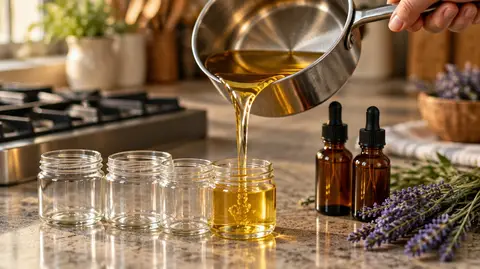
Traverse Bay Farms is not a finished lip balm. It is a 32-oz jar of deodorized grass-fed tallow that I include here because the DIY route deserves a fair comparison. I made my own lip balm using the recipe at /make/lip-balm/ with Traverse Bay as the base. Here is how that homemade product scored against the others.
4-Hour Wear: Customizable. With more beeswax (a 4-to-1 tallow-to-beeswax ratio), my homemade version matched Vanman’s wear time. With less beeswax, it sat closer to Amallow’s two-hour mark.
Mask Feel: Depends on the ratio you choose. Mine was good.
Taste: Neutral. Traverse Bay is deodorized, which is the key reason it works as a DIY base. There is no tallow-note to cover up.
Ingredients: Whatever you put in it. Mine was tallow, beeswax, a drop of vanilla extract, and a splash of jojoba oil. Total cost per ounce was under a dollar.
Price Per Ounce: Best in the test by a long way, once you account for the recipe yield. A 32-oz jar makes roughly 200 lip balm tubes if you only use it for lip balm. Most people will not do that. The math still works when you use the same jar for body butter, deodorant, and a season of cooking.
Verdict: Not a lip balm you can buy off the shelf, but the best per-ounce option if you are willing to spend 30 minutes in the kitchen. The full DIY walkthrough is at /make/lip-balm/.
For broader context on Traverse Bay as a DIY base, the homemade soaps and balms overview covers what else it can do.
What I Learned After 6 Weeks of Daily Lip Balm Testing
A few things stood out that I did not expect going in.
The cheapest commercial option is also the most “tallow-tasting.” That is not a coincidence. The deodorizing process used by premium brands is expensive. If you do not care about taste, you save a lot of money. If you do, pay for the deodorization, or DIY with a deodorized base.
Beeswax ratio is the single biggest variable in wear time. Any of these balms could be made to last twice as long with more beeswax, but you would lose the soft feel that makes tallow special in the first place. The best products find a balance. Vanman’s and Santa Cruz Paleo nail it. Amallow chooses light feel over wear time, which is a valid choice.
Honey is underrated. The Santa Cruz Paleo balm and a few other honey-containing options I tested earlier in the year held moisture better than honey-free formulas. Honey is a humectant, which means it pulls water into the skin rather than just sitting on top.
Allergy season makes everything harder. Even the best balm on this list could not fully keep up with three weeks of antihistamines and mouth-breathing. The right move is to combine a good balm with hydration from the inside (water, a humidifier at night) and to lay off licking your lips. The licking habit was harder to break than the antihistamine dryness.
For a deeper look at how tallow interacts with lip skin specifically, the beef tallow for skincare explainer is worth reading. Lip skin is thinner than facial skin and has no sebaceous glands of its own, which is why fat-based balms outperform water-based glosses every time.
How to Use a Tallow Lip Balm (More Important Than It Sounds)
Tallow lip balm is not chapstick. Treat it like a small-amount skincare product and it will outperform anything you have used.
- Start with clean lips. Wash your face, dab your lips dry, then apply. Applying over coffee residue or food traces gives you a barrier on top of a barrier.
- Use a tiny amount. A grain of rice per lip. The temptation is to load up. Resist it. A thick layer takes longer to absorb and ends up wiped onto your coffee mug.
- Press, do not slide. Press the balm onto your lips with the pad of a finger or the side of the stick. Sliding redistributes product without delivering it.
- Reapply after eating, not on top of food. Wipe your lips with a damp napkin first.
- Use it at night. The single biggest underused application time. Eight hours of sleep is eight hours of repair work, and lips heal faster overnight than during the day.
Frequently Asked Questions
Is beef tallow safe to put on your lips?
Yes. Tallow has been used on skin and lips for centuries. The fatty acid profile is close to what human skin produces naturally, which is why it absorbs cleanly without sitting on top. Some of it inevitably ends up ingested. That is fine. Tallow is a food. Choose grass-fed sources for the best nutrient profile, and avoid balms with mystery additives if ingestion concerns you.
How is tallow lip balm different from regular chapstick?
Most drugstore chapsticks are petroleum-based. Petrolatum creates a sealing layer on top of lips that prevents water loss but does not actually moisturize. Tallow absorbs into the lip skin and conditions it. The difference is real. After a few weeks of switching, most people stop needing to reapply as often because their lips are no longer in a constant repair cycle.
Does tallow lip balm taste bad?
It depends on the source. Premium grass-fed and deodorized tallow has almost no taste. Lower-end products can have a noticeable warm-fat note. Of the five tested here, Santa Cruz Paleo had the most pleasant taste (a faint honey sweetness), Amallow and Vanman’s were neutral, and the budget options were more “tallow-tasting.” DIY with a deodorized base solves taste entirely.
How long does a jar of tallow lip balm last?
A two-ounce jar lasts most people three to six months with daily use. The four-ounce jars stretch that to six to twelve months. Tallow stays stable at room temperature for about a year. The tallow shelf-life guide and the is it spoiled? guide cover storage in detail.
Can I make my own tallow lip balm at home?
Yes, and it is one of the easier DIY skincare projects out there. The recipe at /make/lip-balm/ is a 20-minute project with three ingredients. Use the Traverse Bay 32 oz jar or the grass-fed 4 lb tub as your base. A single batch yields enough for a year of personal use.
Why does grass-fed matter for lip balm specifically?
Grass-fed tallow contains higher concentrations of fat-soluble vitamins (A, D, E, K) plus CLA and omega-3s. Your lip skin absorbs what you put on it more readily than most skin elsewhere on the body, so the nutrient profile of what you apply actually matters. The grass-fed vs grain-fed guide covers this in depth.
Bottom Line
After six weeks of allergy-season abuse, the rankings settled in clear order.
If your lips are seriously chapped right now and you want the strongest product, get Vanman’s. If you want the cleanest ingredient list and the best taste, get Santa Cruz Paleo. If you wear a mask all day or want one product for face and lips, get Amallow whipped. If you are budget-first and willing to add a drop of essential oil for taste, get Organic Tallow Skin. And if you would rather control everything yourself, get the Traverse Bay 32 oz jar and follow the recipe at /make/lip-balm/.
Allergy season ends. The lip-balm habit does not need to. Pick the one that fits the life you actually live and stop replacing $4 tubes of petroleum every six weeks.
Explore more tallow guides
Browse our collection of recipes, comparisons, reviews and DIY tutorials.
View all guidesKing Tallow is reader-supported. We research and test the products we recommend, and when you buy through links on this page we may earn a commission at no extra cost to you. See our affiliate disclosure.
Published