
Beef Tallow vs Olive Oil: Which Is Healthier for Everyday Cooking?
Independent reviewBeef tallow vs olive oil compared head to head. Saturated vs monounsaturated fat, smoke point, USDA nutrition, when each wins, and cost per use.

This post contains affiliate links. We may earn a commission if you purchase through these links, at no extra cost to you.
I get this question more than any other. Tallow or olive oil. Animal fat or Mediterranean staple. The shortcut answer most people online give is “use both,” which is true but also useless. Here is the actual breakdown of when each one wins, with the health framing that the question really hides.
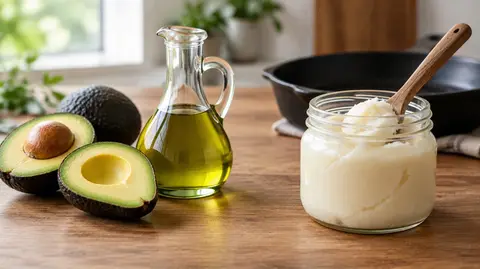
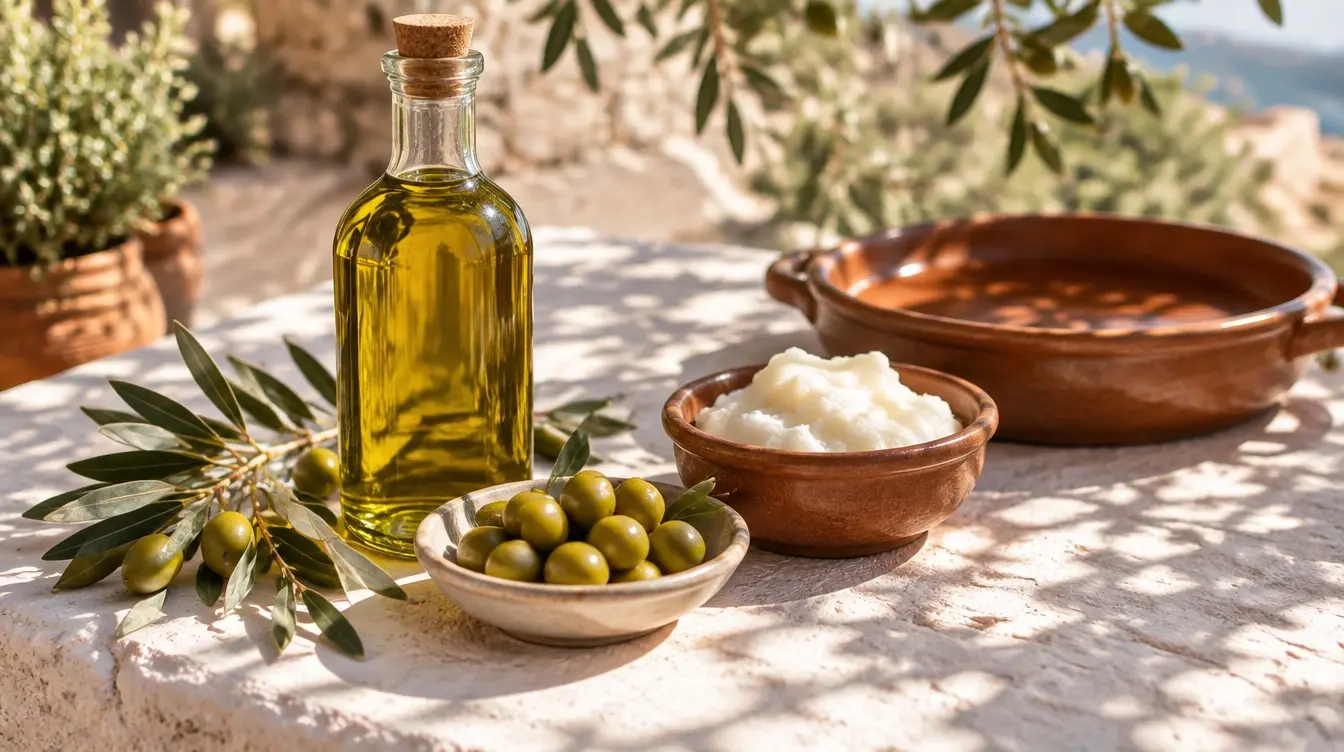
I cook with both. Tallow lives next to my stove. A bottle of cold-pressed extra virgin olive oil lives in my pantry. They do different jobs and most cooks should keep both.
For the structured side-by-side, the compare olive oil programmatic page covers it in chart form.
The Headline Numbers
| Beef Tallow | Extra Virgin Olive Oil | |
|---|---|---|
| Smoke point | ~400F | ~375F |
| Saturated fat (per Tbsp) | 7g | 2g |
| Monounsaturated (per Tbsp) | 5g | 10g |
| Polyunsaturated (per Tbsp) | 0.5g | 1.5g |
| Calories per Tbsp | 115 | 120 |
| Texture at room temp | Solid | Liquid |
| Shelf life sealed | 6-12 months | 12-18 months |
| Best high heat use | Yes | Limited |
| Best for dressings | No | Yes |
The summary in one line: tallow is the high-heat workhorse, olive oil is the finishing and dressing fat.
Saturated vs Monounsaturated
This is where the health debate lives.
Tallow is mostly saturated and monounsaturated. About 55% saturated, 42% monounsaturated, and 3% polyunsaturated.
Olive oil is mostly monounsaturated. About 14% saturated, 73% monounsaturated, and 13% polyunsaturated.
Both fats share the dominant fatty acid: oleic acid (the monounsaturated one). Olive oil is roughly 73% oleic. Tallow is roughly 36% oleic. So tallow is still meaningfully a “monounsaturated fat” by composition, just not as monounsaturated as olive oil.
The saturated fat in tallow is largely palmitic (26%) and stearic (14%). Stearic acid has been shown in multiple peer-reviewed studies to have a neutral effect on blood cholesterol, which is the opposite of the lazy “saturated fat is bad” framing that dominated nutrition advice from the 1980s through about 2015. Palmitic acid is more complicated and can raise LDL in some studies, but the modern consensus is that it has to be looked at in the context of the whole diet rather than as a single villain.
Olive oil’s monounsaturated fat profile is the part the Mediterranean diet researchers have been pointing to for 40 years. The evidence base for olive oil reducing cardiovascular events is one of the strongest in nutrition science. It is not a marketing claim.
The honest synthesis: both fats are defensible. Olive oil has more research behind it as a daily fat. Tallow is more nutritionally rehabilitated than its 1980s reputation suggests, and the more recent meta-analyses do not support the original case against it.
Smoke Point
Tallow smokes at about 400F. Extra virgin olive oil smokes at about 375F. Refined “light” olive oil smokes at about 465F, but most cooks are using extra virgin.
The 25-degree difference matters when you are aggressively searing or deep frying. At 425F on a cast-iron pan, extra virgin olive oil starts to break down, smoke heavily, and produce off-flavors. Tallow sits comfortably in that range.
For temperatures below 350F (most stovetop sauteing, gentle roasting at 350F or under), olive oil is fine and the smoke point difference does not matter.
For high-heat applications (searing, frying, roasting above 400F), tallow is the more stable fat.
When Each One Wins
Olive oil wins for:
- Salad dressings (tallow is solid at fridge temp, useless for dressing)
- Finishing drizzle on cooked vegetables, pasta, soup, bread
- Mediterranean dishes where olive oil is part of the flavor profile (Greek, Italian, North African)
- Sauteing at low-to-medium heat
- Roasting at 350F or below
- Bread dipping
- Pesto and other raw applications
- Marinades
Tallow wins for:
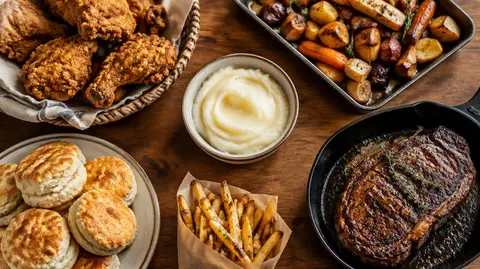
- Searing steak, chops, burgers (cook steak)
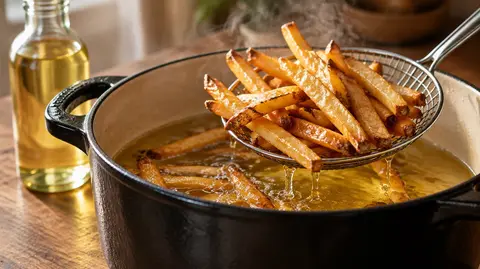
- Deep frying (cook french fries)
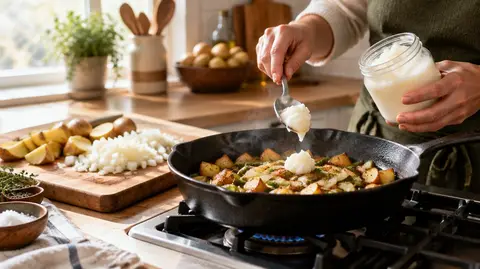
- Roasting at 425F (potatoes, root vegetables, brussels sprouts)
- Cast-iron cooking
- Biscuits and pie crust where you want flakiness
- Anything where you want savory depth in the background
- Stable, shelf-stable cooking fat that lives on the counter
Both work for:
- Stovetop sauteing at moderate heat
- Pan-fried eggs
- Roasting at 375F to 400F (toss-up, depends on flavor preference)
- Fried chicken (tallow leans crispier, olive oil leans lighter)
For the broader cooking-by-application breakdown, the cooking pillar covers more dishes.
The Mediterranean vs Traditional Carnivore Framing
The cultural framing matters because it shapes how people choose.
The Mediterranean argument: Olive oil is the central fat of the longest-living populations on earth (Sardinia, Ikaria, Crete). The Mediterranean diet, with olive oil as the primary fat plus fish, vegetables, legumes, and modest meat, has the strongest evidence base for cardiovascular and metabolic health of any well-studied dietary pattern.
The traditional argument: Beef tallow was the dominant cooking fat in Northern Europe, the British Isles, and the American frontier for centuries. The introduction of seed oils in the early 1900s, and the swap of tallow for vegetable shortening in fast food in 1990, correlates with the rise of metabolic syndrome and the obesity epidemic. The traditional kitchen ate tallow, lard, and butter for centuries without modern chronic disease.
Both arguments are real. Both have evidence. The framing that “either is correct, the other is poison” is wrong on both sides.
What I actually do: olive oil for dressings, raw applications, and Mediterranean-style cooking. Tallow for high-heat cooking and savory roasting. Butter for baking. The kitchen runs better with all three than with any one.
USDA Nutrition Data Side by Side (per 1 Tbsp)
Beef Tallow (FDC ID 173594):
- 115 calories
- 12.8g total fat
- 6.4g saturated
- 5.4g monounsaturated
- 0.5g polyunsaturated
- 14mg cholesterol
- 0g carbs, 0g protein
- Trace vitamins A, D, E, K (more in grass-fed)
Extra Virgin Olive Oil (FDC ID 171413):
- 120 calories
- 13.5g total fat
- 1.9g saturated
- 9.9g monounsaturated
- 1.4g polyunsaturated
- 0mg cholesterol
- 0g carbs, 0g protein
- 1.9mg vitamin E (10% DV)
- 8.1mcg vitamin K (10% DV)
Olive oil has a slightly better fat profile if you are looking only at saturated vs unsaturated. Tallow has a slightly higher density of fat-soluble vitamins per tablespoon (when grass-fed) and contains palmitoleic acid that olive oil does not.
Cost Per Cooking Application
Cost only really matters when you are doing high-volume cooking.
Olive oil (good quality EVOO): $0.50 to $1.00 per tablespoon at retail. For a salad dressing or finishing drizzle, that is fine. For deep frying that needs a full quart of fat, that is $40 to $80 of olive oil per session, plus you are wasting the EVOO at high heat.
Beef tallow (grass-fed): $0.30 to $0.60 per tablespoon. For deep frying, that is $25 to $40 of tallow per session, and you can reuse it 3 to 5 times. Cost per fry session lands around $7 to $12.
For occasional cooking, the cost difference is negligible. For weekly deep frying, tallow is the clear winner on dollars per dish.
The Grass-Fed Tallow 4 lb tub is the cost-effective option for high-volume cooking. The Traverse Bay 32 oz is the budget pick for normal household use.
Storage and Shelf Life
Olive oil: Glass bottle, cool dark cabinet. Light degrades it. Heat degrades it. Air degrades it. Properly stored EVOO lasts 12 to 18 months. After opening, use within 6 months for best flavor. Olive oil that has gone rancid smells like crayons.
Tallow: Glass jar, room temperature or fridge. Stable across light and warm temps in a way olive oil is not. Sealed jar lasts 6 to 12 months at room temp, longer in fridge. Rancid tallow smells sour or off in a way that is hard to miss.
The does tallow go bad post covers tallow storage in more detail.
Health Honest Take
I am not a doctor. I am a cook who has read more nutrition research than is healthy.
If your concern is cardiovascular health and you trust the consensus, olive oil has the better evidence base as a daily fat. The Mediterranean diet research is the most consistent body of nutrition science we have.
If your concern is metabolic health, blood sugar, and inflammation, and you are eating a low-carb or whole-foods-traditional diet, tallow fits cleanly and is more nutritionally rehabilitated than the 1980s reputation suggests.
If your concern is cooking quality, use the right fat for the job. Olive oil for salads and finishing. Tallow for high-heat searing and frying. Anyone telling you that one is poison and the other is medicine is selling you something.
Frequently Asked Questions
Can I cook everything in olive oil?
Most things, yes, as long as you keep the heat below 375F. For high-heat searing and frying, the smoke point is the limit. For everything else, olive oil works fine.
Is beef tallow worse for your heart than olive oil?
The traditional answer was yes. The modern research suggests the picture is more complicated and that tallow’s saturated fat profile (heavy in stearic and oleic) is not the villain it was made out to be. Olive oil still has the stronger long-term cardiovascular evidence.
Which one is better for weight loss?
Neither and both. Total calorie intake and overall diet quality matter much more than the specific cooking fat you use.
Can I use tallow for salad dressing?
No. Tallow solidifies at room temperature and turns into a paste on cold salad. Use olive oil.
Can I use olive oil for deep frying?
It works but is wasteful. The smoke point is on the low side, EVOO breaks down at frying temperatures, and the cost per session is high. Use tallow or refined oil for frying.
Is grass-fed tallow worth the price compared to olive oil?
For everyday cooking, yes. The flavor and nutritional density justify the cost. For dressings and finishing, no, use olive oil.
Bottom Line
Tallow and olive oil are not competing for the same job. Olive oil is the cold-application and low-heat fat. Tallow is the high-heat and savory-cooking fat. Most kitchens need both, and the cost of running both is under $30 total. If you want one bottle of EVOO and one jar of tallow on the shelf, grab a Grass-Fed 4 lb tub and a bottle of cold-pressed EVOO from your grocery store and call it a complete fat pantry.
Explore more tallow guides
Browse our collection of recipes, comparisons, reviews and DIY tutorials.
View all guidesKing Tallow is reader-supported. We research and test the products we recommend, and when you buy through links on this page we may earn a commission at no extra cost to you. See our affiliate disclosure.
Published