

This post contains affiliate links. We may earn a commission if you purchase through these links, at no extra cost to you.
If you eat keto or carnivore, the question of tallow versus butter comes up the first time you cook a steak. They are the two heavy-hitter saturated cooking fats. They both work. They are not identical, and the differences matter more on a restricted diet than they do on a standard one.
I cook with both, eat both, and have had to learn the hard way which one is the better tool for which job. The frustrating truth is that the answer depends on what you are cooking, what your gut tolerates, and what your reasons are for going carnivore in the first place (autoimmune protocol versus general dietary preference). I will walk through all of that, then land on a clear recommendation at the end.
The Quick Macros Side by Side
Per tablespoon (about 14 grams):
Beef tallow:
- Calories: ~115
- Fat: 13g (about 6.5g saturated, 5.5g monounsaturated, 0.4g polyunsaturated)
- Carbs: 0g
- Protein: 0g
- Cholesterol: ~14mg
Unsalted butter:
- Calories: ~102
- Fat: 11.5g (about 7.2g saturated, 3.3g monounsaturated, 0.4g polyunsaturated)
- Carbs: 0.01g (trace)
- Protein: 0.1g (trace casein and whey)
- Cholesterol: ~31mg
- Lactose: ~0.01g
The headline difference is that tallow is pure fat. Zero carbs, zero protein, zero lactose, zero casein. Butter is 99% fat but it has trace residues of milk solids that matter for some people on autoimmune carnivore protocols.
The calorie difference is small and largely comes from the water content in butter (butter is about 16% water; tallow is essentially anhydrous). Per gram of actual fat, they are nearly identical.
Where Butter’s Trace Carbs and Proteins Actually Matter
For most people doing standard keto, the trace lactose and casein in butter are too small to count. You would have to eat 100 tablespoons of butter to hit a single gram of carbs from lactose. That is not a real concern.
Where it does matter is for people on autoimmune carnivore protocols, lion-diet style elimination, or anyone with a confirmed casein sensitivity. Casein triggers some inflammatory responses in sensitive individuals at very small doses. Whey is even more reactive for some people. If you are doing carnivore specifically to identify trigger foods, butter is not the cleanest fat to start with.
Ghee solves part of this problem (the milk solids are removed) but not all of it. Trace casein can still be present in commercial ghee. Tallow is the clean option. Zero dairy proteins, zero dairy sugars, no residue to worry about.
If you have done a strict elimination and reintroduced dairy without symptoms, this paragraph does not apply to you. Eat butter freely.
Smoke Point: Tallow Wins by a Wide Margin
Butter’s smoke point is around 302F. Above that, the milk solids start to burn and you get the bitter brown-butter taste, which is great if you want brown butter and terrible if you want a clean sear.
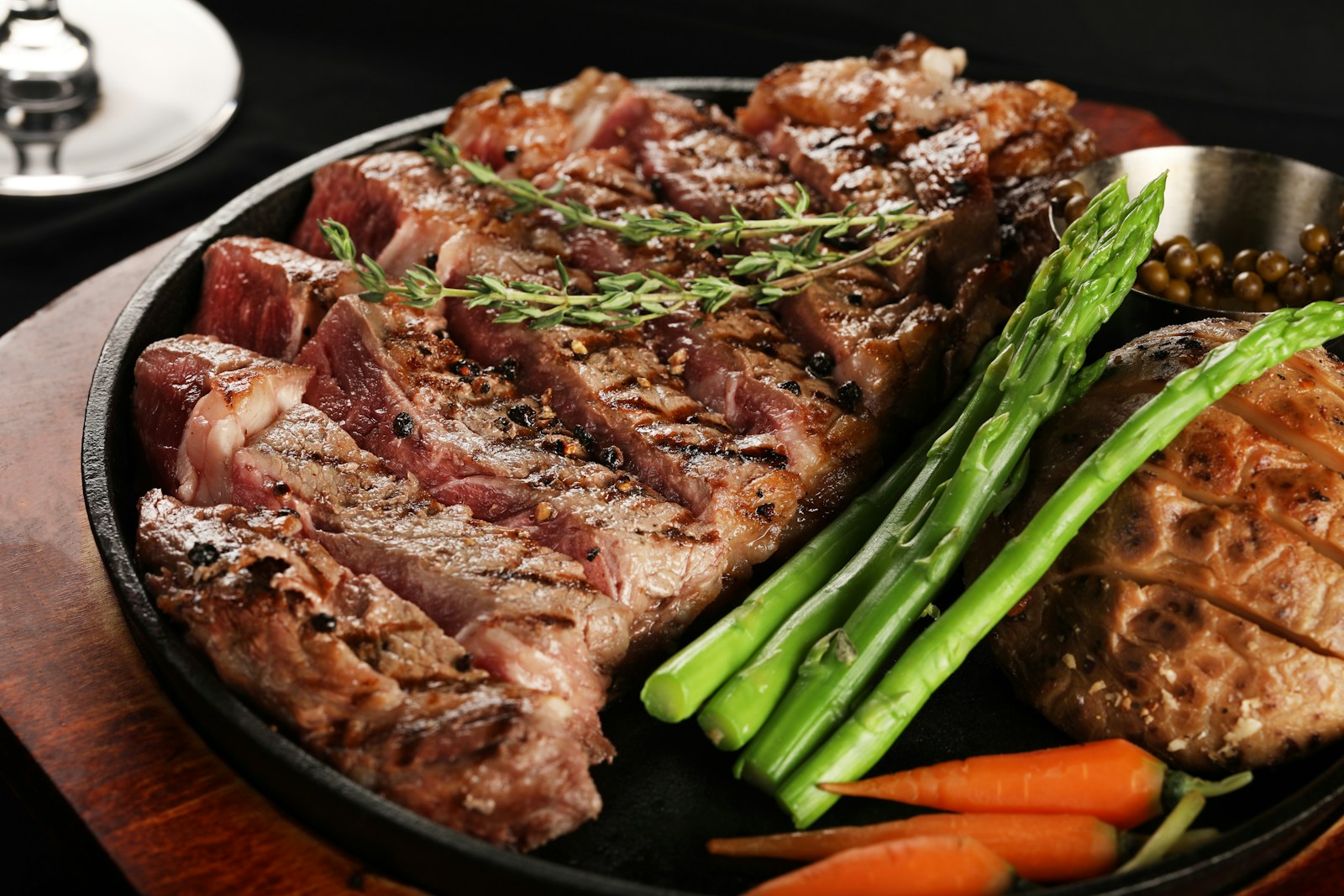
Tallow’s smoke point is around 400F. That is a meaningful gap in practice. If you are searing a steak in a cast iron pan that is over 400F (which is where you want it for a proper crust), butter alone will burn before the meat browns. Tallow holds.
This is why classic steakhouse technique uses tallow or beef fat for the initial sear and finishes with a pat of butter at lower temperature for the flavor lift. The two fats are complementary, not interchangeable, when you care about the crust.
For deep frying, tallow is the clear winner. The smoke point and the low polyunsaturated fat content mean it does not oxidize the way seed oils do. Butter is unusable for deep frying because of the smoke point alone.
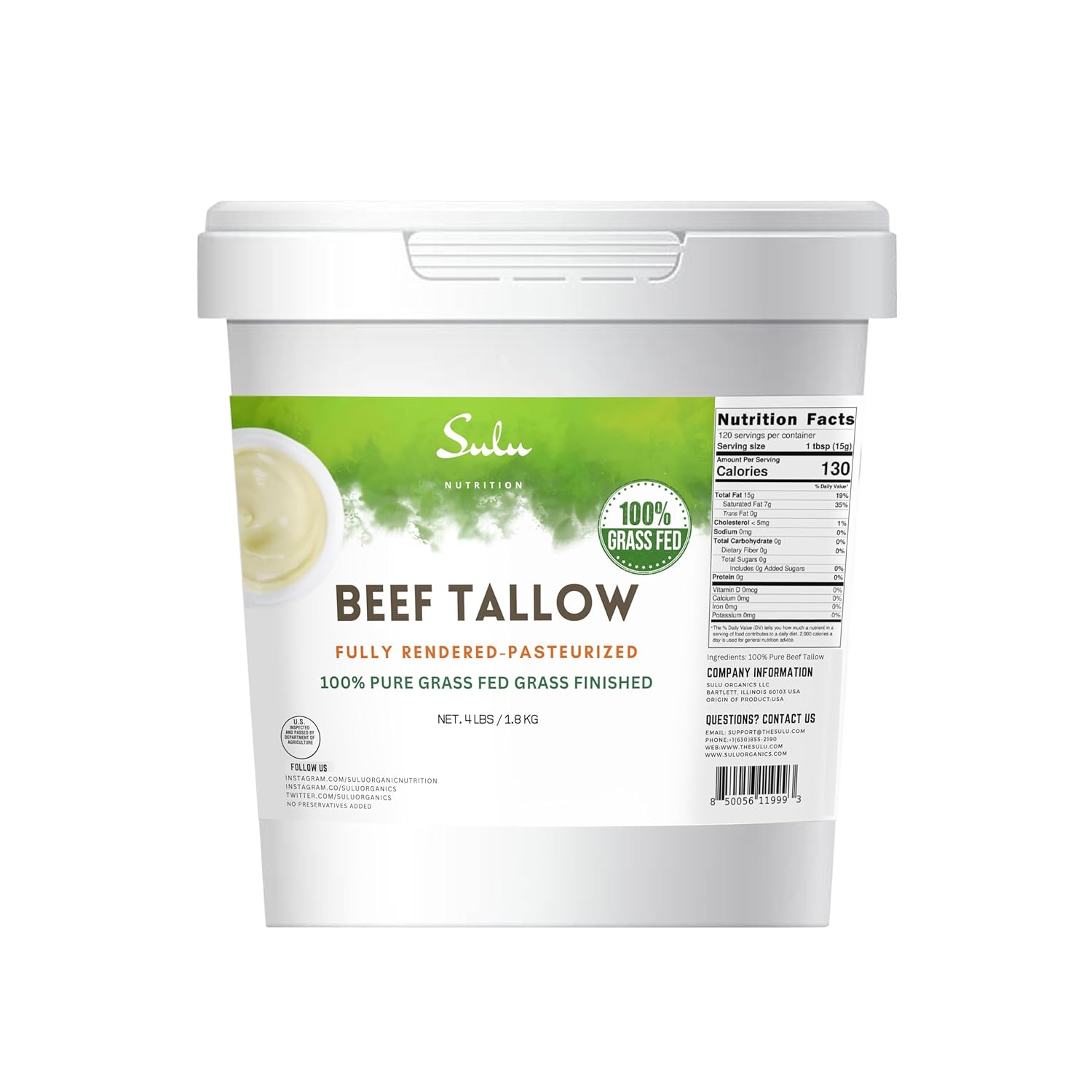
I keep a 4-pound bucket of grass-fed tallow for everything that needs heat above 300F, and butter for finishing and lower-temperature cooking.
Taste: A Real Difference That Cuts Both Ways
Butter tastes like butter. That milky, slightly sweet, dairy-forward flavor is iconic. There is a reason every cuisine on earth that has access to dairy uses butter.
Tallow tastes like beef. Specifically, it tastes like the rendered fat from a well-cooked steak. On a steak, that flavor compounds beautifully. The crust gets beefier. The seasoning amplifies. On a baked potato, the result is closer to a steakhouse experience than butter could give you. On scrambled eggs, the eggs come out with a savory depth that butter does not produce.
Butter does not pair with everything tallow pairs with, and tallow does not pair with everything butter pairs with. Butter wins on baked goods (it has water content, which produces steam and lift), butter wins on most seafood, butter wins on pancakes. Tallow wins on red meat, fries, roasted root vegetables, and any dish where you want a savory beefy backbone.
For dessert applications, butter wins universally. Tallow’s beefy note does not work in cookies or cakes, even when it is the deodorized variety. Save tallow for savory.
Where Each One Wins (And the Honest Tiebreaker)
Use tallow for:
- Searing steaks at high heat
- Frying eggs (cast iron, high heat)
- Deep frying anything (especially french fries)
- Roasting root vegetables
- Finishing red meat dishes
- High-heat stir-fries
- Anything where the cooking temperature exceeds 300F
- Any carnivore application where you want zero dairy
Use butter for:
- Sauteing at moderate heat
- Finishing fish
- Baking
- Eggs cooked low and slow (omelets, scrambled French-style)
- Sauces (beurre blanc, hollandaise)
- Anything where the dairy flavor is part of the dish
- Anywhere ghee would otherwise be the answer (ghee is just clarified butter)
Use both:
- Steakhouse technique. Sear in tallow, baste in butter as the temperature comes down.
- Roasted potatoes. Toss in tallow at high heat, finish with a knob of butter for flavor lift.
- Pan sauces. Build the fond with tallow, mount with cold butter at the end.
If I had to pick one and only one for a keto pantry, I would pick tallow. The smoke point versatility and the zero-dairy profile make it more universally useful. Butter is wonderful but it is more limited at high heat.
If I had to pick one for a normal cooking pantry, I would pick butter for the breadth of cuisines it serves. But that is not the question this post asks.
The Cardiovascular Question
Both tallow and butter are saturated-fat-heavy. Both have been targeted by 1980s and 1990s nutrition guidelines and both have been gradually rehabilitated in the more recent literature. The Astrup 2020 review in the Journal of the American College of Cardiology is the standard reference for the shift in mainstream thinking on saturated fat and cardiovascular risk.
Saturated fat eaten in a low-carbohydrate background diet (which is what keto and carnivore are) has a much weaker association with cardiovascular outcomes than saturated fat eaten on top of a high-carbohydrate Standard American Diet. The same butter that looked harmful in a 1985 epidemiological study looks neutral or beneficial in a 2020 randomized trial in low-carb eaters.
This is not me telling you that all saturated fat is health food. It is me telling you that the worry about tallow versus butter on a keto or carnivore diet is, at the population level, much smaller than mainstream guidance from the 1990s implied. Pick the fat that fits your meal and your gut. The macro-level cardiovascular question is roughly a wash between the two.
What Grass-Fed Does (And Does Not) Change
Grass-fed butter and grass-fed tallow both have meaningfully better fatty acid profiles than their grain-fed counterparts. Higher CLA, better omega-6 to omega-3 ratio, more vitamin K2, more beta-carotene (visible as the deeper yellow color in both).
The grass-fed premium matters in roughly the same way for both products. If you are buying butter for daily eating on keto, spring for grass-fed butter (Kerrygold, Vital Farms, or a local brand). If you are buying tallow for daily eating on carnivore, spring for grass-fed and grass-finished tallow.
The relative gap between grass-fed and grain-fed is bigger for tallow than for butter, mainly because beef finishing practices vary more than dairy finishing practices. American grass-fed butter is closer to American grain-fed butter than American grass-fed tallow is to American grain-fed tallow. So the grass-fed upgrade pays a slightly bigger dividend on the tallow side.
Cost Per Calorie
Butter at $5 a pound is about $0.31 per tablespoon. Grass-fed butter at $8 a pound is about $0.50 per tablespoon.
The 4-pound grass-fed tallow bucket at roughly $35 is about $0.17 per tablespoon. The Traverse Bay 32 oz is similar per ounce. So bulk grass-fed tallow is roughly half to a third the price of grass-fed butter per tablespoon eaten.
For daily-driver fat on keto or carnivore, that math compounds quickly. Three tablespoons a day at $0.50 each is $45 a month. At $0.17 each it is $15 a month. Over a year that is a $360 difference.
This is the boring practical reason I default to tallow as my primary cooking and eating fat and treat butter as a finishing fat.
Frequently Asked Questions
Can I cook with butter on carnivore?
If you tolerate dairy, yes. Many carnivore eaters include butter, ghee, and aged cheese without issue. If you are doing strict carnivore for autoimmune reasons, tallow is the safer fat to default to. If you are not sure, eliminate butter for two weeks and reintroduce it with attention to symptoms. That is the only real way to know.
Is ghee the same as tallow?
No. Ghee is clarified butter (butter with the milk solids removed). It still comes from a dairy source and may contain trace casein. Tallow is rendered beef fat from a different animal entirely. They have similar smoke points (ghee around 480F, tallow around 400F) but different flavor profiles and different protein-residue concerns.
Does the protein in butter take it out of ketosis?
No. The trace protein in butter (about 0.1g per tablespoon) is far below the threshold that would impact ketosis even if you ate a full stick. Ketosis is not that fragile.
Can I use tallow in baking?
You can, but the flavor will affect the outcome. Tallow works in savory baking (meat pies, biscuits to serve with stew, crusty breads). It does not work in sweet baking (cookies, cakes, sweet quick breads) because the beefy note clashes with sugar. Butter is the universal baking fat.
How does the saturated fat content compare?
Butter is slightly higher in saturated fat per gram of total fat (about 63% saturated). Tallow is about 50% saturated. Butter is also higher in short-chain saturated fats (butyric, caproic), which tallow does not contain. Tallow is higher in stearic acid, which is metabolically neutral.
Which one is better for fat loss?
Neither has a meaningful advantage. Calories are calories, and both are calorie-dense. The bigger lever for fat loss is total intake and total carbohydrate, not the specific saturated fat source. Use whichever one helps you stick to your eating plan.
Bottom Line
Tallow wins for high-heat cooking, zero-dairy eating, deep frying, and per-calorie cost. Butter wins for moderate-heat cooking, baking, dairy-friendly flavor, and finishing applications where you want the milky note. For a keto or carnivore pantry, both belong on the shelf, with tallow as the daily driver and butter as the finishing flourish.
If you are picking one to buy first, get the 4-pound grass-fed tallow bucket. It does more jobs at higher heat and costs less per tablespoon. If you want a smaller neutral-flavored jar for raw eating in coffee, add the Traverse Bay 32 oz as your second purchase.
For the cooking-fat comparison in more depth, the tallow versus butter for cooking post goes harder on the technical side. The tallow versus ghee comparison covers the dairy-free clarified-butter angle. For the broader diet question, see the keto and carnivore overview and the carnivore product guide.