Beef Tallow vs Butter: Which Is Better for Cooking, Keto, and Health?
Independent reviewBeef tallow vs butter compared: smoke point, nutrition per tablespoon, keto and carnivore fit, baking swaps, grilling, and when each fat is the better choice.

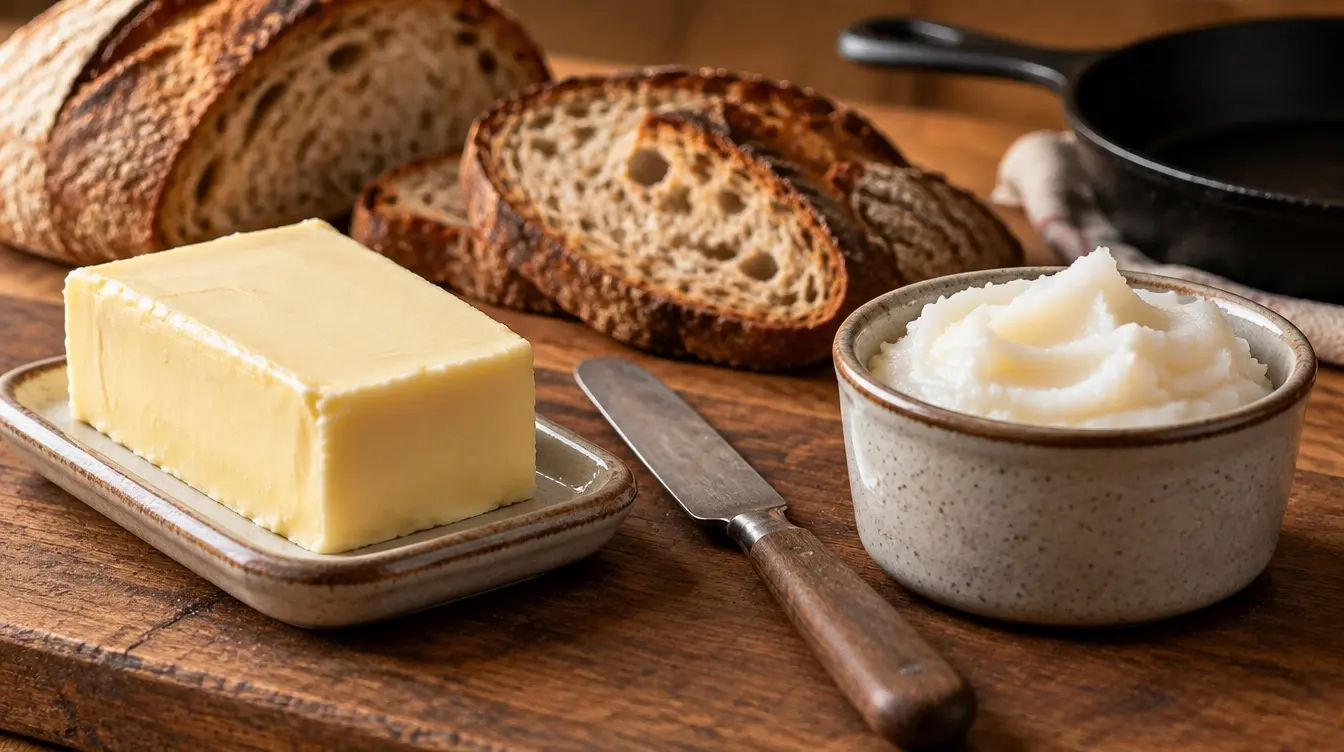
Beef tallow is better than butter for high-heat cooking: it smokes at roughly 400°F versus about 300-350°F for whole butter, contains no water or milk solids to burn, and is dairy-free. Butter is better for baking sweet goods, finishing sauces, and low-to-medium heat cooking where its dairy flavor is the point. Nutritionally they are close; both are mostly saturated fat with about 100-115 calories per tablespoon.
We test and research the products we recommend. If you buy through our links, we may earn a commission at no extra cost to you.
Beef Tallow vs Butter at a Glance
| Beef tallow | Butter (unsalted) | |
|---|---|---|
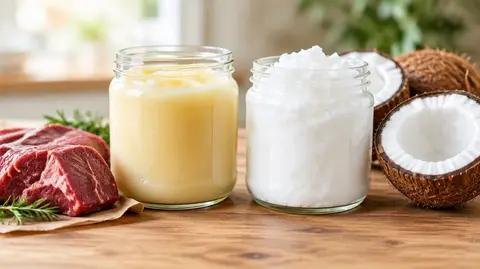
| What it is | Rendered beef fat, close to 100% fat | Churned cream, about 80% fat, 16-18% water, plus milk solids |
| Smoke point | About 400-420°F | About 300-350°F (ghee: about 450°F) |
| Calories per tbsp | About 115 | About 100-102 |
| Saturated fat per tbsp | About 6.4 g | About 7.3 g |
| Monounsaturated fat per tbsp | About 5.4 g | About 3 g |
| Carbs / lactose / casein | None | Trace amounts |
| Flavor | Mild, savory, beefy | Sweet, creamy, dairy |
| Storage | Months at room temperature if sealed and dark; about a year refrigerated | Refrigerate; weeks to a few months |
| Best for | Searing, deep frying, roasting, grilling, flaky savory pastry | Baking, sauces, finishing, eggs cooked low and slow |
Nutrition figures are approximate, based on USDA FoodData Central entries for beef tallow and unsalted butter. Smoke points vary with purity and are published as ranges.
Is Beef Tallow Better Than Butter?
It depends on the job. Tallow is the better tool when heat is high, and butter is the better tool when flavor from dairy matters more than heat tolerance.
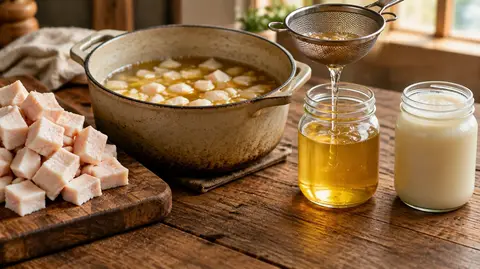
The core difference is composition. Beef tallow is rendered beef fat, usually from the suet around the kidneys and loins. Once it is melted, strained, and cooled, what remains is almost pure fat. Butter is made by churning cream until the fat clumps away from the buttermilk. It keeps water and milk solids (proteins and a little lactose), and those solids are what brown, then burn, at lower temperatures.
That one difference explains most of the cooking behavior:
- Tallow has no water to steam off and no solids to scorch, so it holds steady at searing and frying temperatures.
- Butter foams, browns, and turns bitter if you push it past its smoke point, which is great for brown butter and bad for a hard sear.
Smoke Point: Cooking With Tallow vs Butter
Smoke point is the temperature at which a fat starts giving off visible smoke and breaking down into bitter, oxidized compounds.
- Whole butter: about 300-350°F (salted butter often smokes toward the low end)
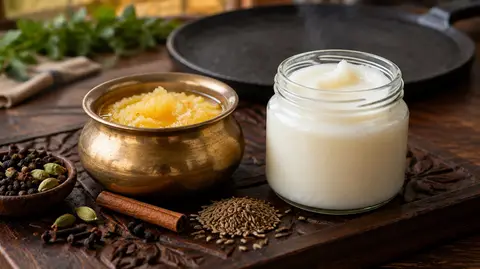
- Ghee (clarified butter): about 450°F
- Well-rendered beef tallow: about 400-420°F
A cast iron pan for a proper steak crust runs 400°F or more at the surface, and a hot grill grate sits between 450 and 650°F. Whole butter cannot hold at those temperatures; the milk solids blacken within a minute or so. Tallow can. For deeper numbers by cooking method, see the beef tallow smoke point and temperature guide.
Tallow is also low in polyunsaturated fat (well under 5% of its fat), which is the fraction most prone to oxidation during long frying. That is the practical reason tallow works for deep frying and butter does not.
Grilling: cook in tallow, finish in butter
On a grill, butter’s water flashes to steam and its milk solids drip onto coals or burners, causing flare-ups and a streaky, sometimes bitter crust. Tallow drips render slowly instead. The classic steakhouse pattern uses beef fat for the sear and adds butter at the end, when the temperature is lower, for flavor.
| Food | Cook with | Finish with |
|---|---|---|
| Ribeye, strip, porterhouse | Tallow | Optional butter pat off heat |
| Burgers | Tallow (a tablespoon per pound mixed into lean grinds, plus a light brush) | Compound butter after resting |
| Chicken thighs | Tallow | Herb butter |
| Asparagus, snap peas, corn | Tallow brushed on before charring | Cold butter, flaky salt, lemon |
| Mushrooms | Tallow | Butter swirl at the end |
Two practical notes: brush tallow onto the food rather than pouring it on the grate (excess fat will catch fire at flame temperature regardless of smoke point), and keep the jar near the grill so it stays soft enough to spread. A light coat of tallow on warm cast iron grates after cooking also works as seasoning, as it does for cast iron pans.
Beef Tallow vs Butter Nutrition
Per tablespoon, from USDA FoodData Central (rounded):
| Per tablespoon | Beef tallow (about 12.8 g) | Unsalted butter (about 14.2 g) |
|---|---|---|
| Calories | 115 | 102 |
| Total fat | 12.8 g | 11.5 g |
| Saturated | 6.4 g | 7.3 g |
| Monounsaturated | 5.4 g | 3.0 g |
| Polyunsaturated | 0.5 g | 0.4 g |
| Cholesterol | 14 mg | 31 mg |
| Carbohydrate | 0 g | Trace |
| Protein | 0 g | About 0.1 g |
The calorie gap mostly comes from butter’s water content. Gram for gram of actual fat, they are nearly the same.
The fatty acids differ in character:
- Tallow is higher in oleic acid (the main fat in olive oil) and stearic acid, a saturated fat that research consistently shows has a more neutral effect on LDL cholesterol than palmitic or myristic acid.
- Butter contains short-chain fats such as butyric acid, which tallow lacks, and more vitamin A per serving.
- Both contain small amounts of conjugated linoleic acid (CLA), since both come from ruminant animals. Grass-fed versions of both tend to have more CLA and a lower omega-6 to omega-3 ratio. See grass-fed vs grain-fed tallow for details.
For the full breakdown, see beef tallow nutrition facts.
Beef Tallow vs Butter: Health
Both are saturated-fat-rich animal fats, and neither is a health food in large amounts. Mainstream guidance (such as the American Heart Association) still recommends limiting saturated fat. At the same time, reviews such as Astrup and colleagues in the Journal of the American College of Cardiology (2020) argued that the effect of saturated fat depends on the food it comes in and the rest of the diet, and that blanket limits may be too simple.
What that means in practice:
- Swapping butter for tallow, or tallow for butter, is not a meaningful health upgrade in either direction. Their saturated fat content per tablespoon is similar.
- The larger factors are how much total fat and how many total calories you eat, and what the rest of the diet looks like.
- If you have high LDL cholesterol or heart disease, talk to your doctor before making either one a daily staple.
Our longer look at the evidence is in is beef tallow healthy?
Tallow vs Butter for Keto and Carnivore
Both fit keto. Butter has only trace lactose (well under 0.1 g of carbohydrate per tablespoon), so it will not affect ketosis in normal amounts. The trace protein does not matter either.
Where they differ is dairy:
- Tallow has zero casein, whey, and lactose. On a strict carnivore or elimination diet where dairy is being tested as a trigger, tallow is the cleaner default.
- Butter is fine for people who tolerate dairy. Many carnivore eaters include butter and ghee without issue.
- Ghee removes most milk solids but can still carry trace casein, so it is not a guaranteed dairy-free substitute.
Cost is the other practical factor for people who eat a lot of fat. Bulk tallow such as the 100% Pure Grass-Fed Beef Tallow 4 lb tub usually costs less per tablespoon than grass-fed butter; check current prices, since both fluctuate. For the diet side in more depth, see beef tallow on keto and carnivore and whether beef tallow is keto-friendly.
Can I Use Beef Tallow Instead of Butter?
Yes, in most savory cooking, and in some baking. Some rules of thumb:
- Swap by weight, or use less by volume. Butter is about 80% fat, so 100 g of butter carries about 80 g of fat. Replacing 1 cup of butter with about 3/4 cup plus 1 tablespoon of tallow keeps the fat roughly equal.
- Add a little liquid in doughs. Butter’s water helps hydrate dough and creates steam. When swapping tallow into biscuits or pastry, add 1-2 tablespoons of cold water or milk per cup of fat if the dough feels dry.
- Add salt if the recipe was built around salted butter.
- Keep butter where its flavor is the point: cookies, cakes, buttercream, brioche, beurre blanc, hollandaise.
- Try a blend first. Half tallow, half butter in a pie crust keeps some butter flavor while making the crust flakier.
Baking with tallow vs butter
Tallow has a higher melting point than butter (roughly 100-120°F versus about 90-95°F), so solid pieces stay intact longer in the oven. The result is very flaky savory pastry: pie crust, biscuits, meat pies. Butter wins in sweet baking. It creams well with sugar to trap air for cakes, spreads into crisp-edged cookies, and brings flavor that tallow cannot. Even deodorized tallow can leave a faint savory note in sweets.
For recipes, see the beef tallow pie crust recipe and the beef tallow baking substitution guide.
Beef Tallow vs Crisco
Crisco (vegetable shortening) is the closer substitute for tallow in baking, because both are 100% fat and solid at room temperature. Butter is 80% fat.
- Pastry: tallow and shortening both make tender, flaky crusts. Tallow adds a mild savory flavor; shortening adds none.
- Frying: shortening is usually listed around 360°F for smoke point. Tallow is about 400°F and lower in polyunsaturated fat.
- Ingredients: current Crisco is made from soybean and palm oils, with some fully hydrogenated palm oil to make it solid. Tallow is a single-ingredient animal fat.
- Diet: shortening is plant-based; tallow is not.
More detail is in beef tallow vs shortening and the tallow vs shortening comparison.
Flavor: What Each Fat Adds
Butter tastes sweet, creamy, and lactic, and browned butter adds nutty notes. That flavor is why butter finishes sauces, fish, vegetables, and pancakes so well.
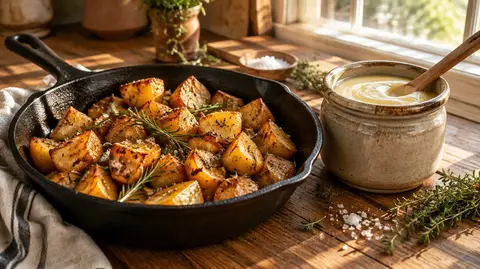
Tallow tastes mildly beefy, like the fat on a well-cooked steak. On steak, burgers, and potatoes, it reinforces the savory flavor. On roasted root vegetables and fried eggs, it adds depth. In desserts, it usually clashes.
Use tallow for: searing steak, deep frying (especially french fries), roasting vegetables at 400°F+, frying eggs in cast iron, grilling, savory pastry.
Use butter for: sweet baking, pan sauces mounted at the end, fish, omelets and soft scrambled eggs, finishing vegetables, spreading.
Use both: sear in tallow and baste with butter as the pan cools; roast potatoes in tallow and toss with a knob of butter at the end; build a fond with tallow and mount the sauce with cold butter.
Storage and Shelf Life
Tallow has almost no water or protein, so it resists spoilage. Sealed in a jar away from light, it keeps for months at room temperature and about a year in the refrigerator. Butter needs refrigeration and keeps for weeks to a few months, or about a year frozen. Details are in how to store beef tallow and does beef tallow go bad?
Cost and Where to Get Tallow
Butter is in every grocery store. Tallow is sold by butchers, specialty grocers, and online, or you can render it at home from inexpensive beef fat trimmings. For ready-made options, the 4 lb grass-fed tub is the bulk pick for high-heat cooking, Fatworks Grass-Fed is a smaller jar for trying it out, and Traverse Bay 32 oz is a deodorized option when you want less beef flavor.
Frequently Asked Questions
Is beef tallow healthier than butter?
Not in a meaningful way. Per tablespoon, tallow has slightly less saturated fat and more monounsaturated fat, while butter has more vitamin A and some butyrate. Both are calorie-dense saturated fats. Choose based on cooking use and dairy tolerance.
Is ghee the same as tallow?
No. Ghee is clarified butter and still comes from dairy. It may contain trace casein. Tallow is rendered beef fat. Ghee’s smoke point (about 450°F) is a bit higher than tallow’s. See beef tallow vs ghee.
Can you cook with butter on carnivore?
Yes, if you tolerate dairy. On an elimination-style carnivore diet, tallow is the safer default until dairy has been reintroduced and tested.
Can I mix tallow and butter?
Yes. A 50/50 blend works for pie crust and for basting steak at the end of cooking. Adding tallow to butter does not meaningfully raise the smoke point of the butter’s milk solids, though, so keep blended fats off very high heat.
Which is better for fat loss?
Neither. Both have about 100-115 calories per tablespoon. Total intake matters far more than which fat you pick.
Bottom Line
Choose beef tallow for searing, frying, grilling, and roasting, for dairy-free cooking, and for long pantry storage. Choose butter for sweet baking, sauces, and finishing. Many cooks keep both: tallow in a jar by the stove for high heat and butter in the fridge for flavor.
Further reading
Explore more tallow guides
Browse our collection of recipes, comparisons, reviews and DIY tutorials.
View all guidesKing Tallow is reader-supported. We research and test the products we recommend, and when you buy through links on this page we may earn a commission at no extra cost to you. See our affiliate disclosure.
Published · Last updated