Skip to content
King TallowKing Tallow
Homemade tallow face cream
Easy DIY Recipe

How to Make Face Cream with Beef Tallow

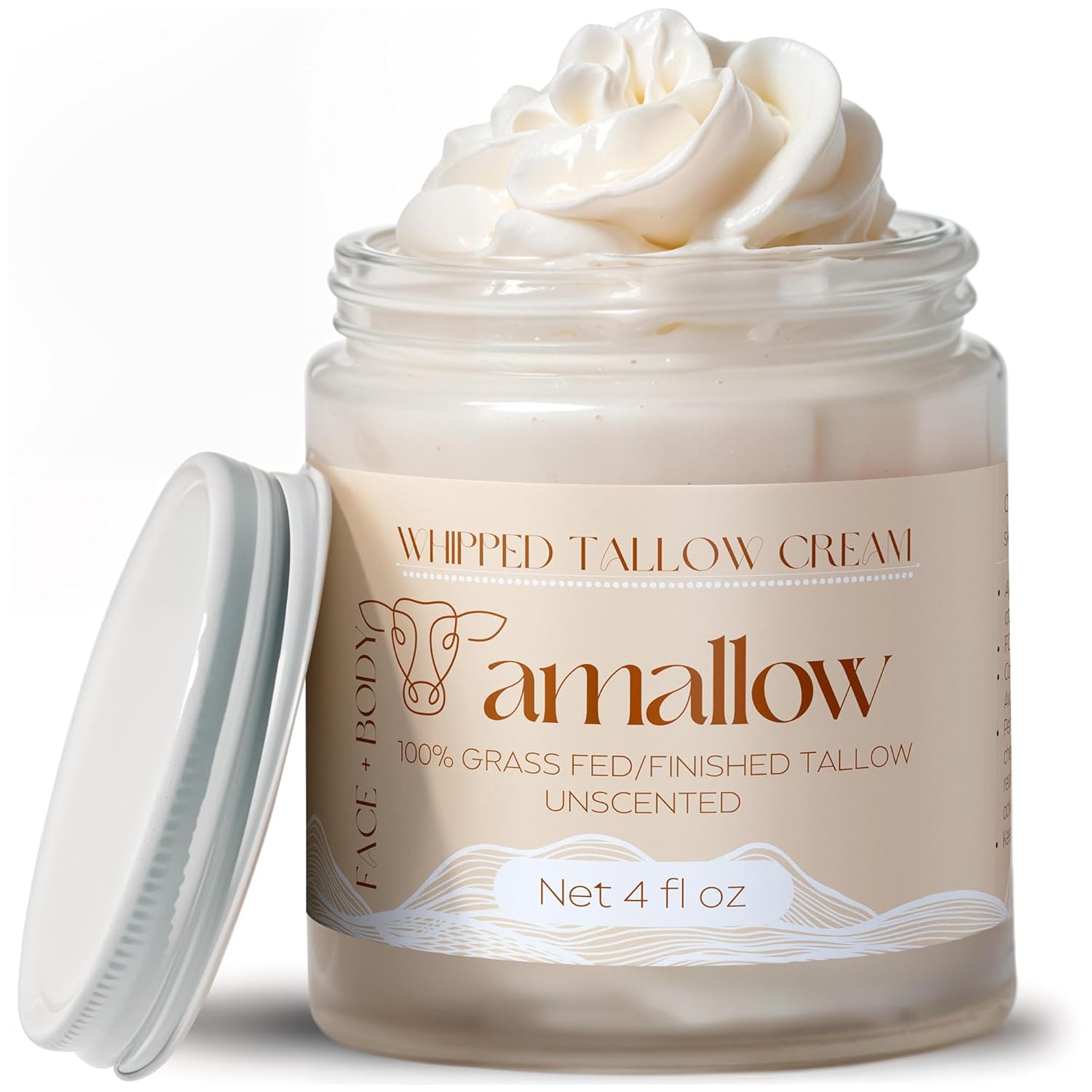
Gently melt 4 tablespoons of grass-fed leaf-fat tallow, stir in 1 tablespoon jojoba oil, 1 teaspoon rosehip seed oil, and 3 drops mixed-tocopherol vitamin E off the heat. Pour into a 2 oz amber jar and let it set at room temperature for 4 hours. Total active time is under 10 minutes; the cream lasts 3 to 6 months and out-performs most $80 facial moisturizers because tallow's palmitoleic acid (C16:1) is biomimetic to human sebum.

By Miles Carter , Holistic Chef & DIY Skincare Formulator Last tested April 15, 2026 12 batches made
Total time
20 minutes
Active time
10 minutes
Yield
2 fl oz (≈ 90 applications)
Shelf life
3-6 months unrefrigerated
Cost / batch
$5.40
Difficulty
easy

Why this recipe actually works

Most face creams sold above $40 an ounce are 70-85% water held together with synthetic emulsifiers, with a few percent of expensive actives bolted on for the marketing copy. A tallow-based face cream inverts that ratio: it is 100% lipid, biomimetic to the stratum corneum, and delivers actives in the medium they evolved to absorb in. The result is a cream that repairs the lipid barrier rather than coating it.

Sebum-identical lipid profile

Beef tallow contains roughly 3% palmitoleic acid (C16:1), a monounsaturated fat that makes up about 20% of human sebum. No common plant oil contains C16:1 in meaningful amounts. That overlap is why tallow integrates into the lamellar lipids of the stratum corneum within minutes instead of sitting on the surface like petrolatum or mineral oil.

Source [1]

Rosehip's natural trans-retinoic acid

Cold-pressed rosehip seed oil contains naturally occurring trans-retinoic acid (the active form of vitamin A) at trace but pharmacologically meaningful concentrations, plus 35-45% linolenic acid (omega-3). Topical retinoic acid up-regulates collagen I synthesis and accelerates keratinocyte turnover; rosehip delivers it without the irritation curve of synthetic retinoids.

Source [2]

Jojoba mimics skin wax esters

Jojoba is technically a liquid wax, not an oil. Its ester structure is nearly identical to the wax esters in sebum, which lets it down-regulate sebum production in oily skin and supplement it in dry skin. This is why a single formula works across skin types instead of needing a separate 'oily' and 'dry' SKU.

Source [3]

Vitamin E protects the unsaturated fats

Mixed tocopherols (alpha + gamma + delta) scavenge peroxyl radicals that would otherwise propagate through tallow's monounsaturated bonds. Three drops per 2 oz batch extends shelf life from 3 to 6 months and protects skin from the exogenous oxidative load of urban air pollution after application.

Why Make Face Cream with Tallow?

Barrier repair

Replaces ceramide and free fatty acid losses caused by surfactant cleansers, retinoid use, or low humidity. Trans-epidermal water loss measurably drops within 3-5 nights of use.

Anti-aging without retinoid burn

Rosehip's natural trans-retinoic acid plus tallow's CLA deliver collagen-supportive signaling at concentrations the skin tolerates without flaking or photosensitivity.

Dehydration recovery

Occlusive lipid film traps the water already in the dermis. Skin that looks dull and crepey at 6 PM looks plump by morning after one overnight application.

Hormonal-shift support

Postpartum, perimenopausal, and post-Accutane skin loses sebum production. Tallow's biomimetic profile is closer to native sebum than anything plant-derived, making it the most direct replacement therapy available without a prescription.

Cost

About $0.06 per application versus $1.50-$4.00 for premium creams in the same lipid-rich category (e.g., Augustinus Bader, La Mer).

Ingredients

Grass-fed leaf-fat tallow

4 tbsp (2 fl oz) (55 g) $2.40

The structural and biomimetic backbone. Provides palmitoleic acid (C16:1), stearic acid (C18:0), oleic acid (C18:1), and conjugated linoleic acid (CLA) in roughly the same ratio as human sebum. Forms the occlusive yet breathable film that defines a true tallow face cream.

What to look for
  • 100% grass-fed and grass-finished, pasture tallow has 2-3× the CLA and a measurable carotenoid (vitamin A precursor) load
  • Rendered specifically from leaf or kidney fat, these depot fats are the whitest, mildest-scented, and most pharmacologically clean
  • Cosmetic-grade or self-rendered through cheesecloth twice for maximum clarity
  • Pale ivory color; firm at fridge temp, soft at 70 °F
Substitutions
Swap in Tradeoff
Bison tallow Slightly higher palmitoleic acid; about 2× the price and harder to source
Emu oil Highest C16:1 of any animal fat (≈ 7%) but liquid at room temp, reformulate with 1 tbsp added beeswax for structure
Mango butter (vegan) No palmitoleic acid; loses the biomimicry. Cream still moisturizes but does not deliver true sebum replacement

Search 'cosmetic-grade grass-fed tallow leaf fat' on Amazon, Etsy, or direct from regenerative ranches like White Oak Pastures or Force of Nature.

Cold-pressed jojoba oil

1 tbsp (½ fl oz) (13 g) $0.80

A liquid wax ester nearly identical to human sebum wax esters. Down-regulates sebum production in oily zones and supplements it in dry zones, making the cream self-balancing across the T-zone and cheeks.

What to look for
  • Cold-pressed, unrefined, golden in color (not water-clear, that's been bleached)
  • Sourced from Sonoran or Israeli plantations for highest tocopherol content
  • Stored in dark glass; jojoba is exceptionally oxidation-resistant but light still degrades color
Substitutions
Swap in Tradeoff
Squalane (olive-derived) Even closer to skin's own squalene; lighter feel; about 3× the cost
Hemp seed oil Adds linoleic acid (good for acne-prone skin) but oxidizes within 6 months, refrigerate the finished cream

Rosehip seed oil (cold-pressed)

1 tsp (≈ 5 ml) (5 g) $1.20

Delivers naturally occurring trans-retinoic acid for collagen support, plus 35-45% linolenic acid (omega-3) and 30-40% linoleic acid (omega-6) for barrier lipid synthesis. The single most evidence-backed anti-aging ingredient in the formula.

What to look for
  • Cold-pressed, not solvent-extracted, solvent extraction destroys the retinoic acid fraction
  • Deep amber to red-orange color (the carotenoid signal); pale yellow rosehip has been refined and lost its actives
  • From Rosa rubiginosa or Rosa moschata, Chilean Patagonian sources test highest for retinoic acid
  • Refrigerate the bottle once opened; rosehip oxidizes faster than any other ingredient in the recipe
Substitutions
Swap in Tradeoff
Sea buckthorn oil (10% of total) Even higher carotenoid and palmitoleic acid content; stains skin orange briefly, use at night only
Bakuchiol 1% in jojoba Plant-derived retinol-mimetic; well-tolerated in pregnancy unlike retinoic acid

Mixed-tocopherol vitamin E oil

3 drops (0.15 ml) $0.40

Antioxidant. Scavenges peroxyl radicals attacking the unsaturated fats in tallow, jojoba, and rosehip. Protects shelf life of the cream and protects skin from oxidative pollution after application.

What to look for
  • Mixed tocopherols (d-alpha, d-gamma, d-delta), NOT synthetic dl-alpha-tocopheryl acetate
  • Sourced from non-GMO sunflower or rice bran for the cleanest profile
  • Color is amber; smells faintly grassy
Substitutions
Swap in Tradeoff
Rosemary CO2 extract Stronger antioxidant; adds a faint herbal scent that some find medicinal

Frankincense or lavender essential oil (optional)

5 drops (0.25 ml) $0.60

Frankincense (Boswellia carterii or sacra) supplies boswellic acids with documented anti-inflammatory and collagen-supportive effects. Lavender adds linalool for calm and gentle antibacterial action. Both are facial-skin safe at this concentration (0.4%).

What to look for
  • Therapeutic-grade, GC/MS-tested, in dark glass
  • Frankincense: look for Boswellia sacra (Oman) or B. carterii (Somalia), not B. serrata which is mostly used internally for joint pain
  • Patch test on inner forearm 24 hours before face application
Substitutions
Swap in Tradeoff
Skip entirely Recommended for pregnancy, eye-area use, or very reactive skin
Helichrysum italicum Premium scar/wrinkle oil; very expensive; use only 2-3 drops

Equipment

Tool Why you need it
Double boiler (or glass bowl over saucepan) Indirect heat keeps tallow under 150 °F so its fatty acids and the rosehip's retinoic acid aren't degraded
Small whisk or fork Combines the oils with the melted tallow; this is not a whipped cream so no mixer needed
2 oz amber or cobalt glass jar with lid Storage; tinted glass blocks UV that would oxidize rosehip's carotenoids and retinoic acid
Digital scale or measuring spoons Tallow's volume varies by batch density; weighing makes the ratio reproducible
Instant-read thermometer (optional but useful) Confirms you stay below 150 °F; above 175 °F you start losing retinoic acid

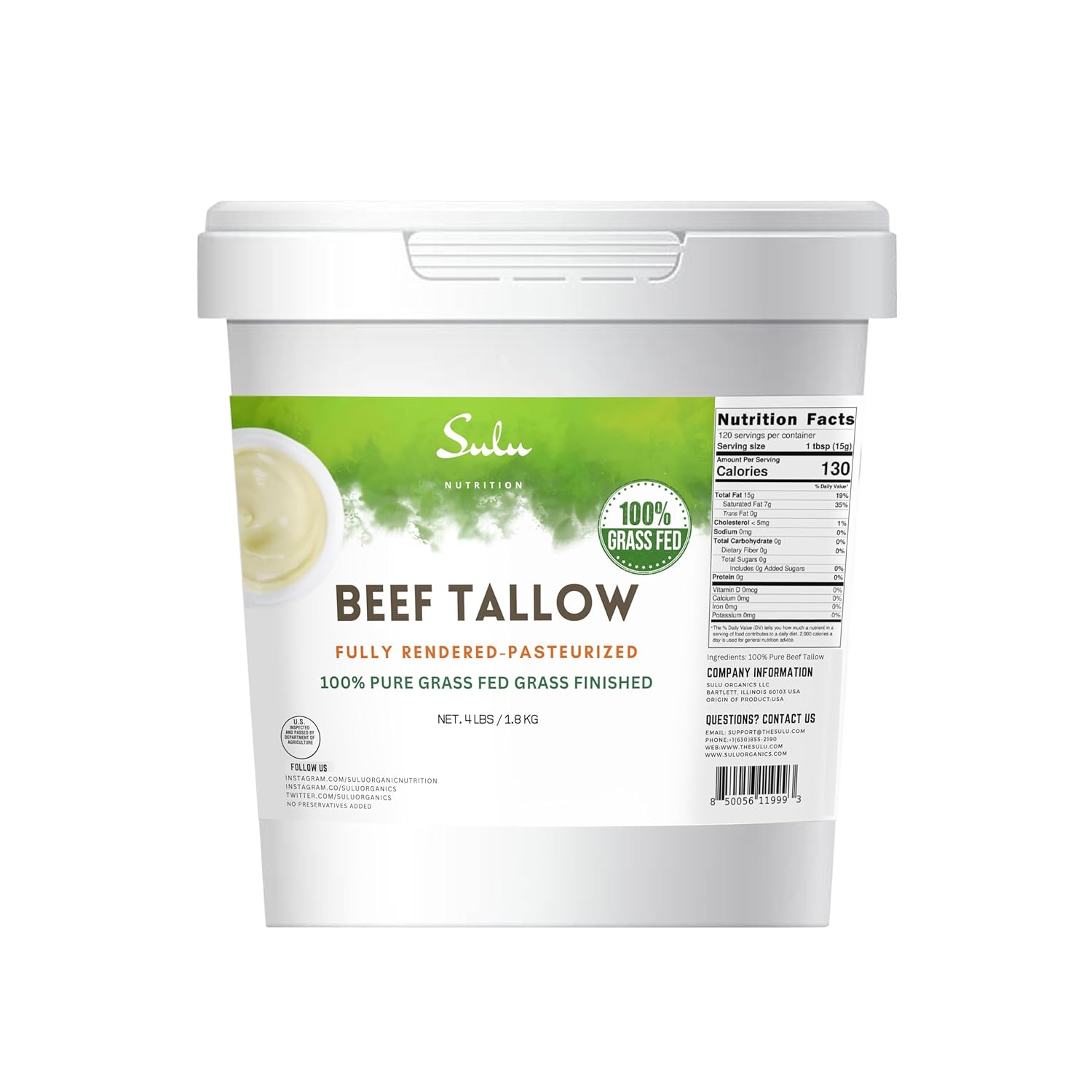
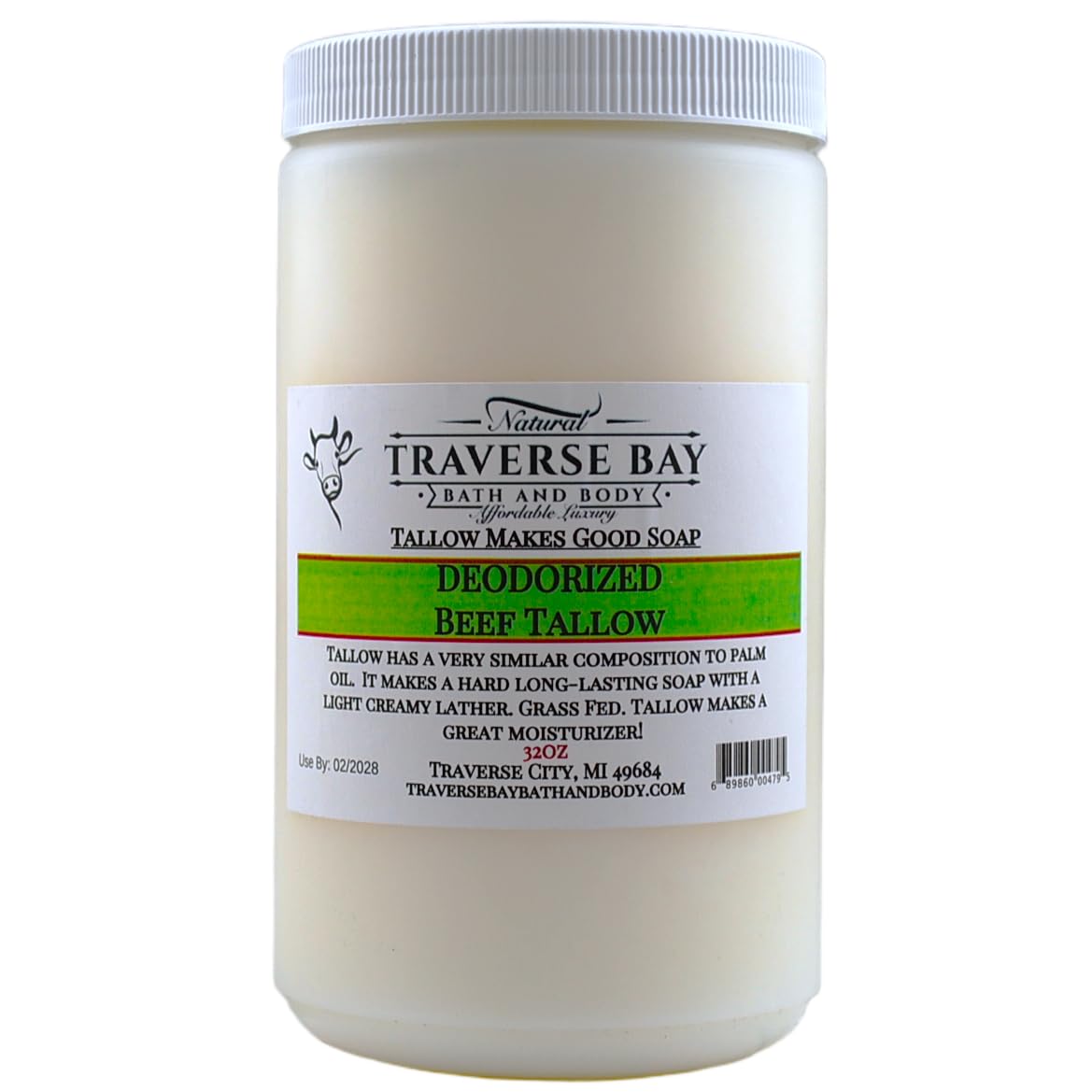
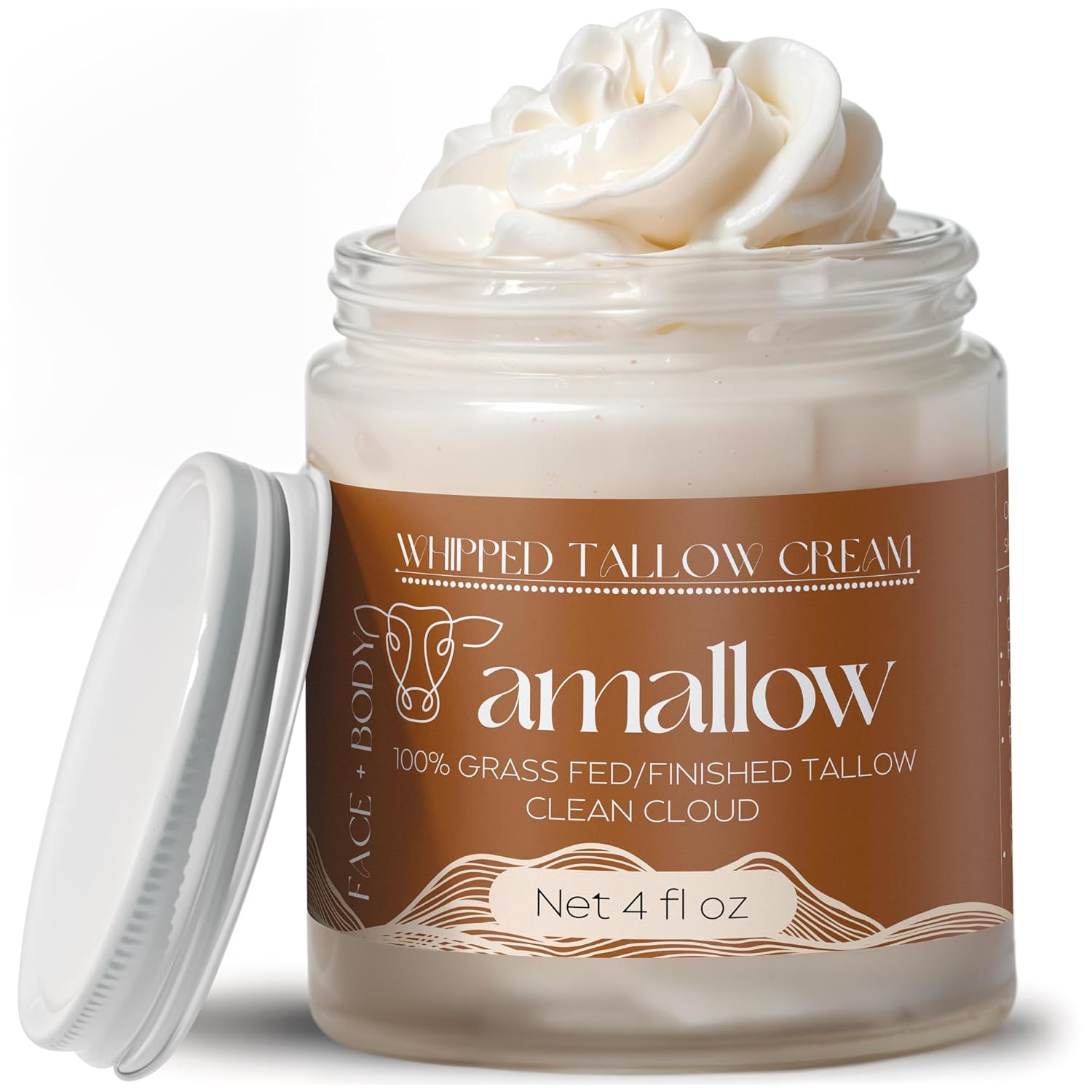
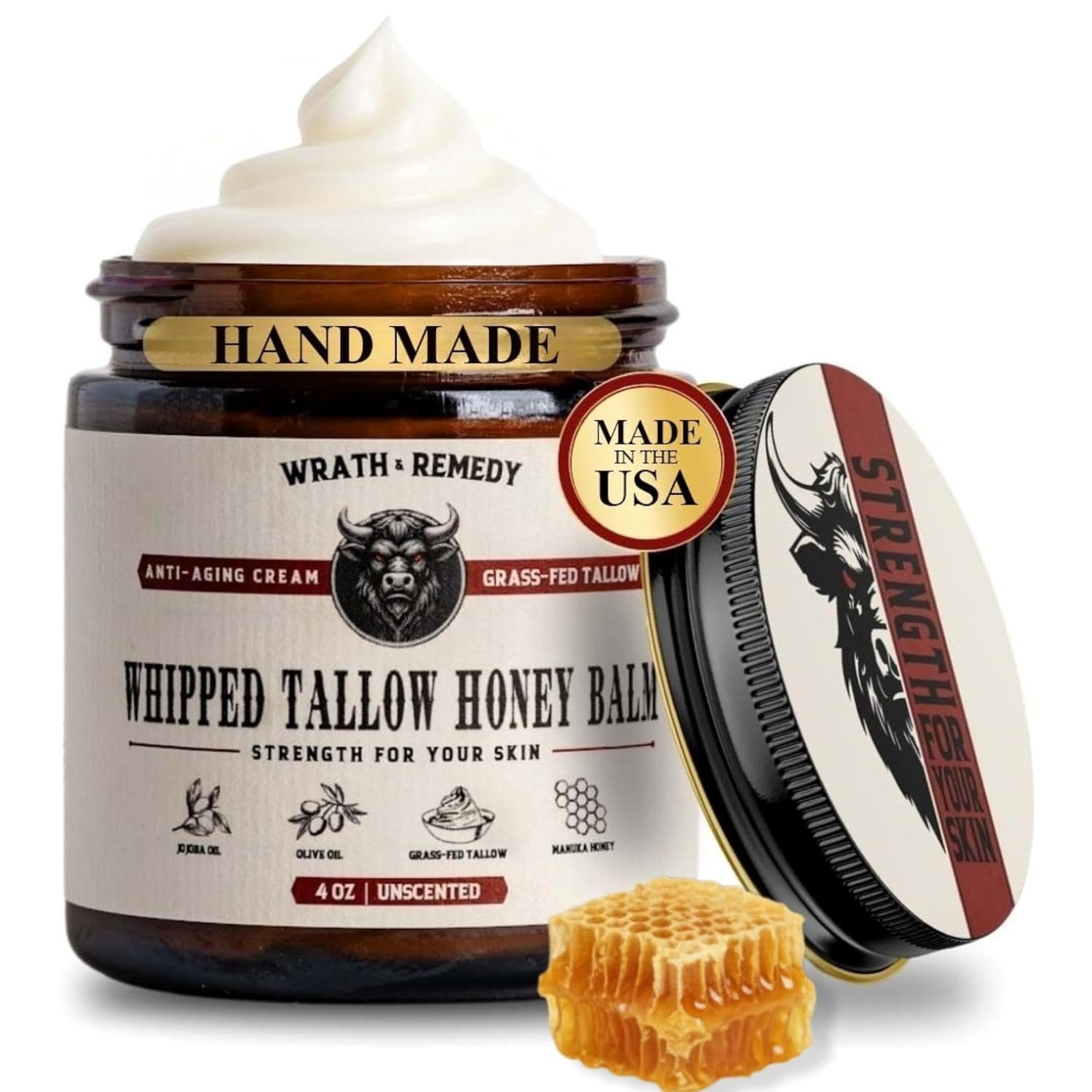
Recommended tallow for this recipe

We test and research the products we recommend. If you buy through these links we may earn a commission at no extra cost to you.

Step-by-step recipe

  1. 1

    Set up gentle heat

    Add 1 inch (2.5 cm) of water to a small saucepan and bring to a bare simmer. Place a small heatproof glass bowl on top so it touches but does not sit in the water.

    Target temp
    Water: ≈ 190 °F / 88 °C
    Duration
    2 minutes
    What you'll see
    Wisps of steam rising; no rolling bubbles
    Watch out for
    A rolling boil pushes the bowl temperature past 175 °F and starts to oxidize the unsaturated fats once you add them
  2. 2

    Melt the tallow gently

    Add 4 tablespoons of leaf-fat tallow to the bowl. Stir with a silicone spatula every 20 seconds.

    Target temp
    120-140 °F / 49-60 °C
    Duration
    3-4 minutes
    What you'll see
    Tallow is fully liquid, clear gold, no opaque streaks
    Watch out for
    Do not exceed 150 °F. Tallow melts at ≈ 105 °F, there is no benefit to going hotter and you risk damaging both the tallow and the oils you'll add next
  3. 3

    Remove from heat and cool slightly

    Lift the bowl off the saucepan and set it on a folded towel on the counter. Wait 60 seconds.

    Target temp
    Drops to about 110 °F / 43 °C
    Duration
    1 minute
    What you'll see
    Tallow still fully liquid; bowl is warm but holdable
    Watch out for
    Adding rosehip to anything hotter than 120 °F begins to denature the retinoic acid
  4. 4

    Stir in jojoba

    Add 1 tablespoon jojoba oil and whisk gently for 10 seconds.

    Target temp
    ≈ 110 °F
    Duration
    10 seconds
    What you'll see
    Mixture is uniform pale gold; no separation
    Watch out for
    Jojoba is heat-stable so this step is forgiving, but the next two ingredients are not
  5. 5

    Stir in rosehip and vitamin E

    Add 1 teaspoon rosehip seed oil and 3 drops mixed-tocopherol vitamin E. Whisk for 10 seconds to combine.

    Target temp
    ≈ 105-110 °F
    Duration
    10 seconds
    What you'll see
    Mixture deepens to amber-gold from the carotenoids in rosehip
    Watch out for
    If it's still steaming, wait 30 more seconds. Steam means moisture, and water in an anhydrous cream is a microbial growth medium
  6. 6

    Optional: add essential oil

    Add 5 drops of frankincense or lavender essential oil and stir 5 seconds.

    Target temp
    Below 100 °F / 38 °C
    Duration
    5 seconds
    What you'll see
    Faint scent rises from the bowl without being overwhelming
    Watch out for
    Hot mixture flashes off the volatile aromatic top notes, wait until you can comfortably hold the bowl
  7. 7

    Pour and set

    Pour into a clean 2 oz amber glass jar, leaving ¼ inch headspace. Leave the lid off for 4 hours at room temperature.

    Target temp
    Room temperature
    Duration
    4 hours unsupervised
    What you'll see
    Cream sets to a soft, scoopable solid that takes a fingerprint when pressed
    Watch out for
    Sealing while warm traps condensation against the lid and creates a microbial pocket, let it set fully open first

Pro tips

  • Use grass-fed leaf fat tallow for face products
  • A little goes a long way - use pea-sized amount
  • Apply to damp skin for better absorption
  • Best used within 3 months for freshness

Troubleshooting

Every batch is slightly different. Here's how to diagnose and fix the most common problems.

Problem Fix
Cream feels greasy and won't absorb Use a pea-sized amount and apply within 30 seconds of toner or thermal water spray. Damp skin absorbs lipids 4× faster than dry skin.
Cream feels heavy under makeup Apply at night only; use a lighter jojoba-based serum in the morning. Or wait a full 15 minutes before applying makeup so the lipids absorb fully.
Tiny gritty texture appeared after a week Warm the jar in a hot-water bath until liquid (about 110 °F), stir, then refrigerate for 30 minutes to set in fine crystals. Store in a stable-temperature cabinet thereafter.
Color shifted from amber to orange-brown If it still smells fresh, use up within 4 weeks and add 5 drops vitamin E to the next batch. If it smells like crayons or oil paint, discard.
Skin breaks out within a week of starting Continue 3-4 weeks if breakouts are small and clustered around usual spots (purging). Stop if breakouts appear in new areas, are inflamed, or accompany itch (likely sensitivity).
Cream smells beefy on application Source cosmetic-grade leaf-fat tallow next batch and re-render through cheesecloth twice. Properly rendered tallow has only a faint clean-meat scent that disappears under any essential oil.
Cream turned yellow/dark over a month Store in amber glass in a closed cabinet. Buy rosehip in 2 oz dark bottles and refrigerate after opening.
Stings on application near nose or eye area Make a frankincense-free batch for compromised barrier periods. Apply pure tallow only for 2 weeks until barrier rebuilds, then reintroduce the full formula.
Separation, clear oil floats on top after 2 weeks Stir back in with a clean spoon. Next batch, set in the fridge for the first 30 minutes to lock the emulsion before slow setting at room temp.
Doesn't feel like 'enough' for very dry skin Layer over a hyaluronic acid serum, or for severe dryness apply this cream first then a thin layer of pure tallow as the final overnight occlusive.

Variations

Anti-aging intensive (frankincense + helichrysum)

For: mature / 35+
Ratio
4 tbsp tallow : 1 tbsp jojoba : 1.5 tsp rosehip : 1/2 tsp sea buckthorn
Essential oils
5 drops frankincense Boswellia sacra, 3 drops helichrysum italicum, 2 drops carrot seed
Notes
Doubled retinoic acid load via extra rosehip plus sea buckthorn's carotenoids. Boswellic acids in frankincense down-regulate MMP-1 (collagen-degrading enzyme). Use at night only.

Acne-prone / oily-combination

For: oily / acne-prone
Ratio
3 tbsp tallow : 2 tbsp jojoba : 1 tsp hemp seed oil (replacing rosehip)
Essential oils
5 drops tea tree, 3 drops manuka, 2 drops blue tansy
Notes
Higher jojoba ratio down-regulates sebum. Tea tree's terpinen-4-ol targets P. acnes. Skip rosehip, its carotenoids can flare hormonal acne in some people. Refrigerate; hemp oxidizes faster.

Sensitive / pregnancy-safe

For: sensitive / reactive / pregnant
Ratio
4 tbsp tallow : 1 tbsp jojoba : 1 tsp rosehip
Essential oils
None, only 3 drops vitamin E
Notes
Skips frankincense (uterine-stimulant concerns at high doses) and skips lavender (estrogenic in some lab models). The pure tallow + rosehip + jojoba base is the safest face cream you can make in pregnancy.

Night cream with bakuchiol

For: any 30+
Ratio
4 tbsp tallow : 1 tbsp jojoba : 1 tsp rosehip : 1/2 tsp bakuchiol 1% in jojoba
Essential oils
3 drops frankincense (optional)
Notes
Bakuchiol is a plant-derived retinol mimetic; combined with rosehip's natural retinoic acid you get measurable wrinkle reduction at 12 weeks without the photosensitivity of synthetic retinol. Still use SPF in the morning.

Brightening / pigmentation

For: any with sun-spots or melasma
Ratio
4 tbsp tallow : 1 tbsp jojoba : 1 tsp rosehip : 1/2 tsp sea buckthorn
Essential oils
3 drops carrot seed, 2 drops geranium, 2 drops frankincense
Notes
Sea buckthorn and carrot seed both deliver carotenoids; geranium has documented effect on melanocyte regulation. Pair with morning SPF; results show at 6-8 weeks.

Minimalist (4 ingredients only)

For: any, beginner friendly
Ratio
4 tbsp tallow : 1 tbsp jojoba : 1 tsp rosehip : 3 drops vitamin E
Essential oils
None
Notes
The default starter formula. No fragrance, no allergens. If you've never used a tallow product before, start here for 4 weeks before adding essential oils.

Use, care, and storage

How to use it (per shave)

  1. 1. Cleanse with a gentle non-foaming cleanser; pat skin so it is just-damp, not wet.
  2. 2. Apply hydrating toner or thermal water spray; do not let skin fully dry before the next step.
  3. 3. Scoop a pea-sized amount with a clean fingertip or small spatula.
  4. 4. Warm between fingertips for 5 seconds until just liquid.
  5. 5. Press (don't rub) into face starting at the cheeks, then forehead, nose, and chin.
  6. 6. Wait 60 seconds for absorption before applying SPF (morning) or pillow contact (night).
  7. 7. For very dry skin, layer a second thin pass on cheeks and around the eyes.

Storage

Sealed amber or cobalt glass jar, in a cabinet away from steam, sunlight, and the radiator/heater. Bathroom counter is fine in winter; move to a bedroom drawer if your bathroom climbs above 80 °F or stays steamy from showers.

Extend shelf life

Add 5 drops mixed tocopherol vitamin E (instead of 3) at the cool-down step. For maximum stability, halve the recipe and make smaller fresher batches every 6 weeks rather than one large jar.

Rancidity test

Sniff the jar weekly. Fresh cream smells faintly nutty-grassy with the essential oil top note. Rancid cream smells like crayons, oil paint, putty, or wet cardboard, that is the unsaturated fats oxidizing into aldehydes. Discard at the first sign.

Discard when

Any visible mould (white, green, pink, or grey spots), a sour or fermented odour, or a color shift to muddy brown. Do not skim and reuse, mould hyphae run throughout the jar.

Cost vs commercial

Homemade
$2.70 /oz
$0.06 per use
Premium
$290.00 /oz
$3.20 per use
e.g. Augustinus Bader The Cream, La Mer Crème de la Mer, Tata Harper Crème Riche
Drugstore
$1.40 /oz
$0.04 per use
e.g. CeraVe Moisturizing Cream, Cetaphil Rich Hydrating Cream

Annual savings: $1,150-$2,300 vs premium commercial face creams for twice-daily use; quality on biomimicry and active delivery exceeds the premium tier

Factor Homemade
Skin-identical lipids Yes (palmitoleic, CLA, oleic, stearic in sebum-like ratios)
Natural retinoid Yes (rosehip trans-retinoic acid)
Synthetic preservatives None (anhydrous, vitamin E only)
Shelf life 3-6 months
Microplastic / silicone load Zero

Safety considerations

Patch test 24 hours before face application

Apply a pea-sized amount to the inner forearm. Wait 24 hours for redness, itch, or bumps before applying anywhere on the face, and especially before the eye area.

Allergen warnings

Tree-nut allergy can cross-react with shea or coconut (not in this recipe but common in tallow products). Lanolin allergy is irrelevant here. If you react to plant essential oils, make the unscented version.

Pregnancy and breastfeeding

The unscented or vitamin-E-only version is safe in pregnancy. Avoid frankincense, helichrysum, rosemary, and clary sage essential oils throughout pregnancy. Bakuchiol is considered pregnancy-safer than synthetic retinoids but discuss with your OB.

Photosensitivity

Rosehip's natural retinoic acid mildly increases sun sensitivity. Use SPF 30+ daily when using this cream, especially the anti-aging variant. Citrus essential oils (bergamot, lemon, lime, grapefruit) are not in the default recipe, do not add them to a face cream you'll wear in daylight.

Pet safety

Tea tree and citrus essential oils are toxic to cats. Frankincense is generally safe but store the jar where pets can't lick it. Wash hands after applying before handling cats.

Medical disclaimer

This recipe is for cosmetic use only. It is not a treatment for eczema, rosacea, perioral dermatitis, melasma, or acne. Consult a board-certified dermatologist if you have an active skin condition before changing your routine.

Frequently asked questions

Can I use tallow face cream with retinol or tretinoin?
Yes, apply prescription retinoid first to dry skin, wait 20 minutes, then apply tallow cream as the buffering moisturizer. Tallow's biomimetic lipids speed barrier recovery between retinoid applications and reduce flaking. Skip the rosehip variant on retinoid nights to avoid stacking retinoic acid.
Is tallow comedogenic?
Tallow scores 2/5 on the comedogenic scale, moderate. For most people it does not cause breakouts and may actually reduce them by normalizing sebum production. Acne-prone skin should use the higher-jojoba variant and patch test 4 weeks before committing.
How long until I see results?
Hydration improvement is visible the first morning. Barrier repair (less redness, less flaking) takes 5-10 nights. Fine-line softening from the rosehip retinoic acid takes 8-12 weeks of consistent use.
Can I use it around my eyes?
Yes, the unscented or simple variant only. Skip frankincense and other essential oils for eye-area application. Pat with the ring finger; do not rub. For dedicated under-eye work, see the eye cream recipe.
Does tallow face cream cause acne breakouts?
Most users see no change or improvement; a minority experience initial purging (microcomedones surfacing in usual spots) for 2-3 weeks. True breakouts in new areas with itch suggest sensitivity, switch to the jojoba-heavy acne variant or discontinue.
Why grass-fed tallow specifically for the face?
Pasture-raised tallow contains 2-3× the conjugated linoleic acid (CLA) and significantly more carotenoids (vitamin A precursors) than grain-finished. Both are anti-inflammatory and collagen-supportive. The face skin shows the difference more than thicker body skin.
Can I use this if I have rosacea?
Many rosacea sufferers tolerate the unscented base extremely well because it doesn't contain the surfactants, fragrance, or preservatives that flare the condition. Skip all essential oils, patch-test 7 days, and introduce slowly. It is not a treatment, see your dermatologist for prescription therapy.
Will it make my face shiny?
For 5-10 minutes after application, yes. Once the lipids absorb (5-15 minutes depending on skin type), the finish is satin-matte, not shiny. Apply at night to avoid the absorption window during your day.
Can men use this?
Yes. Male skin produces more sebum and has a thicker stratum corneum, so men often prefer the higher-jojoba acne variant or simply use a smaller amount of the standard formula. Excellent post-shave moisturizer.
What's the difference between this and a tallow balm?
A balm is straight tallow (sometimes plus beeswax), very occlusive, limited active delivery. This cream is a formulated blend with jojoba (sebum-balancing), rosehip (retinoic acid for collagen), and vitamin E (antioxidant). It does more than a balm and absorbs better.
Is it safe to use long-term?
Yes, tallow has been used on skin for thousands of years with no known accumulation toxicity. Unlike petroleum-based occlusives there is no microplastic shedding, no PEG residue, no preservative load. Long-term users typically reduce or eliminate other moisturizers within 2-3 months.
Can I add hyaluronic acid?
Not directly, hyaluronic acid needs water to function, and this is an anhydrous cream. Apply HA serum first to damp skin, then this cream over the top. The cream then traps the HA's water against the skin.
Does the rosehip oil go bad faster than the rest?
Yes, rosehip is the most oxidation-prone ingredient. Refrigerate the rosehip bottle after opening, buy in 2 oz dark bottles, and use within 6 months. The vitamin E in the cream protects what's already mixed in.
Can teenagers use it?
Yes, the unscented variant is safe and gentle. Hormonal teenage skin often benefits from the jojoba-heavy acne variant. Skip frankincense and skip retinoid stacking on younger skin that is still building its barrier.
Why does my batch have a different texture from a video I watched?
Three variables: tallow firmness varies by breed and pasture; ambient kitchen temperature changes set time; and rosehip oil density varies by source. Once you find a tallow brand that works, stick with it.
Can I make a half batch in a 1 oz jar?
Yes, halve everything. Smaller batches are actually preferred because the cream stays freshest within the first 6-8 weeks. Make a new batch monthly rather than one large jar quarterly.
Does it replace serum, moisturizer, and oil?
For most skin types, yes, it is a complete moisturizer and active-delivery vehicle in one step. People with very dry skin or specific concerns (active acne, melasma) may still want a targeted serum applied first.
Is it safe for sensitive eye skin?
The unscented version is, when applied with the ring finger as a thin tap (not a rub). Avoid the essential oil variants near eyes; the volatile compounds can sting on contact even at 0.4% dilution.

Sources

  1. [1] Pappas, A. (2009). Epidermal surface lipids. Dermato-endocrinology, 1(2), 72-76. Read source →
  2. [2] Lin, T. K., Zhong, L., & Santiago, J. L. (2018). Anti-inflammatory and skin barrier repair effects of topical application of some plant oils. International Journal of Molecular Sciences, 19(1), 70. Read source →
  3. [3] Pazyar, N., et al. (2013). Jojoba in dermatology: a succinct review. Giornale Italiano di Dermatologia e Venereologia, 148(6), 687-691. Read source →
  4. [4] Mukherjee, S., Date, A., Patravale, V., et al. (2006). Retinoids in the treatment of skin aging: an overview of clinical efficacy and safety. Clinical Interventions in Aging, 1(4), 327-348. Read source →
  5. [5] USDA FoodData Central, Beef tallow, lipid composition. Read source →
About the author

Miles Carter

Holistic Chef & DIY Skincare Formulator

This recipe was developed and tested by Miles Carter over 12 batches. Last verified April 15, 2026. More from Miles →