Skip to content
King TallowKing Tallow
Homemade tallow hair pomade
Easy DIY Recipe

How to Make Hair Pomade with Beef Tallow

Melt 2 tbsp grass-fed beef tallow with 1 tbsp beeswax and ½ tbsp coconut oil, stir in 10-15 drops of essential oil, pour into a 2 oz tin and let set 1 hour. Active time is 10 minutes; the tin lasts 2-3 months of daily use, costs about $0.05 per application, and gives a medium, restyleable hold while conditioning the hair shaft and scalp, without the petrolatum, PEGs, or polymers in commercial pomades.

By Miles Carter , Holistic Chef & DIY Skincare Formulator Last tested April 15, 2026 11 batches made
Total time
1 hour 30 minutes
Active time
10 minutes
Yield
2 oz tin (≈ 60 applications)
Shelf life
1 year unrefrigerated
Cost / batch
$3.20
Difficulty
easy

Why this recipe actually works

Commercial pomades fall into two families: petrolatum-based (classic 'heavy hold', Murray's, Royal Crown) that don't wash out with a single shampoo, and water-based (modern 'restyleable', Layrite, Suavecito) that rely on PVP polymers and PEGs for hold. A tallow-and-beeswax pomade does what neither does well: it conditions the hair shaft with skin-identical lipids while the beeswax provides genuine medium-strong hold that yields to restyling and washes out with a single clarifying shampoo.

Beeswax wax esters provide hold with genuine flexibility

Beeswax is roughly 70% wax esters (palmityl palmitoleate, cerin, myricin), 14% free fatty acids, and 12% hydrocarbons. The wax-ester fraction films around individual hair shafts, locking position without rigidly cementing strands together. Unlike PVP polymers (which crack on movement), beeswax film has elastic memory, push your hair back into place after a long day and it stays.

Source [1]

Tallow conditions the shaft with skin-identical lipids

Beef tallow contains ≈ 3% palmitoleic acid (C16:1), which is also ≈ 20% of human sebum. Sebum is what your scalp uses to coat each hair shaft for shine and breakage resistance. Replenishing sebum-identical lipids onto over-shampooed or chemically treated hair restores cuticle smoothness in a way that no plant-based oil can, palmitoleic acid is essentially absent from common plant oils.

Source [2]

Coconut oil is the rare oil that actually penetrates the hair shaft

Most oils sit on top of the hair cuticle. Coconut oil is one of the few oils with a low enough molecular weight (lauric acid, C12:0) and a linear shape that lets it diffuse into the cortex of the hair shaft. Studies have shown coconut oil reduces protein loss in damaged hair more than mineral oil or sunflower oil, making it a structural conditioner, not just a surface coating.

Source [3]

No petrolatum buildup, washes out cleanly

Petrolatum (the base of classic pomades) requires three to five shampoos to remove because it's not water-soluble and not surfactant-soluble at room temperature. A tallow-beeswax pomade washes out in one to two clarifying shampoos, or one shampoo preceded by an olive-oil pre-wash that solubilizes the beeswax, the 'olive oil pre-wash' trick that pomade users have used for decades.

Why Make Hair Pomade with Tallow?

Medium-strong restyleable hold

Holds shape for 8-12 hours of normal wear; restyles with finger combing without re-applying. Stronger than water-based polymer pomades, more flexible than classic petrolatum heavy-holds.

Conditions hair while it styles

Tallow's palmitoleic acid + coconut's lauric-acid penetration deliver real cuticle repair to chemically treated, color-damaged, or over-washed hair. Visible shine improvement in 1-2 weeks of daily use.

Doubles as a beard balm and dry-skin spot treatment

Same formulation works as a beard conditioner, a tame-the-flyaways pomade, or a heavy moisturizer for elbows and cuticles. One tin replaces three products.

Natural matte-to-low-sheen finish

Beeswax pomades give a satin finish, not the wet plasticky shine of petrolatum or the bone-dry matte of clay. Looks like well-conditioned hair, not 'styled' hair.

Cost: $0.05 per application vs $0.20+ for premium pomades

A $3.20 batch lasts 60 applications. Daily users save $80-$140/year vs premium artisan pomades like Patricks, Layrite, or Reuzel.

Ingredients

Grass-fed beef tallow

2 tbsp (1 fl oz) (28 g) $0.60

Provides skin-identical lipids that condition the hair shaft and scalp simultaneously. The palmitoleic acid restores sebum to over-washed scalps; the saturated fats cushion the cuticle. Without tallow you have a beeswax balm with no conditioning value.

What to look for
  • 100% grass-fed and grass-finished, pasture tallow has 2-3× the CLA
  • Rendered from leaf or kidney fat for the whitest colour and faintest scent
  • No added 'natural flavor' or smoke-point modifiers
  • Pale ivory to soft yellow; refrigerator-firm but not rock-hard
Substitutions
Swap in Tradeoff
Bison tallow Slightly higher palmitoleic content; about 2× the price
Lamb tallow Stronger animal scent, mask with cedarwood or bay rum essential oils
Mango butter (vegan) Lacks palmitoleic acid; loses the sebum-replenishment effect; reformulate to 2 tbsp mango + 1 tsp castor oil for slip

Cosmetic-grade whipped tallow from US Wellness Meats, White Oak Pastures, or render leaf fat yourself for ≈ $0.30/oz.

Beeswax (white or yellow pellets)

1 tbsp (0.5 fl oz) (14 g) $0.40

Provides the medium-strong, flexible hold by filming around each hair shaft. The wax-ester fraction (cerin, myricin, palmityl palmitoleate) gives elastic memory, push your hair back into place and it stays. Without beeswax you have a hair oil, not a pomade.

What to look for
  • Pure beeswax (Cera alba), not 'beeswax blend' (often paraffin-cut)
  • Pellets melt faster and more evenly than block beeswax
  • Yellow beeswax for richer scent; white (filtered) for a neutral profile that takes essential oils cleanly
  • Sourced from chemical-free apiaries when possible
Substitutions
Swap in Tradeoff
Candelilla wax (vegan) Plant-based, harder finish; use 75% of beeswax weight (≈ 10 g), candelilla is more rigid per gram
Carnauba wax (vegan) Even harder; firmer hold; use 60% (≈ 8 g) and add 1 tsp extra coconut oil for glide

Virgin coconut oil

½ tbsp (0.25 fl oz) (7 g) $0.10

Penetrates into the hair cortex via lauric acid, reducing protein loss and improving cuticle smoothness. Lowers the pomade's effective melt point so it warms easily between palms and distributes evenly through hair.

What to look for
  • Cold-pressed, unrefined virgin coconut oil
  • Solid at 70 °F, fully clear when melted
  • USDA Organic preferred
Substitutions
Swap in Tradeoff
Babassu oil Same lauric backbone, lighter feel; more expensive
Refined coconut oil Use if you dislike coconut scent, slight loss in shaft penetration
Castor oil Adds water-solubility to the pomade, easier wash-out, slightly heavier feel; use ½ tbsp

Essential oils (optional but recommended)

10-15 drops (0.5-0.75 ml) $0.30

Adds scent and targeted benefits, cedarwood and bay rum for classic barbershop notes, rosemary for scalp circulation, peppermint for cooling.

What to look for
  • Therapeutic-grade, GC/MS-tested
  • Stored in dark glass, citrus oils oxidize fastest
  • Patch test new combinations behind the ear for 24 hours before scalp use
Substitutions
Swap in Tradeoff
Skip entirely Use the unscented base for fragrance-sensitive users or kids

Cedarwood Atlas, bay rum, sandalwood, and vetiver are the four traditional barbershop notes. Rosemary 1,8-cineole adds documented hair-growth support.

Vitamin E oil (mixed tocopherols, optional)

5 drops (0.25 ml) $0.20

Antioxidant, slows oxidation of the unsaturated fats in tallow and coconut, extending shelf life from 1 year to 18 months.

What to look for
  • Mixed tocopherols (d-alpha + beta + gamma + delta), not synthetic alpha-tocopheryl acetate
  • Sourced from non-GMO sunflower or soy
Substitutions
Swap in Tradeoff
Rosemary CO2 extract Stronger antioxidant; adds a faint herbal scent that complements barbershop EOs

Equipment

Tool Why you need it
Double boiler (or glass bowl over a saucepan) Indirect heat keeps tallow under 180 °F so the unsaturated fats don't oxidize
2 oz tin or jar with screw lid Final container, flat tin allows two-finger scoop, jar gives more headspace
Digital kitchen scale (0.1 g) Tablespoon volumes vary by ± 15% with whipped fats; weighing keeps batches consistent
Instant-read thermometer Confirms the 140 °F pour temperature for clean fill without scorching essential oils
Wooden chopstick or silicone spatula Stirs the melt evenly; wood doesn't shock-cool the bowl
Boar bristle or wide-tooth comb For application, distributes pomade through hair without breakage

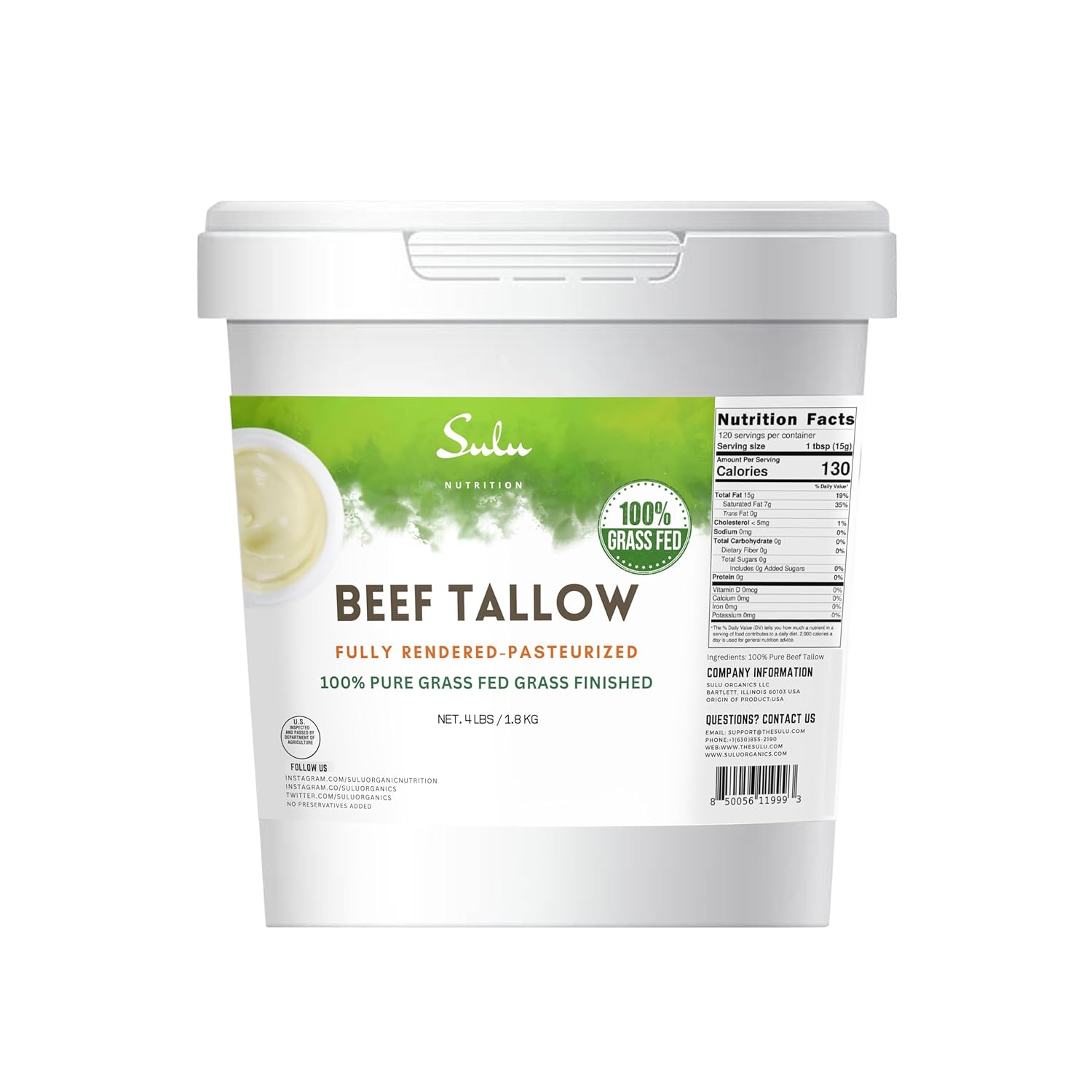
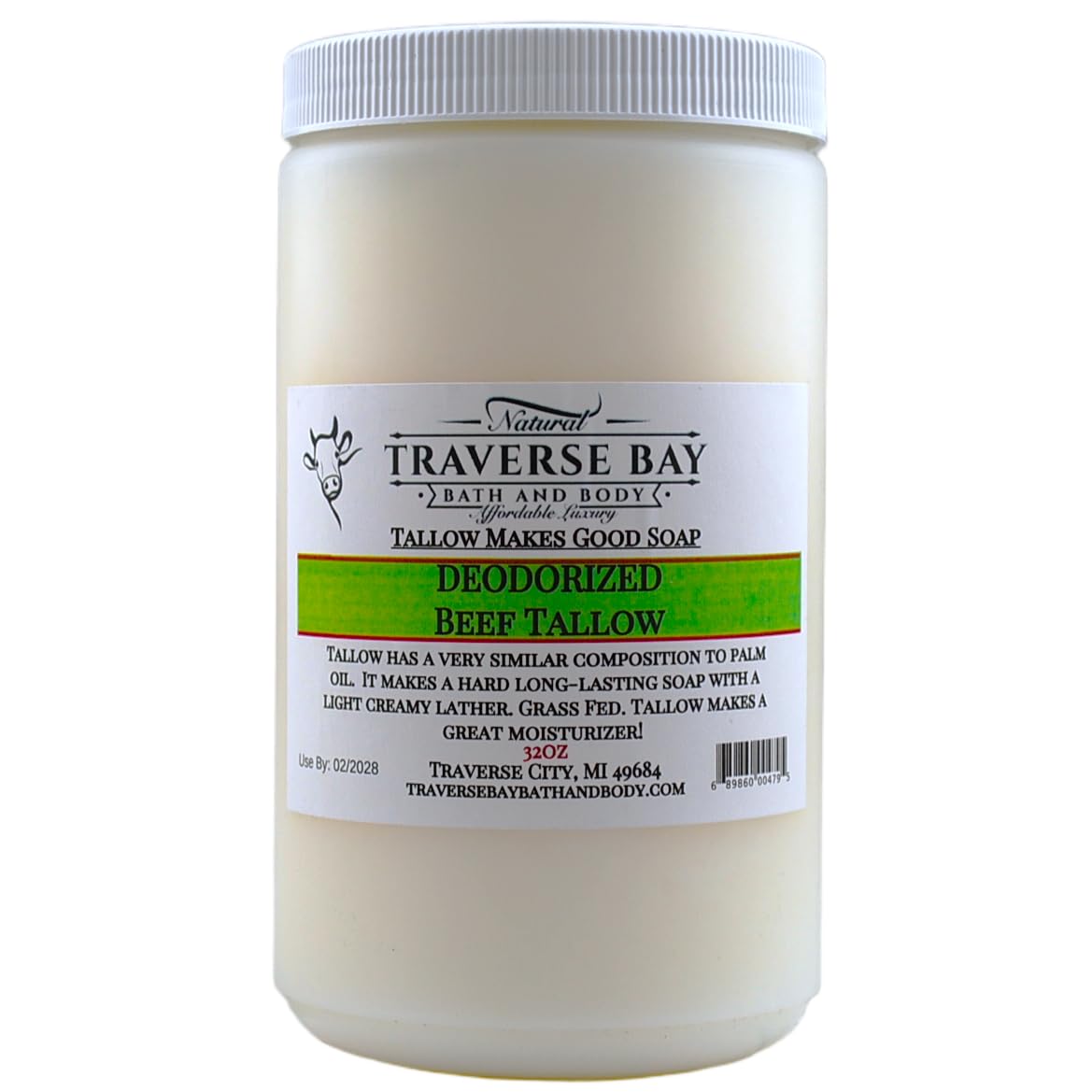
Recommended tallow for this recipe

We test and research the products we recommend. If you buy through these links we may earn a commission at no extra cost to you.

Step-by-step recipe

  1. 1

    Set up the double boiler

    Add 1 inch of water to a saucepan and bring to a low simmer. Set a heatproof glass bowl on top so it touches but does not sit in the water.

    Target temp
    Water: ≈ 200 °F / 93 °C (steady simmer, not rolling boil)
    Duration
    3 minutes
    What you'll see
    Steady wisps of steam, no large bubbles breaking the surface
    Watch out for
    Don't let the bowl bottom touch the water, direct heat scorches tallow and produces an off smell.
  2. 2

    Melt the beeswax first

    Add 1 tbsp beeswax pellets to the bowl. Stir occasionally with a wooden chopstick. Beeswax has the highest melt point (≈ 145 °F / 63 °C) so it goes in first.

    Target temp
    150-160 °F / 65-71 °C
    Duration
    4-6 minutes
    What you'll see
    All beeswax pellets fully melted, mixture is honey-coloured and clear
    Watch out for
    Do not exceed 180 °F. Above that, beeswax loses some of its aromatic compounds and starts to scorch on the bowl edge.
  3. 3

    Add the tallow

    Add 2 tbsp tallow to the melted beeswax. Stir continuously until fully combined.

    Target temp
    150-160 °F / 65-71 °C
    Duration
    2-3 minutes
    What you'll see
    Mixture goes from honey-yellow to creamy ivory; no opaque tallow streaks
    Watch out for
    Tallow added too fast can shock the temperature down enough that beeswax briefly re-solidifies on the spatula. Add slowly and stir continuously.
  4. 4

    Add the coconut oil

    Add ½ tbsp coconut oil. Stir for 1 minute until the mixture is fully homogeneous.

    Target temp
    Drops to ≈ 145 °F / 63 °C
    Duration
    1-2 minutes
    What you'll see
    Single uniform liquid, slightly translucent, the colour of melted ivory candle wax
    Watch out for
    If the mixture clouds or shows separate layers, it's cooled too far, return to heat for 30 seconds.
  5. 5

    Cool slightly before adding essential oils

    Remove the bowl from heat. Let it sit for 2 minutes, stirring gently. Stir in 10-15 drops of essential oils and 5 drops of vitamin E.

    Target temp
    135-140 °F / 57-60 °C
    Duration
    2-3 minutes
    What you'll see
    Mixture is still fully liquid; slightly cloudier at the edges
    Watch out for
    Hot mixture flashes off essential oils, don't add EOs above 150 °F or you'll lose half the aroma.
  6. 6

    Pour into the tin

    Pour steadily into a 2 oz tin, leaving 1/8 inch headspace at the top. Tap the tin gently on the counter to release air bubbles.

    Target temp
    ≈ 140 °F
    Duration
    1 minute
    What you'll see
    Surface is glossy and level; no visible bubbles after the tap
    Watch out for
    Pouring too cold leaves a 'plug' of partially set wax in the spout. Pouring too hot may warp thin tin lids if capped immediately.
  7. 7

    Set at room temperature

    Leave the tin uncapped at room temperature for 1 hour. Do not refrigerate, fast cooling can cause beeswax to crack or form a hollow pocket in the centre.

    Target temp
    Room temp (65-75 °F)
    Duration
    1 hour unsupervised
    What you'll see
    Pomade is fully opaque, satin-firm to a fingernail tap, slightly cool to the touch
    Watch out for
    Capping while warm traps condensation that can introduce moisture and shorten shelf life.
  8. 8

    Cure 12 hours before first use

    Cap the tin and let cure 12 hours at room temperature. Curing lets the wax/fat ratio stabilize so the first scoop has the same texture as the last.

    Duration
    12 hours unsupervised
    What you'll see
    Surface is satin-matte; firm at room temp but yields to fingernail pressure
    Watch out for
    Skipping the cure leads to a pomade that feels softer on the first use than on the tenth.
  9. 9

    Apply

    Scoop a chickpea-sized amount with a fingernail. Rub between palms for 5 seconds to liquefy. Distribute through damp or dry hair from roots to ends, then style with a comb or fingers. Let air-dry or finish with a blow dryer for stronger hold.

    Duration
    Per use
    What you'll see
    Pomade goes on as a clear film, not a white residue, white means not enough warming between palms
    Watch out for
    More is not better, start with a chickpea-sized amount. Too much pomade weighs hair down and dulls shine.

Pro tips

  • More beeswax = stronger hold
  • Less beeswax = more natural, flexible look
  • Start with less product, add more as needed
  • Great for beards too

Troubleshooting

Every batch is slightly different. Here's how to diagnose and fix the most common problems.

Problem Fix
Hair looks too greasy / weighed down Start with a chickpea-sized amount and add more only if needed. For fine hair, switch to the light-hold variant (1.5 tbsp tallow : ½ tbsp beeswax : ½ tbsp coconut).
Won't wash out, feels coated even after shampoo Use the 'olive oil pre-wash' trick: massage 1 tbsp olive oil through dry hair before stepping into the shower. Wait 2 minutes, then shampoo as normal, the olive oil dissolves the beeswax and the shampoo carries everything out. Alternatively, use a clarifying shampoo (look for sodium laureth sulfate or apple cider vinegar rinse) once a week.
Flakes by the end of the day Apply to slightly damp hair (not dripping wet) for cleanest distribution; reduce to a half-chickpea amount; brush out with a boar-bristle brush before bed each night.
No hold, hair falls flat by mid-morning Switch to the strong-hold variant (1:1 tallow to beeswax) or apply to towel-dried (not wet) hair. Finish with 30 seconds of cool blow-dryer to set the wax film.
Smells too strong / essential oils overwhelming Re-melt the batch, add another tbsp of tallow to dilute, re-pour. Long-term: stick to 10 drops total of EOs in a 2 oz batch and blend complementary oils (cedarwood + bay rum + a touch of vetiver) rather than one dominant oil.
Pomade is too hard / doesn't soften between palms Warm the tin briefly with a hairdryer for 10 seconds before scooping; or re-melt and add ½ tbsp extra coconut oil to soften the ratio permanently.
Pomade is too soft / liquid in summer Refrigerate the tin between uses; or remake with a 1:1 tallow:beeswax ratio for a hot-climate stable version. Keep the tin in a bedroom drawer rather than a hot bathroom.
Smells off / cardboard or crayon Discard. Source fresher tallow, store the tin in a closed cabinet, and add 5 drops vitamin E to the next batch.
White cast on dark hair after application Rub between palms for a full 5-10 seconds until you feel the pomade go from solid to oily-clear. Apply only after complete liquefaction.

Variations

High hold (1:1 tallow:beeswax)

For: thick / coarse / pompadour styles
Ratio
2 tbsp tallow : 2 tbsp beeswax : ½ tbsp coconut oil
Essential oils
8 drops cedarwood Atlas, 5 drops bay rum, 3 drops vetiver
Notes
Strong, all-day hold for slick-back, pompadour, or quiff styles. Restyleable but firmer than the standard recipe. Requires the olive-oil pre-wash for clean removal.

Light hold (less beeswax, more tallow)

For: fine / thin / wavy / curly hair
Ratio
2 tbsp tallow : ½ tbsp beeswax : 1 tbsp coconut oil
Essential oils
6 drops lavender, 4 drops rosemary, 3 drops sweet orange
Notes
Conditioning and tame-the-frizz finish without weight. Closer to a hair-balm than a true pomade. Washes out with one regular shampoo.

Beard balm (added jojoba + argan)

For: facial hair / dry beard
Ratio
2 tbsp tallow : 1 tbsp beeswax : ½ tbsp coconut oil + 1 tbsp jojoba oil + ½ tbsp argan oil
Essential oils
6 drops sandalwood, 4 drops cedarwood, 3 drops black pepper
Notes
Jojoba is structurally similar to sebum (a wax ester, not a triglyceride) and conditions facial hair without weighing it down. Argan adds vitamin E and shine. Use a beard comb for even distribution.

Hair-and-beard combo

For: any
Ratio
2 tbsp tallow : 1 tbsp beeswax : 1 tbsp coconut oil + ½ tbsp jojoba
Essential oils
5 drops cedarwood, 4 drops bay rum, 3 drops vetiver
Notes
Slightly softer than the standard pomade so it can also be massaged into a beard. The jojoba addition makes it appropriate for direct skin contact (cheek, jawline).

Water-soluble (added castor oil)

For: any / easy wash-out
Ratio
2 tbsp tallow : 1 tbsp beeswax : ¼ tbsp coconut oil + ¼ tbsp castor oil
Essential oils
Your choice from above
Notes
Castor oil's ricinoleic acid adds slight water-solubility, making the pomade rinse out with one regular shampoo (no clarifying or pre-wash needed). Slightly heavier feel than the standard recipe.

Matte clay-like finish (added bentonite or kaolin)

For: any / matte hair styles
Ratio
2 tbsp tallow : 1 tbsp beeswax : ½ tbsp coconut oil + 1 tbsp kaolin clay (sifted)
Essential oils
6 drops cedarwood, 4 drops sage, 3 drops black pepper
Notes
Kaolin clay absorbs the surface oil that makes the standard pomade satin-shiny, leaving a true matte textured finish. Hold is slightly firmer because the clay adds structure. Bentonite works similarly but feels heavier.

Use, care, and storage

How to use it (per shave)

  1. 1. Towel-dry hair to slightly damp (not dripping wet, not bone-dry).
  2. 2. Scoop a chickpea-sized amount with a fingernail or small spatula.
  3. 3. Rub between palms for 5-10 seconds until fully liquefied (pomade goes from solid to oily-clear).
  4. 4. Distribute through hair from roots to ends, working back to front.
  5. 5. Comb into shape with a boar-bristle brush or wide-tooth comb; or finger-style for textured looks.
  6. 6. Optional: finish with 30 seconds of cool blow-dryer to set the wax film for stronger hold.
  7. 7. Restyle throughout the day with finger combing, no need to reapply.

Storage

Sealed tin or screw-top jar, cool dark cabinet, away from steam and direct sun. Bathroom counter is fine in winter; move to a bedroom drawer in summer if your bathroom climbs above 80 °F.

Extend shelf life

Add 5 drops vitamin E (mixed tocopherols) and 3 drops rosemary CO2 extract at the cooling step. Stretches shelf life from 1 year to 18 months.

Rancidity test

If the pomade smells like crayons, oil paint, or wet cardboard, the unsaturated fats have oxidized, discard. A fresh pomade smells faintly of beeswax honey and your essential-oil blend, never sharp or sour.

Discard when

Any visible mould (white fuzzy spots distinct from beeswax bloom), any pink/orange discoloration, any sour or fermented smell, or after 18 months even if it looks fine.

Cost vs commercial

Homemade
$1.60 /oz
$0.05 per use
Premium
$8.00 /oz
$0.27 per use
e.g. Patricks (heavy hold), Layrite, Reuzel, Murdock London
Drugstore
$2.20 /oz
$0.07 per use
e.g. Suavecito, American Crew Pomade, Murray's Superior

Annual savings: $80-$140 per person vs premium artisan pomades for daily users; plus reusable tins amortize after one batch.

Factor Homemade
Hair-conditioning lipids Yes (palmitoleic acid, lauric, stearic from tallow + coconut)
Hold mechanism Beeswax film (elastic memory)
Wash-out difficulty 1-2 shampoos with olive-oil pre-wash
Synthetic preservatives None, anhydrous formula
Shelf life 1 year (18 months with antioxidant)

Safety considerations

Patch test new variations behind the ear

Apply a pea-sized amount to the skin behind the ear (closest tissue to scalp). Wait 24 hours for redness, itch, or bumps before full scalp/hair use. Patch test again whenever you change essential oils.

Essential oil concentration limits for leave-on products

Industry guideline for leave-on scalp products is 2% maximum essential oil concentration. The standard recipe (10-15 drops in 2 oz / 60 ml) sits at ≈ 0.8-1.2%, well within safe limits. Do not exceed 25 drops in a single batch even for stronger scent.

Photosensitizing essential oils

Cold-pressed bergamot, lemon, lime, and grapefruit essential oils can cause sunburn or hyperpigmentation on UV-exposed scalp (visible on shaved heads or thin hair). Use steam-distilled or bergaptene-free citrus oils only.

Pregnancy and children

The unscented or light-hold variants are safe in pregnancy. Avoid sage, rosemary, peppermint, eucalyptus, basil, and clary sage essential oils throughout pregnancy. Children under 6 generally don't need pomade; if used, stick to the light-hold variant with no EOs.

Beeswax allergy

True beeswax allergy is rare but documented. Patch test if you have a known bee-sting allergy (cross-reactivity is uncommon but reported). Candelilla or carnauba wax is the substitute.

Pet safety

Tea tree, peppermint, eucalyptus, and citrus essential oils are toxic to cats. Cap the tin tightly and store where pets cannot lick or chew it. Rinse hands after applying before handling cats.

Frequently asked questions

Will it wash out with regular shampoo?
The light-hold variant washes out cleanly in one regular shampoo. The standard medium-hold and high-hold versions need either (a) a clarifying shampoo or (b) the 'olive oil pre-wash' trick: massage 1 tbsp olive oil through dry hair before stepping in the shower, wait 2 minutes, then shampoo as normal. The olive oil dissolves the beeswax and the shampoo carries everything out in one wash.
How does this compare to Suavecito or Layrite?
Those are PVP polymer + water-based pomades that wash out easily but provide no hair conditioning. This pomade gives comparable hold but actively conditions the hair shaft with skin-identical lipids, visible improvement in hair shine and breakage resistance after 1-2 weeks of daily use. Trade-off: slightly more involved wash-out (one extra step).
How much should I use?
Start with a chickpea-sized amount for short-to-medium hair; pea-sized for fine or thin hair; large-marble-sized for thick or long hair. More is not better, too much pomade weighs hair down, dulls shine, and is harder to wash out.
Will it cause hair loss or scalp problems?
No, the opposite. The tallow conditions the scalp with skin-identical lipids, and rosemary EO (in the light-hold variant) has documented hair-growth-supporting activity in clinical studies (comparable to 2% minoxidil at 6 months). It's an oil-based scalp treatment as much as a styling product.
Can I use it on a beard?
Yes, the standard recipe works as a beard pomade (heavier hold) and the beard-balm variant (with added jojoba + argan) works as a daily beard conditioner. The hair-and-beard combo variant is designed to do both jobs from one tin.
Why does my hair feel greasy the next morning?
Either you used too much, or you slept with it in. Pomade is a daytime styling product, wash or rinse it out before bed. If you want overnight conditioning, switch to the light-hold variant (less beeswax, more conditioning) or apply only at the ends, not the roots.
Does it have SPF?
No, the bar reflects a small amount of UV via the beeswax (very minor effect, perhaps SPF 1-2) but should not be relied upon as sun protection. Use sunscreen on exposed scalp.
Can I use this on my kid's hair?
Yes, the unscented light-hold variant is appropriate for children over 6. It works as a tame-the-cowlick balm for school mornings. Skip all essential oils for children under 3.
Why does my pomade smell different than my friend's batch?
Three variables: (1) tallow composition varies by breed and pasture; (2) yellow vs white beeswax differ in scent; (3) essential oil sourcing varies by harvest year. Once you find a tallow + beeswax + EO combo you like, source consistently.
Will it dye blonde hair yellow?
Yellow beeswax can leave a faint warm cast on very pale blonde or platinum hair. Use white (filtered) beeswax for blonde hair to avoid any colour shift.
How do I make it stronger hold without making it harder to wash out?
Switch to the high-hold variant (1:1 tallow:beeswax) and add ½ tbsp castor oil at the cooling step. The castor adds water-solubility that compensates for the extra beeswax, strong hold, single-shampoo removal.
Can I use this as a moustache wax?
Almost, moustache wax needs even higher beeswax (try 1 tbsp tallow : 2 tbsp beeswax : ¼ tbsp coconut for a true 'stache wax). The standard pomade is too soft for sculpting moustache tips but works fine for general moustache conditioning.
Why does my finished pomade feel waxy / not smooth?
Either the wax/fat ratio is too high, or the mixture cooled too quickly (beeswax crystallized in chunks rather than a smooth matrix). Re-melt to 175 °F, hold 5 minutes, cool slowly at room temperature next time, no fridge.
Can I add menthol crystals for cooling?
Yes, dissolve ¼ tsp menthol crystals in the warm fats during the melt step. Gives a genuine cool sensation on the scalp for 10-15 minutes after application. Avoid contact with eyes.
Will it leave residue on my pillowcase?
If you sleep with it in, yes, tallow and beeswax can transfer to fabric. Wash or shampoo before bed, or sleep on a satin pillowcase that resists oil pickup. Pretreat any pillowcase stains with dish soap before washing.
Is this safe for color-treated hair?
Yes, and the conditioning effect is especially valuable for chemically treated hair, which loses cuticle integrity. Coconut oil's shaft penetration helps reduce the protein loss that follows bleaching or coloring.

Sources

  1. [1] Fratini, F., Cilia, G., Turchi, B., & Felicioli, A. (2016). Beeswax: A minireview of its antimicrobial activity and its application in medicine. Asian Pacific Journal of Tropical Medicine, 9(9), 839-843. Read source →
  2. [2] Pappas, A. (2009). Epidermal surface lipids. Dermato-endocrinology, 1(2), 72-76. Read source →
  3. [3] Rele, A. S., & Mohile, R. B. (2003). Effect of mineral oil, sunflower oil, and coconut oil on prevention of hair damage. Journal of Cosmetic Science, 54(2), 175-192. Read source →
  4. [4] Lin, T. K., Zhong, L., & Santiago, J. L. (2018). Anti-inflammatory and skin barrier repair effects of topical application of some plant oils. International Journal of Molecular Sciences, 19(1), 70. Read source →
  5. [5] USDA FoodData Central, Beef tallow, lipid composition. Read source →
About the author

Miles Carter

Holistic Chef & DIY Skincare Formulator

This recipe was developed and tested by Miles Carter over 11 batches. Last verified April 15, 2026. More from Miles →