Skip to content
King TallowKing Tallow
Homemade tallow leather conditioner
Easy DIY Recipe

How to Make Leather Conditioner with Beef Tallow

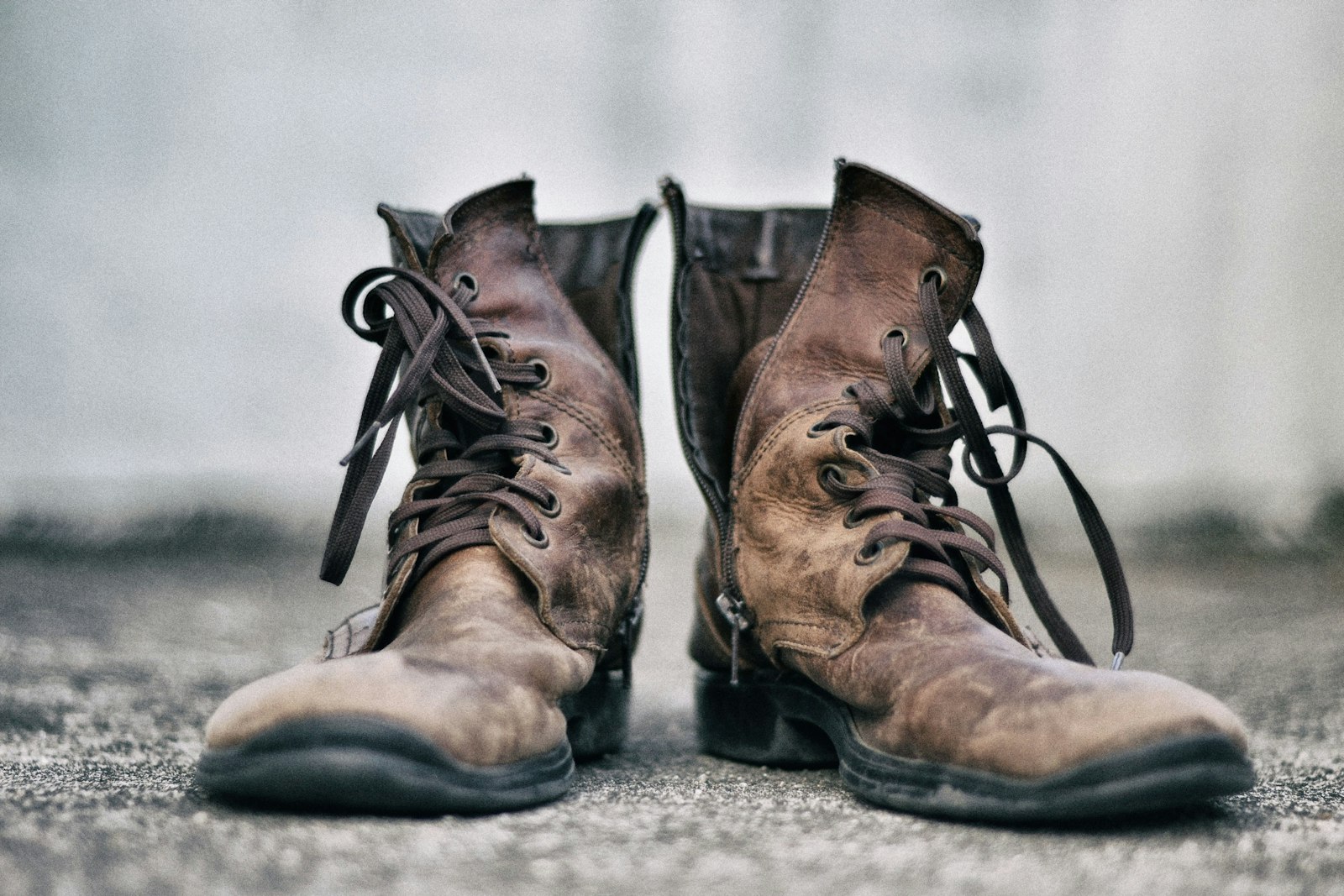
Melt 3 parts beef tallow with 1 part beeswax in a double boiler, optionally adding 1 tablespoon neatsfoot oil per cup of tallow for deeper penetration. Pour into a shallow tin and cool. Apply thin coats with a soft cloth to clean, dry full-grain or top-grain leather, allow 20 minutes for absorption, and buff with a horsehair brush. The treatment works because leather is collagen-bound animal hide, and tallow's saturated fatty acids replenish the structural lipids stripped during tanning.

By Miles Carter , Holistic Chef & DIY Skincare Formulator Last tested April 15, 2026 9 batches made
Total time
15 minutes active + 2 hours set
Active time
15 minutes
Yield
8 oz tin (≈ 40 boot treatments or 6-8 saddle conditioning sessions)
Shelf life
2+ years sealed; 18 months once opened
Cost / batch
$4.80
Difficulty
easy

Why this recipe actually works

Leather is animal hide that has been chemically transformed: tannins (vegetable-tanned) or chromium salts (chrome-tanned) bind to the collagen triple-helix to prevent rot, while fat-liquoring oils are stuffed into the fiber bundles to keep them flexible. Over months of use, those fat-liquor oils migrate out, get rubbed off, or oxidize, and the collagen fibers begin to chafe against each other dry. That dry friction is what cracks leather. A tallow-and-beeswax conditioner re-introduces structural lipids of the same kind originally used in fat-liquoring, restoring flex and water resistance simultaneously.

Lipid replacement at the collagen level

Tallow's fatty acid profile (palmitic ≈ 26%, stearic ≈ 14%, oleic ≈ 36%, palmitoleic ≈ 3%) is remarkably close to the lipid mixture used in traditional currier's dubbin and in many modern fat-liquor formulations. The molecules are small enough (C16-C18 chains) to migrate between collagen fiber bundles, and saturated enough to stay there once they arrive. The leather goes from dry-stiff to flex-supple within an hour of application.

Source [1]

Beeswax forms a hydrophobic surface film

The 10-25% beeswax fraction doesn't fully penetrate the leather, it sits in and just above the surface pores. Beeswax is a complex ester wax dominated by myricyl palmitate and long-chain fatty alcohols (cerin), which crystallize into a continuous hydrophobic film. This film is what gives the conditioner its waterproofing function: rain beads up and rolls off rather than soaking in.

Source [2]

Why neatsfoot oil is the traditional additive

'Neatsfoot' oil is rendered from the shin bones and feet of cattle (Old English 'neat' = ox/cattle). Its fatty acid composition is heavier on oleic acid than tallow itself (≈ 70% oleic) and remains liquid at room temperature, which makes it a deep-penetration carrier, it pulls the saturated tallow fraction further into the fiber bundles. One tablespoon per cup of tallow is the conventional dose.

Source [3]

Why this protocol does not work on suede or nubuck

Suede is leather sanded on the flesh side to raise a fine nap; nubuck is sanded on the grain side. Both depend on standing fiber ends to give their soft, brushed appearance. A tallow-wax conditioner mats those fibers down permanently, once oiled, suede becomes dark, splotchy, and slick. Use a dry rubber suede brush and a silicone or fluoropolymer suede protector instead.

Why Make Leather Conditioner with Tallow?

Restored flex and supple feel

Dry, stiff leather softens within 1-2 hours of application as the fatty acids migrate between fiber bundles.

Water resistance without sealing

Beeswax surface film sheds rain and snow but still allows the leather to breathe, unlike acrylic or silicone leather sealants, which trap moisture and cause flex cracks underneath.

UV protection

The lipid film attenuates UV penetration into the collagen, slowing the photo-oxidation that fades dyed leather over years of sun exposure.

Stops surface cracking before it propagates

Hairline surface cracks (the 'spider-web' pattern in worn boots) seal up with two consecutive treatments because the wax bridges the gap and the tallow restores fiber elasticity around it.

Two-year shelf life as a salve

Anhydrous formula with no water and antibacterial beeswax, keeps in a sealed tin for 2+ years without preservatives.

Ingredients

Rendered beef tallow (kidney or leaf fat)

6 tbsp (3 fl oz) (85 g) $1.50

Provides the structural saturated and monounsaturated fatty acids that re-occupy the spaces between collagen fiber bundles. This is the conditioning agent.

What to look for
  • Rendered from leaf or kidney fat, neutral scent, clean colour
  • Strained through cheesecloth, protein bits will scorch the leather and leave dark dots
  • Pale ivory to pale yellow when solid
  • Cosmetic-grade or food-grade rendering both work; do not use 'industrial tallow' as it may contain off-grade rendering byproducts
Substitutions
Swap in Tradeoff
Mutton tallow Stronger animal aroma but very traditional for English riding tack; harder finish
Bear fat (rendered) Historical Native American leather treatment, softer, slower oxidation, hard to source legally
Pork lard Softer melt point, can leave a slightly tacky finish unless beeswax is increased to 1:2 ratio

Render from butcher's suet ($2-4/lb) or buy cosmetic-grade in 1 lb tubs from US Wellness Meats, FatWorks, or Epic.

Beeswax pellets or shaved block

2 tbsp (1 oz) (28 g) $0.80

Forms the surface hydrophobic film that gives water resistance and seals in the deeper-penetrating tallow. Increases the firmness of the finished salve so you can scoop and apply with a cloth without it dripping.

What to look for
  • Real beeswax pellets, not 'beeswax blend' (often 30% paraffin)
  • Pale yellow or white, both work; yellow has a slight honey aroma when warm
  • Pliable when warmed in the hand, not brittle
  • Sourced from US, EU, NZ, or Canadian apiary, Chinese beeswax is frequently adulterated
Substitutions
Swap in Tradeoff
Carnauba wax Harder, glossier finish, drop to 1 tbsp or the salve becomes too firm to spread cold
Pine resin (small amount, ≤ 1 tsp) Adds tackiness and stronger waterproofing, used in traditional 'sno-seal' style boot dubbin

Neatsfoot oil (optional but recommended)

1 tbsp (½ fl oz) (15 ml) $1.00

Liquid carrier oil rendered from the shin bones and feet of cattle. Pulls the saturated tallow fraction deeper into the fiber bundles. The traditional pairing in English bridle and harness leather conditioning.

What to look for
  • 100% pure neatsfoot oil, not 'neatsfoot oil compound' (which contains mineral oil, defeating the purpose)
  • Pale straw-yellow colour, faint beefy aroma
  • Bickmore, Fiebing's, and Weaver Leather all sell pure pints
Substitutions
Swap in Tradeoff
Mink oil Comparable penetration; slightly stronger waterproofing; heavier scent
Jojoba oil Plant-based; technically a liquid wax; less penetration but indefinite shelf life
Skip entirely Conditioner still works; deep restoration of severely dry leather is slower (2 vs 1 application)

8 oz pint of pure Bickmore neatsfoot is $7-9 at any tack shop or Tractor Supply.

Pine tar (optional, for boot dubbin variant)

1 tsp (5 ml) $0.50

Adds heavy waterproofing and a smoky-traditional aroma. Used in working-boot dubbin recipes for centuries, the smell on old logging boots is mostly pine tar.

What to look for
  • 100% pure pine tar (Auson, Skogkar, or Bickmore brands)
  • Thick black-brown viscous liquid
  • Strong smoky aroma, this WILL transfer to the leather and persist for weeks
Substitutions
Swap in Tradeoff
Birch tar Even stronger smoky scent; Scandinavian working-boot tradition
Skip entirely Skip if you don't want the smell; main waterproofing comes from beeswax anyway

Shallow tin (4-8 oz capacity)

1 tin (, ) $1.00 (or free if reused)

Storage and application vessel; shallow shape lets you load a cloth quickly without digging.

What to look for
  • Wide-mouth metal tin with screw or friction-fit lid
  • Food-safe interior coating
  • 4 oz for personal use; 8 oz for tack rooms or multi-pair households
Substitutions
Swap in Tradeoff
Repurposed glass jam jar Works fine; harder to load a cloth from, better to scoop with a small spatula

Equipment

Tool Why you need it
Double boiler or stainless saucepan with glass bowl insert Indirect heat keeps tallow under 200 °F so it doesn't oxidize or pick up scorched protein notes
Soft horsehair brush (3-4 inch) Buffing tool to drive conditioner into the grain after the cloth application; raises the surface sheen
Lint-free microfiber cloths or cotton T-shirt squares Application medium, soft, non-abrasive, distributes a thin even film
Application sponge or sea sponge Optional alternative to cloth for very textured leather like pebbled or full-grain, works the conditioner into the grain pattern
Damp cloth + saddle soap (separate, for surface clean step) Pre-clean step removes surface dust, sweat salts, and old conditioner before re-application, never apply over dirt
Digital scale (1 g resolution) For repeatable batch ratios when scaling up beyond a single tin

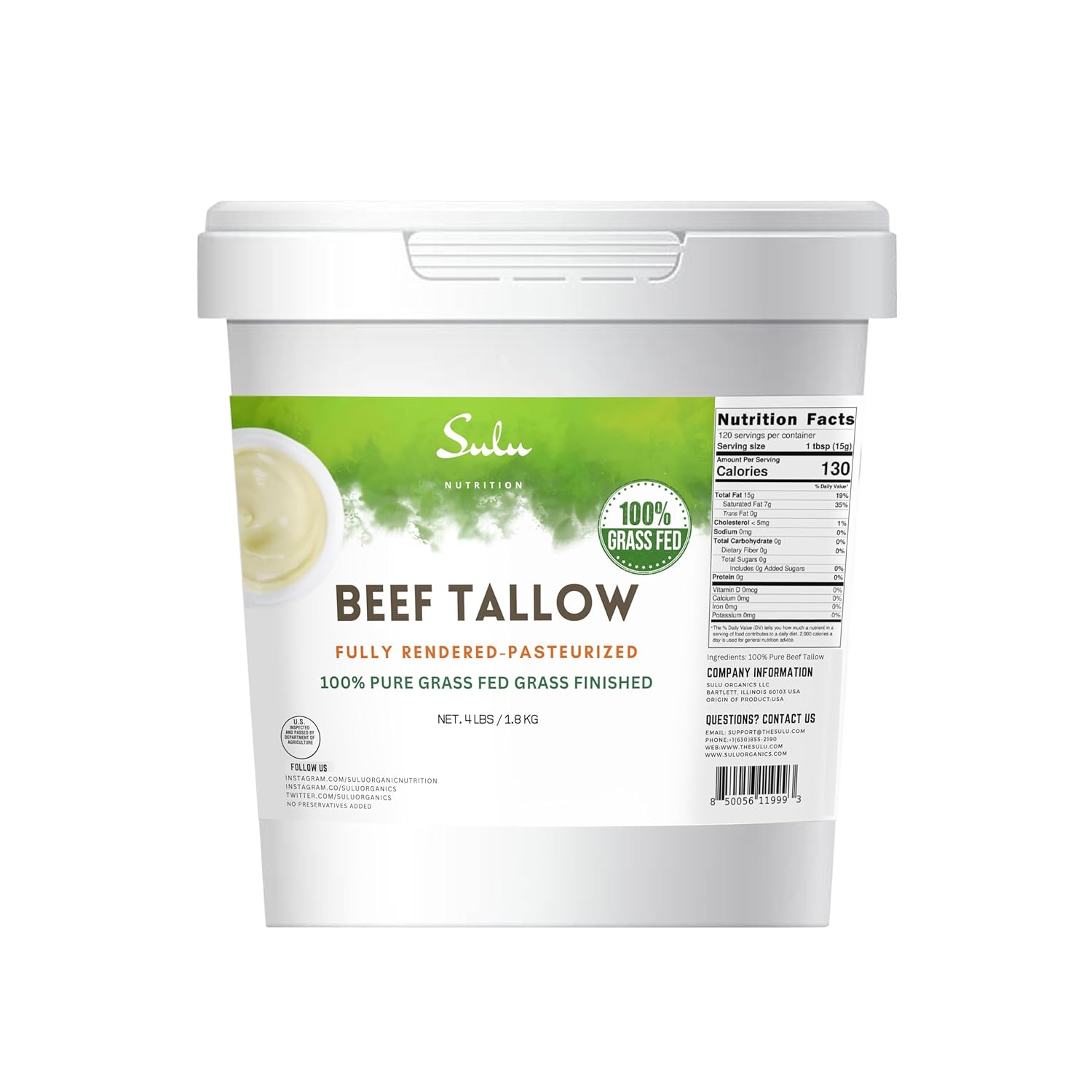
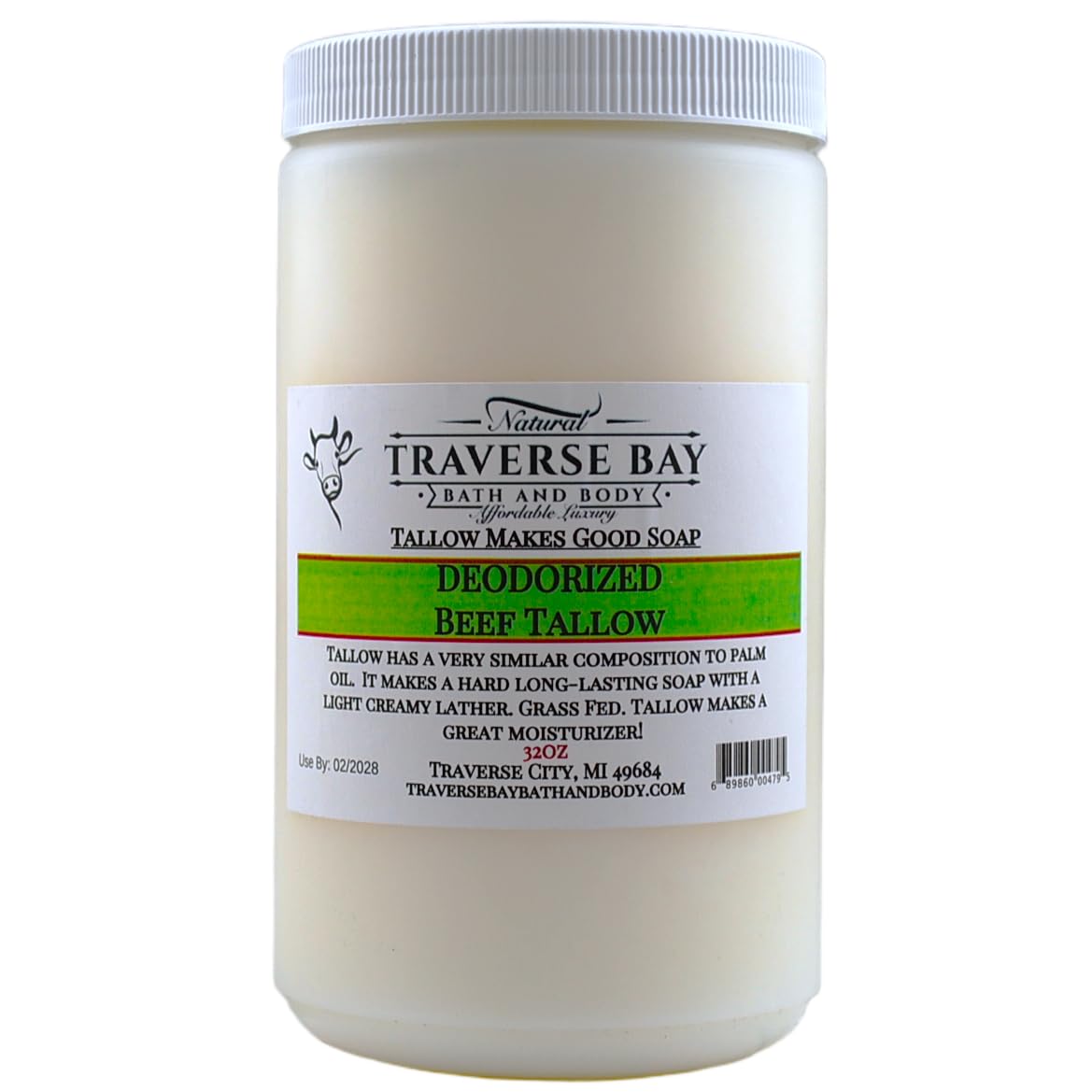
Recommended tallow for this recipe

We test and research the products we recommend. If you buy through these links we may earn a commission at no extra cost to you.

Step-by-step recipe

  1. 1

    Set up the double boiler

    Fill a saucepan with 1 inch of water and bring to a low simmer. Set a heatproof glass bowl on top, the bowl bottom should clear the water surface.

    Target temp
    Water: ≈ 200 °F (93 °C)
    Duration
    3 minutes
    What you'll see
    Steady steam, no rolling boil
    Watch out for
    Bowl touching the water transmits direct heat and risks scorching the tallow.
  2. 2

    Melt the tallow

    Add 6 tbsp (85 g) of rendered beef tallow to the bowl. Stir occasionally with a stainless or silicone spatula.

    Target temp
    150-170 °F (65-77 °C)
    Duration
    5-7 minutes
    What you'll see
    Fully clear golden liquid, no opaque streaks at the bottom
    Watch out for
    Above 200 °F the unsaturated fraction begins to oxidize and the salve will smell sharp.
  3. 3

    Add beeswax and melt to clarity

    Add 2 tbsp (28 g) of beeswax pellets to the melted tallow. Stir continuously until fully dissolved.

    Target temp
    Hold at 165-175 °F
    Duration
    3-5 minutes
    What you'll see
    Mixture fully clear with a faint honey aroma; no chunks or floating wax
    Watch out for
    If beeswax isn't melting, the heat is too low, bump the simmer up.
  4. 4

    Add neatsfoot oil and any optional additions

    Remove from heat. Stir in 1 tbsp neatsfoot oil. If making the boot-dubbin variant, also stir in 1 tsp pine tar. Stir 30 seconds to fully combine.

    Target temp
    Off heat, ≈ 150 °F
    Duration
    1 minute
    What you'll see
    Mixture is uniform; pine tar (if added) gives a darker amber colour
    Watch out for
    Adding cold oil to very hot fat can cause splatter, pour slowly down the side of the bowl.
  5. 5

    Pour into the tin

    Pour the mixture into the prepared tin, leaving ¼ inch of headspace. Place on a level surface where it won't be disturbed.

    Target temp
    Pour at 140-150 °F
    Duration
    1 minute
    What you'll see
    Smooth flow, no splashing; surface levels itself within 30 seconds
    Watch out for
    Pouring below 130 °F gives a wrinkled surface (cosmetic only).
  6. 6

    Cool and set

    Leave the tin uncovered at room temperature until fully solid. Do not refrigerate, fast cooling causes a grainy crystal structure.

    Target temp
    Room temperature, 65-75 °F
    Duration
    2 hours
    What you'll see
    Surface goes from glossy translucent to opaque waxy-matte
    Watch out for
    Capping while still warm traps condensation that can spot the surface.
  7. 7

    Pre-clean the leather

    With a damp (not wet) cloth, wipe the leather to remove surface dust, salt deposits, and old conditioner residue. For heavy build-up, lather a small amount of saddle soap on a barely-damp cloth, work in circles, then wipe with a clean damp cloth. Allow to dry for 30 minutes.

    Target temp
    Room temperature
    Duration
    10 minutes clean + 30 minutes dry
    What you'll see
    Leather looks slightly darker when damp; returns to original shade as it dries
    Watch out for
    Never apply conditioner to wet leather, water trapped under the wax film causes mildew and dark spotting.
  8. 8

    Apply the first thin coat with a cloth

    Scoop a fingertip-sized amount of conditioner onto a folded microfiber cloth. Body heat from your hand softens it. Apply to the leather in small circular motions, working with the grain. Cover one panel or section at a time. Less is more, a thin film should look slightly damp, not greasy.

    Duration
    2-5 minutes per pair of boots; 15-25 minutes per saddle
    What you'll see
    Leather darkens by 1-2 shades during application, this is the lipid wetting the fibers and is normal
    Watch out for
    Globs and excess conditioner can't penetrate further, they sit on the surface, attract dust, and turn sticky. Always less than you think.
  9. 9

    Allow absorption

    Set the leather aside in a warm (not hot) dry room. The conditioner penetrates over 20 minutes; deeper restoration continues for several hours.

    Duration
    20 minutes minimum, ideally 1-2 hours
    What you'll see
    Surface returns to a matte finish as the lipid sinks into the grain
    Watch out for
    Direct sun or radiator heat can melt the wax fraction and cause it to migrate unevenly, leave at room temperature.
  10. 10

    Buff to a soft sheen

    With a dry horsehair brush or clean microfiber cloth, buff the leather in long even strokes. This redistributes any surface excess and brings up the satin sheen of the beeswax film.

    Duration
    2-3 minutes
    What you'll see
    Leather develops an even, low-luster sheen, not high-gloss (that requires polish, not conditioner)
    Watch out for
    If buffing leaves visible streaks, you applied too much conditioner, wipe with a clean dry cloth and let it absorb another hour.
  11. 11

    Repeat if leather was severely dry

    For severely dry, cracked, or long-neglected leather, apply a second coat 24 hours after the first. Two thin coats outperform one thick coat every time.

    Duration
    Repeat above as needed
    What you'll see
    After the second coat, surface should feel supple and pliable, no longer dry to the touch
    Watch out for
    More than 2 coats in 48 hours over-saturates the leather, fibers go limp and the leather loses structural memory.

Pro tips

  • Test on inconspicuous area first
  • Apply thin coats - less is more
  • Warm leather slightly for better absorption
  • Great for boots, saddles, belts, furniture

Troubleshooting

Every batch is slightly different. Here's how to diagnose and fix the most common problems.

Problem Fix
Leather darkened more than expected The colour usually lightens 30-50% over 2-3 weeks of normal use. To minimize next time, test on a hidden area first, apply thinner coats, and accept that some darkening is permanent. For light tan leather, consider a beeswax-only or jojoba-based alternative.
Sticky / tacky finish that won't dry Wipe the surface vigorously with a clean dry cloth to remove excess. Move the leather to a warmer (70-75 °F) room. If still tacky after 24 hours, lather a tiny amount of saddle soap on a damp cloth and gently strip the surface excess.
White haze or chalky residue after buffing Buff with a soft cloth or horsehair brush, the haze polishes out. For persistent bloom, gently warm the leather with a hair dryer on low (12 inches away) while buffing.
Leather still feels dry after one application Wait 24 hours, then apply a second thin coat. Severely cracked vintage leather may need 3-4 coats over a week to fully restore. Add neatsfoot oil to the formula if not already included.
Won't restore deeply cracked leather The conditioner can prevent further crack propagation and seal the gap so it doesn't worsen, but it cannot 'heal' deep cracks. For structural restoration, professional leather repair (filler + dye + finish) is the only option. Set realistic expectations.
Stitching darkened more than the leather Cosmetic only; will not affect strength. To minimize next time, apply with a small brush that avoids the seam line, or wipe seams with a clean dry cloth immediately after application before the conditioner fully absorbs.
Conditioner rubs off on clothing Buff thoroughly with a clean cloth and let the leather rest for 24 hours before wearing/using. Future applications: use less (a fingertip-sized amount covers a whole boot), and always buff after the absorption period.
Mildew or dark spotting weeks after application Surface mould wipes off with a 50/50 white-vinegar-water solution; let dry fully, then re-apply conditioner. Long-term: never condition wet leather; store conditioned items in a ventilated area, not a sealed plastic bag.
Patchy / uneven darkening Apply a second light coat across the entire surface to even out absorption. Buff thoroughly. For very absorbent vintage leather, pre-condition the dry spots with a tiny amount of plain neatsfoot oil before the full conditioner application.
Salve has gone hard in the tin and won't scoop Warm the tin in a sunny window for 20 minutes, or set in a bowl of warm (not hot) water for 2 minutes. The salve softens to scoop temperature. Long-term: store at room temperature, not in an unheated garage in winter.

Variations

Standard 3:1 conditioner (workhorse)

Ratio
3 parts tallow : 1 part beeswax + optional 1 tbsp neatsfoot per cup of fat
Notes
The default recipe. Balanced penetration and surface protection. Good for any non-suede non-nubuck leather.

Waterproofing formula (1:1, more beeswax)

Ratio
1 part tallow : 1 part beeswax
Notes
Heavier wax fraction creates a thicker hydrophobic film. Trade-off: less penetration into the fiber bundles, so pair with the standard 3:1 recipe applied first as a base coat, then this as a topcoat.

Deep conditioning (extra neatsfoot)

Ratio
3 parts tallow : 1 part beeswax + 2 tbsp neatsfoot oil per cup of fat
Notes
Higher liquid-oil fraction means deeper penetration but less surface film. Use as a restoration treatment, then follow with the standard 3:1 recipe for ongoing maintenance.

Saddle soap alternative (with castile)

Ratio
3 parts tallow : 1 part beeswax + 1 tbsp liquid castile soap (added off-heat)
Notes
The castile gives the salve mild surfactant action so it lifts surface dust as you apply. Not as effective as a separate clean step + condition step but useful for quick maintenance between deep cleanings. Buff thoroughly to avoid soap residue.

Boot dubbin (heavy beeswax + pine tar)

Ratio
1 part tallow : 1 part beeswax
Notes
Traditional Scandinavian and English working-boot formula. Strong waterproofing, distinctive smoky aroma, very long-lasting in wet conditions. Apply warm with a brush; allow extra absorption time.

Upholstery conditioner (lighter, less beeswax)

Ratio
5 parts tallow : 1 part beeswax + 1 tbsp neatsfoot per cup of fat
Notes
Lower wax fraction means less surface film, important for furniture leather where you don't want sticky or tacky finish. Apply very thin coats with a soft cloth, buff aggressively after 30-minute absorption.

Antique restoration (softer formula)

Ratio
4 parts tallow : 1 part beeswax + 1 tbsp jojoba per cup of fat
Notes
Jojoba is a liquid wax (chemically a wax ester, not an oil) with indefinite shelf life, important for archival pieces where rancidity over years is a concern. Lower wax fraction reduces surface film for delicate vintage leather that doesn't need waterproofing.

Use, care, and storage

How to use it (per shave)

  1. 1. Pre-clean the leather with a barely-damp cloth (and saddle soap if heavily soiled). Allow to dry 30 minutes.
  2. 2. Test on an inconspicuous area first, apply a fingernail-sized dot, buff after 20 minutes, check for unexpected darkening.
  3. 3. Scoop a fingertip-sized amount of conditioner onto a clean microfiber cloth. Body heat softens it.
  4. 4. Apply in small circular motions, working WITH the grain. One panel or section at a time.
  5. 5. Use less than you think, a thin film should look damp, not greasy.
  6. 6. Allow 20 minutes (minimum) for absorption. For deeper restoration, leave 1-2 hours.
  7. 7. Buff with a horsehair brush or clean dry cloth in long even strokes to bring up the satin sheen.
  8. 8. For severely dry leather, repeat with a second thin coat 24 hours later, two thin coats beat one thick coat every time.

Storage

Sealed tin at room temperature (60-80 °F). Avoid direct sun. The salve hardens below 55 °F (warm in your hand or briefly in warm water before use); softens above 90 °F (fine, just scoop carefully). Do not store in a humid bathroom (the tin can rust at the rim).

Extend shelf life

Add 5 drops vitamin E (mixed tocopherols) per batch at the cooling step. Stretches shelf life from 2 to 3+ years. The anhydrous formula and antibacterial beeswax already give very long stability, extra antioxidant just prevents the unsaturated fraction from oxidizing.

Rancidity test

Smell the salve before each use. Fresh: faint warm-tallow + honey aroma. Rancid: sharp, paint-like, crayon, or wet-cardboard smell. Rancid conditioner can discolor leather a yellow-brown shade and leave an off smell that persists for weeks. Discard and make a fresh batch.

Discard when

Sharp rancid smell that doesn't go away when you stir; visible mould (extremely rare in this anhydrous formula); colour change to grey or pink; if you accidentally introduced water (wet finger, condensation) and the salve has separated.

Cost vs commercial

Homemade
$0.60 /oz
$0.12 per application
Premium Leather
$6.50 /oz
$1.20 per application
e.g. Saphir Renovateur, Saphir Médaille d'Or, Pecard Antique Leather
Mid Market
$1.80 /oz
$0.35 per application
e.g. Lexol Conditioner, Bick 4, Leather Honey
Drugstore Spray
$0.90 /oz
$0.20 per application
e.g. Kiwi Leather Lotion, Mink Oil paste

Annual savings: $60-$120 vs Saphir for a 4-pair boot rotation conditioned quarterly; $20-$40 vs Lexol/Bick over the same period.

Factor Homemade
Penetration into fiber bundles High (small saturated fatty acids)
Water resistance High (beeswax film)
Breathability Yes
Darkening risk 1-2 shades
Cost per oz $0.60

Safety considerations

Test on inconspicuous area before full application

All oil conditioners darken leather by 1-2 shades. Some leathers (light tan, natural blond, dyed sage or pastel) darken permanently and unevenly. Test a fingernail-sized dot under a strap, on the inside of a tongue, or behind a buckle for 24 hours before treating the visible surface.

Do NOT use on suede or nubuck

Suede and nubuck depend on standing fiber ends for their soft napped appearance. Tallow-wax conditioner mats those fibers down permanently, once oiled, suede is dark, splotchy, and slick. Use a dry rubber suede brush and a fluoropolymer suede protector instead.

Do NOT use on patent or coated leathers

Patent leather is sealed with a polyurethane or acrylic finish; the conditioner cannot penetrate the seal and may haze the surface. Wipe with a damp cloth only. Synthetic 'leatherette' or pleather has no collagen, conditioner does nothing useful.

Keep away from food contact surfaces

This conditioner is for leather only. Do not use on cutting boards, butcher blocks, or wooden utensils, see the wood-polish recipe for the food-safe variant designed for kitchenware.

Store sealed and away from pets

The salve smells like a treat to dogs (warm fat + honey beeswax). A dog that licks several ounces may have GI upset. Store the tin sealed and on a high shelf.

Allergen disclosure

Beeswax is well-tolerated but propolis residue (rare, in very minimally-filtered beeswax) can trigger reactions in propolis-allergic individuals. Lanolin (in the boot dubbin variant) is a known contact allergen, use a different variation if you have a known wool-grease sensitivity.

Pine tar variant, flammability and sensitivity

Pine tar is flammable as a concentrated substance (though safe in this dilution). It also has a strong smoky aroma that some people find irritating; use the boot-dubbin variant only on outdoor or working leather, never indoor furniture.

Frequently asked questions

Will tallow conditioner darken my leather?
Yes, by 1 to 2 shades for the first few applications. All oil-based conditioners do this; it's the lipid wetting the fibers. Lighter leathers (tan, natural blond, pastel-dyed) show more visible darkening than dark browns or blacks. Always test on an inconspicuous area first. Most of the darkening fades 30-50% over 2-3 weeks of normal use, but some permanent shift is unavoidable.
Is it safe for my car seats?
Yes for genuine full-grain or top-grain leather seats, most luxury cars use real leather and benefit from periodic conditioning every 6-12 months. NOT safe for synthetic 'leatherette' or vinyl seats (Mercedes MB-Tex, Tesla 'vegan leather,' BMW SensaTec, Lexus NuLuxe), these are polyurethane-coated fabrics with no collagen, and the conditioner can leave a sticky residue. Check your owner's manual or a hidden seam if you're not sure.
How often should I condition my leather?
Indoor leather (sofas, bags, wallets, dress shoes): every 3-6 months. Boots in regular wear: every 4-8 weeks. Boots in wet/winter conditions: every 2-4 weeks. Saddles in active use: monthly clean + condition. Leather will tell you when it's thirsty, dry, dull, slightly stiff, or beginning to show fine surface lines means it's overdue.
Can I use this on a baseball glove?
Yes, and many old-school glove care guides specify pure tallow or neatsfoot oil. Apply a thin coat to the palm, fingers, and laces; work into a ball-shape and wrap with a glove band overnight. Do not over-condition (heavy applications make the glove floppy and reduce structural memory). Once or twice per season is plenty.
Will this waterproof my boots?
It will significantly improve water resistance, rain beads up and rolls off rather than soaking in. It is not the same as a sealed waterproof membrane (Gore-Tex, etc.). For maximum water resistance, use the 1:1 waterproofing variant or the boot-dubbin variant; reapply every 2-4 weeks during wet seasons.
Why does my conditioner smell like meat?
Properly rendered leaf or kidney tallow has a faint warm-baking aroma, not a beefy meat smell. If yours smells obviously beefy, the tallow was rendered with connective tissue still attached. Re-render through cheesecloth or buy cosmetic-grade tallow. Add 5 drops of cedarwood or pine essential oil if the residual scent bothers you.
Can I use bacon grease or cooking lard?
Cooking-residue grease has water, salt, and burned protein in it, it will spoil quickly and may stain leather with dark spots. Lard (rendered pork fat) works but is softer than beef tallow and gives a slightly tackier finish; increase the beeswax to 1:2 if substituting.
How is this different from mink oil?
Mink oil is rendered subcutaneous fat from farmed mink; chemically very similar to tallow but with a slightly different fatty acid profile (more palmitoleic, more oleic). Both work; tallow is far easier to source ethically and at scale. The traditional Western tannery formula is tallow + beeswax + neatsfoot; mink oil came into common use in the 20th century.
Is it safe to use on saddles?
Yes, this is the original use case. English bridle leather and Western saddle leather have been conditioned with tallow + beeswax + neatsfoot blends for centuries. Apply with a soft cloth, allow 1-2 hours absorption, buff thoroughly. For competition tack you may also want a separate finishing wax; for working saddles this conditioner is sufficient.
Why does the salve harden in winter?
Beeswax has a melt point of ≈ 145 °F but stiffens considerably below 60 °F. Warm the tin in your hand for 30 seconds, in a sunny window for 10 minutes, or in a bowl of warm water for 2 minutes. The salve returns to scoop-able consistency. Don't microwave, uneven heating melts spots and crystallizes others.
Can vegans use this?
No, tallow is rendered beef fat and beeswax is animal-derived. The closest plant-based alternative for leather conditioning is a jojoba-and-carnauba-wax blend, but it provides less penetration and less waterproofing than the tallow formula. If you only own vegan synthetic leather, you don't need a conditioner at all, wipe with a damp cloth.
Will it stain my carpet or floor if it drips?
Yes, fresh conditioner is essentially fat and wax, both of which will leave grease stains on carpet and unsealed wood floors. Apply over a drop cloth or in a leather-care area. Spilled conditioner on carpet: blot, sprinkle baking soda, vacuum after 24 hours. Repeat as needed.
Can I use this on luxury designer bags?
Yes for full-grain leather like Hermès Togo, Chanel caviar, or Coach Heritage; test on an inconspicuous spot first. NOT for coated canvas (Louis Vuitton Monogram, Goyard) or saffiano (treated calf with a printed coating). When in doubt, contact the brand's care line, most luxury houses sell their own conditioner that's compatible with their specific finish.
How long does a 4 oz tin last?
For a single-person household with one pair of boots and a couple of belts and bags: 1-2 years easily. For a horse owner conditioning tack monthly: 6-9 months. For a leather-craft business: less. The salve doesn't 'use up' fast because each application uses very little, a fingertip-sized scoop covers a whole boot.
Is it safe to apply with bare hands?
Yes, this is essentially food-safe ingredients in a non-food formulation. Many leather workers prefer applying with bare fingers because body heat helps the conditioner soften and absorb. Wash your hands afterward; the salve isn't toxic but it's still oil and wax.
Can I add essential oils for scent?
Yes, 10 drops per batch at the cooling step. Cedarwood and sandalwood pair well with leather aesthetically and have mild antimicrobial properties. Avoid citrus oils (can photo-darken light leathers in sun). For a 'tack-room' aroma, try 5 drops cedarwood + 3 drops vetiver + 2 drops pine.
Does it work on leather book bindings?
Yes, and this is an established conservation practice for vintage leather books, though the British Library and similar institutions use a slightly different formula (lanolin + neatsfoot, no beeswax). Apply VERY sparingly with a soft cloth; over-conditioning can swell the leather and stress the binding. For valuable or rare books, consult a professional conservator first.
Better than Bick 4 or Lexol?
Different formulation philosophy. Bick 4 and Lexol are water-based emulsions with mineral oil and surfactants, they're convenient, don't darken leather as much, and work fine for routine maintenance. Tallow conditioner is anhydrous, penetrates deeper, lasts longer per application, and provides much better water resistance. For routine touch-ups, the commercial products are easier; for restoration and serious conditioning, the tallow formula does more work per ounce.

Sources

  1. [1] Society of Leather Technologists and Chemists, Fat-liquoring and lubrication of leather, technical bulletin. Read source →
  2. [2] Tonnesen, B. & Bertelsen, M. (1989). Beeswax composition: long-chain esters and fatty alcohols. Apidologie, 20(2), 121-129. Read source →
  3. [3] American Institute for Conservation Wiki, Leather conservation: cleaning and consolidation methods. Read source →
  4. [4] USDA FoodData Central, Beef tallow and neatsfoot oil composition. Read source →
About the author

Miles Carter

Holistic Chef & DIY Skincare Formulator

This recipe was developed and tested by Miles Carter over 9 batches. Last verified April 15, 2026. More from Miles →