Skip to content
King TallowKing Tallow
Homemade tallow lip balm
Easy DIY Recipe

How to Make Lip Balm with Beef Tallow

Melt 2 tablespoons grass-fed beef tallow, 1 tablespoon white beeswax pellets, and 1 tablespoon virgin coconut oil in a double boiler at 160 °F, stir in 5 drops vitamin E and optional essential oils, and pour into 12-15 lip balm tubes before the mixture starts to set. Total active time is 12 minutes; balms keep for 12 months unrefrigerated, outperform petroleum lip products on lasting moisture, and cost about $0.18 per tube.

By Miles Carter , Holistic Chef & DIY Skincare Formulator Last tested April 15, 2026 19 batches made
Total time
30 minutes
Active time
12 minutes
Yield
12-15 standard 0.15 oz tubes (or 6 tins)
Shelf life
12 months unrefrigerated
Cost / batch
$2.70
Difficulty
easy

Why this recipe actually works

Drugstore lip balms are mostly petrolatum, mineral oil, paraffin wax, and synthetic flavor, they sit on the lip surface as an inert film, do nothing nutritive, and create a feedback loop where lips feel dry whenever the layer wears off. A tallow-beeswax-coconut balm does the opposite: beeswax forms a breathable occlusive seal, tallow's palmitoleic acid integrates into the lip mucosa's lipid lamellae, and coconut's lauric acid handles minor microbial protection, actively rebuilding the lip's lipid barrier instead of just sealing over the deficit.

Beeswax: breathable occlusive, not a plastic film

Beeswax is roughly 70% long-chain monoesters (cetyl palmitate, myricyl palmitate) and 14% free fatty acids. The ester structure forms a semipermeable film that blocks moisture loss while still allowing CO₂ and gas exchange, unlike petrolatum, which forms a 100% impermeable barrier and locks the lip surface in an anaerobic state where commensal flora are disturbed.

Source [1]

Palmitoleic acid for lip-mucosa biomimicry

Beef tallow contains roughly 3% palmitoleic acid (C16:1), the same fatty acid that makes up about 20% of human sebum and is also concentrated in the mucosal lipids of the lip vermilion. That overlap is why tallow integrates into the lip lipid bilayer instead of sitting on top of it the way mineral oil does.

Source [2]

Vitamin E (tocopherol) protects the unsaturated fraction

Mixed-tocopherol vitamin E added at 0.5-1% of total batch weight scavenges peroxyl radicals in the unsaturated lipid fraction, extending shelf life from ~6 months to 12+ months. It also has documented benefits for healing chapped or chemo-damaged lip mucosa.

Source [3]

Coconut's lauric acid for incidental microbial protection

Lauric acid (C12:0), the dominant fatty acid in coconut oil, has documented activity against Staphylococcus aureus and Candida albicans at the concentrations present in this formula. That's why a balm tube that touches your mouth, your finger, and your pocket lining for 6 months doesn't develop yeast or bacterial contamination.

Why Make Lip Balm with Tallow?

Lipid biomimicry

Tallow's palmitoleic acid and saturated 16/18-carbon fatty acids match the lip mucosa's natural lipid profile, allowing the balm to integrate into the lipid lamellae rather than sit as a film.

Long-lasting cushion

Beeswax's monoester structure resists licking and rubbing far longer than oil-only balms; one application typically lasts 2-4 hours vs 30-45 minutes for a petroleum stick.

No 'addictive' feedback loop

Unlike menthol/camphor-heavy commercial balms (Carmex, Blistex) that create dependency by mildly irritating lips, this balm doesn't trigger reactive moisture loss when it wears off.

Active healing for chapping

Tallow's CLA and palmitoleic acid plus beeswax's natural propolis traces support cellular repair; visible chap recovery typically inside 48 hours of consistent use.

Cost

About $0.18 per tube vs $3-$8 for premium natural balms (Burt's Bees, Rosebud, Aquaphor). One $2.70 batch yields 12-15 tubes, enough for a year of daily use, gifts included.

Ingredients

Grass-fed beef tallow

2 tbsp (1 fl oz) (28 g) $0.50

Provides skin-identical lipids and the palmitoleic acid that integrates into the lip mucosa's lipid layer; carries the active essential-oil and vitamin-E load.

What to look for
  • 100% grass-fed and grass-finished
  • Rendered from leaf or kidney fat for the whitest, mildest result
  • No added natural flavor or processing aids
  • Pale ivory; refrigerator-firm but not brick-hard
Substitutions
Swap in Tradeoff
Bison tallow Marginally higher palmitoleic; harder to source; ~2× cost
Lanolin (animal-derived) More healing for severely cracked lips; 25-40% of lanolin users develop sensitization with daily use
Mango butter (vegan) Loses palmitoleic acid but works structurally; reduce to 1.5 tbsp and add 1/2 tbsp jojoba

1 lb cosmetic-grade tallow ($20-$30) makes 30+ batches; or render leaf fat from a local farm for under $0.30/oz.

White beeswax pellets

1 tbsp (0.5 fl oz) (14 g) $0.65

Sets the balm into a solid-but-soft stick at room temperature (melt point ≈ 145 °F); creates the breathable occlusive film that locks moisture into the lip mucosa.

What to look for
  • 100% pure beeswax, no paraffin blends
  • Pellets (pastilles) for fast even melting; never use a chunk straight off a frame
  • White (filtered) for cosmetics; yellow (unfiltered) is fine if you want honey aroma
  • Sourced from US or EU apiaries with traceability
Substitutions
Swap in Tradeoff
Candelilla wax (vegan) Use 2/3 the amount, candelilla is harder; doesn't carry the propolis traces that aid healing
Carnauba wax (vegan) Use 1/2 the amount, carnauba is the hardest natural wax; balm becomes brittle if you use too much

Pellets in 1 lb bags from beekeeper supply shops cost about $10 and last for 30+ batches.

Virgin coconut oil

1 tbsp (0.5 fl oz) (14 g) $0.20

Lauric acid handles incidental microbial protection on a tube that touches your mouth daily; adds slip; lowers the apparent melt point so the balm yields to body heat instantly.

What to look for
  • Cold-pressed, unrefined, virgin
  • Solid below 76 °F, completely transparent when melted
  • USDA Organic preferred
Substitutions
Swap in Tradeoff
Babassu oil Same lauric backbone, lighter feel; pricier; non-comedogenic for those concerned about peri-oral acne
Refined coconut oil Use if you dislike coconut scent; minor antimicrobial reduction

Mixed-tocopherol vitamin E

5 drops (0.25 ml) $0.20

Antioxidant, protects the unsaturated fatty acid fraction (in tallow and coconut) from oxidation, doubling shelf life. Has independent skin-healing benefits for damaged mucosa.

What to look for
  • Mixed tocopherols (alpha, beta, gamma, delta), not synthetic alpha-tocopheryl acetate
  • Cold-pressed, dark glass bottle
  • Sunflower-derived for non-soy diets
Substitutions
Swap in Tradeoff
Rosemary oleoresin extract (ROE) Even more potent antioxidant; very strong herbal aroma at lip-balm dose
Skip Shelf life drops to 6 months

Essential oils or flavor (optional)

5-10 drops (0.25-0.5 ml) $0.45

Flavor/aroma and targeted actives. Peppermint for cooling, vanilla CO2 for sweetness without sugar, sweet orange for brightness.

What to look for
  • Therapeutic-grade, GC/MS-tested
  • For citrus, use steam-distilled only (not cold-pressed), cold-pressed citrus is photosensitizing on lips
  • Vanilla CO2 extract preferred over vanilla 'flavor oil' (which is usually synthetic)
Substitutions
Swap in Tradeoff
Skip entirely Default for pregnancy, infants, children under 3, or known fragrance sensitivity

Optional natural tint

1/8 tsp (≈ 0.5 g) $0.30

Color. Alkanet root for soft red, Brazilian beetroot powder for deep pink, cocoa powder for warm brown, mica for shimmer.

What to look for
  • Cosmetic-grade, lip-safe pigments only, never use food coloring or craft mica
  • FDA-approved oxide pigments for any tint that contains 'iron oxide' or 'titanium dioxide'
Substitutions
Swap in Tradeoff
Mineral mica (lip-safe) Adds shimmer; very small amounts only
Beetroot powder Strong pink-red; can settle if not fully dispersed

Equipment

Tool Why you need it
Double boiler (or glass bowl over saucepan) Indirect heat keeps the blend below 180 °F so beeswax doesn't scorch and tallow doesn't oxidize
Lip balm tubes (0.15 oz) Standard format; one batch fills 12-15 tubes
Tube filling tray (optional but transformative) Holds 50 tubes upright with a fill plate that catches overflow; eliminates the #1 mess source in batch pouring
Small funnel or transfer pipette Gets the molten balm into tubes cleanly; without this you waste 20-30% of the batch
Digital kitchen scale (0.1 g) Weighing wax precisely is what makes balms consistent across batches
Instant-read thermometer Confirms 160 °F melt and 145-150 °F pour temperature, pour too cool and tubes have a sunken meniscus; too hot and they crack

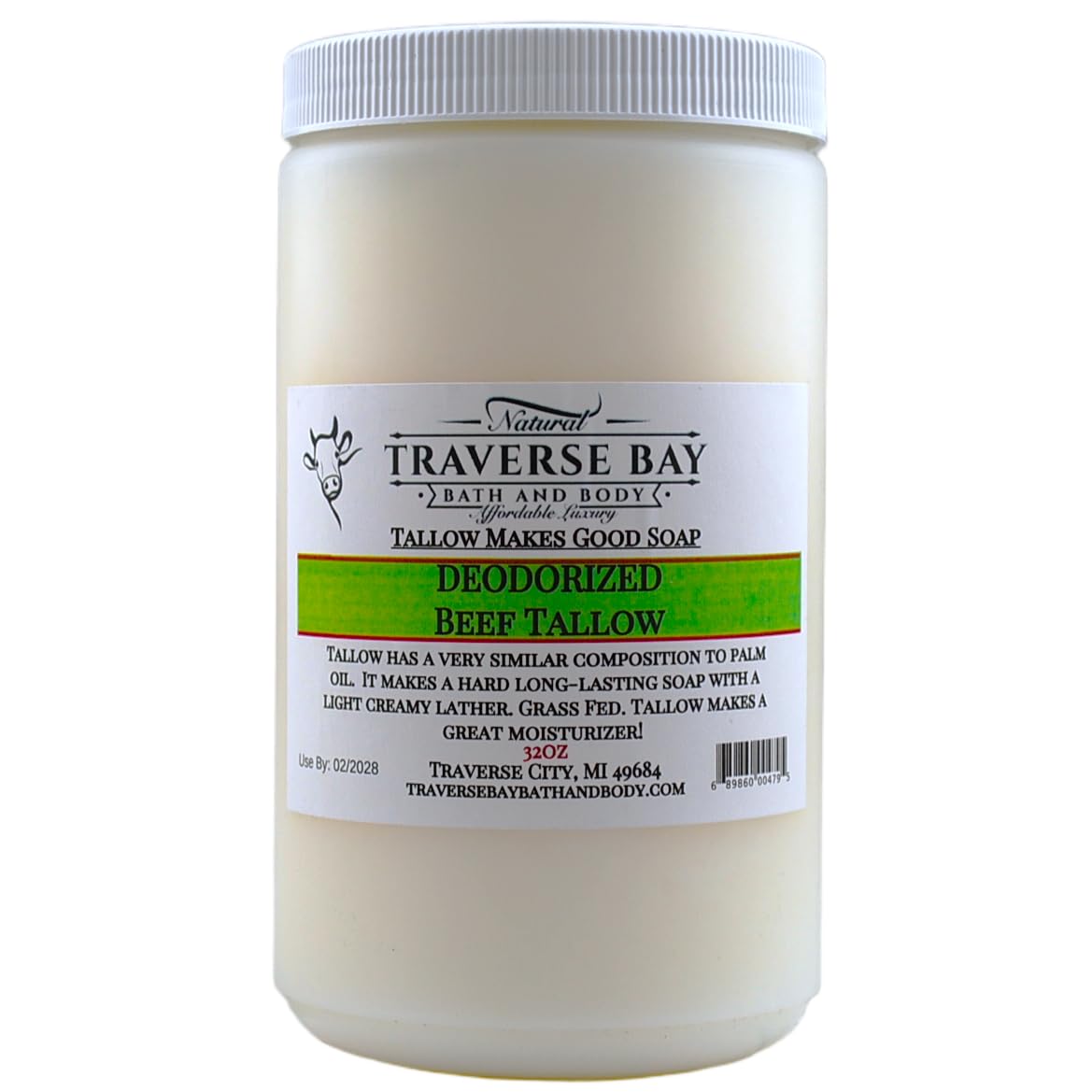
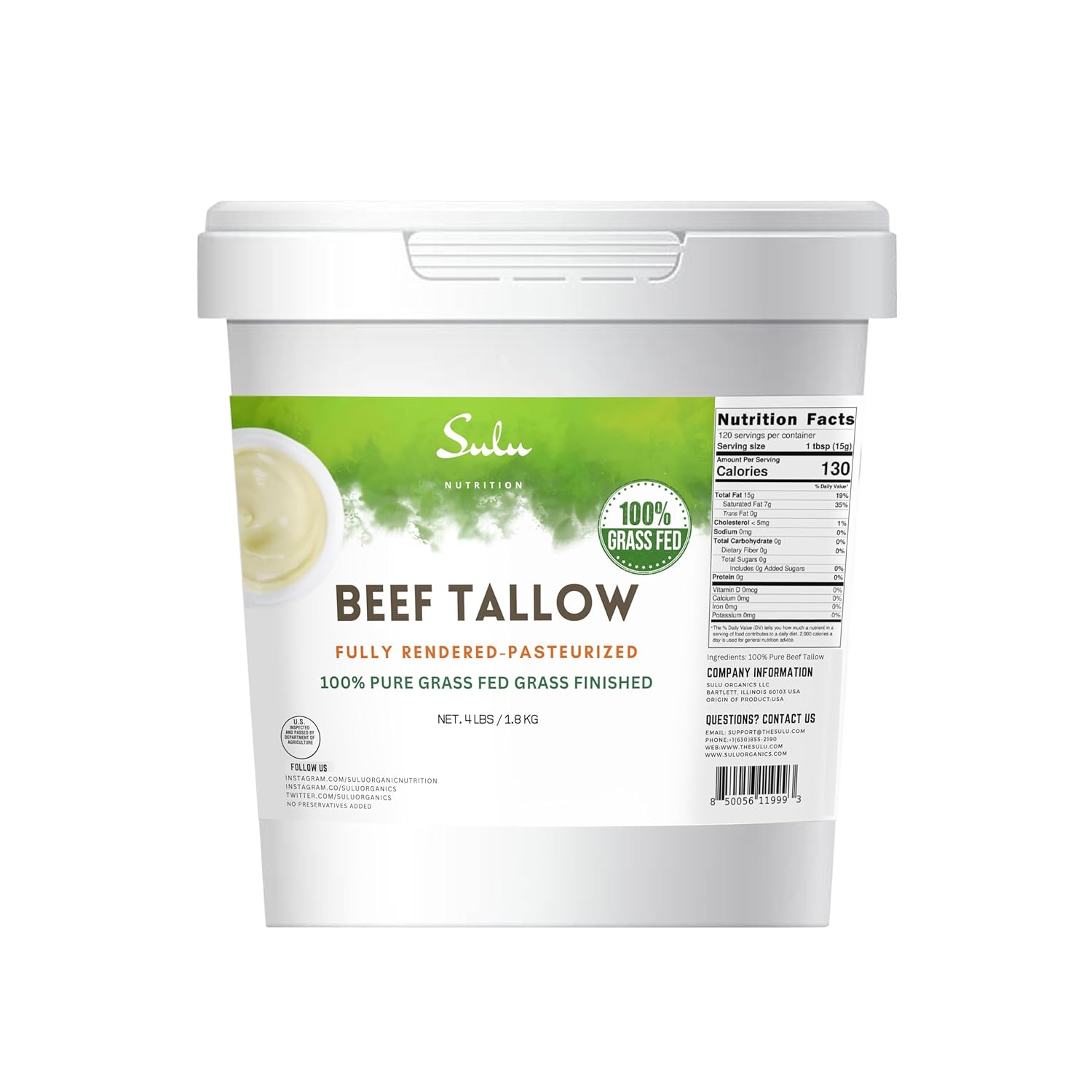
Recommended tallow for this recipe

We test and research the products we recommend. If you buy through these links we may earn a commission at no extra cost to you.

Step-by-step recipe

  1. 1

    Prepare the tubes / tins

    Set 12-15 empty 0.15 oz lip balm tubes upright in a tube tray, egg carton, or wedged in a small box. If using tins, line them up on a flat sheet pan. Wipe each with a clean dry cloth.

    Duration
    3 minutes
    What you'll see
    All containers vertical, openings clear, no debris inside
    Watch out for
    Tubes that aren't fully vertical will spill or set with a slanted top, you can't easily fix that after pouring
  2. 2

    Set up the double boiler

    Add 1 inch (2.5 cm) of water to a saucepan and bring to a gentle simmer. Set a small Pyrex measuring cup or heatproof bowl on top.

    Target temp
    Water: ≈ 200 °F / 93 °C (steady simmer, not rolling boil)
    Duration
    3 minutes
    What you'll see
    Steady wisps of steam, no large bubbles breaking the surface
    Watch out for
    Don't let the bowl bottom touch the water, direct heat scorches beeswax to a yellow-brown and produces an off smell
  3. 3

    Melt the beeswax first

    Add 1 tablespoon white beeswax pellets to the bowl. Stir gently every 30 seconds until fully liquid.

    Target temp
    150-160 °F / 65-71 °C
    Duration
    4-6 minutes
    What you'll see
    Pellets fully liquid and clear; no opaque chunks; surface looks like a shallow amber pool
    Watch out for
    Beeswax has a 145 °F melt point, patience matters here. Cranking heat to speed it up scorches the surface.
  4. 4

    Add tallow and coconut oil

    Add 2 tablespoons tallow and 1 tablespoon coconut oil. Stir until uniform.

    Target temp
    150-160 °F / 65-71 °C
    Duration
    2-3 minutes
    What you'll see
    Mixture is fully liquid, slightly cloudier than just the beeswax, no streaks of solid
    Watch out for
    Don't exceed 180 °F. Hot blends crack the tubes when poured cold and oxidize the tallow.
  5. 5

    Cool slightly, then add vitamin E and essential oils

    Remove the bowl from heat and let the temperature drop to 150 °F. Add 5 drops vitamin E and 5-10 drops of essential oil. Stir 10 seconds.

    Target temp
    150 °F / 65 °C
    Duration
    1-2 minutes
    What you'll see
    Drops disperse into the warm liquid without leaving an oily slick on top
    Watch out for
    Adding EOs at full melt temperature flashes off the volatile aroma molecules; adding at 150 °F preserves them
  6. 6

    Pour quickly into tubes

    Working fast, pour the molten balm into each tube to the rim. A small funnel or pipette helps. Tubes hold ≈ 4 g each.

    Target temp
    Pour at 145-150 °F
    Duration
    3-5 minutes (work fast, the mixture sets quickly)
    What you'll see
    Balm fills each tube smoothly to the very top with a slight convex meniscus
    Watch out for
    If the balm starts to solidify in the bowl mid-pour, briefly return to heat for 30 seconds and stir. Pouring half-set balm produces lumpy, uneven tubes.
  7. 7

    Top off after first cool

    After 4-5 minutes the surface in each tube will sink slightly as the balm contracts. Re-melt any leftover balm and top each tube off to the rim.

    Target temp
    Same, 145-150 °F
    Duration
    2 minutes
    What you'll see
    Surface sinks 1-2 mm in the center as it sets, that's the cue to top off
    Watch out for
    Skipping this step leaves tubes with a concave dip in the surface that looks unprofessional
  8. 8

    Cool and cap

    Let tubes set undisturbed at room temperature for 60-90 minutes. Don't refrigerate, fast cooling causes surface cracks. Cap once fully solid.

    Target temp
    Room temperature
    Duration
    60-90 minutes
    What you'll see
    Surface is fully matte and firm to a fingernail tap
    Watch out for
    Capping while still slightly warm traps condensation inside the tube and accelerates spoilage
  9. 9

    Label and use

    Label each tube with the date and variation. Apply to lips as needed, typically 4-8 times daily for chapped lips, 1-3 times for maintenance.

    Duration
    Per use
    What you'll see
    Balm goes on as a clear film; lips feel cushioned, not slippery
    Watch out for
    Don't twist the tube up more than 1/4 inch, extended balm above the rim can break off.

Pro tips

  • Work quickly when pouring - tallow sets fast
  • Warm your tubes slightly for easier pouring
  • Add vitamin E oil for extra healing properties
  • Use leaf fat tallow for the most neutral scent

Troubleshooting

Every batch is slightly different. Here's how to diagnose and fix the most common problems.

Problem Fix
Balm is too hard, drags across lips and won't transfer Re-melt the entire batch and add 1 extra teaspoon coconut oil or jojoba. For next batch, drop beeswax to 2 teaspoons (10 g) instead of 1 tablespoon (14 g).
Balm is too soft, slumps in the tube or melts in a pocket Re-melt and add 1 extra teaspoon beeswax. For hot climates, use 1.5 tablespoons beeswax + 0.5 tablespoon coconut as the standard ratio.
Balm doesn't stay on lips, wears off in 20 minutes Reduce coconut to 1.5 teaspoons; pat lips dry before applying; the licking habit is real and you have to break it independently of the formula.
Tubes set with a sunken meniscus / dip in the center Always do a second top-off pour 4-5 minutes after the first. Re-melt any sunken tubes, top off, and let set again.
Tubes won't fill cleanly, balm sets in the funnel Pre-warm a metal funnel with hot water and dry it; pour at 145-150 °F; if you fall behind, set the bowl back over hot water for 30 seconds and stir.
White spots / grainy patches on the balm surface Re-melt to 175 °F, hold 5 minutes to dissolve seed crystals, then pour and let set at room temperature (not in fridge). Use a clean bowl dedicated to lip balm.
Balm cracks down the middle of the tube after a day Always cool tubes at room temperature for 60-90 minutes, never in the fridge. Pour at 145-150 °F, not above 160 °F.
Smells beefy or off when warmed by lips Re-render tallow through cheesecloth twice next batch. For current batch, mask with 2× the essential oil, 10 drops peppermint will cover almost anything.
Balm separates over weeks, oily layer on top of waxy layer Re-melt all tubes, stir thoroughly, top off and re-set. Stir for a full 30 seconds before pouring in future batches.
Tinted balm has visible color streaks or settled pigment Pre-mix the pigment with a small amount of liquid jojoba into a smooth slurry before adding to the melted base. Stir constantly while pouring.

Variations

Peppermint cooling balm (the classic)

For: normal / chapped / winter
Ratio
Standard 2 tbsp tallow : 1 tbsp beeswax : 1 tbsp coconut oil
Essential oils
10 drops peppermint (Mentha piperita), 5 drops vitamin E
Notes
Genuine cool sensation from menthol; slight plumping effect on lips. Skip for kids under 6, peppermint can cause respiratory reflex in young children.

Vanilla honey balm

For: normal / dry
Ratio
Standard ratio + 1/4 teaspoon raw honey
Essential oils
10 drops vanilla CO2 extract (not vanilla 'flavor oil')
Notes
Honey adds natural humectancy and a subtle sweetness. Drop 1/4 tsp honey directly into the melted blend at 150 °F and stir vigorously to disperse, it will be slightly cloudy. Shorter shelf life: 6 months because of the introduced moisture.

Tinted lip balm (soft red)

For: normal / cosmetic-only
Ratio
Standard ratio + 1/8 tsp alkanet root powder infused into the tallow at 150 °F for 20 minutes, then strained through a coffee filter
Essential oils
5 drops vanilla CO2, 5 drops vitamin E
Notes
Alkanet gives a wine-red infusion; final on-lip color is a soft natural pink-red. For deeper color, add 1/4 tsp lip-safe red iron oxide directly. Always pre-disperse mineral pigments in a small amount of jojoba first.

Honey + propolis healing balm

For: severely chapped / wind-burned / cold-sore-prone
Ratio
Standard ratio + 1/4 tsp raw honey + 5 drops propolis tincture
Essential oils
5 drops melissa essential oil (Melissa officinalis), documented activity against HSV-1, 5 drops vitamin E
Notes
The melissa oil has small but documented antiviral effects on cold sores at first tingle. Apply 5-6 times daily at the prodrome. Discontinue if propolis triggers stinging, small percentage of users are propolis-sensitive.

SPF-style red raspberry seed balm

For: normal / sun-exposed (skiing, beach lips)
Ratio
1.5 tbsp tallow : 1 tbsp beeswax : 1 tbsp coconut oil : 1/2 tbsp red raspberry seed oil
Essential oils
5 drops vitamin E, no essential oils
Notes
Red raspberry seed oil has measurable but modest natural UV-attenuating properties (claimed SPF range varies in literature). This is NOT a sunscreen substitute, apply a real SPF 30+ chapstick first if doing serious sun exposure. Reapply every 90 minutes.

Citrus zing balm (steam-distilled only)

For: normal / brightening
Ratio
Standard ratio
Essential oils
8 drops steam-distilled lemon (Citrus limon, not cold-pressed), 4 drops sweet orange, 5 drops vitamin E
Notes
Critical: cold-pressed citrus oils contain bergaptene/furanocoumarins that are photosensitizing on lips and can cause hyperpigmentation. Use steam-distilled or 'bergaptene-free' versions only.

Unscented sensitive (pregnancy / infant-friendly / chemo lips)

For: sensitive / pregnancy / infants over 6 months / chemo-recovery
Ratio
Standard ratio
Essential oils
None. 5 drops vitamin E only.
Notes
The default for any compromised mucosa. Tallow's biomimetic profile actively heals; absence of EOs eliminates any sensitization risk.

Use, care, and storage

How to use it (per shave)

  1. 1. Pat lips dry with a clean tissue if they are wet, applying balm to wet lips traps water that evaporates and leaves them drier than before.
  2. 2. Twist tube up no more than 1/4 inch (6 mm). Excess balm is fragile and can break off.
  3. 3. Apply in 2-3 light passes across the upper and lower lip, going slightly past the vermilion border into the lip line.
  4. 4. Press lips together once to redistribute; don't smack, smacking removes balm.
  5. 5. Reapply when lips feel uncushioned (typically every 2-4 hours for maintenance, every 30-60 minutes for actively chapped lips).
  6. 6. Avoid licking lips after application, saliva contains proteolytic enzymes that strip the lipid layer faster than no balm at all.
  7. 7. For overnight healing of severely chapped lips, apply a thicker layer at bedtime; pillow contact is fine.

Storage

Sealed tube in a drawer, pocket, or cool cabinet. Avoid car dashboards in summer (the balm will soften and slump in the tube). Direct sunlight exposure for hours degrades the unsaturated lipids.

Extend shelf life

Add 5 drops mixed-tocopherol vitamin E per batch (the recipe already includes this; don't reduce it). Stretches shelf life from 6 to 12 months. For 18+ month shelf life, store unused tubes in a sealed bag in the freezer.

Rancidity test

Fresh balm smells faintly of beeswax and your chosen essential oil. If it smells like crayons, oil paint, fish, or wet cardboard when warmed by lip contact, the unsaturated lipids have oxidized, discard.

Discard when

Any color change to grey or yellow-brown, any sour or rancid odor, any pink/orange spots, or any visible mold (rare in anhydrous formulas but possible if water was introduced via a wet finger or honey variation that got moisture contamination).

Cost vs commercial

Homemade
$0.00 /oz
$0.00 per application
Premium natural
$0.07 /oz
$0.07 per application
e.g. Burt's Bees, Rosebud Salve, Eos, Jack Black
Drugstore
$0.04 /oz
$0.04 per application
e.g. Chapstick, Carmex, Blistex

Annual savings: $45-$75 vs premium natural balms for one-tube-per-month usage; pays back the equipment investment in the first batch.

Factor Homemade
Skin-identical lipids Yes (palmitoleic acid, CLA, long-chain stearic, beeswax esters)
Petroleum derivatives None
'Addictive' menthol/camphor loop None unless you choose peppermint variation at lower dose
Active healing for chap recovery High (active fatty-acid integration into lip mucosa)
Shelf life 12 months

Safety considerations

Patch test new variations

Apply a small amount to the corner of your mouth. Wait 24 hours for redness, itch, or swelling before applying full coverage, particularly important for tinted, citrus, melissa, or propolis variants.

Allergen warnings

Beeswax allergy is rare but documented (estimated 1-3% of population). Coconut and tree-nut cross-reactivity is uncommon but possible. Propolis (in healing variation) sensitizes 5-10% of users with regular use. Patch test if you have any history of cosmetic dermatitis.

Pregnancy and children

Unscented sensitive variation is safe in pregnancy and for children over 6 months. Avoid peppermint, eucalyptus, rosemary, and clary sage essential oils during pregnancy. For children under 3, use unscented only, peppermint can trigger respiratory reflex in young children.

Photosensitizing oils, critical for lips

Cold-pressed citrus oils (lemon, lime, bergamot, grapefruit) are photosensitizing on lips and can cause persistent hyperpigmentation. Use only steam-distilled or bergaptene-free citrus oils, and avoid sun exposure for 12 hours after application.

Pet safety

Tea tree, peppermint, eucalyptus, and citrus essential oils are toxic to cats. Don't let cats lick your lips after application. Store tubes out of reach of dogs, a chewed tube of tea tree balm has caused canine toxicity.

Honey and infants

Honey-containing variations should never be used on infants under 12 months due to infant botulism risk. The unscented or basic peppermint version is safe for older babies and toddlers.

Medical disclaimer

This is a cosmetic lip moisturizer, not a treatment for cold sores, angular cheilitis, actinic cheilitis, or any medical condition. Consult a dermatologist for persistent or recurring lip lesions.

Frequently asked questions

How long does homemade tallow lip balm last?
Twelve months at room temperature in a sealed tube with vitamin E added; up to 18 months refrigerated or frozen. Shelf life is bounded by oxidation of the unsaturated fatty acids in tallow and coconut, not by microbial spoilage, anhydrous formulas don't grow microbes unless water is introduced.
Why is my lip balm too hard / too soft?
It's the beeswax ratio. Hard balm = too much wax: re-melt and add 1 extra teaspoon coconut oil. Soft balm = too little wax: re-melt and add 1 extra teaspoon beeswax. The standard 2:1:1 tallow:beeswax:coconut works for most climates; hot climates need 1.5 tbsp beeswax.
Can I use this on my baby's lips?
Yes, with the unscented variation only and only for babies over 6 months. Avoid honey-containing versions for infants under 12 months due to infant botulism risk. For infants under 6 months, use plain unrefined tallow without any additions.
Will it make my lips break out around my mouth?
Tallow has a comedogenic rating of 2/5 (moderate) and coconut oil is 4/5. If you get peri-oral acne, swap coconut oil for babassu (rated 1/5) and reduce tallow slightly. Most users tolerate the standard formula on lips because lip vermilion has no sebaceous glands.
Does it really last 2-4 hours per application?
Yes for maintenance use on healthy lips. For chapped or wind-burned lips, expect 60-90 minutes per application initially while the lipid barrier rebuilds. After 3-5 days of consistent use you'll need to reapply less often as the barrier heals.
Why does my Chapstick make my lips feel drier when it wears off?
Because Chapstick (and Carmex, Blistex) contain camphor and menthol that mildly irritate lip mucosa, triggering reactive moisture loss. They feel cooling at first, then create a dependency loop. This balm uses only mild peppermint at low dose (or none) and doesn't cause that loop.
Can I make it without tallow / fully vegan?
Substitute mango butter or shea butter for the tallow at a 1:1 ratio. You lose the palmitoleic acid that integrates into lip mucosa, so the active healing effect is reduced, but the balm still moisturizes and protects.
How many tubes does one batch make?
12-15 standard 0.15 oz lip balm tubes, or 6 small 0.25 oz tins, or any combination. The recipe yields about 56 g of finished balm.
Why do I need to top off the tubes after the first pour?
Beeswax-tallow blends contract about 5-8% in volume as they cool. Without a second top-off pour 4-5 minutes after the first, you get a sunken meniscus in each tube that looks unprofessional. Top off with the same molten batch (re-warm if needed).
Can I add SPF to the balm?
True SPF requires zinc oxide (non-nano, uncoated) at 15-20% by weight to achieve SPF 15-25, and it has to be tested in a lab to claim a number. For passive UV attenuation, red raspberry seed oil offers documented but modest natural protection. For real sun exposure (skiing, beach), use a separately-purchased SPF 30+ chapstick first, then this balm on top.
Why does a 'natural' tinted lip balm look like a beige stick?
Most natural pigments (alkanet, beetroot, hibiscus) are subtle on the lips. For more visible color, add lip-safe iron oxides (red, yellow, brown) or lip-safe mica at 0.5-2% by weight. Pre-disperse mineral pigments in a teaspoon of jojoba or melted coconut oil to avoid color streaks.
Can I use beeswax from my own beehive?
Yes, but render it through 2-3 layers of cheesecloth first to remove larvae casings, propolis chunks, and bee parts. Re-melt and filter twice for cosmetic-grade clarity. Unfiltered home wax can be slightly gritty in the final balm.
Why is my balm separating in the tube?
The beeswax and oil phases didn't fully homogenize during pour, usually because the bowl cooled too fast or you didn't stir before pouring. Re-melt all tubes, stir thoroughly, top off, and re-set. Always stir for 30 seconds before the first pour.
Can I use refined coconut oil if I don't want the smell?
Yes, refined coconut oil works structurally just as well and has no scent. You lose a small amount of antimicrobial activity from the lauric acid being slightly less bioavailable, but vitamin E + beeswax preservation still gives a 12-month shelf life.
Is this safe to lick off accidentally?
Yes. Every ingredient in the unscented and most flavored variations is food-grade. Avoid licking off citrus, peppermint, or tea tree variations in any quantity; trace ingestion is fine. Don't deliberately eat the balm.
Can I make a stick / push-up format instead of a tube?
Yes, pour into 0.5 oz push-up deodorant containers using the same recipe but increase beeswax by 25% (to 1 tablespoon + 1 teaspoon) for a firmer stick that holds its shape when extended above the rim.

Sources

  1. [1] Lin, T. K., Zhong, L., & Santiago, J. L. (2018). Anti-inflammatory and skin barrier repair effects of topical application of some plant oils. International Journal of Molecular Sciences, 19(1), 70. Read source →
  2. [2] Pappas, A. (2009). Epidermal surface lipids. Dermato-endocrinology, 1(2), 72-76. Read source →
  3. [3] Keen, M. A., & Hassan, I. (2016). Vitamin E in dermatology. Indian Dermatology Online Journal, 7(4), 311-315. Read source →
  4. [4] USDA FoodData Central, Beef tallow, lipid composition. Read source →
About the author

Miles Carter

Holistic Chef & DIY Skincare Formulator

This recipe was developed and tested by Miles Carter over 19 batches. Last verified April 15, 2026. More from Miles →

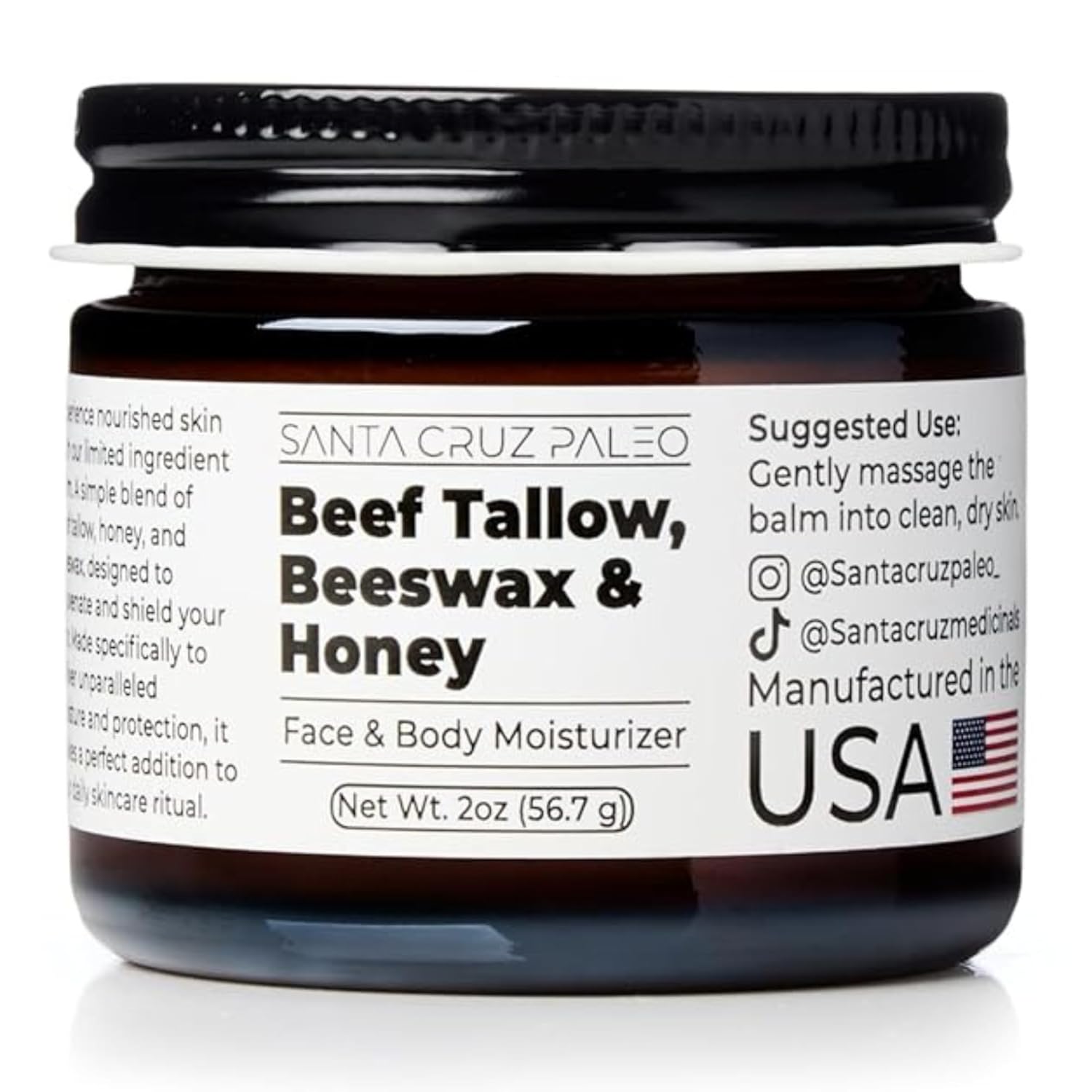
Don't want to DIY? Buy a ready-made tallow lip balm alternative

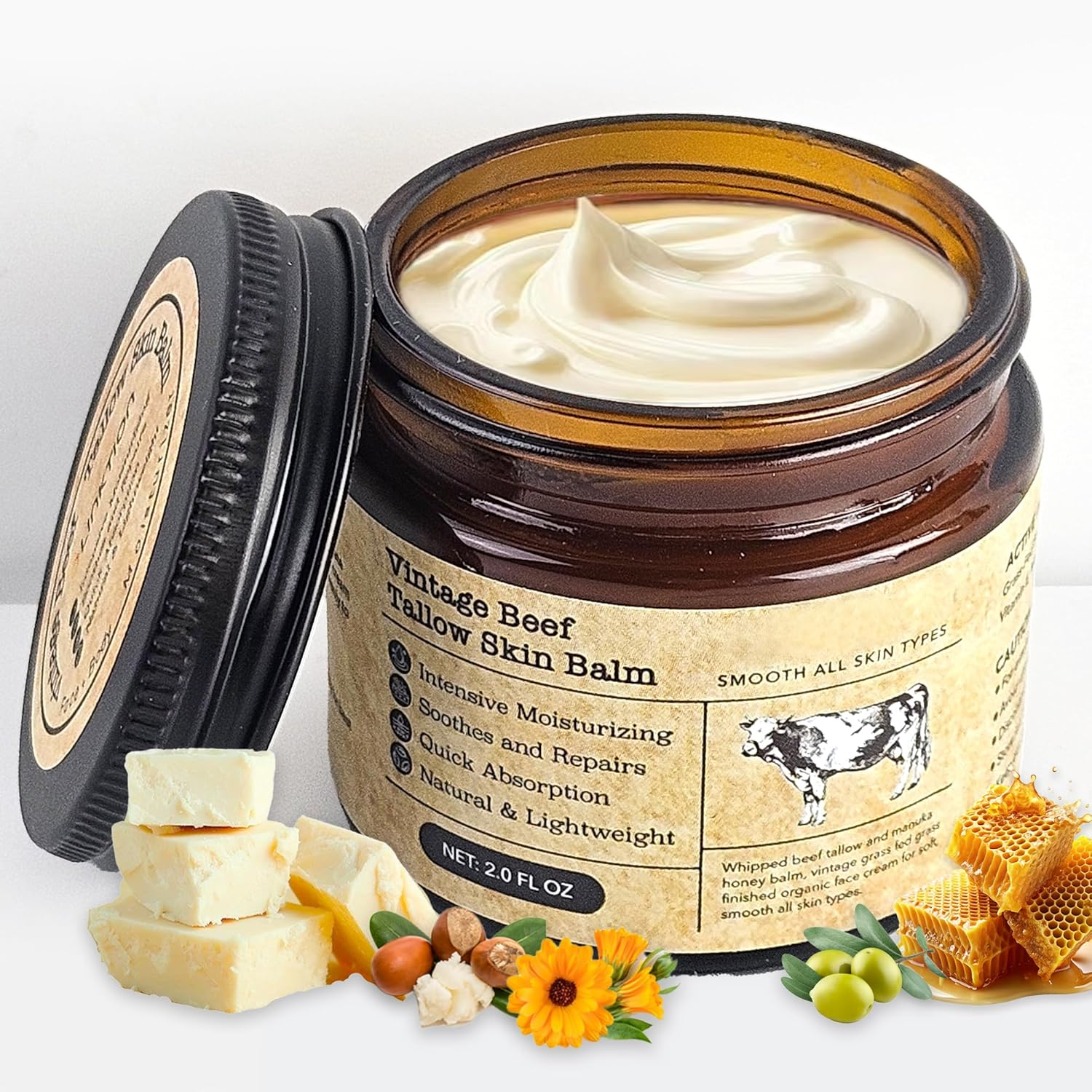
If you'd rather skip the prep, these are the closest commercial tallow products we'd recommend instead. Affiliate links.