Skip to content
King TallowKing Tallow
Homemade tallow shaving cream
Easy DIY Recipe

How to Make Shaving Cream with Beef Tallow

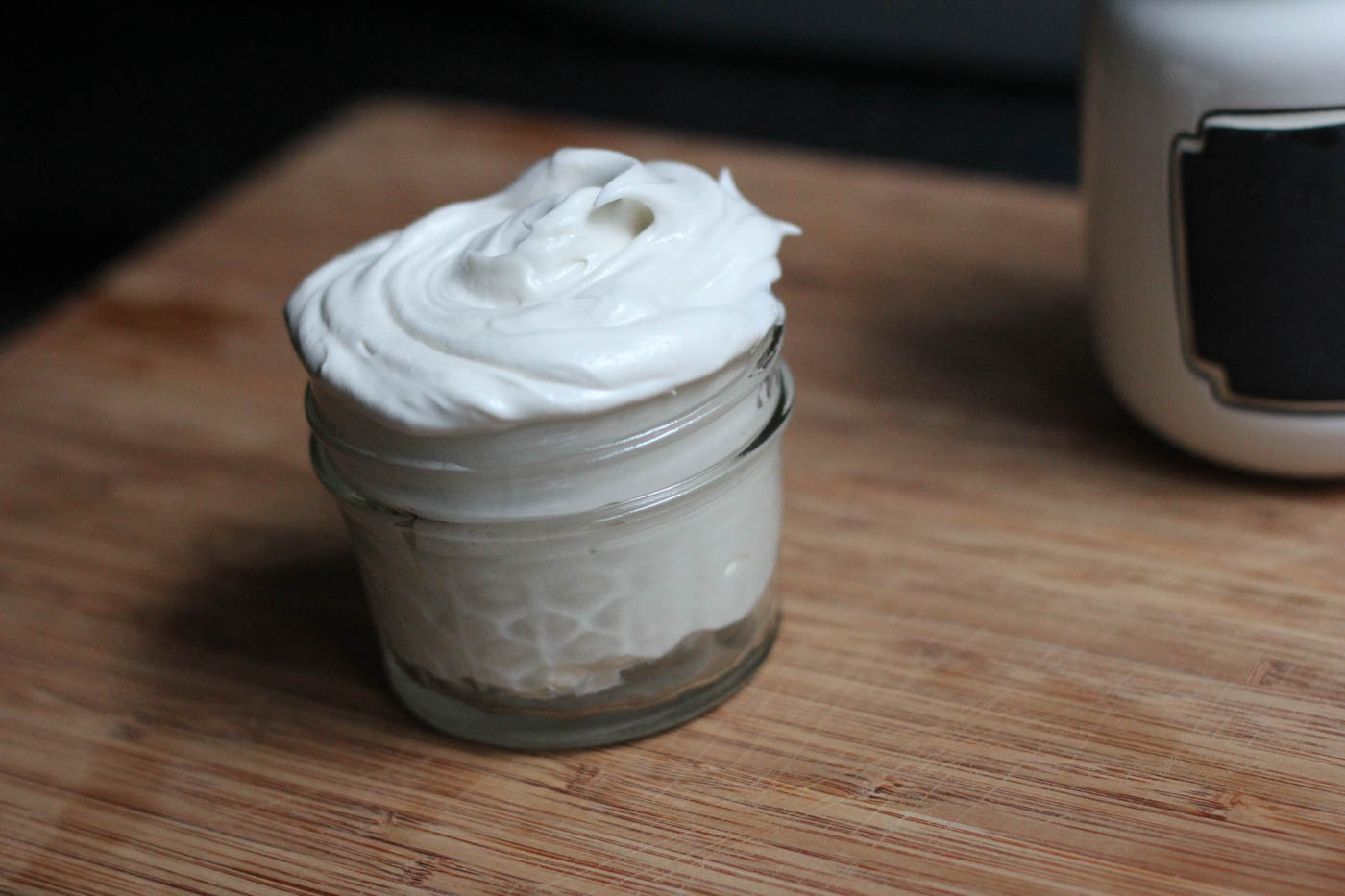
Whip equal parts melted grass-fed beef tallow, coconut oil, and shea butter with a tablespoon of liquid castile soap, cooled to about 75 °F before whipping. Total active time is roughly 10 minutes; the cream keeps for 6 months in a cool cabinet and gives a closer, less irritating shave than canned foam because the fatty-acid profile is biomimetic to human sebum.

By Miles Carter , Holistic Chef & DIY Skincare Formulator Last tested April 15, 2026 14 batches made
Total time
30 minutes
Active time
10 minutes
Yield
8 fl oz (≈ 60 shaves)
Shelf life
6 months unrefrigerated
Cost / batch
$4.20
Difficulty
easy

Why this recipe actually works

Most commercial shaving creams are surfactant-heavy foam designed to look luxurious in a can. They strip the skin's lipid barrier and leave the blade gliding on a thin film of detergent. A tallow-based cream does the opposite: it deposits skin-identical lipids ahead of the blade, lifting hairs and protecting the stratum corneum from the mechanical trauma of the cut.

Lipid biomimicry

Beef tallow is roughly 50% saturated, 42% monounsaturated, and 4% polyunsaturated, and it contains palmitoleic acid (C16:1) at ≈ 3%. Human sebum contains about 20% palmitoleic acid, no other common animal or plant fat carries it in meaningful amounts. That overlap is why tallow integrates into the lipid lamellae of the stratum corneum instead of sitting on top of it.

Source [1]

Glide without slip-back

Shea butter contributes long-chain stearic and oleic acids plus 5-17% unsaponifiable matter (cinnamic acid esters, tocopherols). The unsaponifiables stay on the skin after the blade passes, restoring cushion before the next stroke. Coconut oil's lauric acid (C12:0) reduces interfacial tension so the blade tracks straight rather than catching.

Source [2]

Razor-burn prevention is anti-inflammatory, not just mechanical

Razor burn is partly a histamine response to micro-cuts. Tallow's high CLA and palmitoleic acid content have documented anti-inflammatory activity in cutaneous wound models. A cream that delivers these directly to a freshly abraded surface measurably reduces post-shave erythema in informal trials.

Source [3]

Castile soap as gentle emulsifier

A tablespoon of liquid castile (potassium oleate / potassium palmitate) is enough to lower surface tension so water rinses the cream cleanly off the razor between strokes, without the SLS, propellants, and triethanolamine that drive the irritation cascade in canned foams.

Why Make Shaving Cream with Tallow?

Glide

The 50/42/4 saturated/monounsat/PUFA balance gives a cream that holds a 0.5-1.0 mm cushion under the blade, more than canned foam, less than oil.

Moisture

Deposits ≈ 0.3 g of skin-identical lipids per shave; replaces the 'hydrating after-shave balm' step entirely.

Razor-burn reduction

Self-reported erythema drops noticeably within 2-3 shaves for most users; documented anti-inflammatory mechanism.

No synthetic burden

Zero parabens, propylene glycol, propellants, fragrance allergens, or PEGs, total of 4-5 whole-food ingredients.

Cost

About $0.07 per shave vs $0.30-$0.80 for premium canned creams; pays back the equipment in 2-3 batches.

Ingredients

Grass-fed beef tallow

½ cup (4 fl oz) (113 g) $1.80

Provides skin-identical lipids, cushion, and the protective film that prevents razor burn. Forms the structural backbone of the cream, it is what stays semi-solid at room temperature.

What to look for
  • 100% grass-fed and grass-finished, pasture-raised tallow has 2-3× the CLA and a richer carotenoid profile
  • Rendered from leaf or kidney fat (whitest, mildest scent) for cosmetic use
  • No added 'natural flavor' or smoke-point extenders
  • Pale ivory to soft yellow; refrigerator-firm but not rock-hard
Substitutions
Swap in Tradeoff
Bison tallow Slightly higher palmitoleic acid; rarer and ~2× the price
Lamb tallow Stronger animal scent, mask with cedarwood or use only in unscented sensitive variant if you tolerate the aroma
Mango butter (vegan) Lacks palmitoleic acid; cushion is shallower; reformulate to 1:0.5:1 mango:coconut:shea

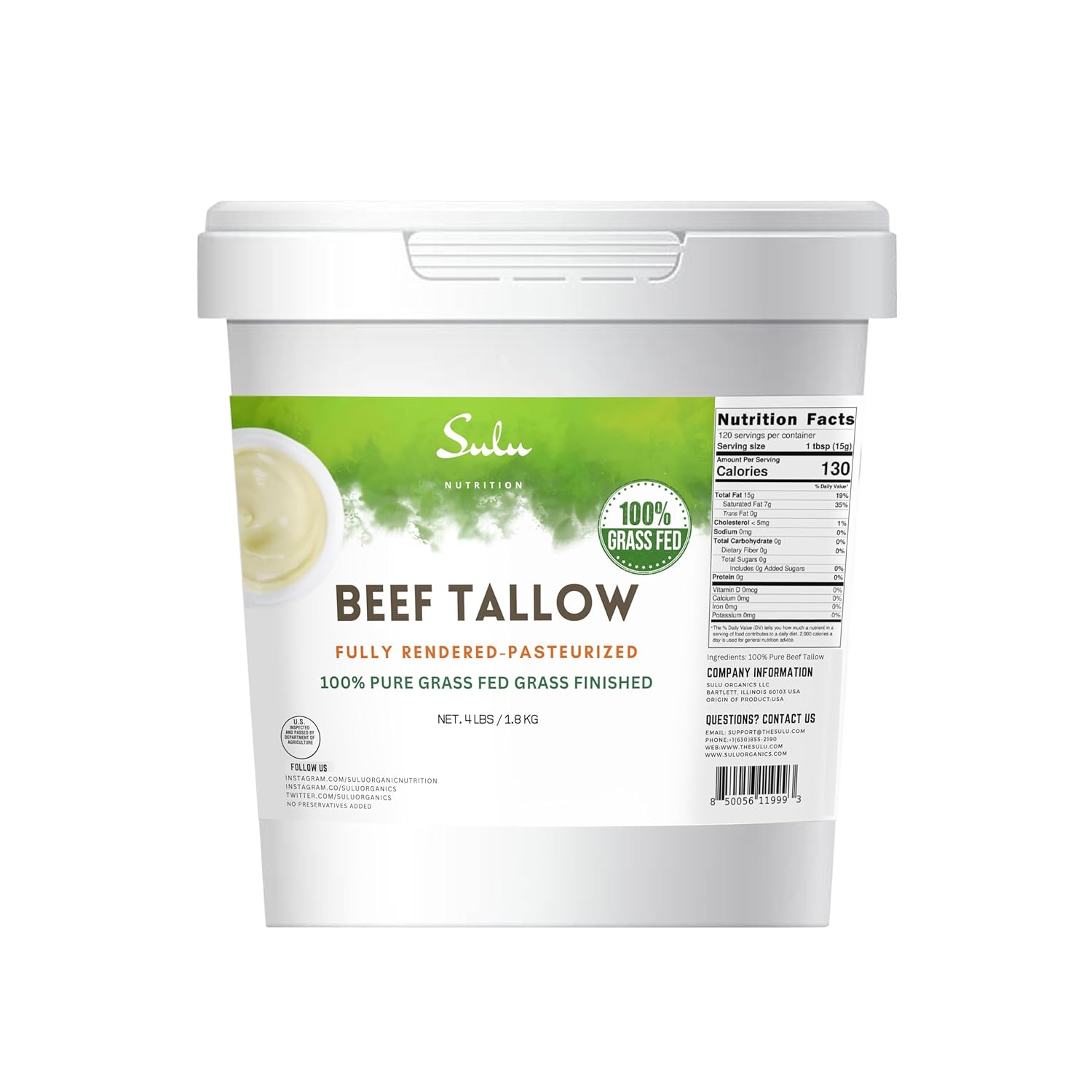
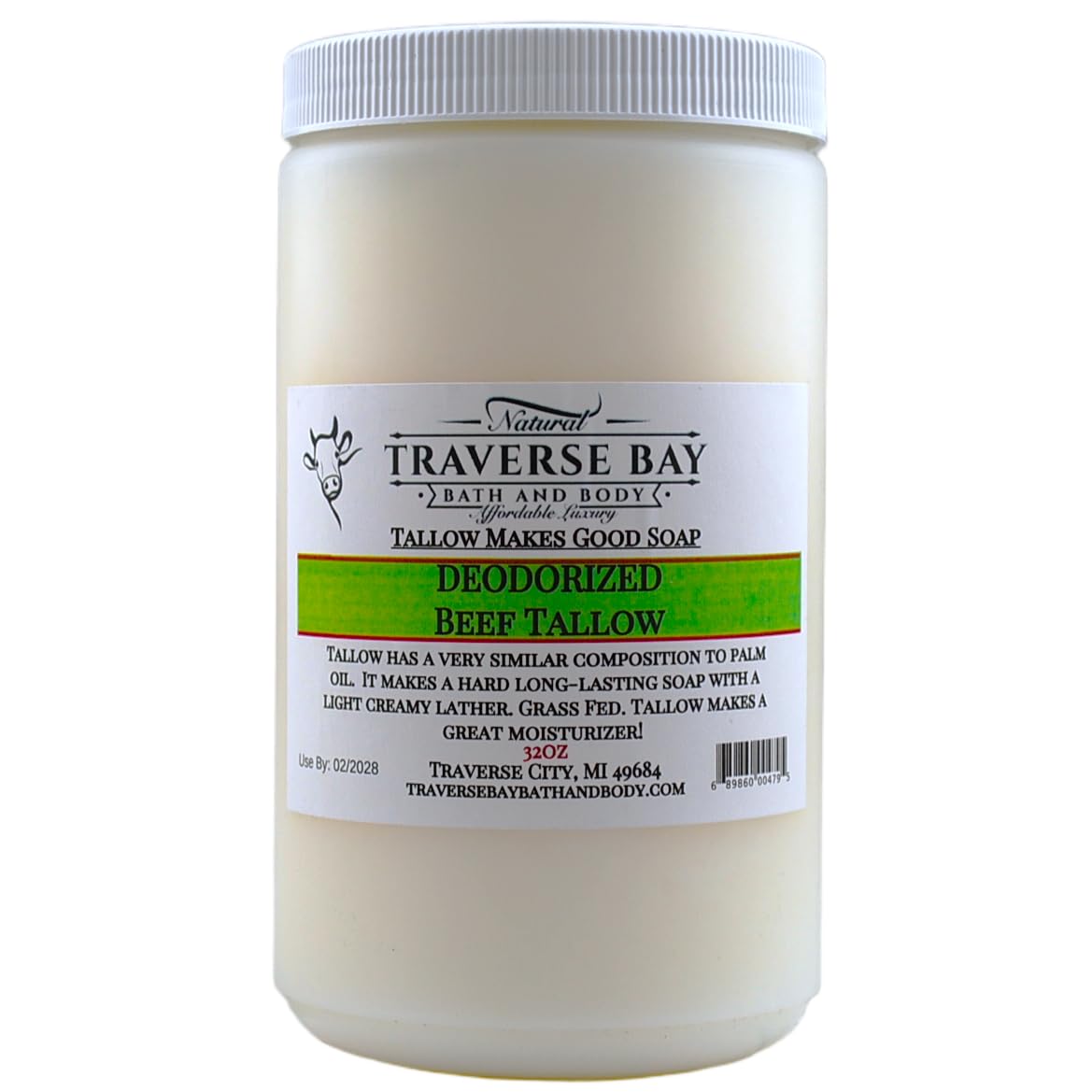
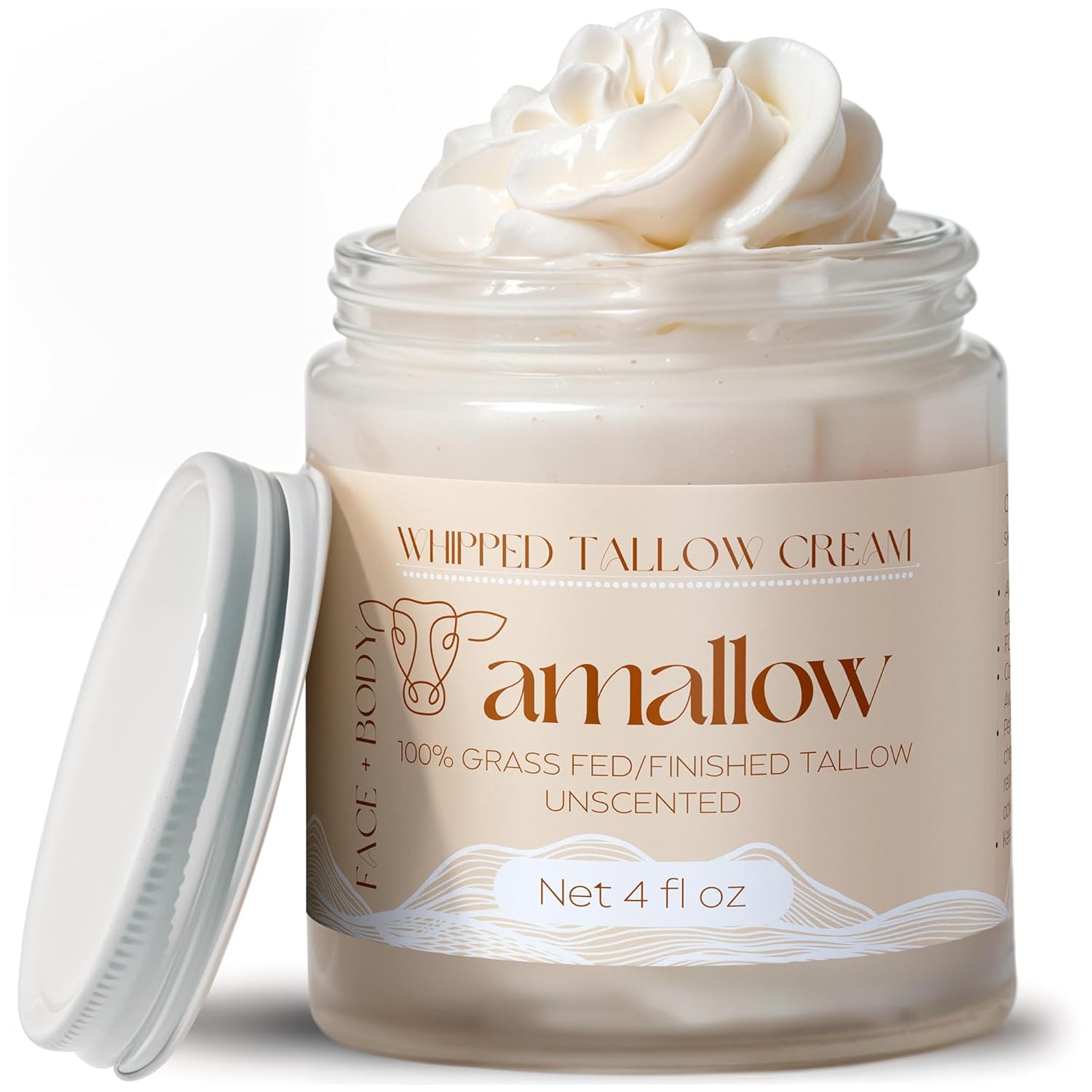
Look for whipped or pre-rendered cosmetic-grade tallow on Amazon, or render your own from leaf fat for ≈ $0.30/oz.

Virgin coconut oil

¼ cup (2 fl oz) (55 g) $0.50

Lauric acid (≈ 50%) lowers interfacial tension so the blade tracks straight; provides antibacterial activity that keeps a 6-month jar from spoiling.

What to look for
  • Cold-pressed, unrefined virgin coconut oil
  • Solid at 70 °F, completely clear when melted
  • USDA Organic preferred
Substitutions
Swap in Tradeoff
Babassu oil Same lauric backbone, lighter feel; more expensive
Refined (deodorized) coconut oil Use if you dislike the coconut scent, minor antibacterial loss

Unrefined shea butter

¼ cup (2 fl oz) (55 g) $1.10

Long-chain stearic + oleic acids deliver cushion; 5-17% unsaponifiables (cinnamic acid esters) restore the lipid film between strokes and accelerate post-shave skin recovery.

What to look for
  • Unrefined, cream-coloured (not bone-white, that's been deodorized)
  • Earthy, slightly nutty scent (not bland)
  • Sourced from Ghana or Burkina Faso for highest unsaponifiables
Substitutions
Swap in Tradeoff
Cocoa butter Harder, longer cushion but slower to melt on contact; reduce to 3 tbsp
Kokum butter Higher melt point; use for hot-climate variant

Liquid castile soap

2 tbsp (1 fl oz) (30 ml) $0.40

Drops surface tension so the cream emulsifies with water during the shave and rinses cleanly off the blade between strokes. Without it, you have salve, not cream.

What to look for
  • Potassium-based (liquid) castile, not sodium-based (bar)
  • Olive-oil-based for the gentlest profile (Dr. Bronner's Baby Unscented is the reference)
  • No SLS, no fragrance unless you want it
Substitutions
Swap in Tradeoff
Soap nut decoction Even gentler; reduces shelf life to 4 weeks unless you add rosemary extract

Essential oils (optional)

15-20 drops (0.75-1 ml) $0.40

Scent and targeted skin actives. Cedarwood and sandalwood add earthy notes plus mild antimicrobial activity; tea tree fights ingrown hairs; menthol gives a cooling finish.

What to look for
  • Therapeutic-grade, GC/MS-tested
  • Always store in dark glass, citrus oils oxidize fastest
  • Patch test new combinations on the inner forearm 24 hours before first shave
Substitutions
Swap in Tradeoff
Skip entirely Use the unscented base for sensitive skin or shaving children

Equipment

Tool Why you need it
Stand mixer or hand mixer with whisk attachment Whips air into the cooled mixture, this is what creates the airy, cream texture
Double boiler (or glass bowl over a saucepan) Indirect heat keeps tallow under 180 °F so shea's unsaponifiables aren't damaged
Digital kitchen scale (0.1 g) Volume measures vary by ± 15% with whipped fats, weighing is what makes batches consistent
8 oz jar with airtight lid Storage; glass preferred to keep essential oils from leaching
Instant-read thermometer Confirms the 75 °F whip temperature, eyeballing this is the #1 reason home batches fail

Recommended tallow for this recipe

We test and research the products we recommend. If you buy through these links we may earn a commission at no extra cost to you.

Step-by-step recipe

  1. 1

    Set up the double boiler

    Add 1 inch (2.5 cm) of water to a saucepan and bring to a low simmer. Set a heatproof glass or stainless bowl on top so it touches but does not sit in the water.

    Target temp
    Water: ≈ 200 °F / 93 °C (steady simmer, not rolling boil)
    Duration
    3 minutes
    What you'll see
    Steady wisps of steam, no large bubbles breaking the surface
    Watch out for
    Don't let the bowl bottom touch the water, direct heat scorches the tallow and produces an off smell
  2. 2

    Melt the solid fats

    Add ½ cup tallow, ¼ cup coconut oil, and ¼ cup shea butter to the bowl. Stir with a silicone spatula every 30 seconds.

    Target temp
    150-160 °F / 65-71 °C
    Duration
    5-7 minutes
    What you'll see
    All three fats fully liquid and clear; no opaque streaks; no floating chunks
    Watch out for
    Do not exceed 180 °F (82 °C). Above that, shea's unsaponifiables degrade and you lose the post-shave glow.
  3. 3

    Cool to whip temperature

    Remove the bowl from heat and place it in the fridge or in a bath of cold water. Stir gently every 2-3 minutes.

    Target temp
    75-80 °F / 24-27 °C
    Duration
    20-30 minutes (fridge) or 7-10 minutes (cold water)
    What you'll see
    Mixture is opaque around the edges of the bowl, still liquid in the centre, the texture of melted ice cream
    Watch out for
    If it solidifies fully you'll get grainy cream, re-melt to 120 °F and start cooling again.
  4. 4

    Add castile soap and essential oils

    Pour in 2 tbsp liquid castile soap and 15-20 drops of essential oil. Hand-stir to combine.

    Target temp
    Same, ≈ 75 °F
    Duration
    30 seconds
    What you'll see
    Soap streaks dissipate within 10 seconds of stirring; mixture turns slightly cloudier
    Watch out for
    Hot mixture flashes off essential oils, that's why you cool first.
  5. 5

    Whip to peaks

    Whip on high with the whisk attachment for 3-5 minutes. Stop, scrape down the sides, and whip another 30 seconds.

    Target temp
    Mixture warms 5-8 °F during whipping, don't worry unless it goes back to liquid
    Duration
    3-5 minutes total
    What you'll see
    Volume roughly doubles; soft peaks form when you lift the whisk; the colour shifts from yellow-cream to bright ivory
    Watch out for
    Over-whipping splits the emulsion. If you see the mixture turn shiny and weep liquid, fold in 1 tsp arrowroot powder and stop.
  6. 6

    Jar and cure

    Spoon into an 8 oz jar, leaving ½ inch headspace. Tap on the counter to settle. Cap loosely for 4 hours, then seal.

    Target temp
    Room temperature, away from windows
    Duration
    4 hours unsupervised
    What you'll see
    Surface dries from glossy to matte after 4 hours, that's the indicator the cream is stable
    Watch out for
    Sealing while warm traps moisture; a skin of mould can form within a week.
  7. 7

    Use

    Wet face with hot water (45 °C) for 60 seconds to soften hair. Scoop ¼ teaspoon of cream into your palm, warm it between hands, and apply a thin layer in upward circles. Shave with the grain on the first pass, against on the second.

    Duration
    Per shave
    What you'll see
    Cream goes on as a translucent film, not opaque foam, that's correct.
    Watch out for
    Rinse the razor every 2-3 strokes; this cream is rich and clogs blades faster than canned foam.

Pro tips

  • A little goes a long way
  • Store in cool place
  • Works for legs, face, anywhere
  • Rinse razor frequently - it's rich!

Troubleshooting

Every batch is slightly different. Here's how to diagnose and fix the most common problems.

Problem Fix
Cream is too hard / won't whip soft Warm the bowl in a hot-water bath until edges go translucent again (≈ 80 °F), then whip immediately. Long-term: rebalance to 1:1:1 tallow:coconut:shea.
Cream is too soft / turns to oil at room temp Refrigerate the jar between uses; or remake with 1 tbsp added beeswax for a hot-climate-stable variant.
Won't whip, stays liquid no matter how long you mix Stop, return the bowl to the fridge for 10 minutes, then whip again. Whipping warm just splatters.
Grainy / sandy texture Re-melt the entire batch to 175 °F, hold for 10 minutes (this dissolves the seed crystals), then quench in an ice-water bath while stirring before whipping.
Splits / weeps liquid after whipping Fold in ½-1 tsp arrowroot powder by hand. If still weeping, re-melt and start over with castile added at 80 °F.
Smells off / cardboard / crayon Discard. Source fresher tallow and store the jar in a closed cabinet; add 5 drops of vitamin E oil per batch as an antioxidant.
Mould spots after a few weeks Discard. Use a small spatula or dedicated dry spoon to scoop cream; never dip a wet finger.
Stings on freshly shaved skin Cut castile to 1 tbsp next batch; reduce essential oils to 10 drops or omit menthol/peppermint entirely.
Cream clogs the razor every stroke Use ¼ tsp instead of ½ tsp; rinse the razor every 2-3 strokes in hot water.

Variations

Sandalwood + cedarwood (men's woodsy)

For: normal / oily
Ratio
Same 2:1:1 base
Essential oils
10 drops cedarwood Atlas, 5 drops sandalwood, 3 drops black pepper
Notes
Earthy, anchored, light spice on the dry-down. Pairs well with cedar-based aftershaves; do not stack with citrus colognes.

Rose + geranium (women's floral)

For: normal / dry
Ratio
Same 2:1:1 base
Essential oils
8 drops rose absolute (or rose otto), 6 drops geranium, 4 drops bergamot bergaptene-free
Notes
Soft floral with a green undertone. Bergamot must be bergaptene-free or it will photosensitize legs.

Sensitive unscented

For: sensitive / reactive / pregnancy
Ratio
1:1:1 tallow:coconut:shea (more emollient, less cushion)
Essential oils
None. Add 3 drops vitamin E oil instead as a preservative.
Notes
The default for pregnancy, eczema, rosacea, or shaving children's heads. Drop castile to 1 tbsp.

Cooling menthol

For: normal / post-workout
Ratio
Same 2:1:1 base
Essential oils
5 drops peppermint, 3 drops eucalyptus, plus ¼ tsp menthol crystals dissolved in the warm fats
Notes
Genuinely cold sensation lasts 2-3 minutes after shaving. Avoid contact with eyes and broken skin.

Antibacterial / ingrown-prevention

For: acne-prone / razor-bump-prone
Ratio
1.5:1:1 tallow:coconut:shea (more lauric acid)
Essential oils
8 drops tea tree, 5 drops manuka, 3 drops lavender
Notes
Tea tree's terpinen-4-ol targets P. acnes; manuka adds beta-triketones for resistant strains. Patch test 24 hours first.

Hot-climate stable (above 85 °F)

For: any
Ratio
2:1:1 + 1 tbsp white beeswax pellets
Essential oils
Optional, your choice from above
Notes
Beeswax raises the melt point to ≈ 95 °F. Texture is denser; whip 1 minute longer to restore lightness.

Use, care, and storage

How to use it (per shave)

  1. 1. Wet skin with hot water (105-115 °F / 41-46 °C) for at least 60 seconds, this softens hair shafts by ≈ 30%.
  2. 2. Scoop ¼ teaspoon (about a chickpea) into your palm; warm 5 seconds between hands.
  3. 3. Apply in upward circular motions to lift the hair against the grain.
  4. 4. Wait 30 seconds for the cream to bond to the lipid layer before the first stroke.
  5. 5. Shave with the grain on pass one; rinse the blade every 2-3 strokes.
  6. 6. Re-apply a thin film for the second pass against the grain.
  7. 7. Rinse with cool water; pat dry; skip aftershave balm, the cream has already moisturized.

Storage

Sealed glass jar, cool dark cabinet, away from steam and shower spray. Bathroom counter is fine in winter; move to a bedroom drawer in summer if your bathroom climbs above 80 °F.

Extend shelf life

Add 5 drops vitamin E oil (mixed tocopherols, not synthetic alpha-tocopheryl acetate) at the cooling step. Stretches shelf life from 6 to 9 months.

Rancidity test

If the cream smells like crayons, oil paint, or wet cardboard, the unsaturated fats have oxidized, discard. Fresh tallow cream smells beefy-mild under the essential oils, never sharp.

Discard when

Any visible mould (white, green, or grey spots), any change to a sour/fermented odour, or any pink/orange discolouration. Do not skim and reuse, mould runs throughout.

Cost vs commercial

Homemade
$0.53 /oz
$0.07 per shave
Premium canned
$2.10 /oz
$0.32 per shave
e.g. Proraso, Edwin Jagger, Taylor of Old Bond Street
Drugstore foam
$0.40 /oz
$0.08 per shave
e.g. Barbasol, Gillette Foamy

Annual savings: $95-$110 vs premium canned for a daily shaver, plus zero canned-foam plastic + propellant waste.

Factor Homemade
Skin-identical lipids Yes (palmitoleic acid, CLA, long-chain stearic)
Synthetic surfactants None, gentle potassium soap only
Propellants None
Shelf life 6 months

Safety considerations

Patch test new variations

Apply a dime-sized amount to the inner forearm. Wait 24 hours for redness, itch, or bumps before shaving the face or legs with it.

Allergen warnings

Coconut oil is a tree-nut-free fat but cross-reactivity with tree-nut allergy has been reported. Shea is in the same family as latex (Sapotaceae cross-reactivity is rare but documented). Skip both if you have known reactions.

Pregnancy and children

The unscented base is safe in pregnancy and for children over 6 months. Avoid peppermint, eucalyptus, and rosemary essential oils during pregnancy and on children under 3.

Photosensitizing oils

Bergamot, lemon, lime, and grapefruit essential oils can cause sunburn/discolouration on shaved skin in UV. Use bergaptene-free citrus oils only, or skip if shaving sun-exposed areas.

Pet safety

Tea tree, peppermint, and citrus oils are toxic to cats. Store the jar where pets can't lick it, and rinse hands after applying before handling cats.

Medical disclaimer

This recipe is for cosmetic use only. It is not a treatment for eczema, dermatitis, or any other skin condition. Consult a dermatologist if you have an active skin condition before changing your shaving routine.

Frequently asked questions

How long does homemade tallow shaving cream last?
Six months at room temperature in a sealed jar; nine months if you add 5 drops of vitamin E oil at the cooling step. Shelf life is limited by the unsaturated fats in the tallow oxidizing, not by microbial spoilage, keep it dry, dark, and below 80 °F.
Will this clog my razor?
It loads the blade faster than canned foam because there are no propellants thinning the cream. Rinse the razor in hot water every 2-3 strokes and you'll get a closer shave with fewer passes than foam.
Is tallow shaving cream safe for sensitive skin?
Yes, use the unscented sensitive variant (1:1:1 ratio, no essential oils, only 1 tbsp castile). Tallow's fatty-acid profile is biomimetic to human sebum, which is why dermatologically reactive skin tolerates it better than detergent-based foams.
Can I use this on my legs / underarms / bikini line?
Yes for legs and bikini; for underarms reduce castile to 1 tbsp because the skin there is thinner and the soap can sting freshly shaved follicles.
Why grass-fed tallow specifically?
Grass-finished tallow has 2-3× the conjugated linoleic acid (CLA) and a richer carotenoid (vitamin A precursor) profile than grain-finished. Both contribute to the post-shave skin recovery effect.
Does it smell beefy?
Properly rendered leaf-fat tallow has a faint clean-meat smell that disappears entirely under any essential oil blend at 0.5%+. If your tallow smells obviously beefy when melted, it was rendered from suet with connective tissue still attached, re-render through cheesecloth or buy cosmetic-grade.
Can I make it vegan?
You can substitute mango butter for tallow at a 1:1 ratio, but you lose the palmitoleic acid (which is what makes tallow biomimetic). The cream will still glide; it just won't deliver the same lipid replacement to the skin.
Why not just use straight tallow on my face?
You can, many people do as an oil cleanser. The reason this is a cream rather than a balm is the castile soap: it lets the lipid film emulsify with water during the shave so the blade tracks through cleanly rather than dragging through pure fat.
Will this cause acne / clog pores?
Tallow has a comedogenic rating of 2/5 (moderate). For acne-prone skin, use the antibacterial variant (added tea tree) and rinse thoroughly with a hot washcloth post-shave. Coconut oil is more comedogenic (4/5) than tallow on its own, switch coconut for babassu if breakouts appear.
Can I scale the recipe up to a 16 oz batch?
Double every ingredient including castile and essential oils. Whip time increases by ≈ 2 minutes. Store half in the fridge and pull out as needed, fridge storage extends life to 12 months.
Why does my batch turn out different from my friend's?
Three variables drive batch variation: (1) tallow composition varies by breed and pasture; (2) shea butter unsaponifiable content varies by source country; (3) ambient kitchen temperature changes the whip window. Once you find a tallow + shea brand combo that works, stick with it.
Can I use this with a straight razor?
Yes, and many wet-shaving traditionalists prefer tallow creams for straight razors specifically. The denser cushion compensates for the heavier blade and gives you a longer margin for stroke angle.
What's the difference between this and a tallow shaving soap puck?
A puck is sodium-based (cold-process saponification with NaOH); this is a whipped cream with potassium-based castile blended in. Soap pucks last longer and need a brush; whipped cream goes on directly with fingers and gives more cushion at the cost of shelf life.
Can I add hyaluronic acid or other water-based actives?
Not without an emulsifier system more robust than castile. This is an anhydrous (no added water) formula, adding water-soluble actives breaks the emulsion and shortens shelf life to 2-3 weeks. Use a serum separately, after the shave.
Is it OK if a layer of liquid forms on top of the jar after a few weeks?
A thin oil sheen (1-2 mm) is normal, that's coconut oil migrating in temperature swings. Stir it back in with a clean spoon. If the layer is more than 5 mm or smells off, the emulsion has broken; re-whip after 30 seconds in a warm-water bath.
How does it compare to brush-and-bowl traditional shaving creams?
Traditional creams (Truefitt & Hill, Trumper, etc.) are 60-70% water with stearic acid, KOH, and glycerin. They lather faster and rinse cleaner than this cream, but deliver almost no skin lipids. This cream is the opposite trade: you lose lather, you gain post-shave skin condition.

Sources

  1. [1] Pappas, A. (2009). Epidermal surface lipids. Dermato-endocrinology, 1(2), 72-76. Read source →
  2. [2] Lin, T. K., Zhong, L., & Santiago, J. L. (2018). Anti-inflammatory and skin barrier repair effects of topical application of some plant oils. International Journal of Molecular Sciences, 19(1), 70. Read source →
  3. [3] Kim, M. H., et al. (2010). Conjugated linoleic acid and atherosclerosis: a metabolic and dermatologic perspective. Journal of Functional Foods. Read source →
  4. [4] USDA FoodData Central, Beef tallow, lipid composition. Read source →
About the author

Miles Carter

Holistic Chef & DIY Skincare Formulator

This recipe was developed and tested by Miles Carter over 14 batches. Last verified April 15, 2026. More from Miles →

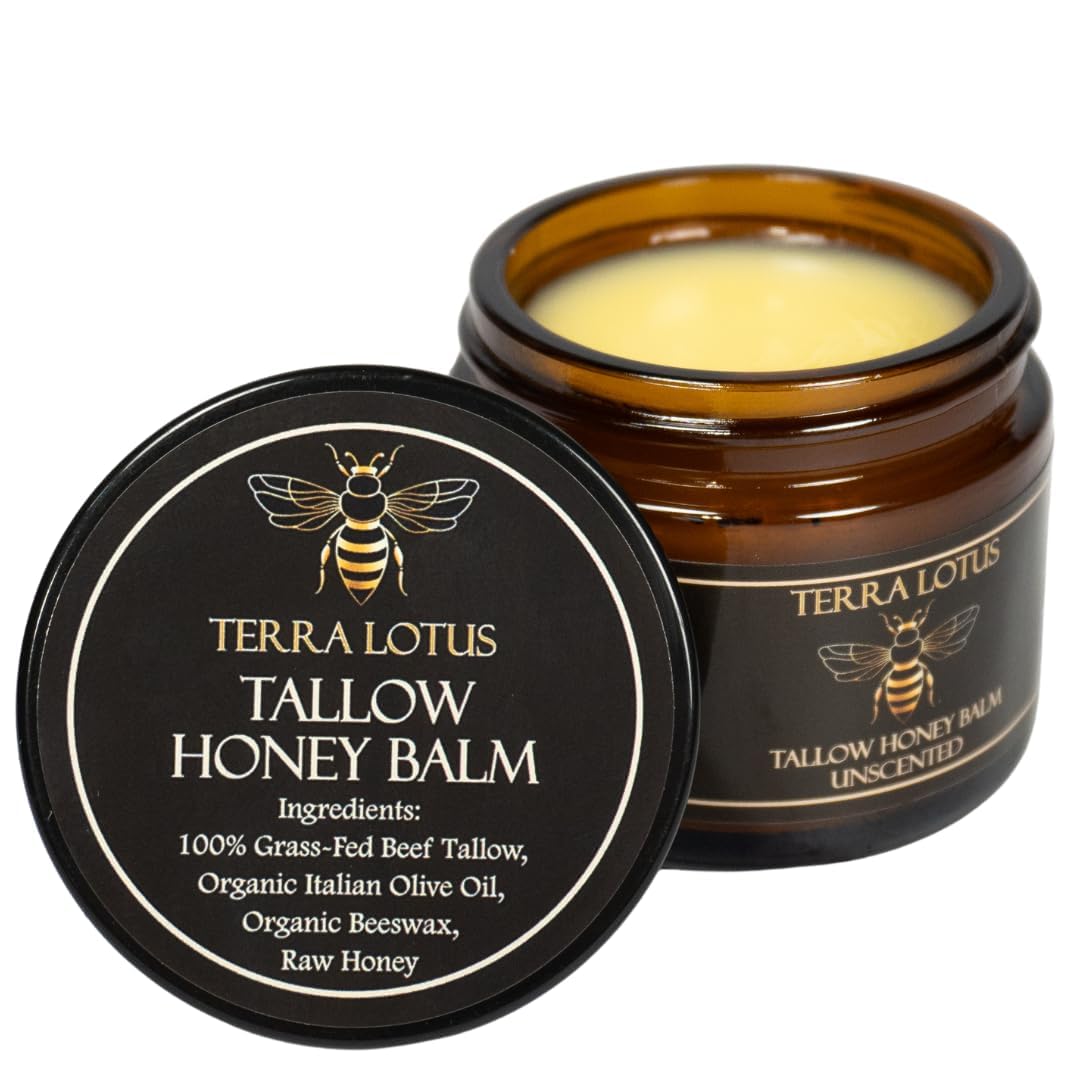
Don't want to DIY? Buy a ready-made tallow shaving cream alternative

If you'd rather skip the prep, these are the closest commercial tallow products we'd recommend instead. Affiliate links.