


Duck Fat
A comprehensive guide to duck fat - from rendering to cooking to skincare.
Anas platyrhynchos domesticus
Also known as: duck tallow, rendered duck fat, duck drippings
Duck Fat Properties
Texture
Soft, semi-solid at room temperature
Availability
Good - grocery stores, butchers, online
Nutrition Highlights
- High in oleic acid (like olive oil)
- Good omega-3 to omega-6 ratio
- Contains linoleic acid
- Lower in saturated fat than beef tallow
Best Uses for Duck Fat
- Roasting potatoes
- Confit
- Frying
- French cuisine
Duck Fat vs Beef Tallow
Duck fat is softer and has a lower smoke point than beef tallow. It has a more pronounced savory flavor. Often preferred for potatoes and poultry dishes. More expensive but prized in French cooking.
Rendering Duck Fat
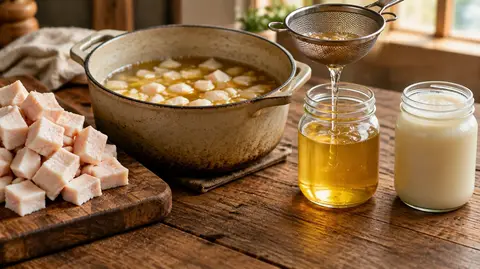
Save fat from roasting ducks or buy duck skin/fat trimmings. Render slowly to avoid burning. Duck fat liquefies at low temperatures and stores well in the refrigerator for months.
Historical Uses
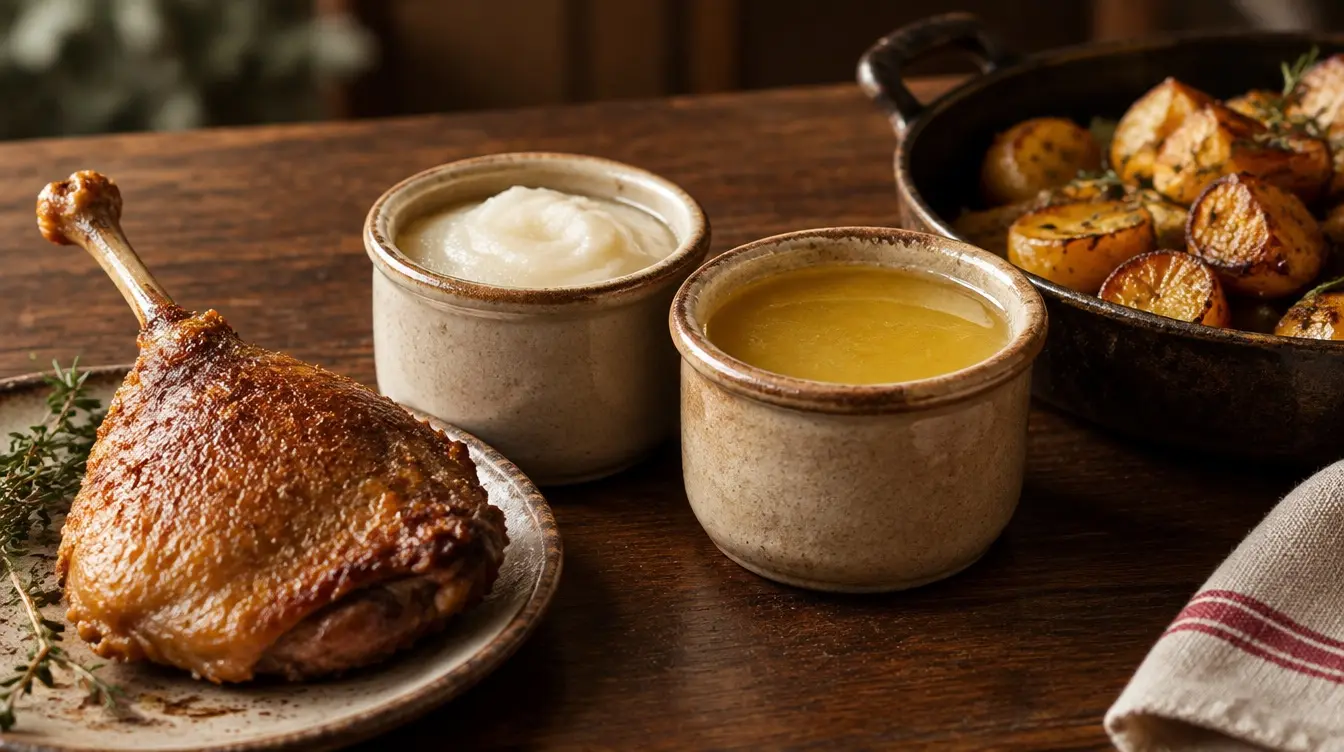
Duck fat is a cornerstone of French cuisine, particularly in the southwest regions. Duck confit, made by cooking duck legs in their own fat, dates back centuries as a preservation method.
Where to Buy Duck Fat
- Save from roasting whole ducks
- Butcher shops
- Grocery stores (D'Artagnan, etc.)
- Online retailers
Frequently Asked Questions
What is duck fat?
Duck Fat is rendered fat from Anas platyrhynchos domesticus. Also known as duck tallow, rendered duck fat, duck drippings. It has a smoke point of 375°F (190°C).
How does duck fat compare to beef tallow?
Duck fat is softer and has a lower smoke point than beef tallow. It has a more pronounced savory flavor. Often preferred for potatoes and poultry dishes. More expensive but prized in French cooking.
Where can I buy duck fat?
Save from roasting whole ducks. Butcher shops. Grocery stores (D'Artagnan, etc.). Online retailers