

This post contains affiliate links. We may earn a commission if you purchase through these links, at no extra cost to you.
Beef tallow is rendered beef fat. That is the whole answer. The rest of this guide is the part you came here for, the part that explains why your grandmother kept a jar of it next to the stove, why every restaurant chain quietly stopped using it in the 1990s, and why every steakhouse you actually want to eat at is using it again.
I have been cooking with tallow for about six years and making my own skincare from it for the last three. In that time the questions I get from friends, family, and readers fall into the same handful of buckets. What is it. How is it made. Does it taste like beef. Will it clog my arteries. Is grass-fed worth it. Can I really put it on my face.
This is the long answer. Pour a coffee.
The One-Sentence Definition
Beef tallow is the solid fat you get when you slowly melt down the suet, kidney fat, or trim fat of a cow and strain out the connective tissue.
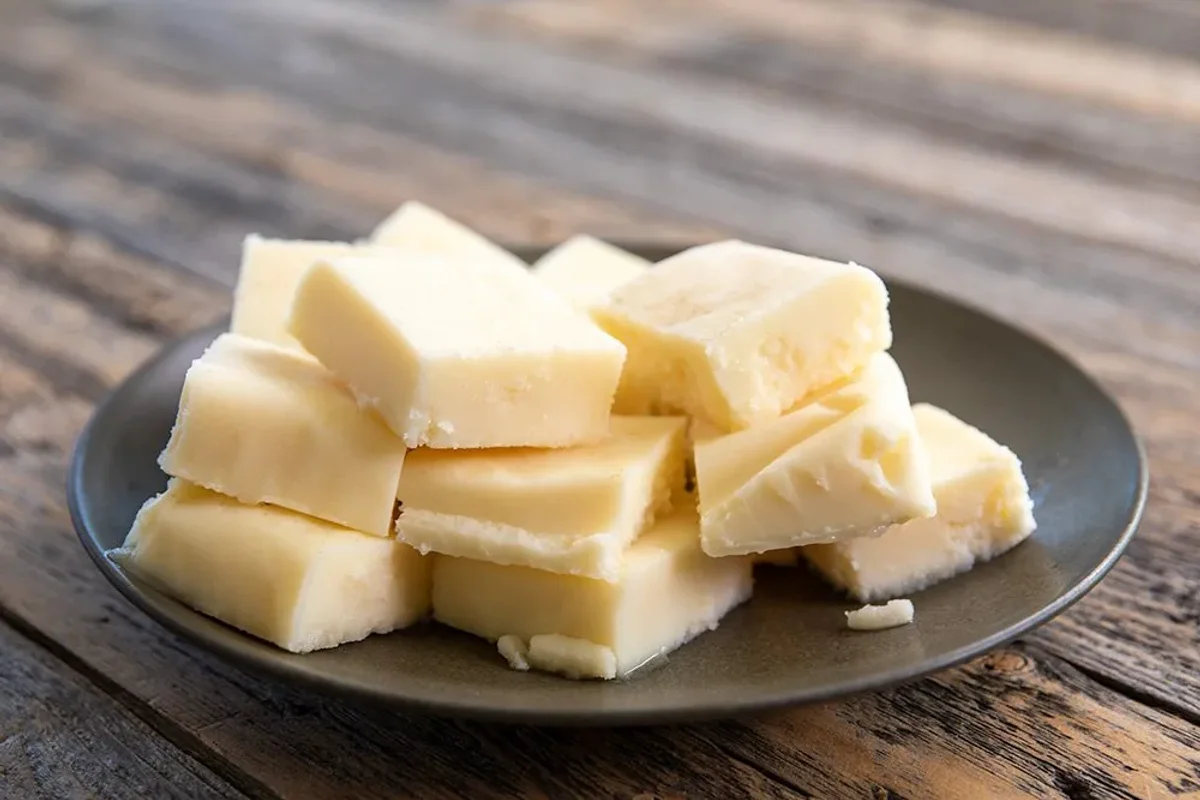
At room temperature it is white or pale ivory, soft enough to scoop with a spoon but firm enough to hold its shape. Pop it in the fridge and it goes hard. Melt it in a pan and it turns into a clear golden liquid that smells faintly like cooked beef and roasted nuts, depending on how it was rendered.
That is it. Tallow is not a marketing term. It is not a supplement. It is fat. The same fat humans have cooked with for at least the last 200,000 years.
How Tallow Is Made
The process is straightforward. You take beef fat, you cut it small, you heat it gently until the fat melts out of the protein and connective tissue, you strain the liquid, and you let it cool. That is rendering. I cover the full method in How to Render Beef Tallow at Home and you can also see my slow cooker method for the hands-off version.
There are two rendering styles that matter, wet and dry.
Wet rendering means you add water to the pot. The water keeps the temperature capped at around 212F, which protects the fat from browning and gives you a cleaner, more neutral end product. It is the method I use when I am making tallow for skincare or for delicate baking.
Dry rendering means no water. You heat the fat directly and let it sweat its own moisture out. The temperature climbs higher, the protein scraps brown slightly, and the finished tallow picks up a deeper, more savory flavor. That is the one you want for fries, burgers, and anything else where you actually want to taste it.
If you do not want to render your own, the 100% Pure Grass-Fed Beef Tallow (4 lbs) tub is what I keep on hand for cooking when I run out, and Traverse Bay Farms (32 oz) is the budget pick I send people who are just trying it for the first time. For the full sourcing breakdown, the buy guide walks through everything.
The Fatty Acid Profile (And Why It Matters)
Here is the actual composition of beef tallow by fatty acid, averaged across a normal feedlot cow:
- Palmitic acid (C16:0): ~26%. A saturated fat. Stable at heat. Your skin makes this one too.
- Oleic acid (C18:1): ~36%. A monounsaturated fat. Same family as olive oil. This is the single largest component.
- Stearic acid (C18:0): ~14%. Another saturated. Neutral effect on blood cholesterol in most studies.
- Palmitoleic acid (C16:1): ~3%. A rare monounsaturated. Your skin’s sebum contains this one in nearly identical proportions, which is the lipid biomimicry part of the skincare argument.
That math adds up to about 55% saturated, 42% monounsaturated, and 3% polyunsaturated. The polyunsaturated number is the one most people get wrong. Tallow is shockingly low in polyunsaturated fats, which is part of why it is so stable at heat and so resistant to going rancid in a jar on the counter.
Grass-fed tallow shifts this slightly. You get a higher conjugated linoleic acid (CLA) content, a slightly better omega-6 to omega-3 ratio, and more vitamin E and beta-carotene, which is why grass-fed tallow looks faintly yellow instead of stark white. I get into the grass-fed vs grain-fed comparison further down.
Where Tallow Comes From On the Cow
Not all fat on a cow is the same. The three you will see at a butcher counter or in an online listing are:
Leaf fat (suet). The dense, crumbly fat that wraps the kidneys and loins. This is the gold-standard rendering fat. It has the lowest moisture content, the cleanest flavor, and the highest yield. If you ask a butcher for “suet for rendering” this is what you should get. Expect 60-65% yield by weight after rendering.
Back fat. The thick fat cap along the back and shoulders. Softer than suet, a little more moisture, slightly more beefy in flavor. Great for everyday cooking tallow. This is what most online tallow comes from because there is more of it per cow.
Trim fat. The scraps left after butchering. Variable quality. Can be excellent or full of gristle depending on the butcher. I have rendered great batches of trim and one batch that was 40% connective tissue and barely worth the time.
I always ask for suet when I can get it, and I take back fat when I cannot. I have written about why beef tallow sometimes smells like beef and it almost always traces back to which cut of fat you started with.
What It Tastes Like
Cooked beef tallow tastes like beef. Not aggressively. Not the way bacon fat hits you. More like the background flavor of a great roast, distilled into a cooking fat.
If you wet-render it and strain it carefully, the flavor is so neutral that you can use it for biscuits, pie crust, and even pastry without anything tasting savory. If you dry-render it and let the protein scraps brown a little, you get that classic McDonald’s-fries-from-the-80s flavor, the one they spent years trying to fake with “natural beef flavor” after they switched to vegetable oil in 1990.
In a sear it is incredible. Steaks pick up a crust that is darker, crisper, and more beef-flavored than what you get with butter or oil. Eggs fried in tallow taste richer. Roasted potatoes pick up a flavor that no other fat replicates, which is the whole reason British chip shops used to use it exclusively. The cooking guide and the comparison vs lard get more specific about which fat to reach for in which situation.
What It Smells Like
In a closed jar at room temperature it smells faintly of nothing. Maybe a hint of cooked beef if you put your nose right up to it.
Warmed in a pan it smells like a Sunday roast in a way that surprises first-timers. Not unpleasant. Just present.
If your tallow smells aggressively beefy or has a barnyard funk, the rendering was off. Usually that means it cooked too hot, the meat scraps got toasted, or there was kidney fat that did not get cleaned before rendering. A second filtration through cheesecloth fixes most of it. I wrote a full diagnostic at why beef tallow smells like beef.
For skincare, neutral smell matters more. Wet-rendered, double-strained tallow is nearly odorless once it cools. The Traverse Bay 32 oz is deodorized using activated charcoal and is the closest store-bought option I have found to truly scent-free tallow.
Grass-Fed vs Grain-Fed
This is the question I get most.
grass-fed tallow is nutritionally better and aesthetically prettier. Grain-fed tallow is cheaper and more available. For cooking, the difference is small. For skincare, the difference is bigger because grass-fed tallow contains more fat-soluble vitamins (A, D, E, K2) and more CLA, which is the part of the conditioning argument that actually has research behind it.
Grass-fed tallow:
- Faint yellow tint from beta-carotene
- Slightly softer texture at room temp
- More omega-3 (still small in absolute terms)
- More CLA, more vitamin E
- 2 to 3x the price of grain-fed
Grain-fed tallow:
- Pure white
- Firmer at room temp
- Higher in palmitic and stearic
- Often easier to find in bulk
- Half the price or less
I cook with both depending on what I have. I make skincare exclusively with grass-fed. If you only buy one thing today, grass-fed 4 lbs covers both use cases.
How to Actually Use It
This is the part most articles skim. I will break it into the three buckets I get asked about most.
Cooking
Tallow is one of the best high-heat cooking fats on earth. Smoke point lands around 400F, which is higher than butter, higher than virgin olive oil, and on par with refined avocado oil. Use it for:
- Searing steak and chops
- Frying eggs, potatoes, chicken
- Roasting vegetables (carrots are next-level)
- Biscuits and pie crust as a butter substitute (1:1 by weight)
- Smash burgers
- Deep frying
Skip it for:
- Salad dressings (solidifies cold)
- Raw applications
- Anything where you want a neutral, fat-free taste
I cover this in detail in the cooking pillar guide and the olive oil comparison.
Skincare
Tallow on skin is the application that turned me from a cooking-only user into someone with a whole shelf of jars. The molecular structure is so close to human sebum that it absorbs in seconds and does not feel greasy after a couple minutes. For an overview, the skincare pillar covers it end to end, and the condition-specific pages at /tallow-for/ drill down on eczema, dry skin, mature skin, and a dozen others.
If you do not want to DIY, the Amallow Unscented whipped balm is the daily option I keep on my counter, and the Santa Cruz Paleo is what I hand to friends with sensitive skin because it has three ingredients total.
DIY
This is the rabbit hole. Tallow makes excellent:
- Face cream (recipe)
- Body butter (recipe)
- Soap (recipe)
- Lip balm (recipe)
- Deodorant (recipe)
- Shaving cream (recipe)
- Candles (recipe)
- Leather conditioner (recipe)
The full DIY index is at /make/. For the bulk base, the grass-fed 4 lb tub is what I use across the board.
Tallow vs Lard vs Suet vs Ghee vs Schmaltz
People mix these up constantly. Quick rundown.
Tallow is rendered beef fat. Solid at room temp. Mild beef flavor. Smoke point ~400F.
Lard is rendered pork fat. Solid at room temp, softer than tallow. Slightly sweeter, less beefy. Smoke point ~370F. Great for pie crust. The full breakdown lives in beef tallow vs lard and the programmatic compare/lard page.
Suet is the raw, unrendered fat from around the kidneys. It is what you start with before rendering it into tallow. You will see it sold for bird feeders or for pudding-making in British recipes.
Ghee is butter that has been simmered to drive off the water and milk solids. It is dairy fat. Different animal, different flavor, similar high-heat tolerance.
Schmaltz is rendered chicken or goose fat. Lighter than tallow. Strong poultry flavor. Used heavily in Eastern European Jewish cooking.
The category they all share is animal fats that solidify at room temperature, were used for everything for centuries, got demonized in the 1970s, and are now back on every chef’s shortlist.
Nutrition Basics
Per tablespoon (about 13g), beef tallow has roughly:
- 115 calories
- 13g total fat
- 7g saturated fat
- 5g monounsaturated fat
- 0.5g polyunsaturated fat
- 0g carbs, 0g protein
- Trace vitamin A, D, E, K (more in grass-fed)
- 0mg trans fat
The thing nutritionists missed for 40 years is that the saturated fat in tallow is not the same as the saturated fat in seed oils or processed foods. The 14% stearic acid component, in particular, has been shown in repeated studies to be neutral or slightly beneficial for LDL. The 36% oleic acid component is the same fat in olive oil that gets praised endlessly.
I am not a doctor and I am not telling you to ignore your cholesterol panel. I am telling you that the “saturated fat is dangerous” headline was based on the wrong saturated fats. The healthy debate post goes deep on the research if you want to follow the trail.
Common Myths
Myth: Tallow will give you a heart attack. The original studies that linked saturated fat to heart disease in the 1950s did not differentiate between trans fats (which are bad) and naturally occurring saturated fats (which are largely neutral). Modern meta-analyses keep failing to find a link between saturated fat and cardiovascular events. The story is more complicated than the headline.
Myth: Tallow goes rancid quickly. Tallow is one of the most shelf-stable fats on earth. Properly rendered and stored in a jar with a lid, it lasts 6-12 months at room temperature and longer in the fridge. I have used tallow that sat at room temp for nine months and tasted perfect.
Myth: Tallow on your face will cause acne. For most people, no. The lipid profile is closer to human sebum than any other available oil, which means it absorbs cleanly. People with active cystic acne should patch-test first, but the bigger risk in skincare is essential oils and fragrances, not the tallow base.
Myth: All tallow tastes like beef. Properly wet-rendered tallow is nearly flavorless. Browned, dry-rendered tallow tastes savory. Bad tallow tastes off. The rendering method is the variable.
Myth: Tallow is only for keto people. Tallow has been a cooking staple for every dietary tradition in the world. The keto crowd brought it back into the conversation, but it sits comfortably in a Mediterranean diet, a traditional French kitchen, or a Sunday-roast British household. The keto post covers the specifics.
Frequently Asked Questions
Is beef tallow the same as beef fat?
Almost. Beef fat is the raw fat before processing. Tallow is what you get after you slowly melt it down and strain out the protein and connective tissue. The same way bacon is pork belly that has been cured and smoked, tallow is beef fat that has been rendered.
Is beef tallow healthy?
Healthier than it was given credit for from the 1970s through about 2015. The fatty acid profile is roughly 55% saturated, 42% monounsaturated, and 3% polyunsaturated, which is much closer to what your body actually uses than the seed-oil-heavy fats that replaced it. The longer answer lives in is beef tallow healthy.
Can I use beef tallow on my face?
Yes. The lipid profile matches human sebum closely enough that it absorbs well and does not clog pores for most people. Start with a clean, unscented option like Amallow or Terra Lotus, patch-test, and read the skincare pillar for the actual routine.
How long does beef tallow last?
Six to twelve months at room temperature in a sealed jar. Longer in the fridge. The high saturated-fat content makes it shelf-stable in a way most plant oils are not.
Where do I buy good beef tallow?
Locally from a butcher if you have one. Online, my long-running picks are Grass-Fed 4 lb for the bulk cooking option and Traverse Bay 32 oz for the deodorized DIY base. The buy guide walks through everything else.
Can I substitute tallow for butter or oil in a recipe?
Usually 1:1 by weight. Tallow is 100% fat, butter is about 80% fat plus water, so you will get a slightly richer result with tallow. For pie crust and biscuits, the swap is a direct hit. For cakes and cookies, do a test batch first because the texture changes.
Bottom Line
Beef tallow is rendered beef fat, the most-used cooking fat in human history outside of the last 50 years, and one of the most underrated skincare ingredients on the planet. It is shelf-stable, high-heat tolerant, biocompatible with human skin, and finally getting taken seriously again after decades in the wilderness.
If you are just starting out, grab a small jar of Traverse Bay tallow, fry an egg in it tomorrow morning, and decide for yourself.