

This post contains affiliate links. We may earn a commission if you purchase through these links, at no extra cost to you.
I keep both on my counter. Two jars, side by side, scooped from with two different spoons because mixing them defeats the point. Tallow on the left, lard on the right. After six years of cooking with both, I have a clear opinion about which one wins which fight. The short version is that tallow wins more fights than lard, except for the two that matter most to a serious baker.
Here is the honest comparison.
What They Are
Beef tallow is rendered beef fat. The suet, kidney fat, or back fat of a cow, slowly melted down, strained, and cooled into solid form. The what is beef tallow guide has the full breakdown.
Lard is rendered pork fat. Usually the leaf fat (the soft, mild fat around the kidneys of the pig) or the back fat. Same rendering process, different animal.
Both are pure animal fat. Both have been used by every culture with access to livestock since the beginning of cooking. Both got demonized in the 1970s and 80s, and both are now back on credible chefs’ shelves.
The compare lard programmatic page has a more structured side-by-side if that is how your brain reads comparisons.
Fatty Acid Profiles
This is where the chemistry diverges.
Beef tallow (averaged):
- Palmitic acid (C16:0): 26%
- Oleic acid (C18:1): 36%
- Stearic acid (C18:0): 14%
- Palmitoleic acid (C16:1): 3%
- Linoleic acid (C18:2): 3%
- Total saturated: ~55%, monounsaturated: ~42%, polyunsaturated: ~3%
Lard (averaged):
- Palmitic acid (C16:0): 24%
- Oleic acid (C18:1): 44%
- Stearic acid (C18:0): 11%
- Linoleic acid (C18:2): 10%
- Total saturated: ~40%, monounsaturated: ~50%, polyunsaturated: ~10%
The biggest takeaway: lard has noticeably more polyunsaturated fat than tallow, mostly linoleic acid. That makes lard slightly softer at room temperature and slightly less stable at high heat. Tallow is the more saturated, more shelf-stable, more high-heat-tolerant of the two.
Lard from pasture-raised pigs has higher omega-3 content than feedlot lard. Tallow from grass-fed cattle has higher CLA content than feedlot tallow. Both upgrade nutritionally when the animal was raised right.
Smoke Point
- Tallow: ~400F
- Lard: ~370F
A 30-degree difference. Tallow handles aggressive searing and deep frying with more headroom. Lard handles everything in the 350F to 400F range without breaking down, which is most home cooking.
For deep frying, I use tallow. For roasting and pan-searing, either works. For baking, lard wins (see below).
Flavor
This is the second place they diverge.
Tallow tastes faintly of beef. The flavor is most pronounced when dry-rendered and reduced. Wet-rendered tallow is nearly flavor-neutral. In a hot pan it pulls slight savory notes through everything you cook in it. Steaks taste more like steak. Potatoes taste deeper. Eggs taste richer.
Lard tastes faintly of pork, but in a much more subtle way. Properly rendered leaf lard is almost flavorless. Back fat lard has slightly more pork character. Lard adds richness without imposing a flavor profile, which is why it is the gold standard for pie crust and biscuits.
Side by side, lard is the more neutral fat. Tallow is the more characterful one.
Traditional Uses
Tallow was the dominant frying fat in Britain (chip shops), the American South (cast-iron searing), and parts of central Europe. It is the fat behind classic beef-fat french fries, smash burgers, and steakhouse searing technique. The fast-food fries of the 1970s and 80s were almost all fried in tallow before the industry switched to seed oils in 1990.
Lard was the dominant baking fat in the American Midwest, Mexico (tamales, refried beans), the Caribbean, and Eastern Europe. Lard pie crust was the standard before vegetable shortening hit the market in 1911. Mexican carnitas confit-style cooking is still lard-based. Refried beans without lard are just beans.
Both fats were the workhorses of pre-industrial cooking. Their decline happened at the same time and for the same reasons.
Baking Performance
Here is where lard wins decisively.
Pie crust. Lard makes the flakiest pie crust on earth. The crystalline structure of lard fat melts at a slightly different rate than butter, which creates the layered, shattering flake that defines a great pie crust. Tallow makes a serviceable crust but not a great one. The fat is too saturated and stays solid too long in the oven.
Biscuits. Lard wins again. The tenderness and rise you get from cold lard cut into flour is what separates a great biscuit from a good one. Tallow biscuits exist and are fine. Lard biscuits are the gold standard.
Tortillas. Lard. Every time. The texture of a properly made flour tortilla depends on lard.
Tamales. Lard. The masa needs it.
Cookies and cakes. Neither. Use butter.
If you bake regularly, you need a jar of lard.
Frying and Searing Performance
Tallow wins these.
Steak sear. Tallow. The high smoke point, the beef-on-beef flavor reinforcement, the crust depth.
Smash burger. Tallow. Same reason.
French fries. Tallow. The flavor profile that built McDonald’s reputation in the 70s.
Fried chicken. Either, leans toward tallow for the higher smoke point.
Roasted potatoes. Tallow, by a clear margin. The browning is deeper.
Pan-fried fish. Lard, leans toward neutral. Or use butter.
Stir-fry (non-Asian). Either, depending on flavor preference.
For the full breakdown of cooking-by-dish, the cooking pillar covers it.
Nutrition Side by Side (per tablespoon, ~13g)
| Beef Tallow | Lard | |
|---|---|---|
| Calories | 115 | 115 |
| Total fat | 13g | 13g |
| Saturated | 7g | 5g |
| Monounsaturated | 5g | 6g |
| Polyunsaturated | 0.5g | 1.4g |
| Cholesterol | 14mg | 12mg |
| Vitamin D | trace | trace, higher in pastured |
| CLA | trace, higher in grass-fed | trace |
For most people, the day-to-day nutritional difference between the two fats is small. The bigger nutritional decisions are the source of the fat (grass-fed vs feedlot, pasture-raised vs confinement) and the rest of the diet around it.
Cost
Lard is the cheaper of the two, by a noticeable margin.
- Lard at a butcher (raw fat): $2 to $3 per pound
- Tallow at a butcher (raw suet): $3 to $5 per pound
- Rendered tallow online (grass-fed): $12 to $18 per pound
- Rendered lard online (pastured): $10 to $14 per pound
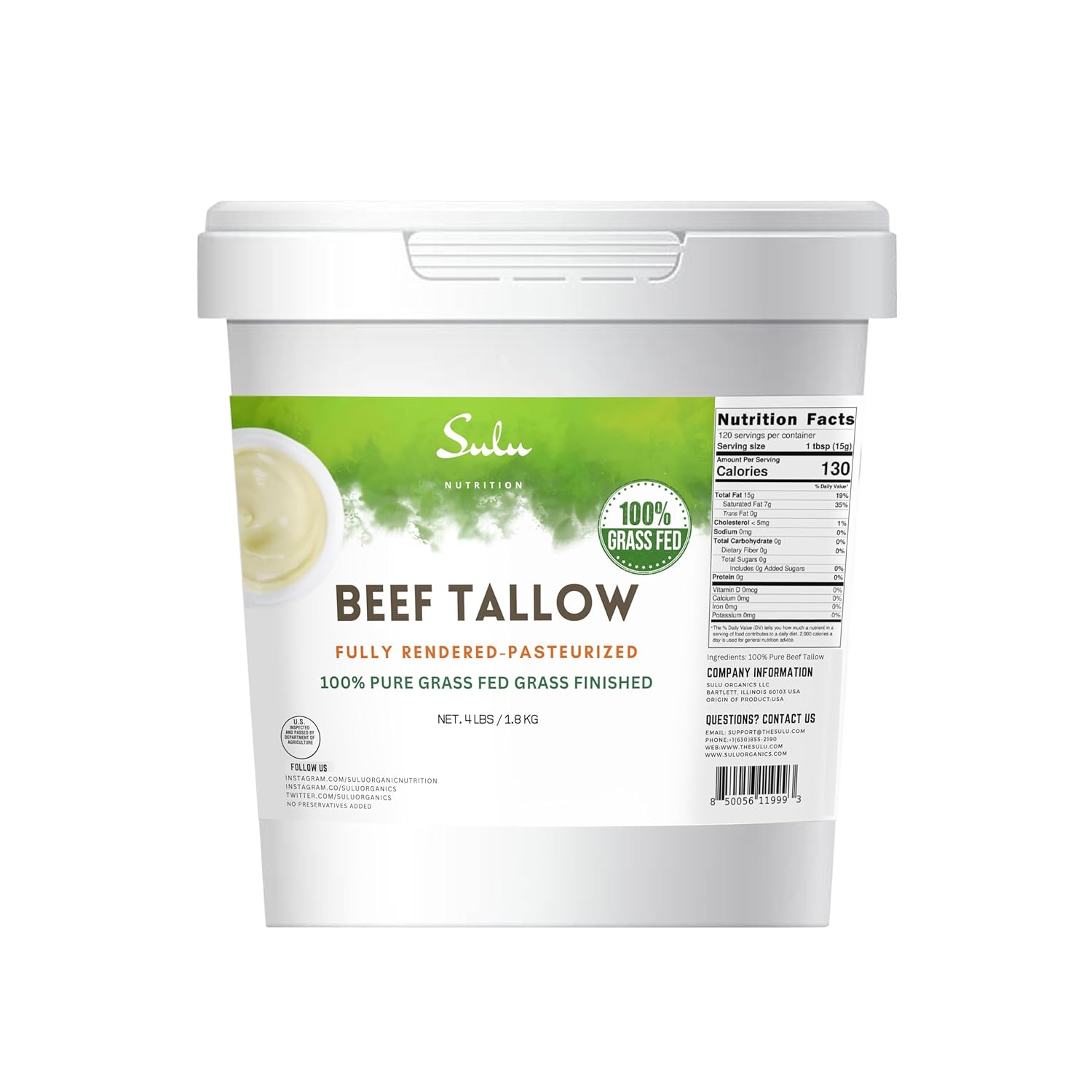
For online tallow, the Grass-Fed 4 lb option and the budget Traverse Bay 32 oz are my go-tos. Both render the buying decision easy if you do not want to make your own.
For sourcing your own raw fat to render at home, the how to render guide walks through the process. The same method works for lard with one difference: lard renders cooler (170F to 200F) and finishes faster.
Sourcing
For cooking-grade fat of either type, your local butcher is the cheapest and most reliable source. Ask for “suet for rendering” or “leaf fat” (the latter applies to both species). Many butchers throw it away or give it away. Some sell it for under $2 a pound.
If you need rendered fat without doing the work yourself, the online market has gotten much better in the last five years. For tallow, Grass-Fed 4 lb is the option I keep coming back to. For lard, the trustworthy brands sell direct from regenerative farms.
For raw suet sourcing across the US, the buy guide walks through butchers, online options, and what to look for.
Which to Keep on Hand
If you can only keep one fat: tallow. It is more versatile across high-heat cooking and works well enough in baking to get you through a biscuit recipe.
If you keep two fats: tallow and lard. The pair covers everything from steak sear to pie crust without compromise.
If you keep three fats: tallow, lard, and butter. That is what I keep. Everything else is duplicative.
If you keep four fats: add olive oil for dressings and finishing. See tallow vs olive oil for the breakdown.
Recipe Ideas Where Each Wins
Use tallow for:
- Pan-seared ribeye
- Smash burgers
- Tallow french fries
- Roasted potatoes and carrots
- Fried eggs
- Yorkshire pudding (yes, really)
- Hash browns
Use lard for:
- Buttermilk biscuits
- Apple pie crust
- Flour tortillas
- Carnitas
- Tamales
- Refried beans
- Old-fashioned doughnuts
Use either for:
- Sauteed greens
- Pan-fried chicken
- Roasted brussels sprouts
- General stovetop cooking when you grab the closer jar
Frequently Asked Questions
Is beef tallow healthier than lard?
The honest answer is they are nutritionally close, with small differences that mostly come down to the animal’s diet. Grass-fed tallow has more CLA and slightly better omega ratios. Pasture-raised lard has more vitamin D and a higher monounsaturated content. Neither is clearly “healthier” in a meaningful sense.
Can I substitute tallow for lard 1:1?
Yes, in most recipes. The exceptions are pie crust, biscuits, and tortillas where the difference in flavor and crystalline structure shows up. For everything else, straight 1:1 swap works.
Which has a stronger flavor?
Tallow. Lard is more neutral. Properly rendered lard is nearly flavorless. Tallow always has a faint beefy note in the background.
Which is better for deep frying?
Tallow, by a small margin. Higher smoke point, more saturated, more stable across multiple uses. Lard works fine but starts to degrade faster.
Can I render both at home using the same method?
Yes. Same wet or dry rendering process, same equipment. Lard finishes about an hour faster than tallow because the fat melts at a slightly lower temperature. The render guide covers the method.
Which lasts longer in storage?
Tallow. The higher saturated fat content makes it more shelf-stable. A sealed jar of tallow lasts 6 to 12 months at room temperature. Lard lasts about 4 to 6 months at room temperature.
Bottom Line
Beef tallow wins for high-heat cooking and is the better all-around fat to keep on your counter. Lard wins for baking and is essential if you make pie crust, biscuits, or tortillas. Buy both. The combined cost is under $30, and the upgrade in your cooking is measurable from day one. If you can only get one, grab the 4 lb Grass-Fed Tallow and add lard from your butcher when you start baking pies.