

How Long Does Rendering Beef Tallow Take? Time and Temperature Guide
Reader-supportedReal rendering times per method: stovetop, oven, slow cooker, and Instant Pot. What 'done' looks like, why time matters, and how it affects color and yield.

This post contains affiliate links. We may earn a commission if you purchase through these links, at no extra cost to you.
The first question people ask me about rendering tallow is some version of “how long does this take.” The honest answer is “longer than you think, but most of it is hands-off.” I have rendered tallow on every standard piece of home equipment, and the time spread between the fastest method and the slowest is bigger than a full workday.
This is the cheat sheet I wish someone had handed me before my first batch. Real numbers, real expectations, and a few notes on what trades you make when you cook the fat faster or slower.
The Short Version
For two to three pounds of diced suet, here is what to plan for.
- Stovetop on low: 3 to 4 hours active, low attention but you cannot leave the house
- Oven at 250F: 4 to 5 hours, hands-off after the first 30 minutes
- Slow cooker on low: 8 to 12 hours, fully hands-off, perfect overnight
- Instant Pot on high pressure: 45 minutes plus 20 minutes natural release plus another 10 to 20 minutes to boil off water
Yield is roughly 60 to 65 percent by weight for any method when you do it right. Two pounds of suet will give you about one and a quarter pounds of finished tallow.
Stovetop on Low: 3 to 4 Hours
Stovetop is the method I use when I want to be done in an afternoon and I do not mind babysitting the pot.
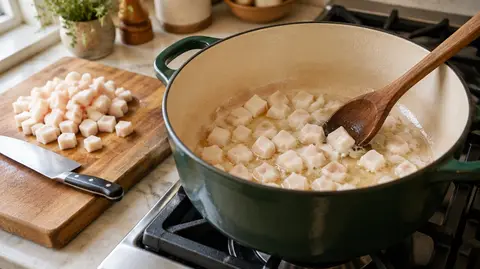
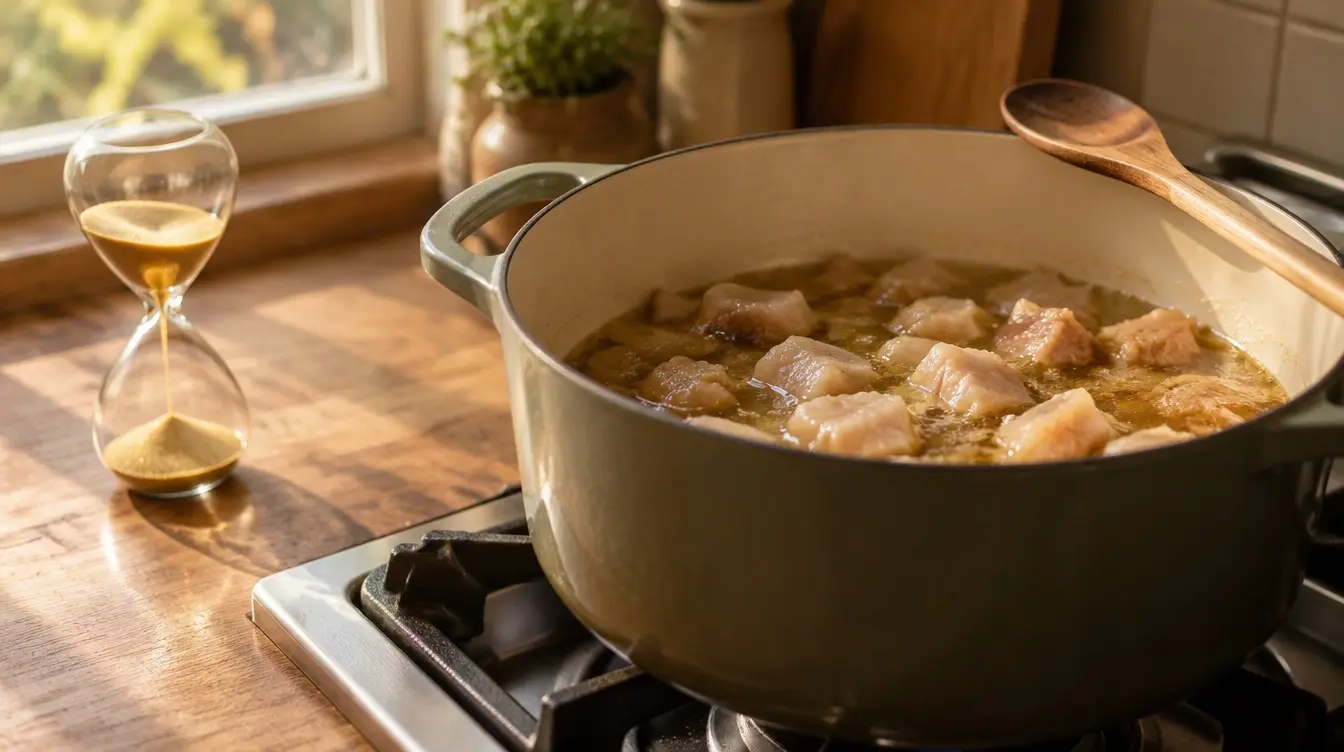
Drop diced suet into a heavy-bottomed pot. A cast iron Dutch oven is ideal. Set the burner as low as it will go. Lid cracked. The first 45 minutes feel like nothing is happening. Then liquid fat starts pooling at the bottom and the rest of the cubes shrink into cracklings.
You will need to stir every 20 minutes or so to keep the bottom layer from scorching. If your stove runs hot even on its lowest setting, place a heat diffuser between the pot and the burner.
The whole thing wraps up in 3 to 4 hours for a standard 2-pound batch. The tallow is usually a slightly deeper golden than the oven or slow cooker methods because the pot bottom gets hotter than 212F in spots.
For the basic step by step on stovetop rendering, my home rendering walkthrough has the full version. This post is the time-and-temperature companion.
Oven at 250F: 4 to 5 Hours
Oven rendering is my favorite method when I want a cleaner finished product without the active stirring of the stovetop.
Dice your suet, spread it across a deep Dutch oven, set the oven at 250F, and walk away. Check on it at the 2-hour mark to give it a stir. After that you can let it ride. Total time is usually 4 to 5 hours for a 2-pound batch.
The advantage of oven is that the heat is even on all sides of the pot. No hot spot on the bottom. The cracklings brown gradually and uniformly. The finished fat is a pale gold, occasionally almost cream-colored if your trim was clean.
The disadvantage is that the kitchen will smell like a steakhouse for the entire 5 hours. Crack a window. I have written about the oven versus stovetop tradeoffs in detail in oven rendering vs stovetop.
For oven and stovetop work I lean on a heavy Dutch oven and a fine-mesh strainer that I picked up specifically for this. The full equipment list I actually use is in best kitchen tools for rendering.
Slow Cooker on Low: 8 to 12 Hours
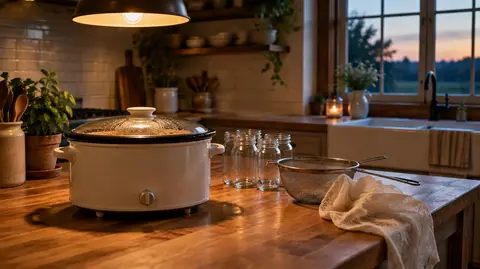
This is the method I recommend to anyone rendering for the first time. The slow cooker holds steady at around 195F to 210F on low, which is right under the protein-browning threshold. You get the whitest, mildest tallow with almost no risk of burning anything.
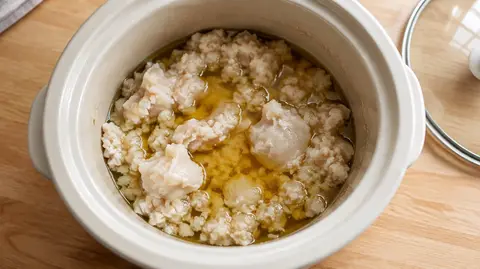
The catch is time. A 2-pound batch of suet needs 8 hours minimum, and I usually let it ride 10 to 12 if I am rendering overnight or while I am at work. The cracklings sink slowly as they shed their fat. When they are pebble-sized and golden brown, you are done.
I cover the full slow cooker method in slow cooker rendering and the original easy slow cooker walkthrough. The summary is: longest cook time, lowest stress, best-looking result.
The end product is so neutral you can use it straight off the stovetop for everything from frying to skincare. If you want a benchmark to compare your batch against, the 4-lb grass-fed jar is the standard I judge my homemade tallow against. If yours looks paler and smells milder, you nailed it.
Instant Pot: 45 Minutes Active, 75 to 90 Minutes Total
Instant Pot is the fastest method and the one that surprised me the most when I tried it.
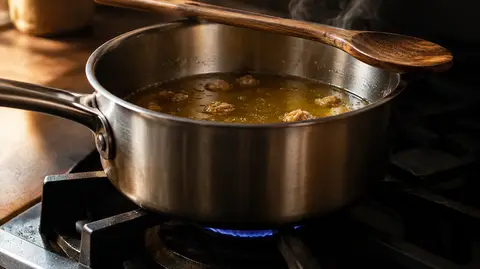
Dice 2 pounds of suet, add 1 cup of water, seal the lid, set high pressure for 45 minutes. Natural release for 15 to 20 minutes. Open the lid. The contents will look like a soup of cracklings floating in cloudy water. Switch to the sauté setting on low and let it bubble for 10 to 20 minutes until the water has fully boiled off. The fat goes from cloudy to clear. Strain.
Total time start to finish is about 75 to 90 minutes for a batch that would take a slow cooker 10 hours.
The water is the trick. It keeps the contents anchored at 212F throughout the high-pressure phase, which means no browning and a very white finished tallow. I cover the full method in Instant Pot rendering.
For the cleanest results across any method, the source material matters more than the equipment. A neutral starting point like Traverse Bay Farms (32 oz) is what I keep around for taste-comparing my homemade batches against a known mild baseline.
Why Cook Time Matters
Three reasons you should care about how long the rendering takes.
First, color. Shorter cook times at lower temperatures give you whiter tallow. Longer cook times, especially with any browning on the cracklings, give you a deeper gold. Neither is wrong. They cook differently and they smell differently.
Second, yield. Counterintuitively, slightly longer cook times can give you slightly higher yield because the cracklings have more time to shed every last bit of fat. The difference is small, maybe 2 to 3 percent of total yield, but it shows up if you weigh batches.
Third, flavor. The longer your fat sits at a temperature where proteins can brown, the more meaty flavor it picks up. For frying and high-heat cooking that is fine. For pie crust, skincare, or baking, you want a shorter and lower render. I dug into why some batches end up cloudy and how time plays into it in why your rendered tallow is cloudy.
What “Done” Looks Like
Forget the timer for a second. You are done when three things are true.
The liquid in the pot is clear and amber. Not cloudy, not opaque. If you tip a spoon you should see through the fat the way you see through cooking oil.
The cracklings have sunk to the bottom of the pot. While they still hold fat, they float. Once they have given up their fat, they are denser than the surrounding liquid and they fall.
The cracklings are golden brown, not black. If your cracklings start to char, your temperature was too high. The finished tallow will carry a burned note that is hard to fix without a re-render.
Once those three things are happening at the same time, kill the heat. Let the pot sit for 10 to 15 minutes so the cracklings settle. Strain through cheesecloth into jars.
Frequently Asked Questions
Can I render tallow in less than 30 minutes?
Not in any way I would recommend. Even the Instant Pot needs 45 minutes at pressure plus the depressurization. You can flash-melt a small amount of pre-rendered tallow in a few minutes, but converting suet into finished tallow takes time.
Does longer cook time always mean better tallow?
No. After a certain point, extra time just adds heat exposure without changing the result. A 14-hour slow cooker session does not produce noticeably better tallow than a 10-hour one. The same batch on the stovetop for 6 hours will start to brown and develop more flavor than you may want.
How do I know when to stop the slow cooker?
When the cracklings are pebble-sized, golden brown, and sitting on the bottom. The liquid above them should be clear amber. If the liquid is still cloudy after 10 hours, give it another hour with the lid off.
Is the Instant Pot really as fast as it sounds?
Yes, but the active engagement is similar to the stovetop. You are not free for the full 90 minutes. You have to come back for the water boil-off step at the end, and that needs attention so the fat does not scorch once the water is gone.
Why does my batch take longer than the timeline says?
Usually one of three things. You did not dice the suet small enough, the batch is bigger than the chart assumes, or the temperature is lower than expected. Smaller dice means more surface area and faster rendering.
Bottom Line
A 2-pound batch of suet takes 75 minutes in an Instant Pot, 3 to 4 hours on the stovetop, 4 to 5 hours in the oven, or 8 to 12 hours in a slow cooker. The total time depends less on what method you pick and more on what kind of finished tallow you want.
If you want the easiest path, slow cooker overnight. If you want speed, Instant Pot with water. If you want a benchmark to compare your homemade batch against, the 4-lb grass-fed jar is the one I use as my reference. Render, strain, jar, and time the next batch with the actual numbers from your kitchen rather than the chart.
Explore more tallow guides
Browse our collection of recipes, comparisons, reviews and DIY tutorials.
View all guidesKing Tallow is reader-supported. We research and test the products we recommend, and when you buy through links on this page we may earn a commission at no extra cost to you. See our affiliate disclosure.
Published