

Beef Tallow for Keratosis Pilaris: Before and After Real Results
Reader-supportedHonest guide to using beef tallow for keratosis pilaris. Why it helps the barrier component, application protocol, lactic acid pairing, and a realistic timeline.

This post contains affiliate links. We may earn a commission if you purchase through these links, at no extra cost to you.
Medical disclaimer: I am a layperson writing from research and personal experience. Keratosis pilaris is a benign condition, but it is still skin, and persistent or worsening symptoms deserve a dermatologist. If your KP is severe, bleeding from picking, or accompanied by inflammation that resembles eczema, book the appointment.
I have had KP on the back of my arms since I was twelve. It is the small flesh-colored or pink bumps on the upper arms, thighs, and sometimes cheeks that everyone in my family called “chicken skin.” It got worse in winter, slightly better in summer when I was at the pool, and never fully went away no matter what I tried. Coconut oil. CeraVe. Two prescription retinoid creams in my twenties.
Tallow is not a miracle cure. The bumps are still there if you look closely. But the surface texture, the redness, and the visible appearance have improved more in nine months of consistent tallow use than in the previous decade of trying other things. The reason has to do with what KP actually is, and where it overlaps with the kind of barrier damage that tallow happens to help.
What KP Actually Is
Keratosis pilaris is keratin plugs in hair follicles. The body produces too much keratin in the follicle, the keratin builds up around the hair shaft, and the bump you feel is the trapped keratin pushing the skin out around it. The pink halo is local inflammation from the obstruction.
The condition is benign and largely cosmetic. It affects somewhere between 50% and 80% of teens and a smaller percentage of adults. The American Academy of Dermatology classifies it as common and self-limiting, and most people see it improve with age even without treatment.
But here is the part most KP guides do not emphasize. KP is associated with two other things at higher-than-baseline rates: dry skin (xerosis) and atopic dermatitis (eczema). The same filaggrin mutations that drive eczema are over-represented in people with KP. The barrier dysfunction is shared. That is not a coincidence, and it is the entry point for understanding why a barrier-repair approach like tallow helps a condition that nominally has nothing to do with the barrier.
Your KP bumps will not disappear from tallow. The keratin plugs are still there. What can disappear, or at least quiet down meaningfully, is the dry, rough, red-halo background that makes KP visible. Take the dryness and redness out of the picture and the bumps look 70% less obvious even if the bumps themselves are unchanged.
Why Tallow Helps the Background, Not the Bumps
Tallow does three things that matter for KP:
-
Replenishes the lipid film. KP-affected skin is dry. The dryness exaggerates the visual contrast between the bump and the surrounding skin. Restore the lipid film, the contrast drops.
-
Reduces transepidermal water loss. KP areas (upper arms, thighs) lose moisture faster than other body areas in people with barrier dysfunction. Tallow’s saturated and monounsaturated fat blend slows TEWL meaningfully.
-
Calms the inflammatory halo. The pink ring around KP bumps is local inflammation. Reducing barrier stress reduces inflammation. The bumps stop looking angry.
What tallow does not do: it does not exfoliate. It does not dissolve keratin. It does not unplug the follicle. For that part of the picture, you need a chemical exfoliant. We will get there.
For the broader condition context, /tallow-for/keratosis-pilaris/ covers the dermatology angle in more depth.
The Application Protocol That Worked for Me
Six weeks is the timeline I recommend committing to before evaluating. KP is slow to change. Anyone promising overnight results is selling you something.
Step 1: Warm shower, not hot. Hot water strips lipids and dries KP worse. Five to ten minutes max, lukewarm.
Step 2: Use a gentle, non-stripping body wash. Skip body scrubs with sugar or salt. They feel productive and they are not. They abrade the surface, irritate the inflammation, and do nothing for the underlying plugs.
Step 3: Pat dry, do not rub. Towel rubbing is enough mechanical stress to flare KP. Press the water out, leave the skin damp.
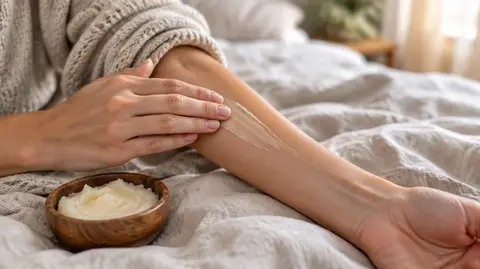
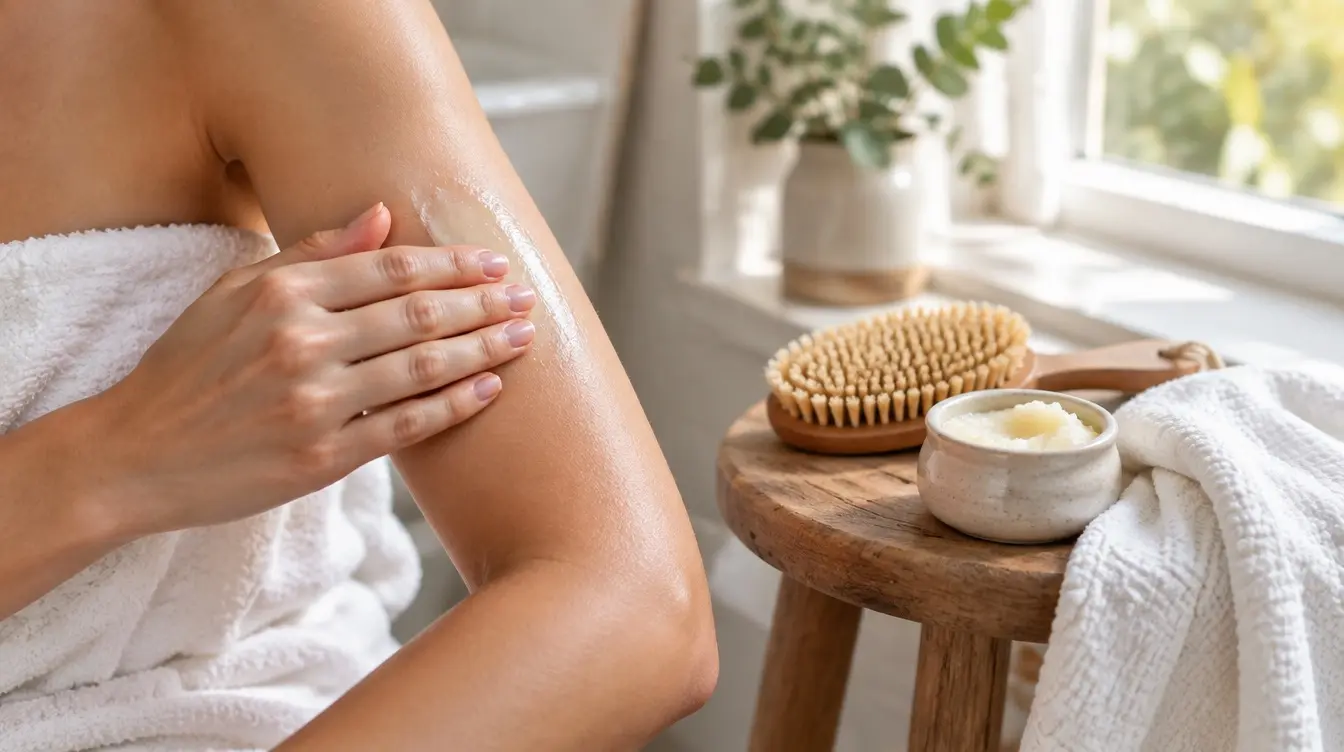
Step 4: Apply tallow within three minutes. Warm a small amount (smaller than you think) between your palms, then smooth onto the KP areas. For upper arms, I use roughly half a teaspoon per side. For thighs, slightly more. Press, do not rub.
Step 5: Once daily, every day, for six weeks. Most KP routines fail because consistency dies after week two when nothing visible has changed. The mechanism takes longer than that to play out. Set a reminder.
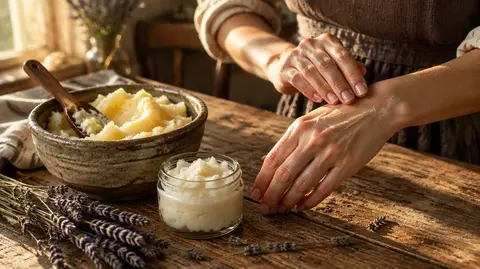
For body application, I use the 4-pound grass-fed tallow tub because the per-ounce cost on a big jar is the only sensible way to do daily body application. If you cook with tallow, the same jar covers both. The Traverse Bay 32 oz is the smaller, deodorized alternative if you do not want a giant tub. For an out-of-the-box ready balm, the Amallow Unscented Whipped Tallow Balm spreads easily and is the one I recommend for people who do not want to handle bulk tallow. The Terra Lotus Organic Unscented is what I use on the worst KP days when the skin is also itchy or reactive.
Pairing with Mild Lactic Acid Exfoliation
This is the part where the routine starts to actually clear bumps instead of just calming the background. Tallow alone improves appearance. Tallow plus a mild chemical exfoliant addresses the keratin plugs themselves.
The two acids that work for KP are lactic acid (a.k.a. AHA) and salicylic acid (BHA). Lactic acid is the gentler option and is what dermatologists most commonly recommend for KP. Look for a body lotion in the 10% to 12% lactic acid range. AmLactin is the standard pharmacy pick. CeraVe SA also works. Your dermatologist can prescribe a stronger formulation if needed.
The protocol I run:
- Sunday and Wednesday nights: Apply lactic acid lotion to KP areas after showering. No tallow on those nights.
- All other nights: Tallow as described above.
- Every morning: Tallow only, no acid.
That cadence keeps the exfoliation present without overdoing it. Daily acid plus daily tallow tends to irritate. Twice-weekly acid plus daily tallow is the sweet spot.
If you have very sensitive skin, drop the acid to once a week or skip it entirely. Tallow alone still helps. It is just slower.
What to Expect: The Realistic Timeline
Some honest numbers from my own log and from people who have written in:
- Weeks 1 to 2: Surface dryness improves noticeably. The rough, sandpaper feel softens. The bumps are still visibly there. Nothing dramatic in the mirror yet.
- Weeks 3 to 4: Pink halos start to fade. The inflammation around individual bumps quiets down. Texture continues to improve.
- Weeks 5 to 8: If you are pairing with lactic acid, you will start to see bump reduction here. Not full clearance. Reduction. Some bumps fully resolve, others stay.
- Months 3 to 6: Stable maintenance. Skin looks visibly clearer at conversational distance. Up close the bumps are still detectable.
I do not have evidence that tallow at twelve months looks dramatically better than tallow at six months. Most of the improvement happens in the first 90 days. After that, you are maintaining the new baseline.
When Tallow Alone Is Not Enough
There is a category of KP that does not respond to over-the-counter approaches. The signs that you are in it:
- KP that bleeds when you scratch or pick (the picking itself can become a problem)
- KP that is associated with significant redness that looks more like rosacea than keratin plugs
- KP on the cheeks that is causing emotional distress
- KP that has persisted into late adulthood without improvement
For those cases, prescription retinoids (tretinoin, adapalene) and urea-based formulations work better than tallow does. Laser hair removal can also help by reducing the trigger (the follicle and hair shaft). Talk to a derm.
Tallow can still be part of the maintenance layer underneath those prescriptions. It is not an either-or. But if you are nine months into a tallow protocol and still unhappy with what you see in the mirror, the next step is a dermatologist, not more tallow.
For more on barrier repair in the context of related conditions, the eczema evidence post covers the underlying mechanism in more depth.
What Not to Do
A short list of things that make KP worse, in my experience and in the dermatology literature:
- Aggressive scrubs. Sugar, salt, walnut shell. Skip all of them.
- Picking the bumps. It feels productive. It scars. Hands off.
- Hot water. Strips lipids, worsens TEWL, irritates the inflammation.
- Heavy fragranced lotions. Many “moisturizers” sold for body care are fragrance-heavy. KP-prone skin tends to react.
- Skipping moisturizer entirely. A lot of people only moisturize when they remember. KP needs daily.
- Layering acid and retinoid every night. Pick one. Alternate. Or you will trade KP for irritant dermatitis.
- Heavy coconut oil applications. Coconut oil is comedogenic and can clog upper-arm follicles. The comedogenic rating post covers why.
Frequently Asked Questions
Will beef tallow cure my keratosis pilaris?
No. There is no permanent cure for KP. Tallow improves the appearance by repairing barrier dysfunction and reducing the dryness and inflammation that make the bumps visible. The underlying genetic tendency stays. Most people see continued improvement with age regardless of treatment.
How long until I see results from tallow on KP?
Two to four weeks for visible texture and dryness improvement. Six to eight weeks for bump reduction if you are pairing with lactic acid exfoliation. Do not evaluate at week one.
Can I use tallow on my legs and thighs for KP there?
Yes. The protocol is the same as for the upper arms. Apply to damp skin after showering. Body areas are less reactive than the face, so you can use a more generous amount.
Is tallow safe for KP on the cheeks?
Yes, but apply more carefully. The face is more reactive than the body. Patch test first. Use the half-face test from the comedogenic rating post if you are acne-prone. Cheek KP often responds better to prescription retinoids than to topical moisturizers, so a derm visit is worth it.
Does grass-fed tallow work better for KP than conventional?
Marginally. The lipid profile is the active mechanism, and that profile is similar between grass-fed and grain-fed. Grass-fed has slightly more vitamin K2 and a better omega ratio. Whether that matters for KP specifically is not proven. If budget is a constraint, conventional is fine.
Can I use tallow and AmLactin together on the same night?
I would not recommend it. Apply the acid lotion alone on acid nights. Tallow on the other nights. Layering both can cause irritation, and you cannot evaluate which one is working.
Bottom Line
Beef tallow does not unplug the keratin in keratosis pilaris. What it does is restore the barrier, reduce the inflammation, and improve the dry, rough background that makes KP bumps look more obvious than they actually are. For visible improvement, six weeks of consistent daily tallow plus twice-weekly lactic acid exfoliation is the protocol that has worked for me and for most people who have shared their results.
If you are starting, the 4-pound grass-fed tub is the cost-effective base for body application. The Amallow whipped balm is the ready-to-use option if you do not want to handle bulk tallow. The Terra Lotus unscented is what I switch to on reactive days.
For the wider context, the KP condition page, the eczema evidence post, and the face complete guide cover related territory.
If six months of consistent use is not getting you where you want to be, see the dermatologist. Tallow is a tool. It is not the only tool.
Explore more tallow guides
Browse our collection of recipes, comparisons, reviews and DIY tutorials.
View all guidesKing Tallow is reader-supported. We research and test the products we recommend, and when you buy through links on this page we may earn a commission at no extra cost to you. See our affiliate disclosure.
This article is for general information and is not medical advice. Patch test new skincare and talk to a dermatologist or doctor about persistent skin conditions.
Published