

Beef Tallow for Face: Benefits, How to Use It, and Who Should Skip It
Reader-supportedCan you put beef tallow on your face? Yes, for most dry and normal skin. How much to use, step-by-step routine, layering with SPF, who should skip it, best picks.

We test and research the products we recommend. If you buy through our links, we may earn a commission at no extra cost to you.
Yes, you can put beef tallow on your face, and for dry, normal, or weather-chapped skin it works well as a rich moisturizer: a pea-sized amount pressed onto damp skin as the last step of your routine, with sunscreen on top in the morning. It is a poor fit for many acne-prone and oily faces, and for skin with seborrheic or perioral dermatitis, so patch test before going full-face. The claims that it reverses wrinkles or “feeds” your skin vitamins aren’t backed by studies; its proven job is softening skin and slowing moisture loss.
This guide covers what tallow can and can’t do on the face, the exact routine, how to layer it with other products, what to expect, and which products to start with. For the science in depth, see our beef tallow for skin guide.
Should You Use Beef Tallow on Your Face? Quick Guide by Skin Type
| Your skin | Tallow on the face? | How to use it | Start with |
|---|---|---|---|
| Dry or very dry | Good fit | Morning and night, pea-sized | Terra Lotus Unscented or Vanman’s at night |
| Normal | Good fit | Night, then add mornings if you like it | Amallow Unscented |
| Combination | Use on dry zones | Cheeks and jaw; little or none on the T-zone | Amallow Clean Cloud |
| Sensitive | Often fine if unscented | Night only for two weeks after a patch test | Terra Lotus Unscented or Santa Cruz Paleo |
| Oily | Usually unnecessary | Spot use on dry patches only | Skip, or a thin whipped balm |
| Acne-prone | Risky | Jawline test for 2-4 weeks first | See our acne-prone guide |
| Seborrheic or perioral dermatitis | Avoid on affected areas | Ask a dermatologist | None |
Can You Put Beef Tallow on Your Face?
For most people, yes. Tallow is rendered beef fat, and fats have been used as face and hand moisturizers for centuries. On the face it acts as an emollient (it smooths the rough edges of dry skin cells) and an occlusive (it leaves a thin film that slows water evaporating from the skin). Those two effects are why dry skin feels softer within minutes and less tight over a week or two of use.
The people who should hold off are those who break out easily, have very oily skin, or have seborrheic dermatitis or perioral dermatitis on the face. Heavy occlusive products are a common trigger for perioral dermatitis, and the yeast involved in seborrheic dermatitis feeds on skin lipids. Tallow is also roughly 40% oleic acid and low in linoleic acid, a profile that doesn’t suit many acne-prone faces (more on that in the comedogenic rating explainer).
Beef Tallow for Face Benefits: What It Can and Can’t Do
What it does:
- Softens dry, flaky, or rough patches, usually right away.
- Reduces tightness and chapping, especially in cold, windy, or dry indoor air.
- Gives a moisturizer option with a very short ingredient list, which matters if fragrances and preservatives irritate you. This depends on buying an unscented product.
- Works as a protective layer on cheeks, around the nose after colds, and on lips.
What it doesn’t do (despite common claims):
- It isn’t identical to your skin’s oil. Tallow shares many fatty acids with sebum, but sebum is also about a quarter wax esters and about an eighth squalene, which tallow lacks (Picardo et al., Dermato-Endocrinology, 2009).
- It isn’t a vitamin treatment. USDA FoodData Central lists 0 vitamin A and 2.7 mg vitamin E per 100 g of beef tallow. A pea-sized amount contains a tiny fraction of what’s in a vitamin serum, and nothing comparable to a retinoid.
- It doesn’t reverse wrinkles. Moisturizing plumps the surface and makes fine lines less visible while the skin is hydrated. Sunscreen and retinoids are the tools with evidence for long-term change; see tallow for wrinkles: the evidence.
- It isn’t a sunscreen. Tallow has no meaningful SPF.
- It hasn’t been tested in clinical trials on faces. The support for tallow comes from general emollient science, its composition, and user reports.
How to Use Beef Tallow on Your Face, Step by Step
Step 1: Patch test
The American Academy of Dermatology suggests testing new products on a quarter-sized spot on the underside of your arm or the bend of your elbow, twice a day for 7 to 10 days (AAD guidance). If that’s clear and you tend to break out, test a small area of your jaw or one cheek for another two to four weeks before using it everywhere.
Step 2: Cleanse gently
Use a mild, fragrance-free cleanser and lukewarm water. Hot water and harsh cleansers strip skin and make it drier.
Step 3: Leave your skin slightly damp
Pat with a towel instead of rubbing dry. Occlusives work by holding water in, so tallow on damp skin traps more moisture and spreads thinner than it does on bone-dry skin.
Step 4: Apply water-based products first
If you use a hydrating toner, hyaluronic acid, niacinamide, or vitamin C serum, apply it now. Tallow goes on top.
Step 5: Warm a pea-sized amount
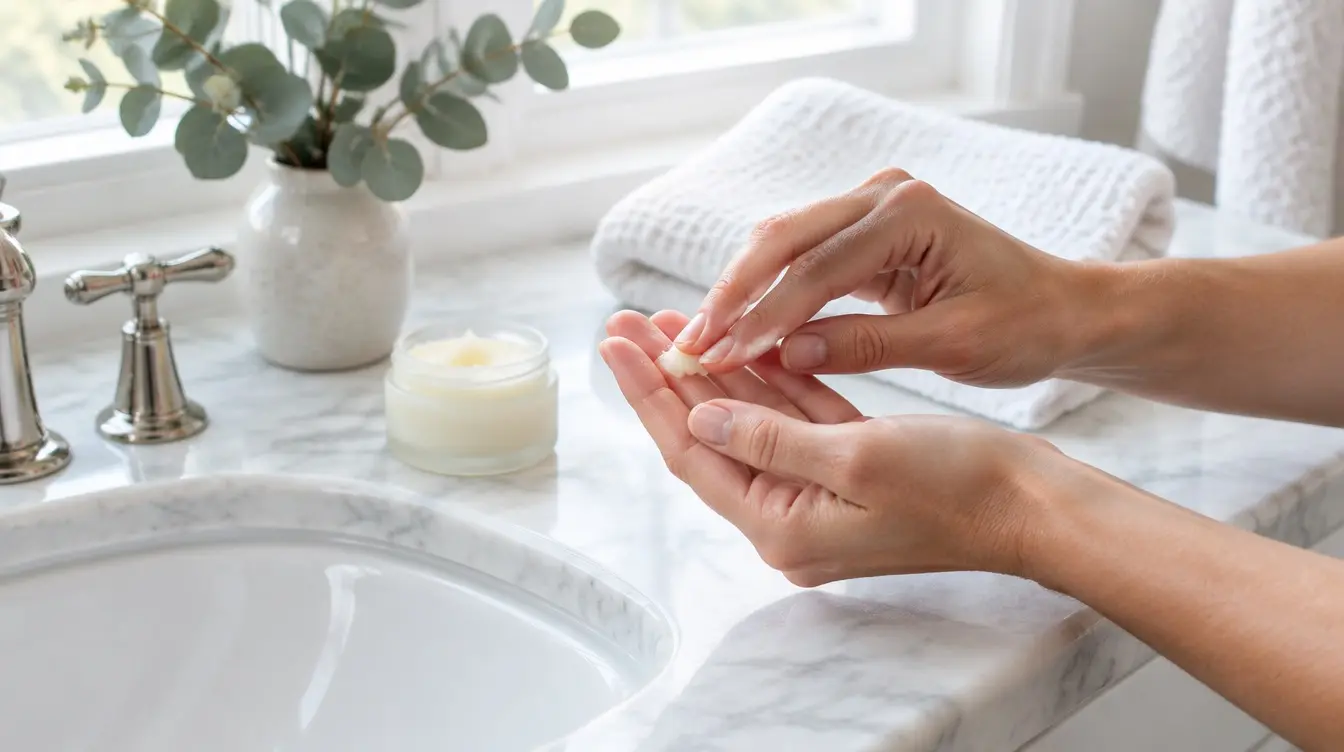
Scoop a portion about the size of a small pea onto a clean fingertip or spatula, then rub your fingertips together for 5 to 10 seconds until it turns from a waxy solid into a clear, thin oil. Whipped products such as Amallow Unscented soften in a couple of seconds; firm balms take longer.
Step 6: Press it in, dry areas first
Press and pat rather than rub. Start with the driest areas (usually cheeks, jawline, and around the mouth), then use what’s left on your fingers for the forehead and nose. Applying less to oily zones is the easiest way to avoid a greasy finish.
Step 7: Let it settle, then sunscreen (morning)
Give it about five minutes before sunscreen or makeup. If it still looks shiny, blot once with a tissue. Then apply a broad-spectrum sunscreen as usual.
How much beef tallow to use on your face
A pea-sized amount covers the whole face. Use about half that in the morning or on combination skin. If the balm is still visibly sitting on your skin ten minutes later, you used too much; wipe off the excess and use less next time.
Layer Order: Morning and Night
Morning
- Gentle cleanse (or water only)
- Optional water-based serum
- Tallow, thin layer
- Sunscreen, full amount
- Makeup, if you wear it
Night
- Cleanse (an oil cleanser first if you wore sunscreen or makeup)
- Optional water-based serum or prescribed treatment
- Tallow, pea-sized
- Optional: an extra dab on very dry spots or lips
If you’re new to tallow, start with nights only for two weeks. Add mornings once you know your skin tolerates it. If even a thin morning layer feels heavy under sunscreen, keep tallow as a night-only product.
Using Tallow With Other Skincare
Retinol, tretinoin, and adapalene
Apply the retinoid to clean, dry skin as directed, wait for it to absorb, then apply a thin layer of tallow where you get dry or flaky. This “buffer” approach is a common way to manage retinoid dryness. If a dermatologist prescribed your retinoid, ask them how they want you to layer it.
Vitamin C and niacinamide serums
These are water-based, so they go first on clean skin. Let them absorb, then add tallow.
Hyaluronic acid
Hyaluronic acid is a humectant that holds water; tallow is an occlusive that slows its evaporation. Apply hyaluronic acid to damp skin, then tallow on top. This pairing suits dehydrated skin that feels tight.
Exfoliating acids (AHA and BHA)
Acids need direct contact with skin. Use them on clean skin and let them absorb before tallow, or use acids and tallow on alternate nights.
Sunscreen
Tallow first, sunscreen second. Wait a few minutes between them so the sunscreen goes on evenly, and apply the full recommended amount. Never mix sunscreen into your tallow, because diluting it lowers the protection below what the label promises.
Makeup
Let tallow settle for 5 to 15 minutes and blot before foundation. Powders tend to sit better than liquids over a balm. Silicone-heavy primers and tallow can pill together; if that happens, keep tallow to your night routine.
What to Expect in the First Few Weeks
- Days 1-3: Skin feels softer, and dry patches look calmer. The texture of a balm can feel heavy if you’re used to lotions.
- Week 1-2: If dryness was your main problem, flaking and tightness usually settle here.
- Weeks 2-4: This is when you’ll know whether tallow suits your face. Smooth, comfortable skin without new breakouts means it’s working for you.
About “purging”: that term describes a temporary flare caused by products that speed up skin cell turnover, such as retinoids and exfoliating acids. Tallow doesn’t do that. If you get new clogged pores or pimples after starting tallow, especially in places you don’t normally break out, it’s more likely a reaction to the balm or one of its added oils. Cut back to every other night or stop. If breakouts persist after stopping, see a dermatologist.
Common Mistakes
- Using too much. The most common reason people call tallow greasy.
- Applying it to dry skin. It spreads poorly and sits on the surface.
- Skipping the warming step. Cold balm drags on the skin and goes on thick.
- Starting with a scented balm. Essential oils add allergy risk and make it harder to tell what your skin is reacting to.
- Using a balm with add-ins you’re allergic to. Many tallow products contain honey, beeswax, olive oil, or sweet almond oil.
- Double-dipping with wet or dirty fingers. Water and bacteria shorten shelf life. Use a clean spatula.
- Dropping sunscreen. Tallow doesn’t protect against UV.
- Using a low-quality or rancid balm. A strong beefy, sour, or crayon-like smell points to poor rendering or oxidation. See how to identify high-quality tallow.
Who Should Skip Tallow on Their Face
- Acne-prone skin and active breakouts. Especially inflammatory or cystic acne, which needs a dermatologist. Tallow’s high oleic, low linoleic profile is the main concern.
- Seborrheic dermatitis. Malassezia yeasts, which are involved in this condition, depend on external lipids to grow.
- Perioral dermatitis. Heavy creams and balms often make it worse.
- Allergies to ingredients in the product. Check for honey and beeswax (bee products), sweet almond oil (tree nut), and essential oils.
- Red-meat allergy (alpha-gal syndrome). Ask your allergist before using beef-derived products.
- Vegans and those avoiding beef. Shea butter, squalane, and jojoba are the usual alternatives.
Can You Use Beef Tallow Around Your Eyes?
Yes, in a very small amount. Dab a rice-grain amount along the orbital bone with your ring finger, keeping it away from the lash line; tallow in the eye blurs vision until it clears. An unscented whipped product such as Amallow Unscented is easier to use in a thin layer here; skip scented balms near the eyes. Tallow won’t fix dark circles; they mostly come from genetics, thin skin, and shadowing. Our tallow eye cream recipe covers a lighter homemade version.
Best Beef Tallow for Your Face: Where to Start
| Product | What’s in it (per listing) | Texture | Best for | Price |
|---|---|---|---|---|
| Amallow Unscented Whipped Tallow Balm | Grass-fed tallow whipped with a carrier oil (sweet almond in Amallow’s whipped line; check if nut-allergic) | Light, whipped | Normal and combination skin, first-timers | $$ |
| Amallow Clean Cloud Whipped Tallow | Grass-fed tallow, sweet almond oil, essential oil blend | Very light | A light, scented option under makeup | $$ |
| Terra Lotus Organic Unscented | Organic grass-fed tallow, raw honey, olive oil | Firm balm | Dry and fragrance-sensitive skin | $$ |
| Santa Cruz Paleo | Grass-fed tallow, beeswax, honey | Firm balm | Shortest list with no added plant oils | $$ |
| Vanman’s Tallow & Honey Balm | Grass-fed tallow, raw honey, beeswax, olive oil | Dense | Very dry skin, night use | $$$ |
| Wrath Remedy Organic Beef Tallow for Skin | Organic grass-fed tallow, raw honey | Balm | Trying tallow on a budget | $ |
For the full comparison, see best beef tallow for face moisturizers. If your skin is reactive, best tallow balms for sensitive skin narrows the list to unscented options. To make your own, start with our tallow face cream recipe.
Using Tallow on the Face for Specific Concerns
- Tallow for dry skin
- Tallow for eczema and our eczema product picks
- Tallow for rosacea
- Tallow for wrinkles and our anti-aging picks
- Beef tallow for men’s skin
Frequently Asked Questions
Will beef tallow clog my pores?
It can in acne-prone skin. Plenty of people use it on their faces without problems, but tallow’s fatty acid mix (high oleic, low linoleic) is linked to breakouts in people prone to them. If you break out easily, test a small area for a few weeks first, and check whether the product adds olive or coconut oil.
Can I use beef tallow on my face every day?
Yes, if your skin tolerates it. Once nightly suits most people; dry skin can use it morning and night. If your skin feels congested, cut back to every other night or use less.
Can I use beef tallow as my only moisturizer?
Yes, for dry and normal skin. It covers the emollient and occlusive roles of a moisturizer. Dehydrated skin may do better with a humectant serum such as hyaluronic acid underneath. Keep sunscreen as a separate step.
How long does tallow take to absorb?
A pea-sized amount on damp skin usually settles within 5 to 10 minutes. If it’s still shiny after 15, use less.
Does beef tallow make your face smell like beef?
Well-rendered tallow smells faintly of beef or almost nothing, and any smell fades soon after application. A strong beef smell usually means the fat was rendered hot or not filtered well. Our explainer on why tallow smells like beef covers the causes.
Is beef tallow better than hyaluronic acid for the face?
They do different jobs. Hyaluronic acid is a humectant that holds water in the skin; tallow is an emollient and occlusive that softens and slows water loss. They work well together: hyaluronic acid first on damp skin, then tallow.
Can I use beef tallow on my face if I have rosacea?
Some people with rosacea tolerate unscented tallow, and some don’t; there’s no research either way. Avoid scented balms, test a small area, and if your rosacea is treated by a dermatologist, ask before adding it. More in tallow for rosacea: the evidence.
Is grass-fed tallow better for the face?
Grass-fed beef fat has more CLA, omega-3s, beta-carotene, and vitamin E than grain-fed (Daley et al., Nutrition Journal, 2010), but no study shows those differences change results on the face. Rendering quality and added ingredients matter more to how a balm feels. See grass-fed vs grain-fed tallow.
How should I store tallow face products?
Somewhere cool and out of direct sun, lid closed, scooped with a clean spatula. Most balms keep for 6 to 12 months at room temperature; refrigeration extends that. Replace any jar that smells sour or sharp. Details in our tallow storage guide.
Bottom Line
Beef tallow is a good face moisturizer for dry and normal skin when you use a small amount on damp skin, put it last in your routine, and keep sunscreen on top. It’s a questionable choice for acne-prone and oily faces and for skin with seborrheic or perioral dermatitis. Start with an unscented, short-ingredient product such as Amallow Unscented or Terra Lotus Unscented, use it at night for two weeks, and decide based on how your skin looks at the end of that time.
Explore more tallow guides
Browse our collection of recipes, comparisons, reviews and DIY tutorials.
View all guidesKing Tallow is reader-supported. We research and test the products we recommend, and when you buy through links on this page we may earn a commission at no extra cost to you. See our affiliate disclosure.
This article is for general information and is not medical advice. Patch test new skincare and talk to a dermatologist or doctor about persistent skin conditions.
Published · Last updated