Beef Tallow Shelf Life: How Long Does It Last and How to Store It
Reader-supportedBeef tallow shelf life by storage method. Room temp, fridge, freezer numbers. How to tell if it has gone rancid, best containers, and the saturated-fat reason it lasts.

This post contains affiliate links. We may earn a commission if you purchase through these links, at no extra cost to you.
Tallow is one of the most storage-friendly fats in the kitchen, and the question I get most often is some version of “how long can I keep it before it goes bad.” The honest answer is longer than you would expect. The reason is chemistry.
Here are the numbers I use, the storage rules that actually matter, and how to tell if a jar has finally given up.
Shelf Life by Storage Method
| Storage location | Homemade tallow | Commercial tallow |
|---|---|---|
| Pantry (room temp) | 6 to 9 months | 1 to 2 years |
| Refrigerator | 12 to 18 months | 2 years+ |
| Freezer | 3 years+ | 3 years+ |
A few caveats on those numbers.
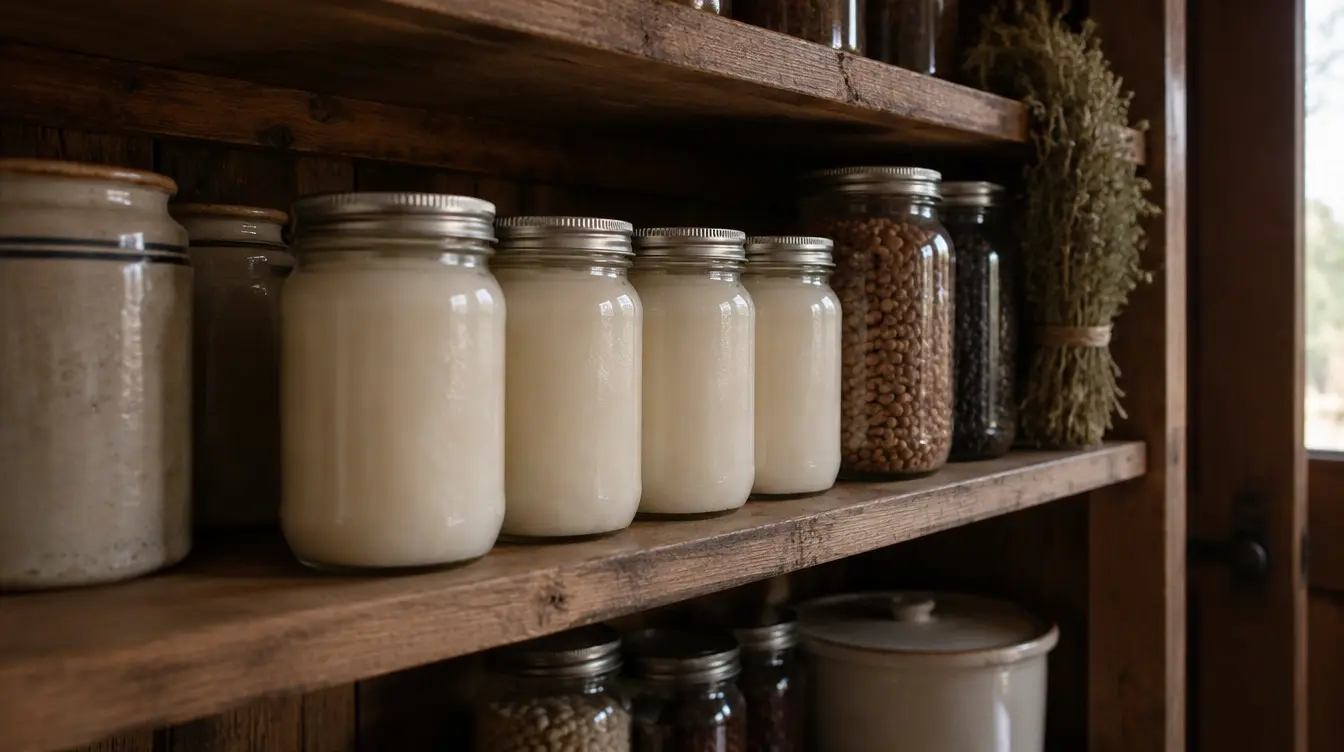
Pantry storage assumes a cool, dark cabinet between 65 and 75 degrees Fahrenheit. Above 80 degrees, halve the timeline. Below 60, you can add a couple months. Heat is the single biggest accelerator of rancidity.
Commercial tallow lasts longer because reputable producers filter and deodorize the fat thoroughly, which removes the trace proteins and moisture that drive spoilage in home-rendered batches. The Traverse Bay Farms 32 oz and the 100% Pure Grass-Fed 4 lb tub are both processed for long pantry life and the printed “best by” dates reflect that.
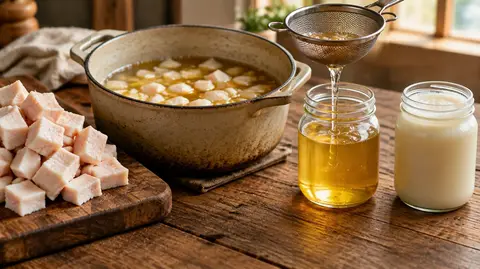
Homemade tallow ranges more. A clean rendering (low water content, properly strained, jarred while hot) hits the 6 to 9 month pantry range. A sloppy rendering with leftover protein bits or trapped moisture can go off in six weeks. The rendering safety guide covers what to fix.
Why Tallow Lasts So Long
This is the chemistry that makes the timeline work. Tallow is roughly 50% saturated fat, 42% monounsaturated, and a small percentage of polyunsaturated. That ratio is the key.
Fat goes rancid through oxidation. Oxygen attacks the double bonds in the fatty acid chains. The more double bonds, the more vulnerable the fat. Saturated fats have zero double bonds. Monounsaturated fats have one. Polyunsaturated fats have two or more.
Tallow’s high saturated content means most of the fatty acid chains have no double bonds for oxygen to attack. The monounsaturated portion is somewhat vulnerable but still slow to oxidize compared to polyunsaturated oils. The small polyunsaturated fraction is the part that determines the actual shelf life, because it is the first thing to spoil.
For comparison:
- Olive oil (mostly monounsaturated, some polyunsaturated): 18 to 24 months sealed, much shorter once opened
- Flaxseed oil (very high polyunsaturated): about 6 weeks even refrigerated
- Coconut oil (highly saturated like tallow): 18 to 24 months at room temp
- Beef tallow (highly saturated): 12 to 24 months at room temp commercial, 6 to 9 months homemade
Coconut oil and tallow are in the same chemical neighborhood and have similar shelf lives for the same reason. Highly saturated fats resist oxidation. That is the actual physics, not a marketing claim.
For more on rancidity and how oxidation actually progresses, the rendering mistakes post covers what to watch for during the cook itself, and why your rendered tallow is cloudy covers the moisture-content side of the problem.
Signs Tallow Has Gone Off
Rancid tallow is unmistakable once you know what to look for. The three indicators in order of usefulness:
1. Smell. Fresh tallow smells either neutral (if deodorized) or like clean beef fat with a slightly nutty edge. Rancid tallow smells sharp, sour, plasticky, or like old crayon. The smell is the most reliable indicator and you can usually tell within two seconds of opening the jar.
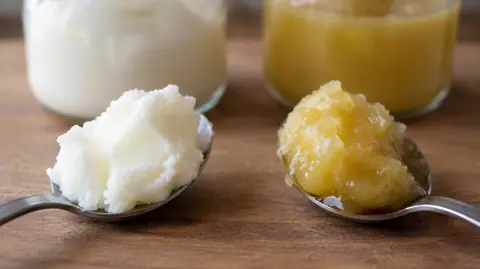
2. Color. Fresh tallow is white to pale ivory. Grass-fed tallow can have a slightly yellow tint from beta carotene, which is normal. Rancid tallow turns yellow-brown, sometimes with grayish patches. Color change without smell change usually means it is on its way out but still usable. Both together means done.
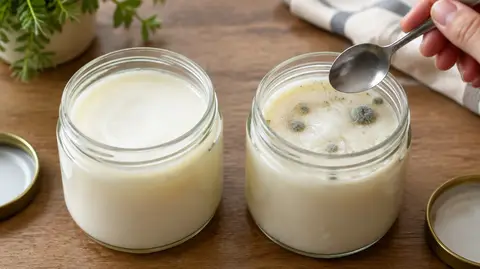
3. Texture. Fresh tallow has a smooth, even, slightly waxy texture. Rancid tallow can develop a sticky or gummy surface layer, sometimes with small dark specks (oxidized fat polymerizing on the surface). If the jar feels tacky on the outside or the top inch looks different from the inside, the top inch is going.
If two of the three are present, throw it out. If only color has changed and smell is fine, you can use it but the clock is ticking.
For a deeper look at how to tell, the does-tallow-go-bad post covers more edge cases including the difference between cosmetic discoloration and actual spoilage.
Best Containers
Container choice affects shelf life almost as much as temperature does. Here is the hierarchy.
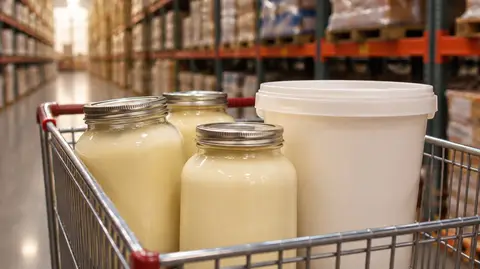
Best: glass jars with airtight metal lids. Wide-mouth pint or quart canning jars (Mason, Ball, Weck) are the gold standard. Glass does not interact with the fat. Airtight metal lids exclude oxygen. Wide mouth makes scooping easy and limits surface area exposure on each scoop.
Good: glass jars with plastic lids. Slightly more oxygen permeability than metal but still very good. Common in commercial tallow packaging.
Acceptable: food-grade stainless steel containers. Inert and airtight. Less common but works fine if you have them.
Avoid: thin plastic containers. Even food-grade plastic is more oxygen-permeable than glass. Some plastics can also leach trace compounds into fat over long storage. Commercial tallow sold in plastic tubs is meant to be used within months, not years.
Avoid: aluminum, copper, or bare metal. These can catalyze oxidation. Fat in direct contact with reactive metals goes off faster.
For long-term pantry or freezer storage, I transfer everything into half-pint or pint Mason jars filled to within a half inch of the rim. Less headspace means less oxygen sitting on top of the fat.
Pantry vs Refrigerator: The Real Tradeoff
This is the question that comes up most often. Tallow does not require refrigeration. Plenty of people leave a jar on the counter for months and the fat is fine. The actual tradeoff between pantry and fridge is convenience versus longevity.
Pantry pros:
- Tallow stays spreadable and scoopable at room temp
- Easy to grab for cooking or skincare
- Long shelf life still measured in months to years
Pantry cons:
- Faster oxidation than fridge storage
- Sensitive to temperature fluctuations (do not store above the stove)
- Light exposure if not in a closed cabinet accelerates spoilage
Fridge pros:
- Roughly doubles shelf life vs pantry
- Stable temperature
- Best for jars you are not actively using
Fridge cons:
- Rock-hard at fridge temps, hard to scoop
- Requires advance warming for skincare use
- Takes up fridge space
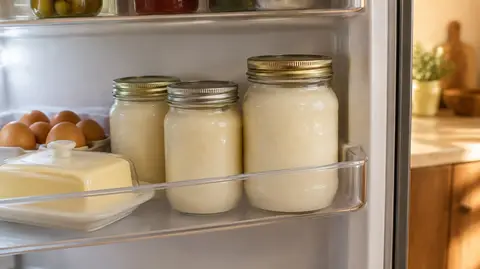
My personal system: I keep one small working jar (4 to 8 oz) in the pantry for daily cooking and skincare, and the bulk jar in the fridge. Refill the working jar from the bulk jar every two to three weeks. Best of both worlds. The Vanman’s Tallow Balm and the Terra Lotus Unscented skincare jars live in a bathroom drawer because they are commercial formulations with their own preservation profile, and bathroom temperatures are within range.
Freezer Storage for Long-Term
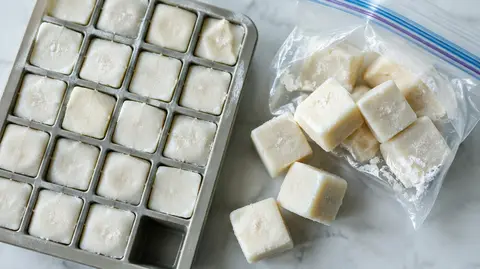
If you are rendering a big batch or you bought bulk tallow and want to keep it for a year or more, the freezer is the answer. Frozen tallow is functionally indefinite. The fat does not “expire” in the freezer. Quality slowly drifts over multiple years but the timeline is in years, not months.
How to freeze tallow well:
- Portion it into small containers (half-pint Mason jars work great).
- Fill to within an inch of the rim to leave room for expansion.
- Label with the rendering or purchase date.
- Stack flat in the freezer.
- Pull one jar at a time as needed.
To thaw, move a jar from the freezer to the fridge a day before you need it. The fat warms gradually without going through a freeze-thaw cycle that creates moisture pockets.
If you render your own and want a clean baseline to start from, the step-by-step rendering guide covers how to get a clean, dry, long-storing batch from the start.
What Shortens Shelf Life
Quick list of the things that drop the timeline.
- Moisture in the jar. Water in the fat is the fastest path to rancidity. Render dry, jar dry.
- Direct sunlight. UV accelerates oxidation. Store in a cabinet, not on a counter near a window.
- Repeated temperature swings. Pantry to fridge to pantry creates condensation inside the jar. Pick one and stick with it.
- Dirty fingers in the jar. Bacteria from skin contact eats the fat. Use a clean spatula or small scoop, not your finger.
- Storing near onions, garlic, or strong-smelling foods. Tallow picks up surrounding aromas. A jar stored next to garlic for a month will smell like garlic.
- Headspace. Half-empty jars oxidize faster than full jars because more oxygen contacts the surface. Decant down as you use it.
Frequently Asked Questions
Can I store beef tallow at room temperature?
Yes. Commercial tallow keeps 1 to 2 years at cool pantry temperatures. Homemade tallow keeps 6 to 9 months. Store away from heat, light, and strong-smelling foods, in a closed cabinet, in glass with an airtight lid.
How long does beef tallow last in the fridge?
Roughly 12 to 18 months for homemade tallow, and over 2 years for commercial. Refrigeration extends shelf life by slowing oxidation. The trade-off is that the tallow becomes hard and hard to scoop.
Can you freeze beef tallow?
Yes. Frozen tallow keeps for 3 years or more. Portion it into small glass jars with an inch of headspace for expansion, label, and stack flat. Thaw in the fridge before use.
Do I need to refrigerate beef tallow after opening?
Not strictly. A clean opened jar of commercial tallow keeps months in the pantry. If you go through it slowly or you live in a warm climate, refrigeration is the safer call. I refrigerate bulk jars and keep a small working jar at room temp.
What does rancid tallow smell like?
Sharp, sour, plasticky, or like old crayon. Distinctly different from the clean beef-fat smell of fresh tallow. The smell test is the most reliable rancidity indicator you have.
Is yellow tallow rancid or just grass-fed?
Both can produce yellow tallow but they look different. Grass-fed tallow has a uniform pale yellow tint from beta carotene throughout the jar, with a normal smell. Rancid tallow has uneven yellow-brown patches, sometimes a sticky surface, and a sharp off smell. Color plus smell is the test.
Bottom Line
Beef tallow lasts months to years depending on how you store it. Pantry storage gets you 6 to 9 months homemade or 1 to 2 years commercial. Refrigeration roughly doubles that. The freezer is good for 3 years and beyond.
The reason for the long shelf life is chemistry: tallow’s high saturated fat content resists the oxidation that spoils less saturated oils. Store in glass with an airtight lid, away from heat and light, and the timeline tracks.
If you are stocking up, the 4-pound grass-fed bulk tub and the Traverse Bay 32 oz both keep well at pantry temperatures for the timelines on the label. For a clean home-rendered baseline, the rendering step-by-step guide and the rendering safety post cover how to get a batch that hits the full shelf-life range, and the spoilage detection guide covers what to look for when the timeline finally runs out.
Smell, color, texture. Two of three off, throw it out. One off, use it up fast.
Explore more tallow guides
Browse our collection of recipes, comparisons, reviews and DIY tutorials.
View all guidesKing Tallow is reader-supported. We research and test the products we recommend, and when you buy through links on this page we may earn a commission at no extra cost to you. See our affiliate disclosure.
Published