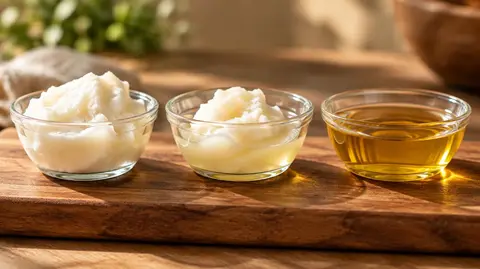
What Temperature Does Beef Fat Render? Tallow Rendering Temps and Safety
Reader-supportedBeef fat renders best at 200-250°F (oven 225-250°F). Full temperature chart from melting point to smoke and flash point, plus safe rendering practices.
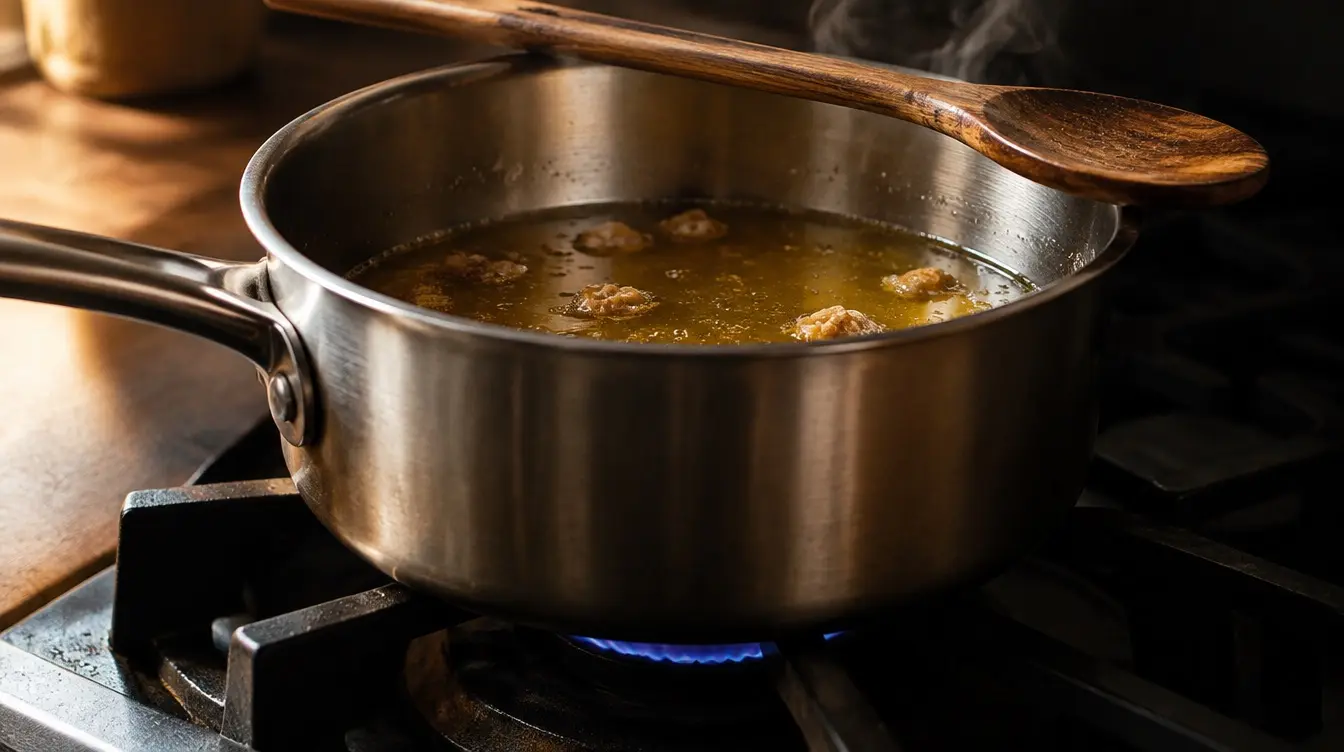
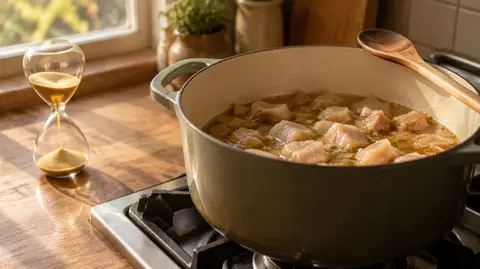
Beef fat starts to soften at around 100-115°F, but it renders efficiently when the liquid fat is held at about 200-250°F. In practice that means an oven set to 225-250°F, a slow cooker on LOW, or the lowest stovetop setting with a thermometer in the pot. Stay well below tallow’s smoke point of roughly 400°F: above about 260°F the cracklings brown fast and the tallow picks up a scorched flavor.
We test and research the products we recommend. If you buy through our links, we may earn a commission at no extra cost to you.
Beef Fat Rendering Temperature Chart
| Temperature | What happens to beef fat |
|---|---|
| ~100-115°F (38-46°C) | Tallow starts to soften. The National Renderers Association lists a Wiley melting point of 107-114°F for edible tallow. |
| ~130-140°F (54-60°C) | Already-rendered tallow is fully liquid. Fat inside raw tissue melts but is still trapped in cells and connective tissue. |
| 212°F (100°C) | Water in the fat boils off. In wet rendering, the pot sits near this temperature until the water is gone. |
| 200-250°F (93-121°C) | Working rendering range. Fat releases from tissue, water evaporates, and cracklings brown slowly. |
| 225-250°F (107-121°C) | Oven setting for oven rendering. |
| 260-300°F (127-149°C) | Too hot for clean tallow. Cracklings brown quickly, the fat darkens, and it tastes roasted or burnt. |
| ~400°F (205°C) | Approximate smoke point of home-rendered tallow. Commercial edible tallow specs call for 435°F minimum. |
| ~600°F (315°C) | Flash point. The NRA’s edible tallow spec lists a 600°F minimum. Vapors can ignite on contact with a flame. |
The melting, smoke, and flash point figures for commercial edible tallow come from the National Renderers Association’s Pocket Information Manual. Home-rendered tallow usually smokes somewhat earlier than refined commercial tallow, which is why most cooking guides put it near 400°F. More on this in the beef tallow smoke point guide and the beef tallow melting point guide.
What Temperature to Render Beef Tallow, by Method
| Method | Setting | Liquid fat temperature to aim for |
|---|---|---|
| Oven (Dutch oven inside) | 225-250°F | Settles in the 200-250°F range on its own |
| Slow cooker | LOW | USDA notes slow cookers generally run between 170°F and 280°F; LOW keeps fat near the bottom of the range |
| Stovetop | Lowest burner setting, adjusted by thermometer | 200-250°F; back off above 250°F |
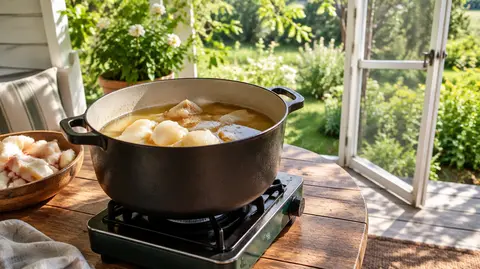
| Wet rendering (any vessel) | Water added at start | Holds near 212°F until the water evaporates, then climbs |
Commercial plants work in the same zone. The NRA describes traditional industrial wet rendering as cooking at about 230-250°F for three to six hours.
The complete method (prep, wet vs dry, straining, and yields) is in how to render beef tallow at home.
Why not render hotter?
Higher heat gets fat out faster, but it also browns the protein in the cracklings, darkens the tallow, and adds a burnt, bitter note that carries into everything you cook with it. It can also lower the smoke point of the finished fat, because scorched particles and degraded fat start smoking sooner. Low heat takes longer, but the result is paler, milder, and keeps better.
Why not render cooler?
Below about 200°F, fat releases slowly and water can linger in the pot. Water left in the finished tallow shortens shelf life and encourages mold. Make sure bubbling has stopped (a sign the water is gone) before you strain. See how to know when tallow is done rendering.
What temperature does steak fat render?
The fat inside a steak starts to soften and melt at roughly 130-140°F internal temperature, which is part of why well-marbled cuts taste richer at medium-rare to medium. A thick fat cap needs direct, high heat (searing it edge-down in a hot pan) to brown and crisp, because the interior of the steak will overcook long before the cap renders on its own.
Is Beef Tallow Flammable?
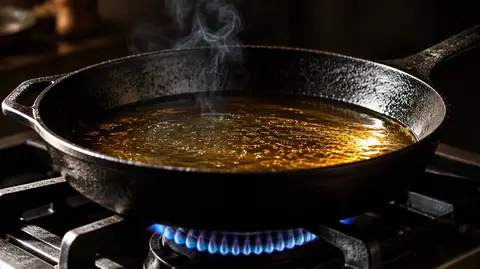
Beef tallow is combustible, but it doesn’t ignite easily. With a flash point around 600°F, it won’t catch fire at any normal cooking or rendering temperature. Grease fires happen when fat is left on high heat until it passes its smoke point and keeps climbing, or when fat spills onto a burner or heating element.
To stay safe:
- Never leave a stovetop render or a pot of frying fat unattended on high heat.
- Treat heavy, continuous smoke as a warning. Turn off the heat and let the pot cool.
- Keep a lid or sheet pan within reach. If fat ignites, turn off the heat and cover the pot. For a small fire, baking soda works; a Class K or Class B extinguisher is the backup.
- Never use water on a grease fire. It turns to steam instantly and sprays burning fat.
- Keep water out of hot fat in general. Wet utensils or wet fat dropped into hot tallow cause violent spattering.
How Hot Is Too Hot? Temperature Control in Practice
A thermometer is the most useful safety tool in tallow rendering. A clip-on model like the ThermoPro TP509 candy/deep fry thermometer or the analog Taylor candy/deep fry dial thermometer stays in the pot so you can see drift before it becomes a problem. For slow cookers and spot checks, an instant-read probe such as the ThermoPro TP19 works.
A heavy vessel matters nearly as much. Thin pots create hot spots that scorch fat on the bottom even when the thermometer reads fine. A thick-walled pot such as the Lodge 6-Quart Enameled Dutch Oven spreads heat evenly. Full gear options are in the tallow rendering equipment guide.
Step by step:
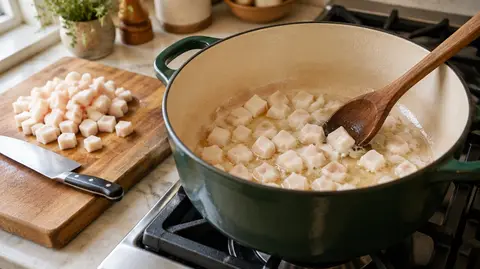
- Prep the fat cold. Cut it into small, even pieces so it heats evenly. No large chunk should lag behind. See the best cuts of beef for rendering.
- Start low. Putting fat into a hot pot on high scorches the outside while the inside is still solid. A splash of water in the bottom protects the first layer until liquid fat forms.
- Hold 200-250°F. Clip the thermometer to the side of the pot, stir occasionally, and adjust the burner in small steps. If the fat reaches 260°F or smells sharp, pull the pot off the heat for a few minutes.
- Strain carefully. Let the fat cool for several minutes first. Hot tallow causes deep burns. Use a stable bowl on a flat surface, and keep children and pets away.
- Cool and store like food. Use clean, dry jars and lids. Let the tallow cool, cap it, and store it cool and dark.
Food Safety: Bacteria, Moisture, and Storage
The temperatures used for rendering are far above what common foodborne bacteria survive. The bigger food safety question is what happens after rendering: recontamination, water, and leftover protein in the jar.
A 2021 study in Translational Animal Science (Molitor et al.) tested Salmonella in beef tallow, white grease, and chicken fat with added moisture at 0-3%. At 76°C (169°F), counts fell below detectable limits within six hours. At 48°C (118°F), populations declined over three to four days. Temperature was the factor that mattered; the moisture levels tested did not change the outcome. The authors point out that moisture introduced to fat after rendering is what allows contamination during transport and storage.
For a home kitchen, that translates to:
- Render all the way. Stop only when bubbling has stopped and the fat is clear, so no water is left in it.
- Strain well. Protein particles and water droplets are what spoil first. Double strain tallow you plan to keep for months.
- Use clean, dry jars and utensils. Never dip a wet or used spoon into a jar of tallow.
- Don’t leave tallow half-cooled overnight in an open pot. Jar it while it’s still liquid.
- Portion it. Reheating the same jar again and again exposes it to air and moisture each time.
Storage timelines and spoilage signs are in how to store rendered beef tallow and does beef tallow go bad.
Smoke, Moisture, and Off Smells
- Spattering and popping mean water is boiling off. That’s normal early on. Keep a lid nearby and stand back when adding fat.
- Light haze near the end of a dry render is normal. Heavy, sharp smoke means the fat is far too hot.
- Burnt or acrid smell means scorching. The flavor won’t recover, but the tallow is still usable for candles or leather conditioner.
- Barnyard or sour smell usually comes from blood spots, meat scraps, or old fat. See why beef tallow smells bad and how to fix it.
Food Use vs Skincare and Craft Use
Tallow for food needs the strictest handling: complete rendering, clean straining, and dry storage. Tallow for skincare and soap making benefits from the same low temperatures for a different reason: gentle heat gives a whiter, milder-smelling fat. Candle tallow can tolerate a darker color, but a clean strain still helps it burn evenly.
Common Mistakes That Undermine Safety
- Starting on high heat and never turning it down
- Leaving a stovetop pot unattended for long stretches with no thermometer
- Straining once into a jar that wasn’t fully clean and dry
- Letting half-cooled tallow sit in the pot overnight
- Reheating the same jar many times instead of portioning it
More in common beef tallow rendering mistakes.
Frequently Asked Questions
What temperature does beef fat render at?
Beef fat begins to melt around 100-115°F, but rendering it efficiently requires about 200-250°F. At that temperature the fat separates from tissue, water cooks off, and cracklings brown slowly.
What oven temperature should I use to render beef fat?
225-250°F. Put the fat in a Dutch oven, leave the lid slightly ajar so steam can escape, and check it about once an hour.
What temperature does beef tallow burn at?
It starts to smoke at roughly 400°F, which is when flavor turns bitter and the fat begins to break down. It won’t ignite until much hotter, around its flash point near 600°F.
Is it safe to render tallow in a slow cooker overnight?
Many people do. A slow cooker on LOW stays well below tallow’s smoke point. Put it on a stable, heat-safe surface away from anything flammable, and leave the lid slightly ajar so moisture can escape.
Does rendering kill bacteria in beef fat?
Rendering temperatures are far above what Salmonella survived in the 2021 Molitor study (it was undetectable within six hours at 169°F). The larger risk is contamination after rendering, which is why clean jars and dry storage matter.
Bottom Line
Render beef fat with the liquid fat around 200-250°F: an oven at 225-250°F, a slow cooker on LOW, or a low burner with a thermometer. Keep it far below the ~400°F smoke point, make sure all the water has cooked off before straining, and jar it in clean, dry containers. If you’d rather not manage temperatures at all, 100% Pure Grass-Fed Beef Tallow (4 lbs) comes already rendered.
Explore more tallow guides
Browse our collection of recipes, comparisons, reviews and DIY tutorials.
View all guidesKing Tallow is reader-supported. We research and test the products we recommend, and when you buy through links on this page we may earn a commission at no extra cost to you. See our affiliate disclosure.
Published · Last updated