
Tallow Balm vs Tallow Cream: What's the Difference and Which to Buy
Independent reviewTallow balm vs tallow cream explained. Formulation differences, texture, shelf life, absorption, and which type fits your skin and use case best.

This post contains affiliate links. We may earn a commission if you purchase through these links, at no extra cost to you.
I get this question a lot from people who are looking at three different jars on Amazon labeled “tallow balm,” “whipped tallow,” and “tallow cream,” and have no idea which one to pick. Honestly, the labels are inconsistent and the differences are not always obvious from the product page. Some brands use the terms interchangeably. Some draw real distinctions.
This is the short explainer that clears it up. Real formulation differences, what they mean for your skin, and which type fits which use case.
For a deeper category review across specific brands, the best tallow face cream comparison and the complete guide to beef tallow for skin on this site cover the broader product space.
Whipped Tallow vs Balm: The Quick Answer
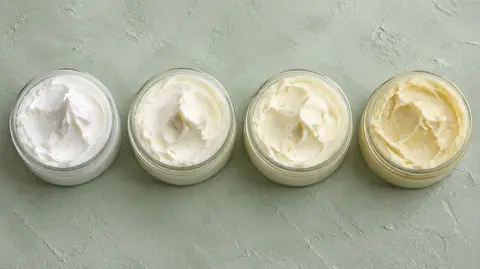
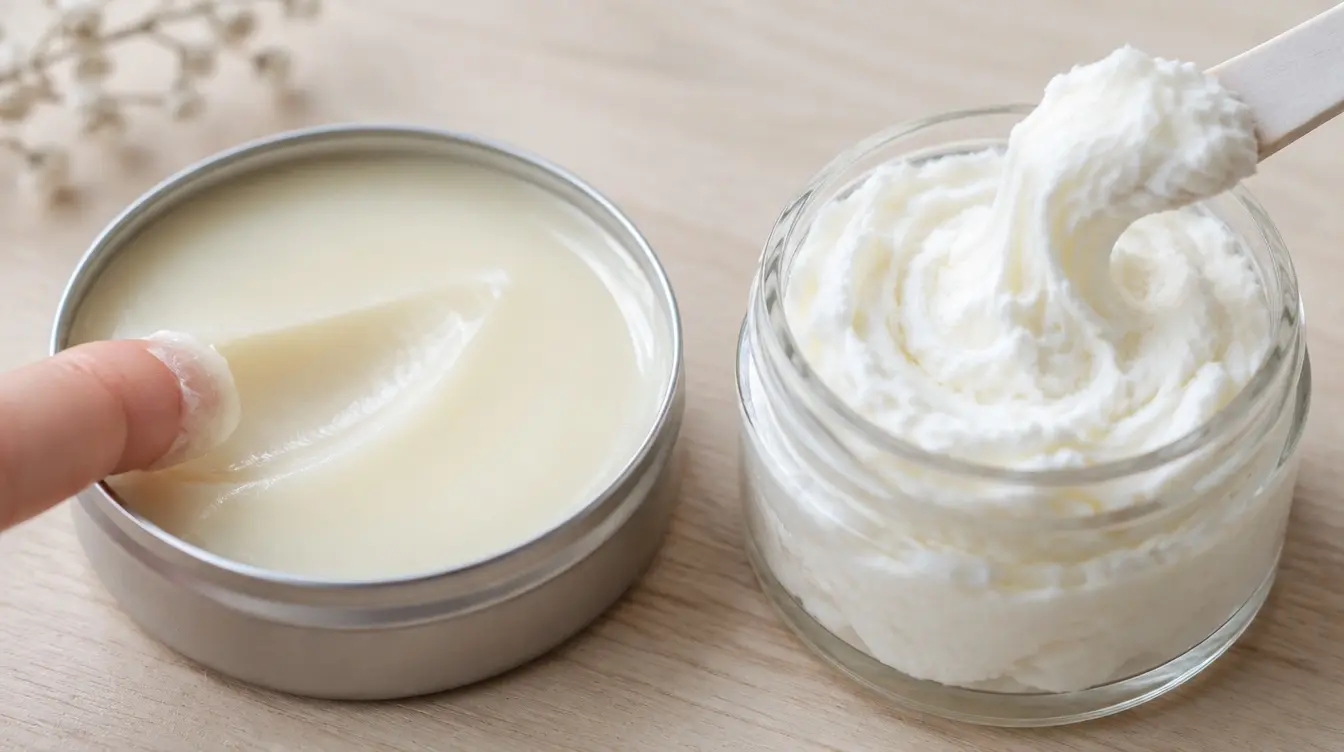
Whipped tallow and tallow balm are the same fat in different textures. Whipped tallow has air beaten into it (and usually a liquid oil blended in), so it is lighter and spreads thinner. A traditional balm is denser, often firmed with beeswax, and leaves a heavier protective layer.
| Whipped tallow | Traditional balm | |
|---|---|---|
| Texture | Soft, fluffy, frosting-like | Firm, waxy |
| Feel after applying | Light film, little shine | Heavier film that lasts longer |
| Best for | Daily face and body use | Cracked hands, heels, lips, overnight |
| Tallow per jar | Less (part of the jar is air) | More |
| Heat tolerance | Collapses when warm | Holds its shape better |
For more on what whipping does and does not change, see our guide to what whipped tallow is. For brand picks, see the best whipped tallow balm rankings.
The Real Formulation Difference
The two product categories come down to what is in the jar besides tallow.
Tallow balm. Mostly tallow with hardening agents and sometimes a carrier oil. A typical balm is around 85% to 95% tallow with the rest being beeswax (to harden the matrix), a small amount of olive oil or jojoba (to soften the spread), and optional essential oils. No water. The result is a firm, solid product that scoops with a fingernail and softens on contact with skin.
Vanman’s Tallow Balm is a good example of the heavy traditional balm format. Mostly tallow, with raw honey, a touch of olive oil, and beeswax for structure. The texture is dense and the application takes some warming between fingertips.
Terra Lotus Organic Unscented and Santa Cruz Paleo are the minimalist-balm category. Three or four ingredients, no fragrance, no emulsifiers.
Tallow cream (or whipped tallow). Tallow that has been whipped to incorporate air and lighten the texture. Sometimes also blended with a water-soluble base or a humectant to create a true emulsion. A whipped tallow that has only air added is technically still pure tallow, just aerated. A tallow cream that has water in it is an emulsion and behaves differently.
Amallow Unscented Whipped Tallow Balm is whipped tallow without water. The air gives it a much lighter feel than a traditional balm but the shelf life and ingredient list stay simple. Amallow Clean Cloud is the same idea but whipped even more aggressively for an ultra-light finish.
True emulsified tallow cream (with water) is less common in the retail space because the water content shortens shelf life and requires preservatives. Most products labeled “cream” in the tallow category are actually whipped balms without water. The word “cream” in this category is mostly a texture descriptor rather than a formulation one.
Texture And Feel On Skin
Side-by-side application is the easiest way to feel the difference.
Traditional balm goes on heavy. You need to rub it between fingertips for 10 to 15 seconds to warm and soften it before applying. On skin it feels dense, takes 2 to 4 minutes to absorb, and leaves a soft barrier feel for an hour or more. Best for cracked or very dry skin where you want the barrier.
Whipped tallow goes on light. You can scoop it directly with a fingertip and apply without much warming. On skin it spreads easily, absorbs in about 60 to 90 seconds, and leaves no visible barrier. Best for normal daily use on face and body.
True emulsified cream (rare in the tallow space) feels closest to a conventional drugstore moisturizer. Water lightens the feel further and the cream absorbs almost immediately. But the formulation requires preservatives and has the shortest shelf life.
For most people the choice is between traditional balm and whipped balm. The distinction is texture and absorption, not whether one works better than the other in any clinical sense.
Shelf Life
This is where the difference matters more than people realize.
Balm shelf life: about a year sealed at room temperature, six to nine months opened. The high tallow content and absence of water mean very little can grow in the jar. Oxidation is the main failure mode, and a balm in a dark cabinet with the lid on stays good for a long time.
Whipped balm (no water): similar shelf life to a traditional balm. The added air slightly accelerates oxidation, so figure about 10 months sealed and six months opened. Still long.
Emulsified cream (with water): much shorter. Three to six months even with preservatives, and water-containing tallow products without preservatives can grow mold or bacteria within weeks. If you see a “tallow cream” that lists water on the ingredient list and no preservatives, that is a red flag.
For shelf life, traditional balm and whipped balm are functionally similar. True water-based cream is a different category with real shelf life trade-offs.
Absorption Speed
Whipped balm absorbs faster. There is no question about this side-by-side.
A traditional balm sits on the skin while the body heat melts and absorbs the fat. That process is slow because dense tallow has a stable solid structure. A whipped balm has lower density per surface area on skin and the body heat reaches more of the product faster.
For face use, this matters a lot. A daily face moisturizer needs to absorb in under two minutes so you can put on glasses, a hat, or makeup without smearing it around. Whipped balm hits that target. Traditional balm rarely does on the face.
For body and hand use, this matters less. You can apply a heavier balm before bed and let it absorb overnight. The barrier feel through that time may actually be a benefit on cracked heels or very dry winter hands.
Best Uses For Each
Where traditional balm wins:
- Dry cracked heels and elbows (the barrier feel is the feature)
- Lips and lip balm (a firmer matrix holds the shape and stays on longer)
- Very dry or eczema-prone skin during acute flares
- Hand cream after dishwashing in winter
- Targeted spots that need repair more than daily maintenance
Vanman’s is my go-to traditional balm for these uses. It is heavy enough to actually deliver the barrier feel and the small jar size matches the targeted use case.
Where whipped balm wins:
- Daily face moisturizer
- Under makeup
- Body moisturizing after a shower
- Anyone new to tallow who might be put off by a heavy texture
- Mixed skin types where you do not want a heavy occlusive
- Travel (the smaller jars are easier and the lighter texture works in more conditions)
Amallow Unscented is the daily whipped balm I keep recommending. Amallow Clean Cloud is the lightest of the whipped options for people who think tallow will feel too heavy. The Organic Tallow Skin 4 oz is the budget pick in the whipped category.
For minimalist sensitive skin in either format, Santa Cruz Paleo has the cleanest ingredient list (three ingredients) of anything I have tested. Terra Lotus Unscented is the other minimalist option in the balm format.
How To Choose
Three questions sort most people into the right product.
Question 1: What is your skin like at baseline?
If your skin is dry, cracked, or eczema-prone, start with a traditional balm. The barrier feel and slower absorption deliver more repair per application.
If your skin is normal, combination, or anywhere on the oily spectrum, start with a whipped balm. The lighter feel and faster absorption let you use tallow without it feeling like a heavy occlusive.
Question 2: Where are you using it?
For face, whipped balm almost always wins. The exceptions are very dry winter face in cold climates, where a traditional balm under a thicker layer of sunscreen or makeup can work.
For lips, traditional balm wins. The firmer matrix stays put.
For hands, either works. Whipped for daily, traditional after dishwashing or for cracked winter hands.
For body, either works. Whipped is faster for daily use. Traditional is better for targeted dry patches.
Question 3: How sensitive are you?
If you have ever reacted to fragrance, essential oils, or skincare ingredients, go minimalist regardless of format. Santa Cruz Paleo (three ingredients), Terra Lotus Unscented (short list, no fragrance), and Amallow Unscented (whipped, no fragrance) are the three I would test first.
If your skin tolerates most products, you can try a scented option like Terra Lotus Lavender or Ancestral Haven Herbal Rose without much risk.
Frequently Asked Questions
Is whipped tallow better than a regular balm?
For face use, generally yes, because of the lighter feel and faster absorption. For targeted very dry skin or lip use, no. Pick by use case, not by category.
Can I whip a regular balm at home?
Yes. Soften a traditional balm to about 80F (warm but not melted), then whip with a hand mixer or whisk attachment for about three minutes. The result is a lighter texture similar to a commercial whipped balm. The whipped version will lose volume slightly over a few weeks as the air works out, but the texture stays softer than the original balm.
What is the difference between whipped tallow and tallow cream?
In most retail products on Amazon, none. The terms are used interchangeably by most brands. A true tallow cream would have water in the formulation, which would require preservatives and shorten shelf life, and very few products in the tallow space do this. If you see a product labeled “cream” with no water in the ingredients, it is whipped balm with a marketing label.
Does whipping change the skincare benefits of tallow?
No. Whipping only adds air, so the fat itself is identical. Whipping changes texture only. The benefits per gram of product are the same.
Why do whipped tallow balms cost more per ounce than traditional balms?
Two reasons. First, the air adds volume to the jar without adding mass, so you are getting fewer grams of tallow per ounce of jar contents. Second, the whipping process is an extra production step. The cost-per-application math is closer than the per-ounce price suggests because you usually apply less whipped product per use.
What is the best tallow balm to buy if I am new to this?
For daily face use, Amallow Unscented Whipped Tallow Balm. For very dry skin or targeted dry patches, Vanman’s Tallow Balm. For minimalist sensitive skin, Santa Cruz Paleo. Any of these three is a good first jar depending on your skin and use case.
Bottom Line
Tallow balm and tallow cream are the same active ingredient in different textures. Traditional balm is dense, slower-absorbing, and best for repair and targeted dry skin. Whipped tallow (which most products labeled “cream” actually are) is lighter, faster-absorbing, and best for daily face and body use.
For most people starting out, a whipped balm like Amallow Unscented is the right first jar. Keep a small traditional balm like Vanman’s alongside it for cracked hands and lips. That two-product stack covers almost every skincare use case.
If you want to compare specific brands side by side, the face moisturizer comparison, the Amallow review, the Amallow Clean Cloud review, and the Amallow vs Vanman’s comparison on this site go deeper into specific picks.
Pick by texture, not by name. The label does not always match the formulation.
Explore more tallow guides
Browse our collection of recipes, comparisons, reviews and DIY tutorials.
View all guidesKing Tallow is reader-supported. We research and test the products we recommend, and when you buy through links on this page we may earn a commission at no extra cost to you. See our affiliate disclosure.
This article is for general information and is not medical advice. Patch test new skincare and talk to a dermatologist or doctor about persistent skin conditions.
Published · Last updated