Skip to content
King TallowKing Tallow
Midwest Region

Where to Buy Beef Tallow in Missouri

Missouri ranks #6 in cattle nationally and produces some of the most accessible grass-fed tallow in the country. US Wellness Meats, headquartered in Monticello, ships nationally and is one of the largest grass-fed tallow processors in the United States. City Market in Kansas City and Soulard Market in St. Louis carry suet year-round. Expect $3 to $5 per pound for raw suet and $9 to $13 per pound for rendered tallow.

Last updated May 26, 2026 by Miles Carter

Cattle ranking
#6 nationally with roughly 4.0 million head
Head of cattle
4,000,000 cattle and calves (2026 USDA NASS estimate)
Typical $/lb
$8 to $12 per pound finished, $3 to $5 per pound raw suet
Best months
October through January after fall slaughter and through holiday season
Grass-fed
Strong. The Ozarks and north Missouri are dominated by cow-calf operations, many of which grass-finish for direct-to-consumer sales.
Major cities
Kansas City, St. Louis

Why Missouri matters for beef tallow

Missouri sits in the heart of the cattle belt and benefits from both Midwest finishing infrastructure and Ozark grass-fed tradition. The state has more cow-calf operations than almost anywhere outside Texas.

US Wellness Meats is here

Headquartered on a farm in Monticello in northeast Missouri, US Wellness Meats is one of the largest grass-fed beef cooperatives in the country. They render tallow in commercial volume from animals raised on their member farms in Missouri, Iowa, and Illinois. The Show-Me Beef brand and several other regional cooperatives operate on similar models.

Cow-calf country

Missouri has more cattle operations than any state east of the Mississippi. Most are small cow-calf farms running 50 to 300 head on pasture, with calves either sold to Kansas or Texas feedlots or finished locally. The grass-finishing route produces the tallow that ends up at farmers markets and direct-to-consumer programs.

Two major city markets plus deep BBQ culture

City Market in Kansas City (1857) and Soulard Market in St. Louis (1779, the oldest continuously operating public market west of the Mississippi) both run year-round with active meat vendors. Kansas City's BBQ tradition means beef fat is a respected ingredient rather than a byproduct. Burnt-end trim, brisket point fat, and rendered beef tallow are all commonly available.

Ozark small-farm density

South-central Missouri (Howell, Texas, Wright, Douglas counties) has a high density of small grass-fed operations selling at regional markets in Springfield, Branson, and West Plains. The Ozark soil and hill terrain are suited to forage rather than row crops, which makes grass-finishing the default in those counties.

Regional context

Climate

Humid continental in the north transitioning to humid subtropical in the south. Cool-season forages (fescue, orchardgrass, clover) dominate. Tall fescue toxicity is a recognized issue and many graziers manage around it with novel-endophyte cultivars.

Terrain

Rolling prairie in the north, Missouri River alluvial bottoms through the center, Ozark Plateau in the south with shallow rocky soils and oak-hickory pasture. The Ozarks especially favor grass-finishing.

Feed practices

Mixed. North Missouri operations often background calves on grass and finish on a corn ration. Ozark and southwest Missouri farms more commonly grass-finish through to slaughter. Read the label for 'grass-finished' specifically; 'grass-fed' alone usually means grain-finished.

In-state rendering

Commercial Missouri processors low-heat dry-render in jacketed kettles. US Wellness uses a slow-render process at controlled temperatures to preserve the carotenoid profile. Small-farm and home rendering is typically wet-render on the stove.

Where to buy beef tallow in Missouri

1

Local butchers and meat markets

Local Pig (Kansas City), McGonigle's Market (Kansas City), Bolyard's Meat & Provisions (Maplewood, St. Louis), Truffles Butchery (Ladue, St. Louis), and G&W Bavarian Sausage (Affton, St. Louis) all carry suet or rendered tallow. Springfield's Harter House and Price Cutter butcher counters stock standard beef fat trim. Call ahead for leaf or kidney fat by name.

2

Farmers markets

City Market Kansas City (Saturday and Sunday year-round), Soulard Market St. Louis (Wednesday through Sunday), Tower Grove Farmers Market (Saturday, April to November), Springfield Farmers Market on the Park (Tuesday, Thursday, Saturday), Columbia Farmers Market (Saturday year-round), and the Overland Park Farmers Market on the Kansas border all host grass-fed beef vendors.

3

Ranches and direct-to-consumer

US Wellness Meats (Monticello, online plus local pickup), Ozark Mountain Beef (Howell County), Show-Me Farms (Sedalia area), Heritage Acres Market (Cabool), Spring Branch Farm (Centertown), and Grant Family Farms (Trenton) all sell direct. Most offer farm pickup, cooperative drop-offs in Kansas City or St. Louis, or nationwide shipping.

4

Specialty and natural grocers

Schnucks (St. Louis based, 100 plus locations) stocks rendered tallow in the cooking-oil section at most stores. Dierbergs (St. Louis upscale chain) carries grass-fed options. Hy-Vee in western Missouri and Kansas City carries Hy-Vee brand and regional grass-fed tallow. Whole Foods in Kansas City (Mission and Country Club Plaza) and St. Louis (Galleria and Town and Country) stock Epic and US Wellness.

5

Online when local fails

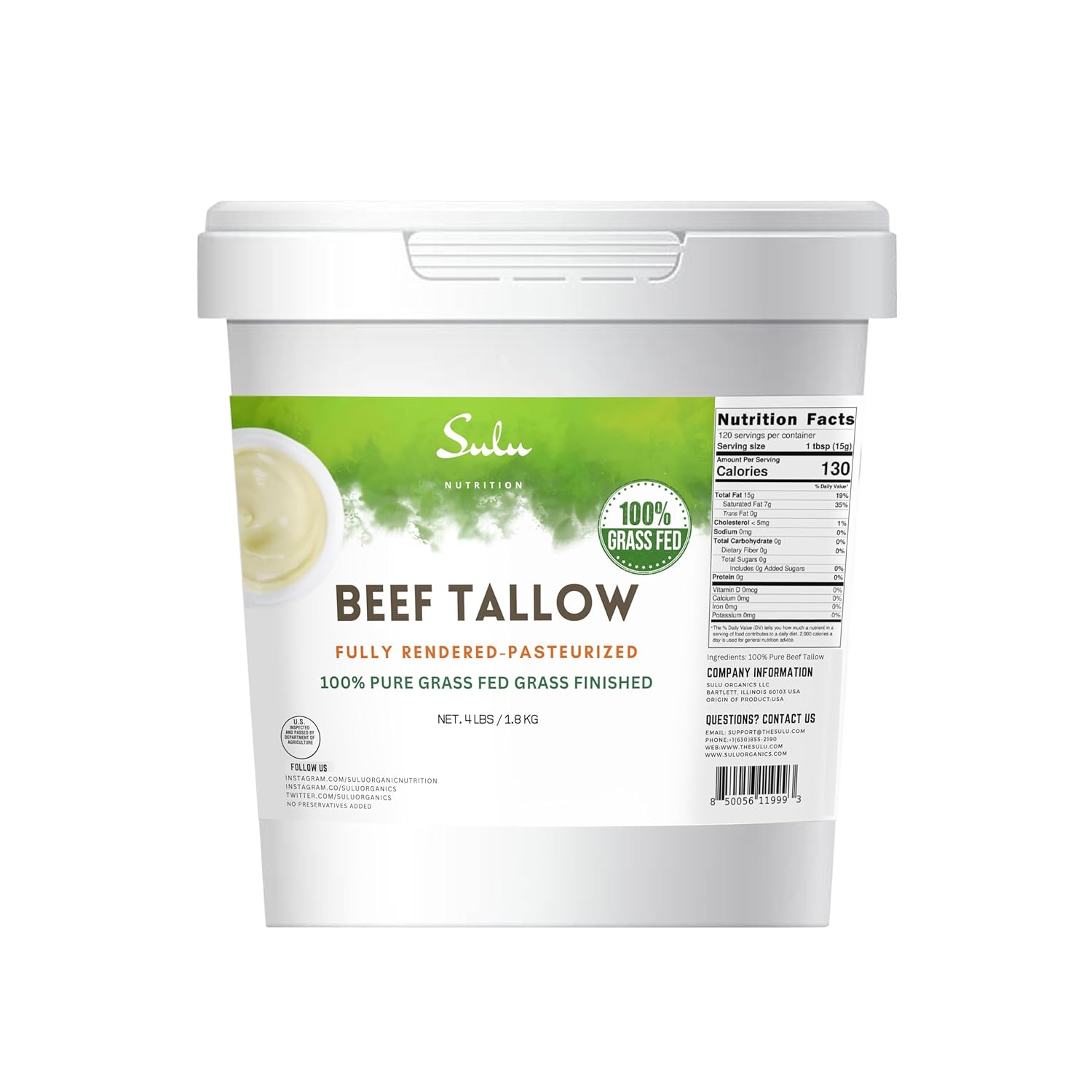
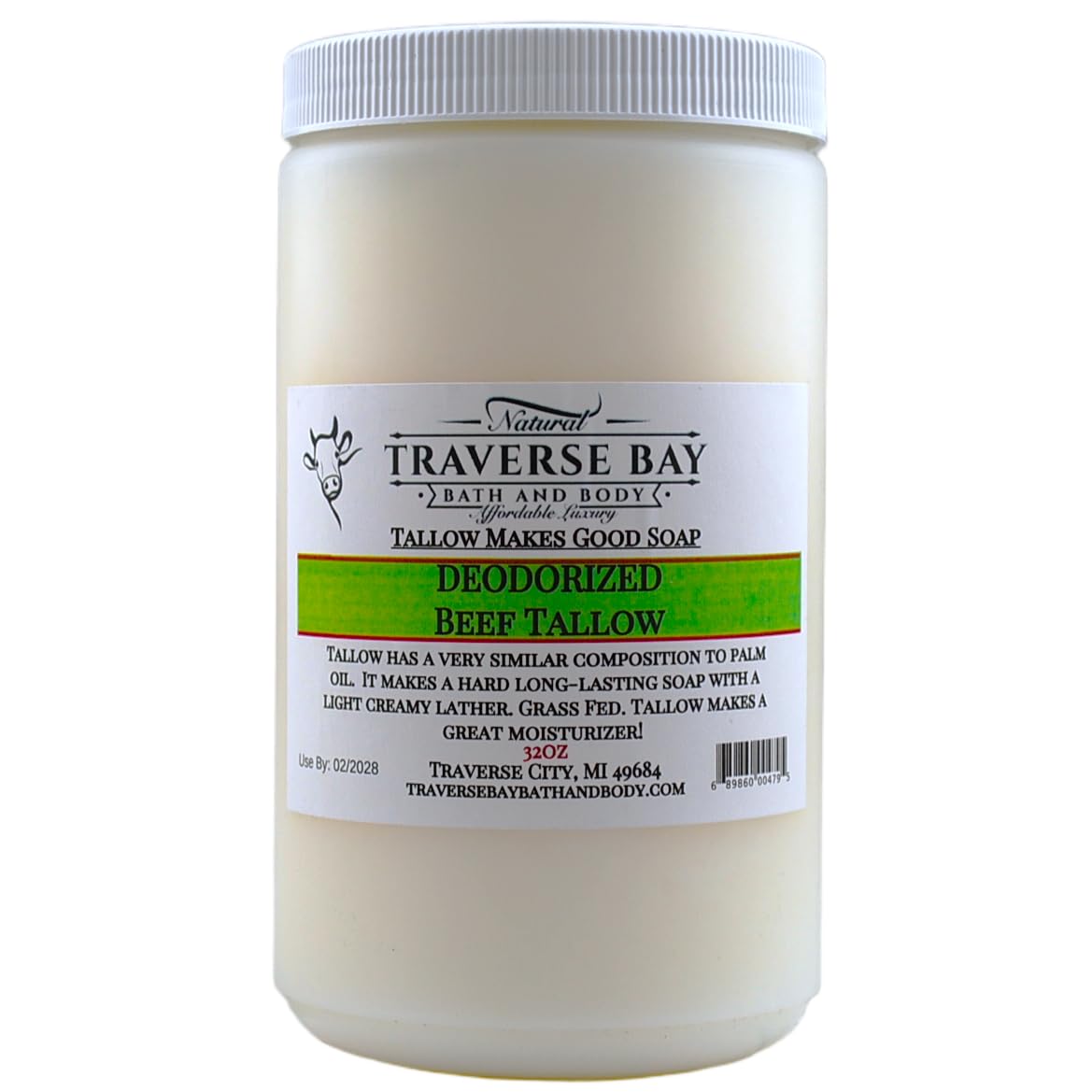
US Wellness Meats ships from Missouri to anywhere in the country and is one of the best mail-order tallow sources in America. Or order 100% Pure Grass-Fed Beef Tallow (4 lbs) as a general option, or Traverse Bay Farms (32 oz) for a deodorized budget alternative. All ship to every Missouri zip in 1 to 3 days.

Reliable online options that ship to Missouri

We test and research the products we recommend. If you buy through these links we may earn a commission at no extra cost to you.

What to look for on the label

Missouri uses standard USDA terminology plus a state origin program. Here is what the labels actually mean at a Missouri butcher or farmers market.

Label What it means
Missouri Grown Missouri Department of Agriculture state origin mark. Confirms in-state raising. Says nothing about feed; grass-finished and grain-finished both qualify.
100% grass-fed and grass-finished Animal ate forage from weaning to slaughter. The gold standard for skincare-quality tallow. Standard claim on Ozark farm-stand and farmers-market labels.
American Grassfed Association (AGA) certified Third-party certified 100% forage, no grain ever, no antibiotics, no hormones. US Wellness and several Missouri farms carry this seal. The strongest grass-finished claim available.
Show-Me Quality Assurance (SMQA) A Missouri Beef Industry Council producer program covering handling, vaccination, and records. Useful for traceability, not a feed or quality claim by itself.
Leaf or kidney fat Internal fat from around the kidneys. Cleanest, palest tallow when rendered. Specify by name when ordering from any Missouri butcher; the default is carcass trim.

What it actually costs in Missouri

Missouri pricing runs slightly above Iowa and Nebraska but below Pennsylvania and most of the coasts. Ozark farm-direct sources are the cheapest, Kansas City artisan butchers the most expensive.

Tier Per pound
Raw suet from Ozark or north Missouri farm $2.50 to $4.50
Raw suet from city butcher $4.00 to $6.50
Rendered tallow, grocery $9 to $13
Rendered tallow, US Wellness direct $11 to $15
Cosmetic-grade whipped balm $48 to $90

When to buy

Missouri's mild winters keep some grass-finished operations slaughtering through November and even December. Supply is heaviest from October to January.

Spring (March to May)

Moderate supply. Previous fall's tallow still in cold storage at larger operations. Small farms may be sold out; switch to US Wellness or grocery options.

Summer (June to August)

Moderate. Farmers markets in Kansas City, St. Louis, Columbia, and Springfield run at full strength. Pasture quality peaks. Good time to place fall pre-orders.

Fall (October to November)

Peak supply. Most grass-finished slaughter happens late October through mid-November after the second pasture flush. Fresh suet and fresh-rendered tallow appear at every farmers market and farm stand.

Winter (December to February)

Strong supply. Holiday baking demand keeps tallow in stock at urban markets through January. Frozen suet remains available at most operations. February is the easiest month to find bulk leaf fat at a discount.

Where to look outside Missouri

Missouri borders eight states, more than any state except Tennessee, and four of them have strong cattle industries.

Kansas

30 minutes from Kansas City to the Flint Hills border

Flint Hills grass-finishing and one of the country's largest stocker-cattle regions. Tallgrass Beef Company sells direct.

Try: Tallgrass Beef Company (Sedan, KS), Creekstone Farms (Arkansas City, KS)

Iowa

2 hours from St. Joseph to southern Iowa

Corn Belt finishing plus a strong small-farm grass-fed scene. Hy-Vee chain crosses both states.

Try: Niman Ranch network, southern Iowa locker plants

Arkansas

1.5 hours from Springfield to the Ozarks

Continues the Ozark grass-fed corridor across the state line. Several Missouri farms supply Arkansas markets and vice versa.

Try: Grass Roots Cooperative (Clarksville, AR), Ratchford Farms (Marshall, AR)

Render it yourself

Buying raw suet from an Ozark or north Missouri farm at $3 per pound, then rendering at home, lands a finished tallow cost near $4.30 per pound: roughly a third of grocery pricing. Five pounds of suet yields enough tallow for a year of skincare for a family. Read the step-by-step rendering guide for both wet and dry methods, then move on to a batch of tallow soap or face cream. Missouri's grass-finished suet renders cleaner than most grain-finished sources because the carotenoid profile is richer and the fat is firmer at room temperature.

How locals cook with it in Missouri

Missouri sits at the crossroads of Midwest farm cooking and Southern smoke-and-fire tradition. Tallow shows up in both.

Kansas City burnt-end tallow rub

Pitmasters at Joe's Kansas City, Q39, and Arthur Bryant's lean on rendered beef fat as a basting and finishing fat for burnt ends. Brush trimmed brisket point with warm tallow before the final wrap, then again at slice time. The rendered fat carries the smoke and pulls the bark together.

Ozark cast-iron skillet biscuits

Southern-style biscuits made the Ozark way: cold beef tallow cut into flour at 2 tablespoons per cup, baked in a preheated cast-iron skillet at 450 F. The high smoke point of tallow lets the skillet stay hot enough to set the crust before the interior cooks through. Flakier than butter biscuits, longer shelf life.

St. Louis-style pork steak finish

St. Louis pork steaks (shoulder cut) get grilled hot and finished with a thin glaze of melted beef tallow stirred into Maull's barbecue sauce. The tallow tames the vinegar bite of the sauce and helps it cling to the meat. A standard backyard move in south city and the suburbs.

Springfield cashew chicken adaptation

Springfield, Missouri invented cashew chicken in 1963 and the local style uses a fried chicken in oyster sauce gravy. Home cooks adapting the recipe for paleo or carnivore diets fry the chicken in beef tallow at 350 F instead of vegetable oil. The crust comes out crisper and the high smoke point holds up to multiple batches.

Bootheel smoked brisket lard layer

Southeast Missouri smokers along the Mississippi tradition (Cape Girardeau, Sikeston) line the bottom of the smoker drip pan with a half inch of rendered tallow to catch and reuse for the next cook. The reused tallow picks up smoke flavor and gives any subsequent searing job a built-in smoke note.

Local & Regional Brands

US Wellness Meats

Ozark Mountain Beef

Show-Me Farms

Missouri Sourcing Tips

  • US Wellness Meats is based in Missouri
  • Kansas City has excellent BBQ culture and butchers
  • Many Ozark farms sell direct
  • Check Schnucks and Dierbergs stores

Major Cities in Missouri

Kansas City St. Louis Springfield Columbia Independence

These cities typically have the best selection of local butchers, farmers markets, and specialty stores carrying beef tallow.

Frequently asked questions

Is US Wellness Meats really based in Missouri?
Yes, headquartered in Monticello in Lewis County in the northeast corner of the state. The company operates as a cooperative of grass-fed farms across Missouri, Iowa, and Illinois, with a processing and shipping operation in Monticello. They ship rendered tallow nationwide and offer farm pickup for Missouri customers who want to skip shipping fees.
What is the cheapest way to buy beef tallow in Missouri?
Drive to the Ozarks or north Missouri, buy raw suet directly from a small grass-fed farm at $3 to $4 per pound, and render at home. Five pounds of suet renders to about 3.5 pounds of finished tallow, landing your cost near $4.30 per pound. Online ordering from US Wellness in bulk is the second-cheapest option for finished tallow.
Can I find grass-fed tallow at Schnucks?
Yes. Most St. Louis-area Schnucks stores stock at least one rendered beef tallow in the cooking-oil or natural-foods section. Pricing runs $10 to $13 per jar (typically 7.5 to 11 ounces). Quality is acceptable for cooking; for skincare DIY, US Wellness or a local artisan source from a farmers market will be milder and paler.
Is City Market in Kansas City a good source?
Yes. The market has run continuously since 1857 and the meat vendors there have direct relationships with regional cow-calf operations. The Saturday market is the deepest day. Local Pig has a stall presence in addition to its Westside storefront. Phone ahead for leaf or kidney fat specifically; standard suet trim is on the counter most weekends.
What about Soulard Market in St. Louis?
Soulard is the oldest continuously operating public market west of the Mississippi, founded in 1779. The meat vendors carry beef fat trim regularly. The Wednesday and Saturday markets are strongest. Bolyard's Meat & Provisions in nearby Maplewood is a stronger specialty option for cosmetic-grade or hand-cut leaf fat.
Does Missouri grass-finished tallow taste different from grain-finished?
Yes, noticeably. Grass-finished tallow has higher carotenoid content (pale yellow tinge), higher CLA content, and a cleaner, less-beefy flavor profile. It tends to be firmer at room temperature and renders to a paler color. For skincare it is significantly better; for cooking the difference is more subtle.
How does Missouri compare to Kansas for sourcing?
Roughly equivalent at the wholesale level (both are major cattle states), with Missouri having slightly more direct-to-consumer farms and Kansas having more commercial processing. For grass-fed tallow specifically, Missouri's Ozarks edge out Kansas's Flint Hills due to smaller-scale operations and tighter customer relationships.
Is the American Grassfed Association seal worth paying for?
Yes if you want third-party verification of grass-finishing. The AGA standard is stricter than 'grass-fed' alone: zero grain ever, zero antibiotics, zero hormones, pasture access at all times. US Wellness and several smaller Missouri farms carry the seal. Expect a 15 to 25 percent price premium versus uncertified grass-finished.
Will Missouri farms ship tallow?
Some yes, some no. US Wellness ships nationwide and is the most polished operation. Ozark Mountain Beef and Heritage Acres Market both have online ordering. Smaller direct-to-consumer farms typically do not ship and require a farm visit or cooperative drop-off pickup in Kansas City, St. Louis, or Columbia.
What about Springfield and southwest Missouri?
Springfield is a strong secondary market. The Tuesday-Thursday-Saturday Farmers Market on the Park hosts grass-fed vendors from Howell, Greene, and Christian counties. Harter House grocery stores stock regional grass-fed tallow at the larger locations. The Springfield Cashew Chicken culture means tallow is in active use in restaurant kitchens, which keeps wholesale supply healthy.
Is Missouri tallow good for skincare DIY?
Yes. Missouri grass-finished tallow renders to a clean pale ivory product with a mild scent. Source leaf fat specifically (not carcass trim) for cosmetic work; render at low heat (under 180 F); strain through cheesecloth; store in a sealed jar away from light. The result is suitable for face balms, body butter, and shaving cream.
How long will Missouri tallow keep?
Twelve months at room temperature in a sealed jar, eighteen months refrigerated, three years frozen. US Wellness commercially-rendered tallow tends to have a shorter open-jar shelf life than slow-rendered farm tallow because the rendering temperature is higher. Either way, store away from light and heat.
Are there organic-certified options in Missouri?
Yes. Several northeast Missouri farms in the US Wellness network are USDA Organic certified. The Whole Foods locations in Kansas City and St. Louis stock organic tallow options regularly. Look for the USDA Organic seal on the label; it requires non-GMO feed, no synthetic inputs, and certified pasture management.
Can I buy tallow at Hy-Vee?
Yes, at the western Missouri Hy-Vee stores in Kansas City, St. Joseph, and Cape Girardeau areas. Hy-Vee carries its own brand plus regional grass-fed brands in the cooking-oil section. The HealthMarkets stores within Hy-Vee have the deepest selection. Pricing runs slightly below Whole Foods for comparable quality.

Sources

  1. [1] USDA NASS Missouri Cattle Inventory 2026 Read source →
  2. [2] University of Missouri Extension: Beef Cattle Production Read source →
  3. [3] Missouri Department of Agriculture: Missouri Grown Read source →
  4. [4] American Grassfed Association Producer Directory Read source →
  5. [5] US Wellness Meats Company Information Read source →