Skip to content
King TallowKing Tallow
Mountain West Region

Where to Buy Beef Tallow in Montana

Montana has about 2.4 million head of cattle on more than 50 million acres of open range, and grass-finishing is the default rather than the premium. Almost every small town has a locker plant that will sell raw suet for $2 to $4 per pound or rendered tallow at $6 to $10. Grass-finished from Yellowstone Grassfed Beef or Sun Prairie runs $11 to $14. Best sourcing months are September through November after summer pasture finishing.

Last updated May 26, 2026 by Miles Carter

Cattle ranking
#10 in US (but #1 grass-finished per capita)
Head of cattle
2.4 million
Typical $/lb
$3 - $14
Best months
September to November
Grass-fed
common
Major cities
Billings, Missoula

Why Montana matters for beef tallow

Montana cattle live on the largest privately held grasslands in the lower 48. The state has fewer total head than Texas or Nebraska but the lowest stocking density and the highest share of grass-finished operations. For cosmetic-grade tallow, Montana's product profile rivals anywhere in the country.

50 million acres of rangeland

Montana ranches average over 2,000 acres each, more than 5 times the national average. Cattle range freely on native mixed-grass prairie, fescue meadows, and mountain valleys, and most stay on grass through slaughter weight.

Regenerative leadership

Operations like Yellowstone Grassfed Beef in Big Timber, J Bar L Ranch in Centennial Valley, and Old Salt Co-op out of Helena have built reputations for adaptive multi-paddock grazing and soil restoration. The tallow that comes off these operations is cosmetically and nutritionally premium.

Strong local processor network

Montana has more than 50 state-inspected meat processors despite low population density. Lower Valley Processing in Kalispell, Yellowstone Valley Food Hub in Billings, Ranchland Packing in Butte, and Hi-Country Beef Jerky in Lincoln all handle suet and rendered product.

Short supply chains

Montana cattle often go from pasture to local processor to local retail without leaving the county. That means the tallow you buy from a Bozeman or Missoula butcher likely came from an animal raised within 100 miles.

Regional context

Climate

Cold continental with long winters in the north and east, milder semi-arid in the south-central valleys. Tallow renders cleanly almost year-round given the cool ambient temperatures. Summer high country grazing windows run May through October.

Terrain

Northern Great Plains east of the Rockies, mountain valleys (Gallatin, Bitterroot, Madison, Yellowstone) in the south-central, alpine meadows at elevation. Most cattle work valley floors with summer high-country grazing.

Feed practices

Cow-calf phase on native prairie or mountain meadow. Many operations finish on grass and hay alone. Feedlot finishing happens for commodity cattle but is less common than in Plains states.

In-state rendering

Local processors render on request. A 1,200 pound grass-finished steer yields 25 to 40 pounds of suet, slightly less than grain-finished due to lower body fat percentage but with higher CLA and carotenoid content.

Where to buy beef tallow in Montana

1

Local butchers and meat markets

Yellowstone Valley Food Hub in Billings carries rendered tallow from multiple regional producers. Ranchland Packing in Butte and Lower Valley Processing in Kalispell handle custom suet. Hi-Country Beef Jerky in Lincoln keeps rendered jars on hand. Bozeman Community Food Co-op carries small-batch local tallow. Missoula Community Food Co-op stocks Montana-sourced rendered product. Expect $2 to $4 raw, $6 to $10 rendered.

2

Farmers markets

Bozeman Farmers' Market on Tuesdays in Bogert Park and Saturdays at Lindley Park (June through September) is the best for grass-finished vendors. Missoula Farmers Market on Saturdays at the XXXXs is excellent. Billings Farmers Market on Saturdays in the downtown lot. Helena Farmers Market on Saturdays at Anchor Park. Whitefish Farmers Market on Tuesdays. All host Yellowstone Grassfed, Sun Prairie, and similar producers in rotation.

3

Ranches and direct-to-consumer

Yellowstone Grassfed Beef in Big Timber ships rendered tallow nationwide and accepts pickup. J Bar L Ranch in Centennial Valley runs a herd share program. Sun Prairie Natural Beef out of Conrad ships statewide. Old Salt Co-op out of Helena bundles tallow with beef shares. Montana Beef Direct and Rocky Mountain Grass Fed Beef operate similar models. The Western Sustainability Exchange directory lists certified regenerative producers.

4

Specialty and natural grocers

Bozeman Community Food Co-op, Missoula Community Food Co-op, and the Real Food Store in Helena are the three best natural grocers in the state and all stock local Montana tallow. Albertsons stores statewide carry Epic and Fatworks at most locations. Super 1 Foods, Town Pump's grocery side, and Smith's (Kroger banner) carry rotating tallow stock. Costco Bozeman and Costco Missoula occasionally stock South Chicago Packing buckets.

5

Online when local fails

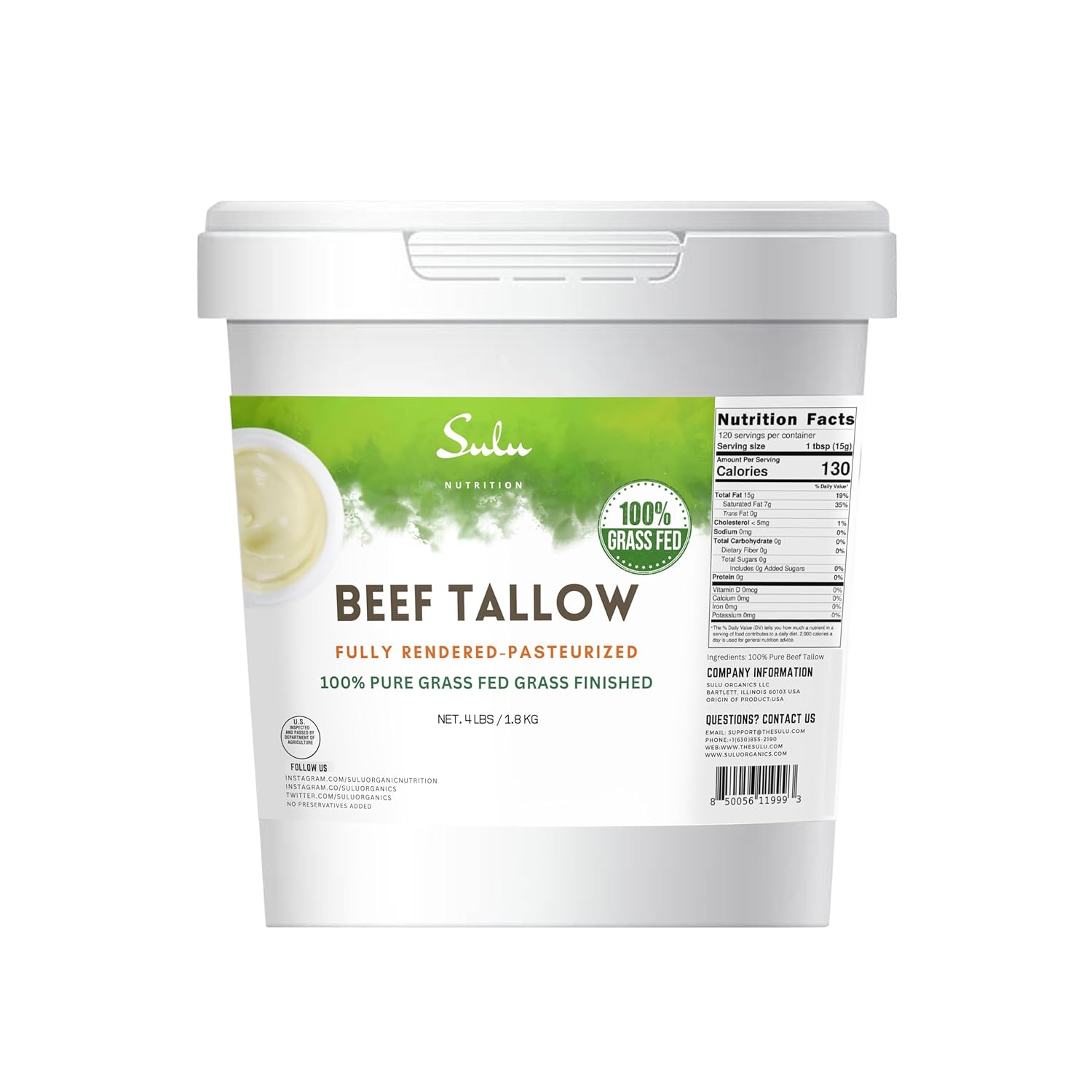
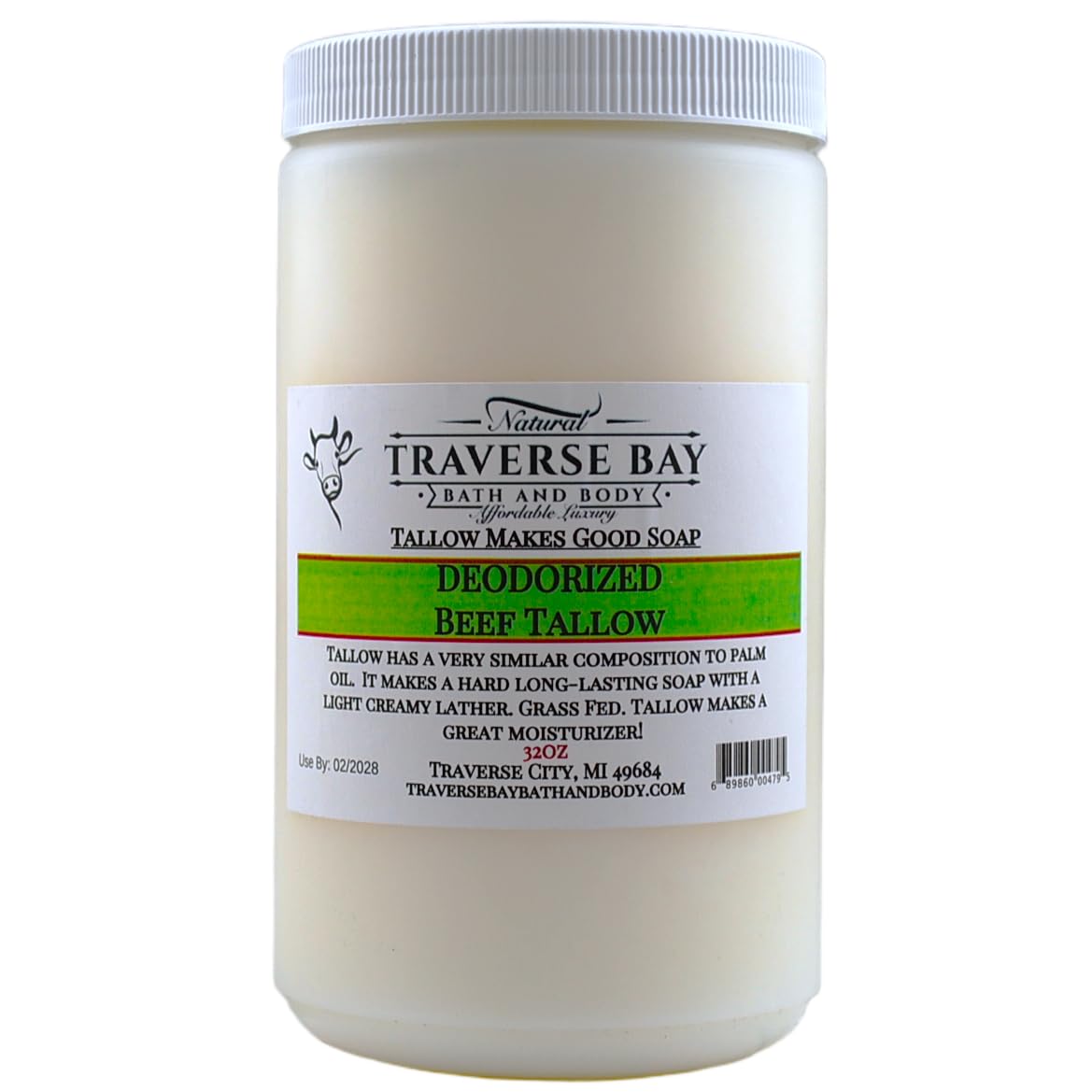
Montana is a big state and not every town has a co-op. For Glasgow, Wolf Point, Glendive, or any of the Hi-Line where lockers exist but specialty grocery does not, order 100% Pure Grass-Fed Beef Tallow (4 lbs) or Traverse Bay Farms (32 oz) on Amazon. Expect 2 to 3 days to major metros, 3 to 5 days to remote eastern Montana.

Reliable online options that ship to Montana

We test and research the products we recommend. If you buy through these links we may earn a commission at no extra cost to you.

What to look for on the label

Montana tallow labels tend to be more meaningful than in Plains states because grass-finishing is the default. Read for certifications and finishing language.

Label What it means
American Grassfed Association certified Audited third-party grass-fed and grass-finished, no antibiotics, no hormones. Yellowstone Grassfed and J Bar L hold certification. $12 to $14 per pound.
Regenerative Organic Certified (ROC) Newer label combining grass-finishing with soil health and animal welfare audits. A handful of Montana operations including parts of Old Salt Co-op meet this standard. $13 to $16 per pound.
Montana grass-finished Cattle finished on Montana grass without grain. Not third-party audited but functionally equivalent. $9 to $12 per pound rendered.
Montana raised State marketing label indicating Montana production but no feed restrictions. Less informative for cosmetic use. $6 to $9 per pound.
Custom suet from a county locker Raw kidney or leaf fat from a private beef processed at a Montana plant. Cheapest path, $1 to $3 per pound. Most Montana lockers produce grass-finished animals by default given the state's grazing model.

What it actually costs in Montana

Montana sits slightly higher than Nebraska or Oklahoma on grass-finished tallow because of lower production volume and longer supply chains. Commodity tallow is comparable to Plains-state pricing. Prices below are 2026 retail observations.

Tier Per pound
Direct from rancher (raw suet) $2 - $4
Local butcher rendered $6 - $10
Farmers market premium $10 - $14
Specialty grocer $12 - $18
Online national brands $8 - $13

When to buy

Montana's slaughter calendar tracks the grass-finishing window closely. Most grass-finished cattle hit weight in early fall after the full summer grazing season.

Spring (March to May)

Calving season. Locker inventory winds down from winter stock. Outdoor farmers markets reopen in late May. Best to buy from existing rendered stock or order online.

Summer (June to August)

Bozeman, Missoula, Billings, Helena farmers markets at full strength. Cattle still on summer pasture. Fresh slaughter limited, existing inventory moves.

Fall (September to November)

Peak season. Grass-finished cattle reach slaughter weight. Custom kills surge. Locker freezers fill. Lowest prices and best variety for both raw suet and rendered product.

Winter (December to February)

Outdoor markets closed; indoor markets continue in Bozeman and Missoula. Locker freezers full. Cold weather makes home rendering pleasant. Limited fresh slaughter due to weather and pasture conditions.

Where to look outside Montana

Montana shares borders with three states and Canada. Most cross-state sourcing makes sense only for the southern and eastern edges of Montana.

Wyoming

1 to 3 hours from southern Montana

7L Diamond Ranch and similar Wyoming grass-fed operations serve Bozeman and Billings. Wyoming Beef Council certified producers ship to Montana.

Try: Wyoming grass-fed direct shipment or Bozeman farmers market vendors who source from Wyoming

Idaho

2 to 4 hours from western Montana

Kuna and Boise area grass-fed operations and Albertsons stores throughout Idaho carry comparable product. Most Bitterroot Valley residents have closer access to Idaho than to eastern Montana.

Try: Albertsons in Coeur d'Alene or Boise Co-op

North Dakota

2 to 5 hours from eastern Montana

North Dakota lockers in the Bakken oil country handle custom suet at similar prices. Fewer dedicated grass-finished operations than Montana.

Try: Williston or Dickinson lockers

Render it yourself

Almost every Montana town has a locker plant within a 30 minute drive. A 5 pound bag of raw kidney fat from Lower Valley Processing or Ranchland Packing runs $10 to $20. Render at home using the step-by-step rendering guide for cosmetic-grade output. Given Montana's grass-finishing default, your finished tallow is functionally equivalent to $12 per pound retail product at about $4 per pound. Then move to a small batch of tallow soap or face cream to test cosmetic quality.

How locals cook with it in Montana

Montana cuisine pulls from cattle country, hunting and game, and frontier traditions. Beef tallow is the historical fat for everything from pemmican to chuckwagon biscuits to high-altitude pie crusts.

Pemmican (traditional and modern)

Lean dried beef pounded with rendered tallow at about 1:1 by weight, pressed into bars. Native to the Northern Plains tribes and adopted by mountain men and homesteaders. Modern recipes often add dried Saskatoon berries or chokecherries. A 1 pound bar packs 2,500+ calories with shelf stability of a year unrefrigerated.

High-altitude pie crust

Tallow pie crust performs better at Montana elevations (Bozeman is 4,800 ft, Butte is 5,500 ft) than butter because tallow's higher melting point keeps the crust intact during the longer high-altitude bake. Use 8 tbsp cold tallow per cup of flour.

Hunter's jerky cure with tallow seal

Dehydrated elk, venison, or beef jerky brushed with rendered tallow before final cooling. The fat coating extends shelf life and adds calories, important for high-country backpacking and traditional preservation.

Chuckwagon biscuits

Cold-cut tallow into flour at a 1:3 ratio, mixed with buttermilk, dropped onto a cast iron lid and baked in Dutch-oven coals. Traditional camp food on Montana ranches still cooked at branding and roundups.

Grass-finished bone broth with tallow cap

Long-simmered beef bones (24 to 48 hours) skimmed of tallow cap, which is saved for cooking. The grass-finished bones produce a deep yellow tallow with high CLA content. Common winter staple across Montana ranches.

Local & Regional Brands

Montana Ranch Brand

Sun Prairie Beef

Montana Sourcing Tips

  • Almost every town has a local butcher with tallow
  • Many ranches sell direct
  • Bozeman has excellent farmers markets
  • Look for Montana-raised, grass-finished beef

Major Cities in Montana

Billings Missoula Great Falls Bozeman Helena

These cities typically have the best selection of local butchers, farmers markets, and specialty stores carrying beef tallow.

Frequently asked questions

Where can I buy beef tallow in Bozeman?
Bozeman Community Food Co-op on West Main carries local Montana tallow from Yellowstone Grassfed, J Bar L, and rotating small producers. Bozeman Farmers' Market on Tuesdays at Bogert Park and Saturdays at Lindley Park (June through September) hosts the same ranchers direct. Town and Country Foods and Heeb's Family Foods both carry national grass-fed brands. Costco Bozeman occasionally stocks South Chicago Packing buckets. Expect $10 to $14 per pound for local, $14 to $18 for branded jars.
Where can I buy beef tallow in Missoula?
Missoula Community Food Co-op on Third Street is the best local source with consistent stock of Montana-rendered tallow. Missoula Farmers Market on Saturdays at the XXXXs hosts grass-finished vendors. Good Food Store also carries grass-fed national brands. Albertsons and Smith's stores in Missoula stock Epic and Fatworks. The Big Sky Brewing area has a couple of butcher shops that handle custom orders. Expect $9 to $14 per pound.
Is Montana tallow grass-fed by default?
Often, but not always. Montana cattle spend more time on grass than cattle in any other Plains state, and many smaller operations finish on grass alone. However, commodity Montana beef destined for national distribution often finishes on grain in Wyoming or Nebraska feedlots. For guaranteed grass-finished tallow, buy from a named producer like Yellowstone Grassfed or J Bar L, or ask the locker plant whether the source animal was grass-finished.
What is Yellowstone Grassfed Beef?
A multi-generation Big Timber operation that runs American Grassfed Association certified cattle on the Yellowstone River valley. They ship rendered tallow nationwide, sell at Bozeman and Billings farmers markets, and accept pickup by appointment at the ranch. Their tallow is deep yellow from carotenoid-rich grass and runs about $13 per pound. One of the gold-standard Montana operations.
Does Albertsons in Montana sell tallow?
Yes. All major Montana Albertsons stores (Bozeman, Missoula, Billings, Helena, Kalispell, Great Falls) stock Epic Provisions 11 oz jars and rotate Fatworks 14 oz. The natural foods aisle is where to look. Some locations also carry South Chicago Packing or Vital Farms brands seasonally. Expect $14 to $18. Smith's (Kroger banner) operates in select Montana metros with similar stock.
Can I buy tallow at Town Pump?
Limited. Some Town Pump locations have a small grocery section but tallow is not a standard SKU. Larger Town Pump locations in Helena, Great Falls, and Bozeman occasionally stock Epic on a rotating basis. If you're traveling rural Montana and stop at Town Pump, check the cooler and natural foods rack but don't count on supply. Town and Country Foods in Bozeman (a separate chain) carries more reliable inventory.
What is the cheapest way to source tallow in Montana?
Custom suet from a county locker. Lower Valley Processing in Kalispell, Ranchland Packing in Butte, Yellowstone Valley Food Hub in Billings, and dozens of smaller plants all handle custom kills. Suet from a private beef runs $1 to $3 per pound raw. Given Montana's grass-finishing default, the resulting tallow is functionally equivalent to $12 per pound retail at about $4 per pound finished cost.
What is Old Salt Co-op?
A multi-ranch cooperative based in Helena that markets regenerative-grazed beef and byproducts including rendered tallow. The co-op model lets smaller operations share processing and distribution. Old Salt sells at Helena Farmers Market, ships statewide, and bundles tallow with beef share programs. Comparable in quality to single-ranch operations like Yellowstone Grassfed.
How much tallow does a grass-finished Montana steer produce?
Less than a grain-finished steer. A 1,100 to 1,300 pound grass-finished animal yields 25 to 40 pounds of suet (versus 35 to 50 for grain-finished). After rendering at 60 to 70 percent yield, that's 18 to 30 pounds of finished tallow. The lower yield is offset by higher CLA content, deeper color, and richer fatty acid profile. Most Montana ranches sell suet separately from the half or whole beef order.
Is Montana tallow good for skincare?
Yes, among the best in the country for cosmetic use. Grass-finished cattle on native prairie produce tallow with elevated CLA, palmitoleic acid, and carotenoid content. The product is deeper yellow, more bioactive, and better tolerated on sensitive skin than commodity tallow. Yellowstone Grassfed, J Bar L, and Sun Prairie are the names to look for. Pair with the [face cream recipe](/make/face-cream) for best results.
When is the best time of year to buy tallow in Montana?
September through November. Grass-finished cattle reach slaughter weight after the full summer grazing season, which means peak supply and peak quality. Locker freezers fill in October and November. Custom kills surge before winter. Prices are at their lowest. By contrast, late spring and early summer have leaner supply because winter inventory has cleared and the new cohort hasn't been processed yet.
Can I order tallow from J Bar L Ranch?
Yes. J Bar L Ranch in the Centennial Valley near Lakeview ships rendered tallow nationwide and offers a herd share program where members pick up bundled beef plus byproducts including tallow. The ranch is one of Montana's most-cited regenerative grazing operations, working closely with The Nature Conservancy on landscape-scale management. Expect $13 to $15 per pound.
Does Costco Bozeman or Costco Missoula sell tallow?
Inconsistently. Both warehouses occasionally stock South Chicago Packing 7 pound buckets at $20 to $30 in the cooler near the butcher department, but it's a rotating item rather than a permanent SKU. The Bozeman warehouse rotates more frequently in summer when seasonal grass-fed product is available. Call ahead before you drive in.
How should I store tallow in Montana's climate?
Montana's dry, cool climate is unusually friendly to tallow storage. A sealed glass jar in a kitchen cabinet keeps fresh tallow stable for 9 to 12 months, longer than the 6 to 9 month average. Cold winter weather extends shelf life further. The only risk is summer heat in southern valleys; if your kitchen runs above 80 F in July and August, refrigerate the working jar.
Are there Hutterite colonies that render tallow in Montana?
Yes. Montana has more than 50 Hutterite colonies, mostly in the Hi-Line and central regions, and many do traditional rendering as part of their cattle operations. Some sell rendered fat at farmers markets in Great Falls, Havre, and Lewistown. The product is typically grass-fed, traditionally rendered, and priced lower than co-op or named-ranch product. Look for vendor names with colony designations like Spring Creek, Birch Creek, or Glacier.

Sources

  1. [1] USDA NASS Montana Cattle Inventory 2026 Read source →
  2. [2] Montana Department of Agriculture, Made in Montana program Read source →
  3. [3] Western Sustainability Exchange producer directory Read source →
  4. [4] Montana Stockgrowers Association industry data Read source →
  5. [5] American Grassfed Association certified producer list Read source →