
Beef Tallow for Beard: Best Balms and How to Apply
Reader-supportedBeef tallow conditions beard hair and the skin under it where itch and dandruff start. Best balms ranked, application technique, scent options, DIY recipe.

This post contains affiliate links. We may earn a commission if you purchase through these links, at no extra cost to you.
I grew a beard for the first time at 22 and gave up at week four because the itch was unbearable. I tried again at 28 with the same result. At 34 I finally figured out that the problem was never the beard. It was the skin underneath, and I had been treating it like beard hair instead of like a face.
The fix turned out to be beef tallow. Not a beard oil. Not a fancy salon balm. A small amount of tallow worked into the skin under the beard first, then through the hair as a finishing layer. The itch was gone in three days and the beard itself started looking like a beard instead of a problem.
This post is the breakdown of why tallow works for facial hair specifically, the four balms I have tested and would actually recommend, and the application technique that makes the difference.
Why Beard Itch Starts at the Skin, Not the Hair
Most beard products treat the symptom. The itch feels like it is in the beard hair, so men reach for beard oil and rub it through the hair like leave-in conditioner. The oil coats the hair, the hair feels softer, the itch comes back in six hours.
The actual problem is the skin underneath. Beard skin is the same skin as the rest of your face, but it spends most of its life in a warm, dark, humid environment created by the hair canopy. The sebum your face produces gets trapped against the skin, the bacterial population shifts, and the skin barrier slowly dries out because the hair physically prevents normal moisture exchange with the air.
The symptoms of that situation are dandruff (beardruff, if you want to be cute about it), itchy skin you cannot reach with a fingernail, flaky patches at the jaw and neckline, and inflamed follicles at the chin where ingrown hairs form.
A tallow balm helps with the dry-skin part of this. Applied to the skin under the beard, it forms a thin protective film that slows moisture loss and softens flaky, tight skin, which is what drives most of the itch. Applied to the hair after, it smooths flyaways and adds a subtle shine without coating the hair in a way that traps more grime.
The order matters. Skin first. Hair second.
The Application Technique
This is the part nobody on a beard subreddit will tell you about. Get the technique right and a basic tallow balm does the job most men buy expensive beard oils for.
Step 1: shower first. Warm water softens the hair and the skin so the balm spreads further. If you cannot shower, splash your face with the warmest water you can tolerate and pat dry until skin is still slightly damp.
Step 2: scoop a pea-sized amount of tallow balm. For a short beard (under one inch), one pea is enough. For a medium beard (one to three inches), two peas. For a long beard, three peas. Do not use more.
Step 3: warm the balm in your palms for 10 to 15 seconds. Rub your palms together until the balm goes from waxy to oily and translucent. This is the step most men skip and the reason their beard oil sits on the surface instead of absorbing.
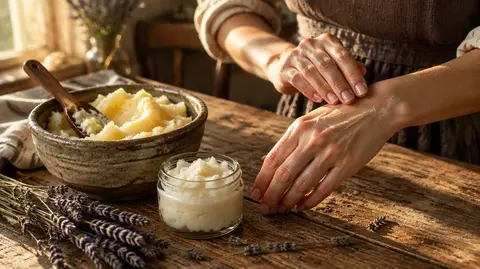
Step 4: work the balm into the skin under the beard first. Push your fingertips through the hair and massage the warm balm into the skin at the jaw, chin, neckline, and mustache area. Do this for 30 to 45 seconds. You should feel the skin warm slightly and the balm should disappear.
Step 5: pull what remains on your hands through the hair from root to tip. The leftover product on your fingers is the right amount for the hair coat. If you have to scoop more for the hair, you used too little on the skin.
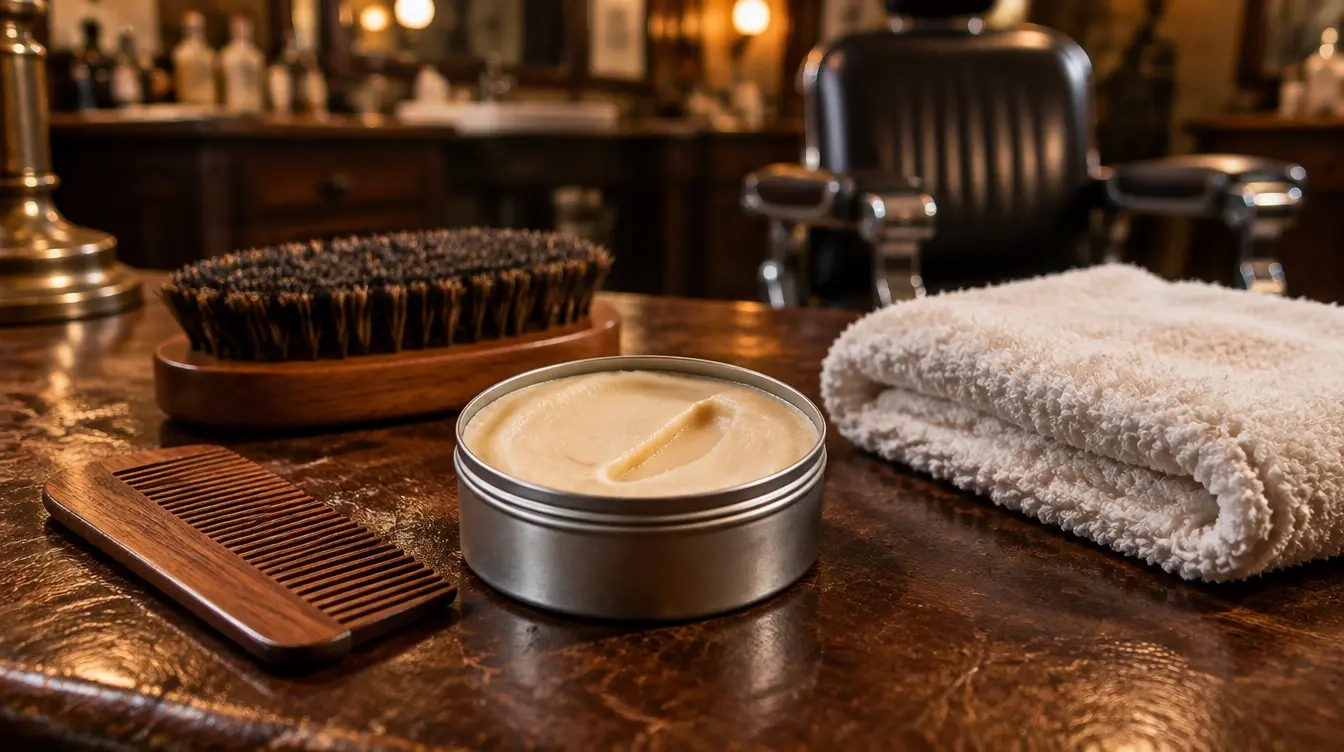
Step 6: comb through with a wide-tooth comb or beard brush. This distributes any remaining product evenly and lifts the beard for a fuller look.
Total time: under two minutes. Frequency: once a day, ideally after a morning shower. Once you are out of the initial conditioning phase (the first two weeks), every other day is enough for most beards.
The Four Tallow Balms Worth Buying for Beard Use
Most beard balms on the market use beeswax, shea butter, and a long list of carrier oils. Tallow-based balms are a smaller market, but a few products work exceptionally well for beard use even though they are marketed for general skincare.
1. Amallow Unscented Whipped Tallow Balm
Amallow Unscented Whipped Tallow Balm is my daily beard balm. The whipped texture is the easiest to work into skin first, the unscented profile means it does not fight with cologne, and the absorption is the fastest of any balm I have tried.
For most men, this is the right starting point. It is light enough for a short beard, conditions enough for a medium beard, and the texture makes the skin-first application technique easy.
2. Vanman’s Tallow Balm
Vanman’s Tallow Balm is the heavy-duty winter pick. The thicker texture handles long beards better, conditions dry winter skin under the beard, and stays put through wind exposure.
I use this on cold days when I am going to be outside for an extended time. The occlusive layer holds up to wind in a way lighter balms do not. The trade-off is that the heavier feel takes longer to absorb, so you want to apply this 15 minutes before leaving the house, not on the way out the door.
3. Terra Lotus Organic Unscented Tallow Balm
Terra Lotus Organic Unscented Tallow Balm is the sensitive-skin pick. If you get razor burn easily, have ingrown hairs along your jaw, or react to fragrance, this short-list balm (tallow, olive oil, and raw honey, with no added scent) is a safe starting point.
It is also the right choice for the first two weeks of growing a new beard, when the skin is adjusting and you want to keep the product list as minimal as possible.
4. Ancestral Haven Herbal Rose Tallow Balm
Ancestral Haven Herbal Rose Tallow Balm is the scent option for men who like a warm herbal note. The rose component is subtle (it is not a perfume) and the herbal base reads as masculine to most noses. If you wear cologne, this layers well with woody and amber fragrances.
I would not pick this as your only balm. But as a weekend beard balm or a “going out” application, the scent is a genuine upgrade over unscented for some guys.
Dedicated Tallow Beard Balms
The four balms above are general tallow skincare products that happen to work well on beards. If you want something formulated and labeled as a beard product, these are tallow-based beard balms and butters on Amazon. We have not reviewed them; the notes come from their listings.
- Bronmans Beef Tallow Beard Butter: a 4 oz tallow beard butter marketed for softening coarse hair and reducing itch.
- Earth Wave Tallow Beard Balm: tallow with shea butter, coconut oil, and argan oil, sold as a light-hold balm for short to medium beards.
- YEALIR Unscented Beef Tallow Beard Balm: an unscented tallow beard butter with grapeseed oil and biotin. Unscented is the better choice if you wear cologne.
- Big Crazy Buffalo Bison Tallow Beard Balm: made with bison tallow instead of beef. Our bison vs beef tallow comparison explains the difference.
Dedicated beard balms usually add more wax for hold and more plant oils for slip. That helps with styling, but a longer ingredient list means more chances for a reaction, so patch test on your jaw first.
Scent Options: What Men Actually Want
Most beard balms lean heavy on either cedarwood-sandalwood-bay rum (the barbershop family) or something woody and smoky (the masculine candle family). The tallow-balm market is lighter on these traditional scents and heavier on unscented or floral options, which is the wrong distribution for a lot of men.
The way I think about it:
Unscented is the right pick if you wear cologne. You do not want your beard balm and your fragrance arguing. Amallow Unscented Whipped or Terra Lotus Unscented are both good choices.
Light herbal (rose, calendula, light lavender) reads as masculine in low concentrations. The Ancestral Haven Herbal Rose is the best option I have tested. The Terra Lotus Lavender version exists too if you specifically like lavender.
Traditional barbershop scents (cedarwood, sandalwood, bay rum) are rare in tallow balms. The best path here is DIY. Add 10 to 15 drops of cedarwood essential oil per ounce of unscented tallow balm and you have a barbershop-scented beard balm that nobody else will be wearing.
If you go the essential oil route, do not exceed 1 percent concentration on facial skin. More is not better. The skin under a beard is sensitive and overdoing it leads to follicle inflammation.
Beard Length Considerations
Different beard lengths need different balm amounts and different application emphasis. Here is the rough breakdown.
Stubble to short beard (0 to 1 inch): skin work is everything. The hair is not long enough to need much conditioning, and the skin underneath is the primary site of itch and ingrown hairs. One pea of Amallow Unscented worked into the skin is enough. Skip the hair pass.
Medium beard (1 to 3 inches): balanced. Skin and hair both need attention. Two peas, skin first, then pull through the hair. This is the length where a tallow balm starts to visibly outperform plain beard oil because the balm conditions the hair without making it look greasy.
Long beard (3+ inches): hair work dominates. Three peas of balm or two peas of balm plus a few drops of beard oil for the tips. The ends of a long beard are old hair that has been through hundreds of washes and is starting to split. Tallow does not repair split ends (nothing does, you have to trim them), but a light coat of fat makes dry ends feel smoother and less prone to tangling.
Mustache only: a tiny amount, less than a half pea, worked just into the mustache hair. Tallow balm makes mustache hair easier to comb and style. If you wax your mustache, apply tallow the night before and wax the next morning to make the wax slide more easily.
Tallow Beard Balm Recipe (DIY)
If you have rendered tallow already, making your own beard balm is the easiest DIY project in the kitchen. The basic recipe is straightforward.
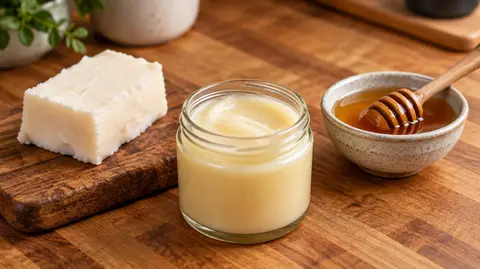
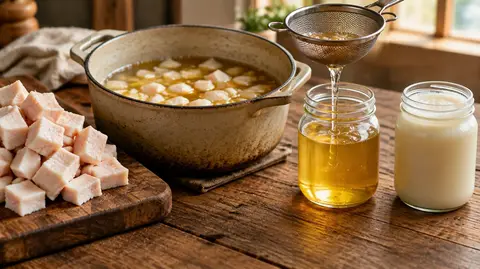
Base: 4 tablespoons rendered beef tallow (a clean cooking tallow like 100% Pure Grass-Fed Beef Tallow works perfectly).
Hardener: 1 tablespoon beeswax pellets.
Optional conditioner: 1 teaspoon jojoba oil or argan oil for a softer finish.
Optional scent: 10 to 15 drops of essential oil per total ounce of balm. Cedarwood, sandalwood, bay leaf, or unscented are my preferred picks.
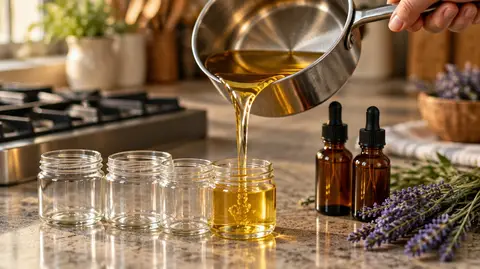
Melt the tallow and beeswax together in a double boiler over low heat. Add the optional conditioner once melted. Remove from heat, let cool for two minutes, then stir in the essential oil. Pour into a small jar or tin and let cool at room temperature for two hours. Done.
For texture variations and the full DIY method, see /make/hair-pomade/, which covers the same basic technique with notes on how to adjust the wax-to-tallow ratio for different hair types.
If you want a budget DIY base, the Traverse Bay Farms 32 oz jar is deodorized and works well as a starting point.
Common Beard Problems Tallow Actually Helps
A few specific issues I get asked about that tallow handles well.
Beardruff (beard dandruff): this one needs a caveat. Plain dry-skin flaking often improves with a moisturizer. But true dandruff and seborrheic dermatitis involve a yeast called Malassezia, which feeds on skin oils and cannot make its own fatty acids. Research by DeAngelis and colleagues (2005) found that oleic acid, a byproduct of that yeast and about 40% of tallow’s fat, triggered dandruff-like flaking on its own in susceptible people. If your flakes are greasy, yellowish, or come with redness, a rich fat can make them worse. Use a medicated shampoo with ketoconazole or zinc pyrithione on the beard and skin first, and see a dermatologist if it does not clear.
Patchy beard growth: tallow will not fix a genetic patch pattern. What it can do is support skin health where hair growth is sparse, which sometimes lets thinner hairs grow longer and fill in a patch visually. Realistic expectation: incremental improvement, not transformation.
Ingrown hairs at the neckline: a moisturizer after shaving can make skin feel less tight and irritated, but the main fixes for ingrowns are shaving with the grain, a sharp blade, and not shaving too close. Apply a thin layer of balm within five minutes of shaving while skin is still slightly damp.
Itchy new beard growth: the first 30 days of growing a beard are the itchiest because the cut ends of the hair scratch the skin as they emerge. Daily tallow balm to the skin shortens the itchy phase from 30 days to roughly 10 days in my experience.
When Beard Oil Beats Beard Balm
I am pro-tallow-balm but I want to be honest about when beard oil is the better choice.
For very long beards (over six inches), a lighter beard oil distributes through the hair more evenly than a balm. The balm is still the right choice for the skin application, but a light beard oil applied to the hair after the balm is often the right combo.
For very humid climates, balm can feel heavy and the skin underneath does not need additional occlusion. A lighter oil is sometimes more comfortable.
For mustache-only grooming, a small amount of oil is easier to control than a balm.
For nearly everyone else, a tallow balm replaces a beard oil entirely and does both jobs (skin and hair) better than oil alone.
Frequently Asked Questions
Will tallow balm make my beard greasy?
Not if you use the right amount and rub it in fully. A pea-sized amount for short beards, two peas for medium, three for long. The whipped texture of Amallow Unscented absorbs the fastest and is the least likely to leave a greasy feel.
Can I use tallow balm on a freshly shaved face?
Yes. A thin layer eases the tight, dry feeling shaving can leave. Choose an unscented balm, since fragrance stings on freshly shaved skin. Apply within five minutes of shaving while skin is still slightly damp.
Does tallow help with beardruff (beard dandruff)?
It depends on the cause. If the flakes are small, dry, and white, and the skin feels tight, a thin daily layer of tallow balm on the skin often helps. If the flakes are greasy or yellowish with redness, that points to seborrheic dermatitis, where the yeast Malassezia feeds on skin oils, and adding a rich fat can make it worse. Treat that with a ketoconazole or zinc pyrithione shampoo, and see a dermatologist if it persists.
Will tallow make my beard grow faster?
No. Beard growth rate is genetic. What tallow can do is support skin health so existing hairs grow to their full potential length without breakage, which sometimes looks like faster growth.
Can I use cooking tallow as a beard balm in a pinch?
Yes. Pure rendered cooking tallow without seasonings works as a beard balm. The texture is firmer than a balm so warm it more in your palms. Many guys use Traverse Bay Farms tallow straight from the jar with no additives.
How often should I apply tallow beard balm?
Daily for the first two weeks of switching products. Every other day after that for most beards. Daily during winter or in dry climates. After every shower if you live somewhere very humid.
Bottom Line
The right tallow balm fixes beard itch by treating the skin under the beard, not just the hair on top. Skin first, hair second. Pea-sized amounts, warmed in the palms, worked into the skin for 30 seconds before pulling through the hair.
For most men, Amallow Unscented Whipped is the right daily pick. Vanman’s is the winter and long-beard option. Terra Lotus Unscented is the sensitive-skin and new-beard option. Ancestral Haven Herbal Rose is the scented option that does not read feminine.
If you render your own tallow, the DIY beard balm at /make/hair-pomade/ takes 20 minutes and gives you the scent control nothing on the market can match. Use Grass-Fed Beef Tallow as your base, add a tablespoon of beeswax, and pick your essential oil. That is the whole project.
Whichever path you go, the itch goes away when you treat the skin like skin instead of treating the hair like a problem.
Explore more tallow guides
Browse our collection of recipes, comparisons, reviews and DIY tutorials.
View all guidesKing Tallow is reader-supported. We research and test the products we recommend, and when you buy through links on this page we may earn a commission at no extra cost to you. See our affiliate disclosure.
This article is for general information and is not medical advice. Patch test new skincare and talk to a dermatologist or doctor about persistent skin conditions.
Published · Last updated