

Beef Tallow for Leather Conditioning: How to Use It Correctly
Reader-supportedBeef tallow for leather conditioning: application technique, what to use it on, what to avoid (suede, nubuck), boots vs furniture, and beeswax waterproofing.

This post contains affiliate links. We may earn a commission if you purchase through these links, at no extra cost to you.
The first time I used beef tallow on leather was an accident. I had melted a small jar to apply to my hands during a cold-weather work week, and a smudge of it ended up on a tired pair of leather work boots. The next morning the boot looked twenty percent better. The cracking on the toe had softened, the color had deepened, and the surface had the kind of low, even sheen that years of polish had not given me.
That was when I started reading about traditional leather care. It turns out tallow has been used on leather for centuries, for exactly the same reason it works on dry skin. Tanned hide is essentially preserved skin, and it loses fats over time the way human skin does. Tallow puts those fats back. The application technique matters, the type of leather matters, and the blend you use matters, but the underlying chemistry is solid.
This is the deep guide. If you want a ready-made recipe with beeswax for full waterproofing, the leather conditioner make page walks through the formula and process. This post covers what tallow actually does to leather, when to use it, when not to use it, and how to apply it correctly across boots, furniture, and saddlery.
What Tallow Does for Leather
Leather is animal hide that has been tanned to prevent putrefaction and to give it the durability and flexibility we use it for. The tanning process replaces some of the natural fats in the hide with tanning chemicals (chrome tanning) or vegetable tannins (vegetable tanning). Over time, even tanned leather loses these fats to evaporation, friction, and exposure. When the fats go, the leather loses flexibility, gets brittle, and eventually cracks.
Tallow restores those fats. The fatty acid profile of beef tallow (heavy in palmitic, stearic, and oleic acids) is close enough to the fats originally present in the hide that it integrates smoothly. The penetration is deep when applied warm, and the residual conditioning lasts months between applications.
In practical terms, tallow does five things on leather:
- Replaces lost fats and restores flexibility
- Adds water resistance by filling porous fiber bundles with hydrophobic fat
- Deepens color (sometimes dramatically, sometimes just slightly)
- Prevents future cracking by keeping the fiber matrix supple
- Adds a gentle, even sheen when buffed
What it does not do is clean leather. Always clean before conditioning. A dirty surface seals the dirt under the conditioner and looks worse over time.
What Tallow Should Not Touch
This is the part that is harder to find online. Tallow is not appropriate for every kind of leather, and using it on the wrong material will permanently damage the finish.
Do not use tallow on:
- Suede. Suede is the inner surface of the hide with a soft napped texture. Tallow will mat the nap, leave dark stains, and ruin the look. Use a dedicated suede conditioner spray instead.
- Nubuck. Nubuck is similar to suede but made from the outer surface, lightly sanded. Same problem. The nap is the point. Tallow flattens it.
- Painted or patent leather. The painted or lacquered surface prevents the tallow from absorbing. It will sit on top, look greasy, attract dust, and not condition the leather underneath. Use a polish designed for finished leather.
- Aniline finished leather (very high-end furniture). Aniline leather is so lightly finished that it absorbs everything aggressively. Tallow can cause uneven darkening. Test on an inconspicuous area first.
- Exotic leathers (ostrich, snake, crocodile). The follicle patterns and scale structures can trap tallow unevenly. Use a leather conditioner specifically formulated for the type.
Tallow is appropriate for:
- Smooth full-grain leather (most boots, belts, watch straps, baseball gloves)
- Saddle leather and tack
- Vegetable-tanned leather (often used in handmade goods)
- Most furniture leather with a smooth surface (test first)
- Tooled and stamped leather
- Worn-in leather of any kind that has lost flexibility
When in doubt, dab a small amount on the underside or an inconspicuous edge, wait 24 hours, and see what happens. The leather will tell you.
Application Technique
Doing this right takes about ten minutes per item and the payoff is huge. Doing it wrong is worse than doing nothing. Here is the technique I have settled on after working through dozens of pairs of boots and a handful of furniture pieces.
Step 1: Clean the leather first. Wipe down with a damp cloth and a small amount of pH-neutral soap, or a dedicated saddle soap if you have it. Let the leather dry fully. Conditioning over dirt seals the dirt in.
Step 2: Warm the leather slightly. You do not need a heat gun. A warm room (70 to 80 degrees Fahrenheit) and a few minutes of friction with your hand or a soft cloth is enough. Warm leather absorbs conditioner significantly better than cold leather.
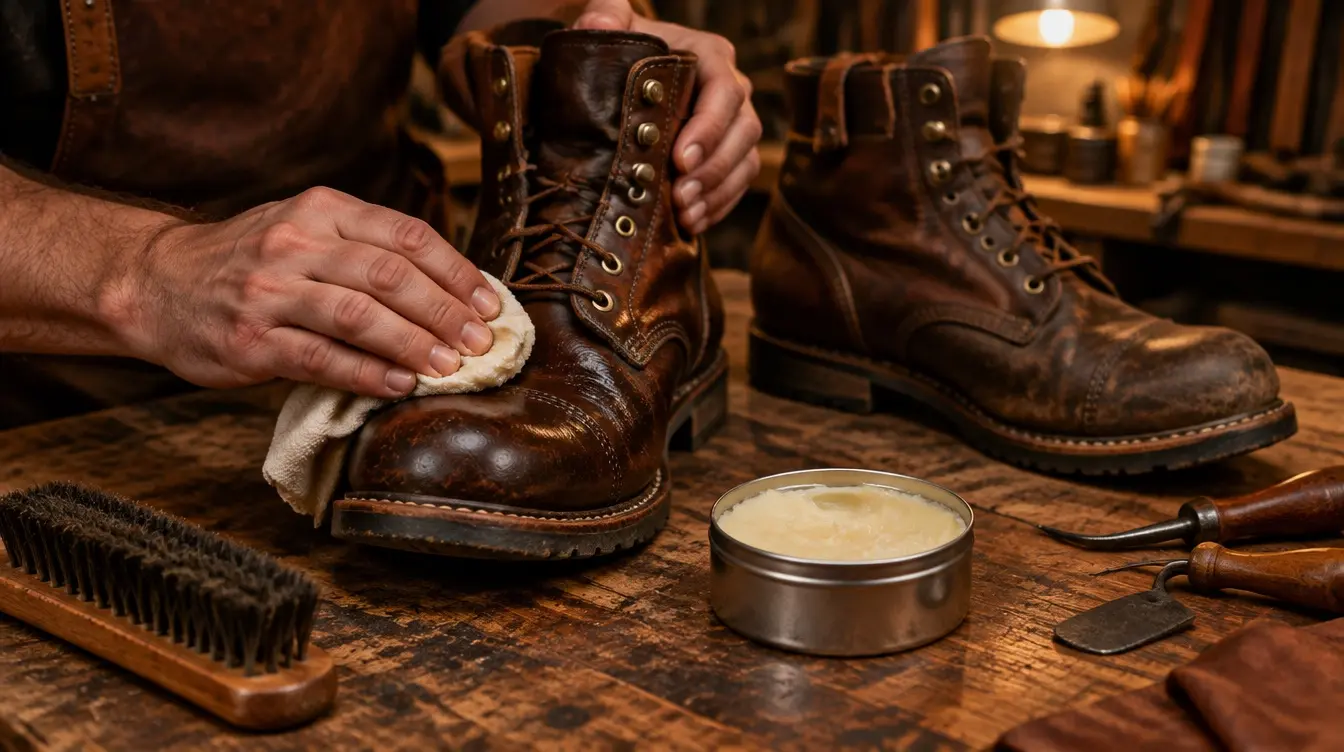
Step 3: Warm the tallow slightly. A small amount of tallow in your palm or on a soft cloth will soften within seconds. If you are working from a hard jar of Traverse Bay tallow or the 4-pound grass-fed bucket, scoop a teaspoon and warm it between your hands. Do not microwave it. Direct heat can damage the fat.
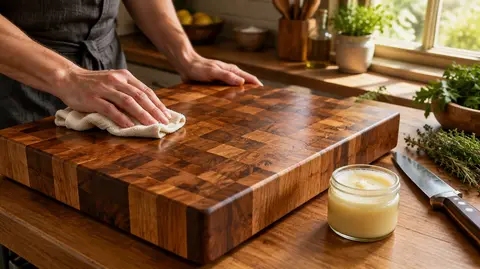
Step 4: Apply in a thin, even layer. Use a clean lint-free cloth or your fingers. Less is more. A teaspoon is plenty for a pair of boots. Work in small circles across the entire surface. Pay extra attention to flex points (toe break, ankle bend, belt holes) where the leather works hardest.
Step 5: Let it absorb for 20 to 30 minutes. The leather will look dull and slightly oily right after application. Walk away. Let it absorb. If you put a boot in the closet at this stage you will trap moisture and conditioner inside, which can encourage mold over time.
Step 6: Buff with a clean dry cloth. After 20 to 30 minutes, buff vigorously with a clean dry cloth. This removes excess conditioner and brings up the sheen. The leather should now look slightly darker than before, supple, and have a low, even shine.
Step 7: Let it cure for 24 hours before heavy use. The conditioner is still integrating into the fiber matrix. A full day in a dry, cool spot lets it set. Avoid water exposure during this window.
That is the entire process. Boots, belts, saddles, and furniture all follow the same pattern.
Boots vs Furniture vs Saddlery
Different items need different approaches.
Work boots and field boots. These take the heaviest beating and benefit from the heaviest conditioning. Twice a year minimum (after winter, after a wet summer). For work boots that get heavy water exposure, I blend tallow with beeswax (see the next section) for waterproofing. The leather conditioner formula is exactly this.
Dress boots and dress shoes. Lighter touch. Once a year is plenty. Use pure tallow without beeswax. You want flexibility, not water resistance. Polish over the conditioned surface if you want a high shine.
Belts and watch straps. A tiny amount every 6 to 12 months. Belts in particular dry out and crack at the buckle hole. A tallow treatment doubles the life of a quality belt.
Furniture. Test first on an inconspicuous corner. Apply sparingly. Furniture leather is usually finished and may not absorb the way unfinished leather does. Once or twice a year is plenty for most pieces. Avoid heavy applications that can transfer to clothing or skin.
Saddlery and tack. Saddles, bridles, reins, halters. These are working leather that needs both conditioning and water resistance. Monthly conditioning during heavy use, seasonal conditioning otherwise. The tallow plus beeswax blend is the traditional saddler’s choice and is still what professionals use.
Baseball gloves. A teaspoon of tallow worked into the pocket and palm of a stiff glove will break it in faster than any commercial conditioner. Cap the heel with a ball and tie it shut overnight. Repeat for three nights.
Tallow + Beeswax for Waterproofing
For leather that gets wet (work boots, hiking boots, saddlery), straight tallow conditions but does not fully waterproof. Adding beeswax to the mix creates a hydrophobic barrier that sheds water for weeks.
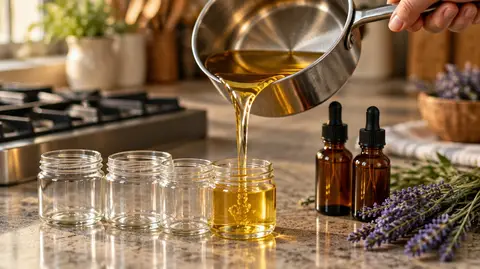
The classic ratio is 2 parts tallow to 1 part beeswax by weight. Melt them together over a double boiler, stir until uniform, pour into a tin, and let it cool. The result is a firm, balm-textured leather conditioner that you apply the same way as pure tallow.
For boots that get serious water exposure (snow, rain, river crossings), I add an extra step. After the standard conditioning, I do a second application focused on the welt (where the upper meets the sole) and the seams. Those are the failure points for water entry. The beeswax in the blend seals them.
The full recipe with measurements is on the leather conditioner make page. It uses the same grass-fed tallow I use for cooking, plus food-grade beeswax. A single batch makes enough conditioner for a year of regular use.
How Often to Re-Apply
This question depends entirely on how hard the leather works.
- Work boots in wet conditions: every 4 to 6 weeks
- Daily-wear boots in normal conditions: every 2 to 3 months
- Dress shoes: twice a year
- Belts and small leather goods: once a year
- Furniture: once a year
- Saddlery in active use: monthly during heavy use, quarterly otherwise
The leather will tell you when it needs conditioning. Look for these signs: surface looks dry and matte, cracking starts to appear at flex points, color is fading or uneven, the leather feels stiff. When any of these show up, condition. Do not wait for visible cracking. Once leather cracks, no amount of conditioning fully reverses it. Conditioning at the dry-looking stage prevents the cracking stage.
Frequently Asked Questions
Will tallow make my leather go rancid?
Properly applied tallow does not go rancid on leather. The fat is fully integrated into the fiber matrix and exposed to air constantly. Rancidity requires trapped, oxygenated, oily conditions that leather use does not produce. I have boots conditioned with tallow that have been in service for 8 years with no rancid smell.
Will tallow darken my leather?
It can, especially on vegetable-tanned and lighter-colored leathers. The darkening is typically even and gives the leather a richer, more patinated look. Chrome-tanned leather darkens less. Always test on an inconspicuous area first if uniform color matters to you.
Can I use store-bought beef tallow from the grocery aisle?
Yes. Any pure rendered tallow works. The grass-fed 4-pound bucket is what I use because it is the same fat I cook with, so I am not buying a separate product. The Traverse Bay deodorized option is also fine.
Is mink oil better than tallow for boots?
Both work. Mink oil is slightly more penetrating and waterproof per application, but it is more expensive and harder to source ethically. Tallow is the traditional choice for a reason. The blend with beeswax matches mink oil’s waterproofing in real-world conditions.
How do I store leather conditioner I have made?
In a sealed tin or jar at room temperature. Out of direct sunlight. The tallow-beeswax blend will last a year easily. I keep a small tin in my mudroom and a backup in a cool closet.
Can I use tallow on a leather couch?
Test first. Most modern furniture leather is heavily finished and will not absorb. Aniline-finished pieces will absorb aggressively and may darken unevenly. Apply a thin layer to a hidden area, wait 24 hours, and evaluate before committing to the full piece.
Bottom Line
Tallow is the original leather conditioner and it still works as well as anything modern chemistry has produced. The key is matching the technique to the leather, avoiding the materials it should not touch, and being willing to wait the 24 hours for full cure. For most boots, belts, saddles, and smooth furniture leather, a 4-pound grass-fed bucket is going to outlast multiple pairs of boots and produce results that any commercial conditioner has a hard time matching. If you want waterproofing, blend with beeswax using the leather conditioner formula. For everything else, pure tallow applied warm and buffed clean is the move.
Explore more tallow guides
Browse our collection of recipes, comparisons, reviews and DIY tutorials.
View all guidesKing Tallow is reader-supported. We research and test the products we recommend, and when you buy through links on this page we may earn a commission at no extra cost to you. See our affiliate disclosure.
Published