
Best Beef Tallow for Baby Skin and Diaper Rash
Independent reviewBeef tallow for baby skin and diaper rash: gentle unscented picks, why to skip honey balms under 12 months, how to apply it, and when zinc oxide is better.

We test and research the products we recommend. If you buy through our links, we may earn a commission at no extra cost to you.
Important: I am not a pediatrician, dermatologist, or medical professional. This guide is based on my research and personal experience. Always consult your child’s pediatrician before introducing any new skincare product, especially for infants under six months or babies with known skin conditions. If your baby has a rash that is severe, spreading, blistered, or accompanied by fever, see a doctor immediately.
With that out of the way — beef tallow has been used on baby skin for centuries. Long before petroleum-based diaper creams and synthetic baby lotions existed, animal fats were the standard barrier cream for infant skin. Many modern parents are coming back to it because it is simple: a single animal fat, often with one or two added ingredients.
I tested three gentle, unscented tallow formulas on adult skin (my own and my wife’s) and researched them extensively for baby safety. I also spoke with parents who use tallow on their infants daily. Here is what I found.
Quick Picks
Best overall for baby skin (12 months and up): Organic Tallow Skin 4oz — Organic grass-fed sourcing, simple formula with honey, large jar for the price. The best combination of quality and value for daily baby skincare use.
Safest for very sensitive babies: Amallow Unscented — Whipped texture is easiest to apply on delicate skin, truly unscented, absorbs fast. The gentlest application experience.
Best minimalist formula: Santa Cruz Paleo — Three ingredients only (tallow, beeswax, honey). The shortest list among the jars we have used.
Honey-free and nut-free: Naked Tallow Balm — Listed as a single ingredient, beef tallow. We have not reviewed it, but a one-ingredient balm is the simplest option for babies under 12 months.
Babies under 12 months: skip the honey balms
Two of our three main picks contain raw honey. The CDC and the American Academy of Pediatrics say babies under 12 months should not be given honey, because it can carry spores that cause infant botulism. That guidance is about eating honey, and there is no specific guidance on honey in skin balms. But babies put their hands and feet in their mouths, and diaper rash often means broken skin, so we suggest avoiding raw-honey balms until your baby’s first birthday. For under-ones, choose a honey-free balm like Amallow Unscented (if there is no tree-nut concern) or a single-ingredient tallow, and check with your pediatrician first.
Why Tallow Works for Baby Skin
Baby skin is different from adult skin, and those differences shape what a good baby moisturizer looks like.
Baby skin is thinner. Infant skin is roughly 20-30% thinner than adult skin. This means it absorbs products faster and is more vulnerable to irritation from harsh chemicals. That is why short, fragrance-free ingredient lists matter more for babies than for adults.
Baby skin has an immature barrier function. The outermost layer of skin (stratum corneum) takes months to fully develop after birth. During this period, a baby’s skin loses moisture faster and is more susceptible to irritants. Any plain occlusive, including tallow, petrolatum, or zinc oxide paste, adds a protective layer on top while the barrier matures.
Baby skin has higher water content. Infant skin contains more water than adult skin, but it also loses water faster through transepidermal water loss (TEWL). A fat layer like tallow slows that water loss.
Diaper rash involves compromised skin. When a baby’s skin is already irritated from moisture, friction, and contact with urine and feces, adding synthetic chemicals can worsen the irritation. Tallow provides a protective barrier that allows the underlying skin to heal while shielding it from further contact with irritants.
Skip the vitamin claims. Tallow is often marketed as rich in vitamins A, D, E, and K. USDA data for beef tallow shows no vitamin A and only small amounts of vitamin E, and the amount in a thin layer on the skin is tiny. The benefit for babies is the protective fat layer, not vitamins.
Know what tallow is not. In the US, diaper rash products that make treatment claims use FDA-recognized skin protectant ingredients such as zinc oxide or petrolatum. Tallow is not one of them, and there are no clinical studies of tallow on infant skin. It is a reasonable, simple moisturizer and barrier for parents who prefer short ingredient lists, not a proven diaper rash treatment.
For the full science behind how tallow interacts with skin, our complete guide to beef tallow for skin covers the fatty acid chemistry and what the evidence does and doesn’t support.
What to Look For in a Baby-Safe Tallow Product
Not every tallow product is appropriate for infant skin. Here are the non-negotiable criteria.
Unscented only. Essential oils are off-limits for babies, particularly infants under six months. Lavender, tea tree, eucalyptus, and peppermint essential oils can cause skin sensitization, respiratory irritation, or allergic reactions in young children. Do not use scented tallow products on babies. Period.
Minimal ingredients. The fewer ingredients in the product, the fewer potential irritants touching your baby’s skin. Ideal baby-safe tallow products contain tallow and maybe one or two additional ingredients (beeswax, honey). Long ingredient lists increase the risk of reaction.
Grass-fed sourcing. Baby skin absorbs products more efficiently than adult skin due to its thinness. This means whatever is in the product is being absorbed more completely. Grass-fed tallow has better fatty acid ratios, higher fat-soluble vitamin content, and fewer potential contaminants from concentrated animal feeding operations.
No synthetic additives. No preservatives, no artificial fragrances, no colorants, no parabens. This should go without saying, but check every label carefully. Some tallow products marketed as “natural” still contain synthetic stabilizers.
Organic when possible. Fat is where lipophilic chemicals (pesticides, herbicides, and other fat-soluble compounds) accumulate in an animal’s body. For a product being applied to thin, absorbent baby skin, organic sourcing reduces exposure to these stored chemicals. This is one of the use cases where the organic tallow premium is most justified.
The 3 Best Tallow Products for Baby Skin
These are the three jars I have vetted most closely for baby use (the single-ingredient balm in the quick picks is listed from its label). Many tallow balms on the market are fine for adult skin but contain ingredients I would not put on an infant.
1. Organic Tallow Skin 4oz — Best Overall for Babies
This is my top recommendation for baby skin for three reasons: organic sourcing, simple formula, and value.
Why it works for babies:
- Organic grass-fed tallow reduces exposure to pesticide residues and synthetic compounds that accumulate in animal fat. For thin, absorbent baby skin, this matters.
- Honey is the only additional ingredient. Raw honey is a humectant (it draws moisture to the skin). Because it is raw honey, we would save this jar for babies over 12 months (see the honey note above).
- 4-ounce jar provides excellent value. Babies go through skincare products quickly. You are applying at every diaper change, after baths, and on dry patches. A 2-ounce jar lasts roughly one week with active diaper rash treatment. The 4-ounce size doubles your supply at a lower per-ounce cost.
- Unscented. No essential oils, no fragrance. Nothing that should not be near a baby’s face or diaper area.
For diaper rash specifically:
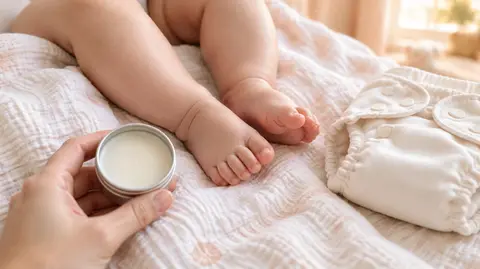
Apply a thin layer to clean, dry skin at every diaper change. The tallow creates a moisture barrier between the baby’s skin and the diaper. The key is applying at every single diaper change, not just when the rash looks bad. If a rash is not clearly improving within two to three days, switch to a zinc oxide cream and call your pediatrician.
What could be better:
- Dense texture requires warming between your fingers before applying to baby skin. Do not rub cold, firm tallow directly on irritated baby skin — warm it to body temperature first.
- Light natural scent from the honey. Not a fragrance, just the natural smell of the ingredients. Most babies and parents do not notice.
- The jar packaging means you are dipping fingers in. Use clean hands every time, or use a small spoon to scoop.
Verdict: The best combination of organic quality, simplicity, and value for daily skincare for babies over 12 months.
2. Amallow Unscented — Gentlest Application
Amallow’s whipped texture makes it the easiest tallow product to apply on delicate baby skin. Where denser products require warming and rubbing, the Amallow scoops out soft and spreads with minimal pressure.
Why it works for babies:
- Whipped texture minimizes friction. On irritated diaper rash or sensitive baby skin, you want to apply as gently as possible. The airy, soft texture of whipped tallow spreads easily without pulling or dragging.
- Absorbs in 3-4 minutes. Faster absorption means the product integrates into the skin quickly, reducing the chance of it rubbing off onto the diaper or clothing.
- Truly zero scent. No essential oils, no fragrance. Even the natural tallow smell is virtually undetectable.
- 4-ounce jar provides good value for a product you will use frequently.
- 100% grass-fed tallow with sweet almond oil as the only additional ingredient.
The sweet almond oil consideration:
Sweet almond oil is the second ingredient in Amallow. For most babies, this is fine — sweet almond oil is gentle, non-irritating, and rates low on the comedogenic scale. However, if your baby has a confirmed or suspected tree nut allergy, do not use this product. Tree nut allergies can develop in infancy, and topical exposure to tree nut proteins is a concern. If there is any family history of tree nut allergy, choose the Organic Tallow Skin or Santa Cruz Paleo instead.
What could be better:
- The sweet almond oil introduces an allergen risk that pure-tallow products avoid.
- Whipped texture contains air, meaning you get less product by weight than a dense formula.
- Not organic. For baby use, organic sourcing provides extra peace of mind.
Verdict: The gentlest application experience for baby skin. If your baby screams during diaper cream application (and many do when their skin is raw), the soft, easy-spreading texture of Amallow reduces the contact time and friction. Just verify there is no tree nut allergy concern first.
3. Santa Cruz Paleo — Purest Formula
Three ingredients: grassfed tallow, beeswax, and honey. For parents who want the absolute minimum number of ingredients on their baby’s skin, this is the product.
Why it works for babies:
- Three food-grade ingredients. Tallow, beeswax, and honey have long histories of use on skin. The honey means this is a pick for babies over 12 months, and beeswax can carry traces of propolis, a known contact allergen, so patch test first.
- Beeswax creates an excellent diaper barrier. The beeswax component gives this product stronger barrier properties than pure-tallow formulas. For diaper rash, where the goal is protecting compromised skin from moisture and irritants, this barrier effect is valuable.
- No carrier oils of any kind. No sweet almond oil, no olive oil, no coconut oil. Zero allergen risk from plant-derived oils.
- Non-comedogenic. If your baby is prone to baby acne (milia), the minimal formula reduces the risk of worsening it.
- Transparent sourcing. Santa Cruz Paleo tells you where their tallow comes from and how it is processed.
For diaper rash:
The beeswax in this formula creates a thicker, more durable barrier than pure-tallow products. Apply at every diaper change, and the barrier holds up better through wet diapers. For a persistent rash, zinc oxide creams remain the standard; use this for prevention and mild redness.
What could be better:
- Firm texture, especially in cold weather. You absolutely must warm this between your palms before applying to baby skin. Spreading cold, firm product on a raw diaper rash will cause pain and crying.
- Premium price. The 2-ounce jar is expensive for a product you will use at every diaper change.
- Small jar size means frequent reordering for daily baby use.
Verdict: A very short ingredient list for babies over 12 months. If ingredient minimalism is your priority, Santa Cruz Paleo delivers, and the beeswax barrier is useful for diaper rash prevention.
How to Use Tallow on Baby Skin
For General Moisturizing
Apply a thin layer of tallow after bath time, while the baby’s skin is still slightly damp. The damp skin helps the tallow absorb faster and locks in moisture more effectively. Focus on areas that tend to get dry — cheeks, hands, legs, and creases behind the ears and knees. A pea-sized amount covers a large area on a small baby.
For Diaper Rash Prevention
Apply a thin layer at every diaper change on clean, dry skin. The tallow creates a protective barrier between the skin and the diaper, reducing friction and shielding against moisture. Consistency matters more than thickness. A thin layer at every change beats a thick glob once or twice a day.
For Active Diaper Rash Treatment
Clean the area gently with warm water (no wipes with alcohol or fragrance). Pat completely dry — do not rub. Apply a moderate layer of tallow, slightly thicker than for prevention. Allow the product to warm to body temperature in your hands first. Apply with gentle pressing, not rubbing. Let the area air-dry for a few minutes before closing the diaper if possible.
For Cradle Cap
Some parents use tallow on cradle cap (seborrheic dermatitis) by massaging a small amount into the scaly patches before bath time. Leave it for 10-15 minutes, then gently brush with a soft baby brush to loosen the scales before washing. This is an off-label use — cradle cap is not dangerous and resolves on its own, but tallow can speed the process by softening the scales.
For Eczema Patches
Regular moisturizing is a standard part of baby eczema (atopic dermatitis) care, and some parents use tallow for it. There are no studies of tallow for infant eczema, and tallow is about 40% oleic acid, a fat that has been shown to weaken the skin barrier in studies of olive oil. Patch test first, and if you use it, apply a thin layer to eczema patches on damp skin. However, baby eczema can be triggered by many factors — food allergies, environmental irritants, genetics — and tallow addresses only the barrier function. If eczema is persistent or worsening, consult your pediatrician.
When NOT to Use Tallow on Your Baby
Tallow is not appropriate for every situation. Here are clear cases where you should not use it.
Open wounds or broken skin. If the skin is cracked and bleeding, tallow is not a wound treatment. Clean the area and use a pediatrician-recommended wound care product.
Infected rashes. If a diaper rash has yellow crusting, pus, spreading redness beyond the diaper area, or is accompanied by fever, the rash may be infected. See your pediatrician. Tallow will not treat a bacterial or yeast infection and may trap bacteria under a moisture barrier.
Known allergies. If your baby has reacted to any animal-derived product, do not assume tallow will be different. If your baby has a confirmed allergy to beef protein (rare but possible), tallow could trigger a reaction even in its rendered form.
Before patch testing. Never apply a new product to a large area of baby skin without patch testing first. Apply a tiny amount to the inside of your baby’s wrist or ankle. Wait 24 hours. If there is no redness, swelling, or irritation, proceed cautiously.
During active fungal infections. Yeast diaper rash (candidal dermatitis) looks different from regular diaper rash — it is bright red with satellite lesions (small dots) around the edges. Tallow can create a warm, moist environment that feeds yeast growth. If you suspect a yeast rash, see your pediatrician for antifungal treatment.
Tallow vs. Conventional Baby Skincare Products
Here is an honest comparison between tallow and the products most parents currently use.
| Factor | Tallow | Petroleum-Based (Vaseline, Aquaphor) | Zinc Oxide Creams |
|---|---|---|---|
| Barrier protection | Good | Excellent | Excellent |
| Clinical evidence in babies | None | Extensive | Extensive |
| FDA-recognized skin protectant | No | Yes | Yes |
| Ingredient simplicity | 1-3 ingredients | 1-15 ingredients | 5-20 ingredients |
| Fragrance-free options | Yes | Yes | Yes |
| Ease of application | Requires warming | Smooth out of tube | Thick, sometimes difficult |
| Availability | Online, specialty stores | Every store | Every store |
| Pediatrician familiarity | Low | High | High |
The honest take: Petroleum-based products like Aquaphor are not evil. They work as barriers. They have decades of pediatric safety data. Many pediatricians recommend them because they are familiar and effective for simple barrier protection.
Tallow’s appeal is a short, traditional ingredient list and a softer feel than petroleum jelly. It does the same basic job, a protective layer on the skin, with far less research behind it. For parents who prefer natural ingredients, it is a reasonable choice for everyday dryness and diaper rash prevention. It is not an upgrade over conventional products, and zinc oxide remains the better choice for an active rash.
Frequently Asked Questions
Is beef tallow safe for newborns?
There is no established clinical guidance on tallow use for newborns specifically. Tallow is a food-grade natural substance that has been used on infant skin for centuries. However, newborn skin (0-4 weeks) is extremely sensitive and still developing its barrier function. I would recommend consulting your pediatrician before using any new skincare product on a newborn. For babies older than one month, patch testing and gradual introduction are the prudent approach.
Will tallow stain baby clothes?
Yes, it can. Tallow is an oil-based product, and it can leave grease marks on fabric. Apply tallow and let it absorb for 5-10 minutes before dressing the baby. For diaper rash application, the tallow is contained within the diaper area and typically does not reach clothing. For full-body moisturizing, use thin layers and allow absorption time.
How do I store tallow for baby use?
Keep the jar in a cool, dark location with the lid sealed tightly. A bedroom dresser or changing table cabinet works well. Do not store in the bathroom where heat and humidity can degrade the product. Tallow lasts 6-12 months at room temperature. If using a jar-based product, always scoop with clean hands or a clean utensil to avoid introducing bacteria.
Can I use cooking tallow on my baby?
I would not recommend it. Cooking tallow is rendered for heat stability and culinary performance, not for skin application. Purpose-made skincare tallow is typically rendered more carefully, filtered more thoroughly, and sometimes comes from higher-quality fat sources (leaf fat, kidney fat) that produce a cleaner, smoother product. For baby skin specifically, use a product designed for skincare.
Does tallow help with baby eczema?
Some parents report that regular tallow application keeps eczema-prone skin more comfortable, but there are no studies of tallow for baby eczema. Moisturizing in general is a standard part of eczema care. Eczema is a complex condition with multiple triggers, and tallow addresses only the moisture and barrier component. It is not a cure. Use tallow as a supportive moisturizer alongside whatever treatment plan your pediatrician recommends.
How is tallow different from lanolin for baby skin?
Both are animal-derived fats with good biocompatibility. Lanolin comes from sheep wool and is commonly used in nipple creams and baby products. Tallow comes from beef fat. Chemically they are different: lanolin is a wax made mostly of sterol esters, while tallow is a triglyceride fat. Lanolin is a recognized contact allergen for a small share of people; reactions to plain tallow appear to be uncommon, although it has been studied far less. Lanolin is also an FDA-recognized skin protectant, which tallow is not. Both are reasonable choices.
Final Thoughts
Beef tallow is one of the most traditional and biocompatible skincare ingredients you can put on a baby. It has a centuries-long track record, a short ingredient list, and it works with infant skin rather than just coating it.
For babies over 12 months, Organic Tallow Skin 4oz is the best starting point — organic sourcing, simple formula, and the best value for a product you will use daily. For younger babies, choose a honey-free balm. For babies with very sensitive or reactive skin, Amallow Unscented offers the gentlest application experience. For maximum ingredient simplicity, Santa Cruz Paleo keeps it to just three ingredients.
Patch test first. Introduce gradually. And keep your pediatrician in the loop. Tallow is not a replacement for medical advice — it is one tool in the toolkit for keeping your baby’s skin healthy and comfortable.
Explore more tallow guides
Browse our collection of recipes, comparisons, reviews and DIY tutorials.
View all guidesKing Tallow is reader-supported. We research and test the products we recommend, and when you buy through links on this page we may earn a commission at no extra cost to you. See our affiliate disclosure.
This article is for general information and is not medical advice. Patch test new skincare and talk to a dermatologist or doctor about persistent skin conditions.
Published · Last updated