
Best Tallow Balm for Sensitive Skin: Unscented, Short-Ingredient Picks (2026)
Independent reviewThe best unscented tallow balms for sensitive skin, compared by every listed ingredient (honey, nut oils, beeswax, olive oil), plus patch-test steps.

This post contains affiliate links. We may earn a commission if you purchase through these links, at no extra cost to you.
The short answer: for sensitive skin, the best tallow balm is one with no added fragrance and a short ingredient list made of things you already know you tolerate. Our top pick is Terra Lotus Organic Tallow Balm (tallow, olive oil, raw honey, no scent added). If you want no plant oil at all, choose Santa Cruz Paleo (tallow, beeswax, honey). If honey or bee products are your problem, Amallow Unscented (tallow and sweet almond oil) or a single-ingredient balm is the better starting point. Patch test whichever you pick before it goes on your face.
My wife has reactive skin. She reacts to fragrance, most essential oils, and almost any sunscreen with a chemical filter, so she assumed tallow balm would be one more rash waiting to happen. The right balm became the moisturizer she uses every night. The wrong one, a scented balm, gave her a contact dermatitis flare across her cheeks within 48 hours. The difference was entirely in the ingredient list, which is why this guide is organized around ingredients rather than marketing claims.
Quick Comparison: Unscented Tallow Balms by Ingredient
Ingredients below are taken from each product’s current Amazon listing and our individual reviews as of September 2026. Brands reformulate, so check the label on the jar you receive.
| Balm | Listed ingredients | Added scent | Honey | Nut oil | Beeswax | Texture | Best for | Price |
|---|---|---|---|---|---|---|---|---|
| Terra Lotus Organic Tallow Balm | Grass-fed tallow, organic olive oil, raw honey | None | Yes | No | No | Soft balm | Best overall for sensitive skin | $$ |
| Santa Cruz Paleo | Grass-fed tallow, beeswax, honey | None | Yes | No | Yes | Firm | No plant oils at all | $$ |
| Amallow Unscented | Grass-fed tallow, sweet almond oil | None | No | Yes (almond) | No | Whipped | Honey-free, daytime use | $$ |
| Naked Tallow Balm | Beef tallow only (1 ingredient per listing) | None | No | No | No | Balm | Strictest elimination test | Check current price |
| Wrath & Remedy Whipped Tallow and Honey | Organic grass-fed tallow, raw honey | None | Yes | No | No | Whipped | Budget, body use | $ |
| Vanman’s Tallow Balm | Grass-fed tallow, raw honey, beeswax, olive oil | None | Yes | No | Yes | Heavy | Cracked hands and heels | $$$ |
Two things jump out of that table. First, “unscented” does not mean “one ingredient”: four of the six contain honey, and one contains a tree-nut oil. Second, the right pick depends on what you react to, which is why the section on choosing by trigger matters more than the ranking.
What “Sensitive Skin” Means Here
Sensitive skin covers a few different situations, and they point to different balms.
Reactive skin flares with topical irritants: fragrance, essential oils, alcohol, preservatives, some plant extracts. The barrier may be intact but easily provoked. The priority is zero added scent and a short list.
Eczema-prone skin has a weaker barrier, higher water loss, and lets irritants through more easily. The priority is a plain occlusive with as few extras as possible. The beef tallow for eczema evidence review covers this in more depth.
Rosacea-prone skin has a vascular component on top of a barrier component. Heat, alcohol, spicy food, and some skincare ingredients trigger flushing. The priority is a light layer and no fragrance. See the tallow and rosacea evidence page before you start.
Post-procedure or healing skin after a peel, laser, or sunburn is temporarily very sensitive. Follow your provider’s aftercare instructions first; a plain occlusive is usually what they suggest.
Why Unscented Matters More Than Anything Else on the Label
Fragrance is the most common cause of allergic contact dermatitis from cosmetics. The word “fragrance” on a label can stand for dozens of undisclosed compounds, and “natural” essential oils contain the same well-documented allergens: linalool, limonene, geraniol, citral, and others that become more allergenic as they oxidize in an opened jar.
Watch the wording, too. The FDA has no legal definition for “unscented” or “fragrance-free.” A product labeled “unscented” can still contain a masking fragrance to cover the smell of other ingredients. For reactive skin, read the ingredient list itself: you want nothing that says fragrance, parfum, essential oil, or a plant name followed by “oil” that you did not choose on purpose.
Every balm in the table above has no added scent. The balms to avoid on reactive skin are covered below.
What the Evidence Does and Doesn’t Say About Tallow on Sensitive Skin
There are no published controlled trials of tallow balm on sensitive, eczema-prone, or rosacea-prone skin. What we can say comes from basic skin science:
- Tallow works as an occlusive and emollient. It forms a lipid layer that slows water loss and softens rough skin. It is not the strongest occlusive available: petrolatum reduces transepidermal water loss by more than 98% (Purnamawati et al., Clinical Medicine & Research, 2017), and it remains the dermatology benchmark for barrier protection.
- Tallow does not supply ceramides. The skin barrier’s own lipids are mainly ceramides, cholesterol, and free fatty acids. Work by Man, Feingold, and Elias (Journal of Investigative Dermatology, 1996) showed barrier repair goes best when all three are supplied together in the right ratio. Tallow is mostly triglycerides, so it can protect the barrier but does not rebuild it the way a ceramide cream is designed to.
- Oleic acid is a real caveat. Tallow is roughly 42% monounsaturated fat, mostly oleic acid (USDA FoodData Central lists 41.8 g per 100 g). A 2017 review by Lin, Zhong, and Santiago in the International Journal of Molecular Sciences summarized studies where oleic-rich olive oil increased water loss and disrupted the barrier, while linoleic-rich sunflower oil preserved it. That research was on plant oils, not tallow, but it is the reason we would steer eczema-prone skin toward an olive-free formula first.
None of this means tallow is a bad choice for sensitive skin. It means the benefit is a simple, fragrance-free occlusive layer, and the short ingredient list is doing most of the work. For the full science, see our complete guide to beef tallow for skin.
The Best Tallow Balms for Sensitive Skin
1. Terra Lotus Organic Tallow Balm: Best Overall
Terra Lotus Organic Tallow Balm is the balm my wife now uses every night and the one we suggest to people who are nervous about trying tallow.
Ingredients: grass-fed beef tallow, organic olive oil, raw honey. Three ingredients, no scent added, no beeswax, no preservative.
Texture: soft and scoopable with a warm fingertip. Melts on contact within a few seconds.
Scent: a faint natural note when you open the jar that disappears once it is rubbed in.
On reactive skin: it has been her nightly moisturizer, used over a hydrating toner, through winter, flights, and a flush-prone week, with no flares.
Watch for: the olive oil (see the oleic acid note above) and the raw honey. If you are eczema-prone, patch test for the full week. If you are buying for a baby under 12 months, choose a honey-free option instead.
Best for: reactive skin that wants the shortest familiar ingredient list, rosacea-prone faces used in a thin layer, and post-procedure skin once your provider clears a moisturizer. Our Terra Lotus review covers the honey formula in detail.
2. Santa Cruz Paleo Beef Tallow Moisturizer: Best With No Plant Oils
Santa Cruz Paleo is the pick if carrier oils are what bother you.
Ingredients: grass-fed beef tallow, beeswax, honey. No olive, jojoba, almond, or coconut oil, and no essential oils.
Texture: the firmest balm here. Warm it between your fingertips for a few seconds before it spreads.
On reactive skin: it passed a 48-hour patch test and a one-week face wear test on my wife’s skin. The beeswax gives it a slightly heavier, longer-lasting film than Terra Lotus.
Watch for: bee products. Honey allergy through skin contact is uncommon, but propolis (“bee glue,” which can be present in beeswax and raw honey) is a well-documented contact allergen. If you have reacted to propolis, beeswax, or bee-based products before, skip this one.
Best for: eczema-prone skin that wants to avoid oleic-rich plant oils, and anyone who has reacted to carrier oils in other balms. See our Santa Cruz Paleo review.
3. Amallow Unscented Whipped Tallow: Best Honey-Free Daytime Pick
Amallow Unscented is the lightest texture on this list and the only bee-free option among our main picks.
Ingredients: grass-fed beef tallow and sweet almond oil, whipped. No fragrance, no honey, no beeswax.
Texture: airy and whipped. It spreads with almost no friction, which matters when your face is already irritated.
On reactive skin: my wife had one mild redness episode in the first week that settled overnight and did not return. It became her daytime moisturizer when she wanted something lighter than Terra Lotus.
Watch for: sweet almond oil is a tree-nut ingredient. Anyone with a tree-nut allergy should skip it.
Best for: daytime use, under sunscreen or makeup, and anyone avoiding honey or beeswax. Our whipped tallow guide explains what whipping does and does not change.
4. Naked Tallow Balm: The Single-Ingredient Elimination Test
If you have reacted to several products and cannot tell which ingredient is the culprit, a one-ingredient balm is the cleanest test. Naked Tallow Balm is listed as beef tallow only.
We have not reviewed this one, so this entry is based on its listing. The logic is simple: if a plain tallow balm causes no reaction over a week, tallow itself is not your problem, and you can add products with honey or oils one at a time. Plain tallow is firm and has more natural scent than blended balms. Apply it to damp skin so it spreads thinner.
5. Wrath & Remedy Whipped Tallow and Honey: Budget and Body Pick
Wrath & Remedy’s whipped tallow and honey balm (sold as “Organic Beef Tallow for Skin”) is the lowest-cost option here and comes in a larger 4 oz jar.
Ingredients: organic grass-fed tallow and raw honey. No scent added.
Texture: whipped, medium-firm, easy to scoop.
Best for: budget-conscious shoppers and body use on dry, reactive skin where you go through more product. Same honey caveat as Terra Lotus.
6. Vanman’s Tallow Balm: For One Specific Job
Vanman’s Tallow Balm is heavy and occlusive, and we include it only for badly cracked or very dry body skin that needs a thick overnight layer.
Ingredients: grass-fed tallow, raw honey, beeswax, olive oil.
Watch for: a thick layer can feel hot on flush-prone skin. We would not use it on a rosacea-prone face.
Best for: cracked hands, heels, and elbows. The tallow for cracked heels page covers that use case.
Tallow Balms to Skip If Your Skin Is Reactive
These are good products, but they contain added scent, so they are poor first choices for reactive skin:
- Terra Lotus Lavender: lavender essential oil, a common sensitizer once oxidized.
- Ancestral Haven Herbal Rose: herbal-rose scent on a tallow, beeswax, and jojoba base.
- Amallow Clean Cloud: the same base as Amallow Unscented plus an essential oil blend.
If your skin is not reactive and you want a scent, our best scented tallow balms roundup compares them.
How to Choose by What You React To
| If you react to… | Start with | Avoid |
|---|---|---|
| Fragrance or essential oils | Any balm in the comparison table | Lavender, rose, “clean” or “fresh” scented versions |
| Bee products or propolis | Amallow Unscented, Naked Tallow Balm | Santa Cruz Paleo, Vanman’s, honey balms |
| Tree nuts | Terra Lotus, Santa Cruz Paleo | Amallow (sweet almond oil) |
| Olive oil, or you have eczema | Santa Cruz Paleo, Naked Tallow Balm | Terra Lotus, Vanman’s |
| Everything, and you don’t know why | Naked Tallow Balm, then add one ingredient at a time | Anything with more than three ingredients |
| Buying for a baby under 12 months | A honey-free balm, after asking your pediatrician | Honey balms |
For infants, our best beef tallow for baby skin guide goes through the honey question and diaper-area use.
How to Patch Test a Tallow Balm
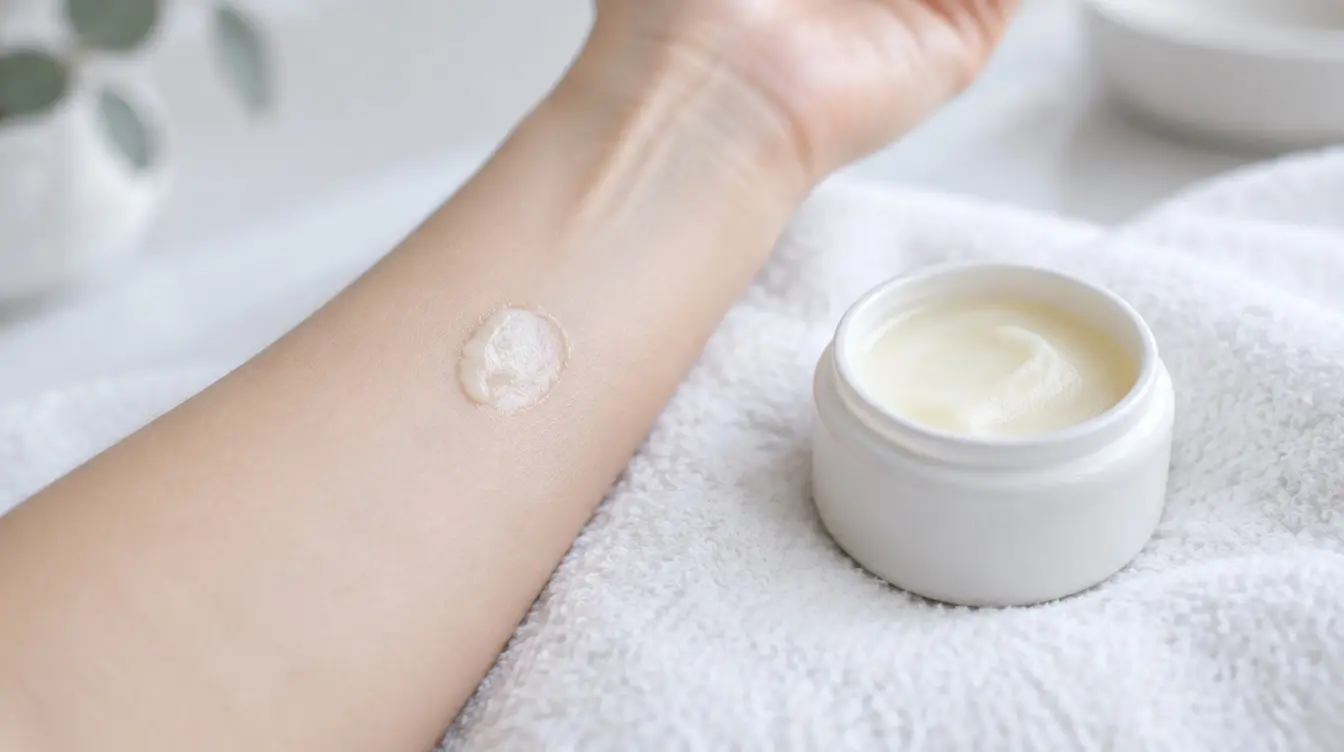
Do this even with unscented, short-list products. The American Academy of Dermatology suggests testing a new product on a quarter-sized spot on the inside of your arm or the bend of your elbow, twice a day for 7 to 10 days, using the amount you would normally apply. No reaction by then means the product is likely safe to use.
For the face, add one more step:
- Run the arm test above.
- If it passes, apply a thin layer to one cheek or along the jaw only, at night, for three to five nights. Delayed contact reactions often show up on day two or three.
- If that passes, use it on the full face at night for a week before adding it to your morning routine.
If you react at any stage, stop, let your skin settle, and note the full ingredient list so you can compare it with the next product you try.
Application Tips for Reactive Skin
Change one thing at a time. If your cleanser, toner, or sunscreen is also new, you will not know which product caused a reaction.
Apply to slightly damp skin. Tallow spreads thinner on damp skin, so you use less product.
Use less than you think. A pea-sized amount covers a whole face. More tallow is more material to react to, not more benefit.
Warm it first. Rub the balm between your fingertips for 10 to 15 seconds so it spreads without dragging on irritated skin.
Hold off on actives in week one. Retinoids, vitamin C, acids, and benzoyl peroxide can all sting more under an occlusive layer. Reintroduce them one at a time after your skin has settled.
Keep the jar clean. None of these balms contain preservatives. Use clean, dry fingers or a small spatula.
When to See a Dermatologist Instead
Tallow balm is a moisturizer. It does not treat skin disease. See a dermatologist before relying on it if you have:
- Severe atopic dermatitis, especially with oozing, crusting, or repeated infections
- Rosacea with persistent flushing despite avoiding your triggers
- A rash that keeps spreading, blisters, or does not settle within two weeks
- Recent procedures with specific aftercare instructions
If a plain, short-list balm still causes a reaction, a dermatologist can run formal patch testing to find the actual trigger. The tallow for eczema and tallow for rosacea pages cover how people use tallow alongside medical care.
Frequently Asked Questions
What is the best unscented tallow balm for sensitive skin?
Terra Lotus Organic Tallow Balm is our top pick: three ingredients and no added scent. If you avoid honey or bee products, choose Amallow Unscented instead, provided you have no tree-nut allergy.
Are all tallow balms good for sensitive skin?
No. Many contain essential oils, botanical extracts, or added fragrance. Only fragrance-free formulas with short ingredient lists are reasonable picks for reactive skin, and even those need a patch test.
Does tallow itself ever cause reactions?
It is uncommon. Most reactions to “tallow balm” turn out to be reactions to an added ingredient: essential oils, propolis in beeswax or raw honey, or a carrier oil. Lanolin allergy is sometimes mentioned in this context, but lanolin is sheep wool wax, chemically different from beef tallow, so a lanolin allergy does not predict a tallow reaction. A single-ingredient balm is the simplest way to check.
Will tallow clog pores on sensitive skin?
It can for some people, especially those prone to acne. Comedogenic ratings for tallow come from old animal-model tests and vary by source. Our comedogenic rating explainer covers what the numbers mean and how to test your own skin.
Is whipped tallow better for sensitive skin?
The texture helps a little because it spreads with less friction on irritated skin. The ingredient list matters far more. A whipped balm with essential oils is a worse choice for reactive skin than a firm balm without them.
Should I use tallow during a rosacea flare?
Don’t start a new product during an active flare. Use what your dermatologist has prescribed, then reintroduce a light, fragrance-free balm at night once the flare settles.
Why does my unscented tallow still have a slight smell?
Tallow has a faint natural scent. Well-rendered tallow should smell mild and waxy. A strong, sour, or crayon-like smell suggests the fat has gone rancid, and rancid fat is more irritating. Replace the jar.
How long until I know if a balm works for me?
A patch test takes 7 to 10 days. Whole-face tolerance shows within about a week of nightly use. Whether it keeps your skin comfortable through a season takes a few weeks of consistent use.
Bottom Line
For sensitive skin, pick by ingredient, not by brand. Terra Lotus Organic Tallow Balm is our top overall pick: three ingredients, no added scent. Santa Cruz Paleo is the choice when plant oils are the problem. Amallow Unscented is the honey-free, bee-free daytime option for anyone without a nut allergy. A single-ingredient balm like Naked Tallow Balm is the cleanest way to find out whether tallow itself agrees with you.
Patch test first, change one product at a time, and use the smallest amount that covers your skin.
Explore more tallow guides
Browse our collection of recipes, comparisons, reviews and DIY tutorials.
View all guidesKing Tallow is reader-supported. We research and test the products we recommend, and when you buy through links on this page we may earn a commission at no extra cost to you. See our affiliate disclosure.
This article is for general information and is not medical advice. Patch test new skincare and talk to a dermatologist or doctor about persistent skin conditions.
Published · Last updated