

This post contains affiliate links. We may earn a commission if you purchase through these links, at no extra cost to you.
I stopped buying mineral oil for my cutting boards about two years ago. The walnut end-grain board I use every day, the maple butcher block on the prep station, and the old olive-wood serving boards my grandfather left me are all on a tallow and beeswax rotation now. They look better than they did under mineral oil, they feel better in the hand, and I never have to wonder whether I am rubbing a petroleum byproduct into the surface I cut my food on.
The argument for tallow over mineral oil is straightforward. Tallow is food. Mineral oil is a refined petroleum product that the FDA allows in food contact but that has no nutritional or biological connection to anything you eat. If you eat tallow already (or even if you do not), rubbing it into a wood surface that touches your food makes more sense than rubbing in fractionated paraffin.
Here is how to do it and why it works.
The Blend
The standard board-care mix is roughly 4 parts tallow to 1 part beeswax by weight, melted together and poured into a wide-mouth jar. The beeswax adds water resistance and gives the finished surface a slight luster. The tallow does the deep conditioning.
For a small jar that lasts about six months of monthly cutting board treatment:
- 4 ounces beef tallow (about 1/2 cup)
- 1 ounce beeswax pellets (about 2 tablespoons)
Melt the beeswax in a double boiler or a heat-safe glass measuring cup set in a pot of simmering water. Once the beeswax is fully liquid, add the tallow and stir until combined. Pour into a wide-mouth glass jar. Let it cool at room temperature for an hour. It will set into a soft, scoopable balm the consistency of thick body butter.
I use 100% Pure Grass-Fed Beef Tallow for this because I keep a tub for cooking and have plenty left over. The Traverse Bay Farms 32 oz jar is the more economical option if you are buying tallow specifically for board care and skincare projects. The /make/wood-polish/ page has the full recipe with a few variations.
How to Apply
The application is the part people get wrong. Most cutting board oils and waxes are sold with instructions that work for the product but not for the wood. Here is what actually penetrates and conditions versus what just sits on the surface.
Warm the wood first. This is the step that mineral oil instructions never include because mineral oil does not need it. Tallow does. A warm surface lets the tallow melt and migrate into the wood grain. Use a hair dryer on medium for 30 seconds across the board, or set the board in a warm spot like a sunny windowsill for 15 minutes. The wood should feel barely warm to the touch.
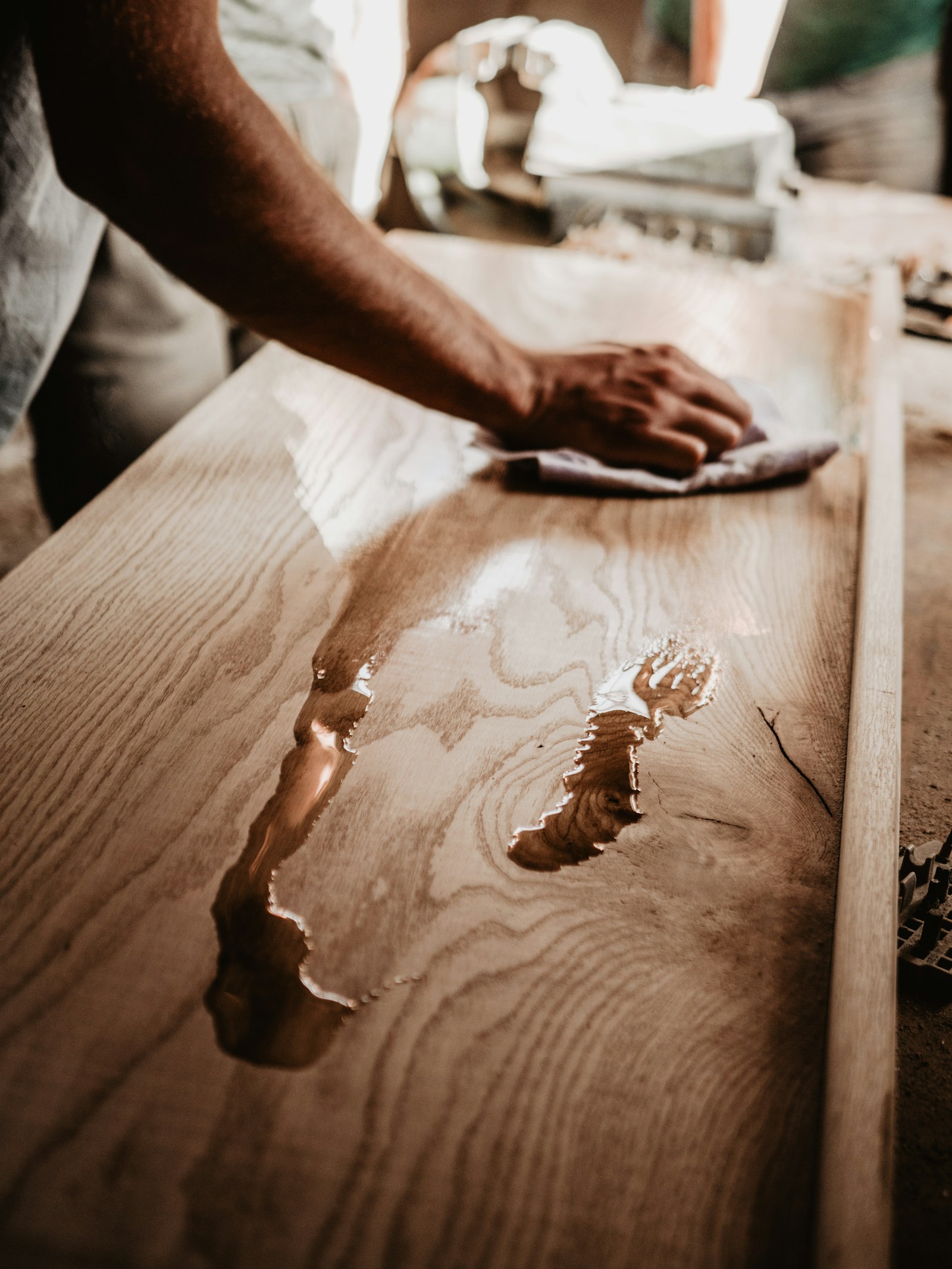
Apply a thin layer. Scoop a teaspoon of the tallow-beeswax blend onto a clean rag or paper towel. Rub it into the surface in the direction of the grain. Cover the entire top, sides, and bottom. The layer should be thin enough that you cannot see standing wax, just a slight sheen.
Wait 30 minutes. The warm wood and the body heat from your hands have liquefied the tallow. As it cools, it will start to set in the grain. Walk away. Make dinner. The board needs this time to absorb.
Buff with a clean rag. After 30 minutes, take a clean dry rag and buff the surface in the direction of the grain. You are removing the excess beeswax that did not absorb, leaving behind a smooth, slightly waxy finish. The buffing is what gives the board the warm soft sheen that mineral oil never produces.
Let it cure for 24 hours before food contact. This is conservative but worth it. The cure lets the beeswax fully set and the tallow finish migrating into the deeper grain. After 24 hours the surface should feel dry, smooth, and slightly waxy with no greasy residue.
If you have done it right, water beaded on the surface should sit in clean droplets rather than soaking in. That bead-and-shed behavior is the test for whether your conditioning is current.
Why Tallow Works on Wood
The chemistry matters because it explains why tallow outperforms vegetable oils on wood.
Tallow is highly saturated. That high saturation means it does not oxidize and turn rancid the way polyunsaturated vegetable oils do. Linseed oil, walnut oil, and flaxseed oil all eventually turn gummy and develop off-smells in wood over time. Tallow does not. The board I treated with tallow two years ago still smells neutral.
The molecule size is right for wood penetration. Tallow’s fatty acid chain lengths (mostly C16 and C18) are short enough to migrate into the porous structure of hardwoods like maple, walnut, and cherry, but long enough not to evaporate or run off. They settle in the grain and stay.
It dries to a non-tacky finish. Beeswax on its own can stay slightly tacky on cool surfaces. Tallow alone soaks in and disappears. The combination dries to a hard, smooth, slightly waxy surface that feels like a properly seasoned cast-iron pan. Smooth, dry, slick.
It is food safe and biologically compatible. If you nick the surface while cutting and a sliver of tallow ends up on your food, nothing has happened that needs explaining. The same cannot be said with confidence for mineral oil over a long enough timeline.
The same reasoning applies to leather, by the way. The leather conditioner page covers that application, and the broader 10 unexpected ways to use beef tallow around your home post sketches out the other household uses I have stress-tested.
Reapplication Schedule
Cutting boards and butcher blocks. Monthly during heavy use, every two months during light use. If the surface stops beading water, it is due. If the wood looks dry or chalky, you are overdue. I treat my main board the first weekend of every month as a habit.
Wooden spoons and utensils. Every few months. Wooden spoons get washed often and lose conditioning faster than a board. A quick warm-and-rub once a quarter keeps them sealed.
Wooden bowls and salad servers. Every two to three months. Less frequent water contact means longer between treatments.
Wood furniture. Seasonally. Once at the start of winter (when home heating dries everything out) and once at the start of summer (when humidity changes). Tables, chairs, butcher block countertops, exposed beams.
Knife handles with wood scales. Twice a year. Once after summer use and once after winter use. Wood-handled chef’s knives and hunting knives both benefit.
Cast-iron-style cooking surfaces (different category but related). The cast-iron seasoning guide covers this application, which uses the same tallow but a different technique.
Furniture and Beyond
The same blend works on more than cutting boards. I use it on:
- A walnut dining table that had developed dry patches near the windows. Two seasonal treatments brought the color back and the patches disappeared
- A reclaimed-wood shelf my brother built me. Tallow stopped it from absorbing dust and gave it a deeper amber tone
- The wooden handles on my outdoor garden tools. Stops cracking and splitting in the Texas heat
- A leather and wood toolbox handle that had gone gray. One treatment brought it back to brown
For exterior wood (decks, fences, outdoor furniture) tallow is less ideal because it does not weather as well as dedicated outdoor finishes. Stick to indoor use and use a real exterior oil for outdoor work.
Common Mistakes
Applying too thick. Excess tallow does not absorb. It sits on the surface, attracts dust, and goes slightly soft in warm weather. Thin layers and patient buffing always win.
Skipping the warm-up. Cold wood does not let the tallow migrate. You will be back in two weeks wondering why the board feels dry again.
Buffing too soon. Wait the full 30 minutes. Buffing before the tallow has had time to settle just lifts product back off the surface.
Using a rancid tallow. If your jar smells off, do not put it on a food-contact surface. Start fresh with a clean product. The does beef tallow go bad guide explains how to tell.
Treating a soaking-wet board. Always dry the board fully before conditioning. A board that is still damp will not absorb the tallow into the grain.
Frequently Asked Questions
Is tallow really safer than mineral oil for cutting boards?
Both are FDA-allowed for food contact. The practical difference is that tallow is a food while mineral oil is a refined petroleum product. For people who prefer to keep petroleum byproducts off their food-contact surfaces, tallow is the clear choice. The functional performance is comparable or better.
Does tallow go rancid on a cutting board?
Properly rendered tallow does not go rancid in normal kitchen use. The high saturation makes it shelf-stable for months on the surface. Boards I treated 18 months ago still smell neutral. If you used a low-quality or partially-rendered tallow, you may get a slight off-smell over time, in which case strip and reapply with better tallow.
How long does the jar of conditioning blend last?
A 5-ounce jar of tallow and beeswax blend lasts me about a year of monthly cutting board treatment plus seasonal furniture work. The blend itself is shelf-stable for a year or more in a sealed jar at room temperature.
Can I use the same tallow for cooking and for board care?
Yes, as long as you use a clean utensil to scoop it out and the tallow is high-quality. I keep separate jars only because it is more convenient. If you want one tub, the grass-fed 4-pound tub covers both uses easily.
Can I add essential oils to the blend?
You can, but I do not. Cutting boards eventually contact food and essential oils can carry stronger flavors than you want migrating off the surface. For furniture-only blends, a drop of cedarwood or fir essential oil adds a nice wood-shop note.
Will tallow darken my light-colored wood?
A little. Maple and ash will gain a slight amber warmth after several treatments. Walnut and cherry hardly change. If you want zero color change, mineral oil is more neutral. Most people prefer the warmth tallow adds.
Bottom Line
A tallow and beeswax blend is the most natural, durable, and food-honest cutting board conditioner you can use. The application is simple. The reapplication schedule is monthly for boards and seasonal for furniture. The performance beats mineral oil on every measure that matters.
Start with a grass-fed tallow tub, pick up a small bag of beeswax pellets, and follow the recipe at /make/wood-polish/. Your boards, your knives, and your furniture will look better in a year than they do today.