
Pork Tallow (Lard) vs Beef Tallow for Skin: Which Is Better?
Reader-supportedPork tallow (lard) vs beef tallow for skin, compared honestly. Fatty acid profiles, comedogenic ratings, historical cold cream use, and when each one wins.

This post contains affiliate links. We may earn a commission if you purchase through these links, at no extra cost to you.
People ask me this almost every week. They have a jar of leaf lard left over from a pie crust project, the rendering smelled lovely, the texture looks creamy enough to scoop into a face cream, and they want to know if they can skip the beef tallow and use what they already have.
My honest answer is yes, you can. Lard works on skin. People used it for hundreds of years before department-store cold cream replaced it. But if you actually compare the two side by side, beef tallow wins for most skin types, and the gap is wider than I expected the first time I tested both on my own face.
Here is the breakdown I wish someone had written down for me when I was deciding which fat to render for skincare.
What Lard Actually Is
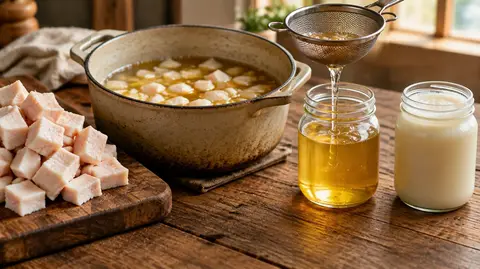
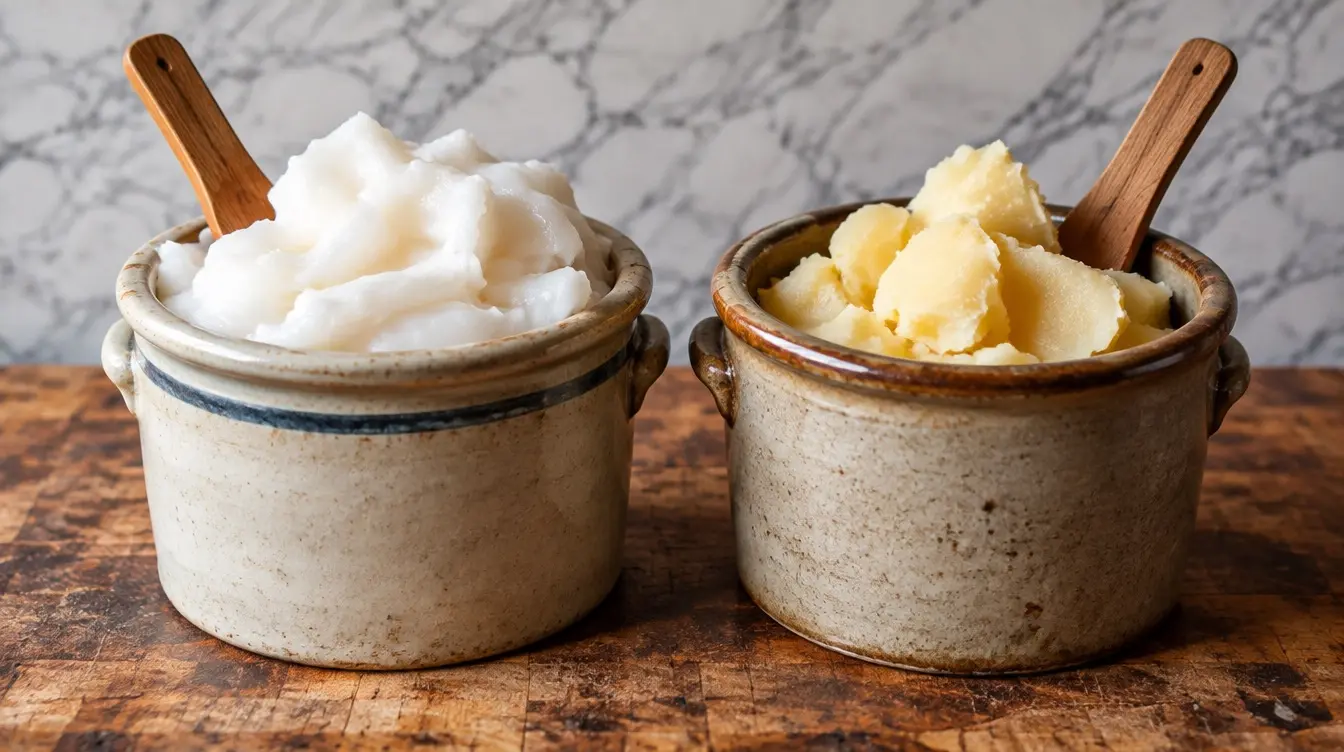
Lard is rendered pork fat. The best skincare-grade lard comes from leaf fat, the soft white fat that wraps the kidneys of a pig. It renders clean, has almost no pork scent when done properly, and stays creamy at room temperature in a way beef tallow does not.
Pork back fat also renders into usable lard, but it carries more flavor and a slight scent that lingers in skincare applications. If you are buying lard at the grocery store, you are probably getting back fat, hydrogenated, and shelf-stabilized. That stuff is fine for biscuits and bad for your face.
The lard worth putting on your skin is freshly rendered, ideally from pasture-raised pigs, and stored cold.
The Fatty Acid Profile Difference
This is where the two diverge, and it matters more than any marketing copy about “ancestral skincare” will tell you.
Beef tallow runs roughly 45 to 50 percent saturated fat, with stearic acid (around 18 to 25 percent) and palmitic acid (around 25 percent) as the structural workhorses. Its monounsaturated content is mostly oleic acid at around 35 to 40 percent. Crucially, beef tallow contains a small but real amount of palmitoleic acid, a fatty acid found naturally in human sebum.
Lard runs leaner on the saturated side. It is around 40 percent saturated fat overall, with stearic acid closer to 12 to 14 percent. Oleic acid is the dominant fatty acid at roughly 45 percent, sometimes higher in pasture-raised pigs. Linoleic acid sits around 10 percent, which is meaningfully higher than beef tallow.
What does that mean in practice? Lard is softer, melts faster on contact with skin, absorbs quickly, and feels lighter. Beef tallow is firmer, takes a few seconds longer to warm into the skin, and creates a more occlusive layer that holds moisture in longer.
For very dry climates or overnight repair use, beef tallow has the edge. For lighter daily moisturizing in humid weather or on combination skin, lard genuinely competes.
The Palmitoleic Acid Argument
The lipid biomimicry case for beef tallow rests heavily on palmitoleic acid. Human sebum contains 15 to 20 percent palmitoleic acid. Beef tallow contains roughly 2 to 4 percent. Lard contains less than 1 percent.
That sounds small until you understand what palmitoleic acid does. It is one of the only fatty acids your skin produces on its own. As you age, your sebaceous glands produce less of it. Topical palmitoleic acid supports the skin barrier and has been studied for antimicrobial activity against the bacteria that cause acne.
This is the molecular reason beef tallow won the skincare race even though lard had a 200-year head start. The fat profile is closer to what your skin already makes.
Historical Use: Lard in Cold Cream
Before I make it sound like lard does not belong in your medicine cabinet, the historical record matters. From the 1800s through the 1950s, lard was the base fat in most homemade cold creams. The classic recipe was lard, beeswax, rosewater, and a fragrance oil. Apothecaries sold it in glass jars. Farm wives made it for chapped winter hands.
The reason was practical. Pigs are smaller and easier to slaughter at home, lard renders in a couple of hours, and it stays creamy without whipping or warming.
The reason it fell out of fashion was mostly marketing. Petroleum jelly was cheaper to mass produce. Beauty companies wanted ingredient lists that did not say “pig fat.” Lanolin and mineral oil took over. Lard quietly disappeared from medicine cabinets sometime in the 1960s.
The traditional knowledge was real. It just lost a marketing fight.
The Comedogenic Comparison
This is the part that matters most if you have any acne tendency at all.
On the comedogenic scale (a rough 0 to 5 ranking of how likely a fat is to clog pores), lard sits at around 4 out of 5. Beef tallow sits at around 2 out of 5. That is a real and meaningful gap.
The reason lard scores higher is the oleic acid content. Higher oleic oils, including olive oil, avocado oil, and lard, tend to disrupt the skin barrier on acne-prone faces and feed the bacteria that cause breakouts. People with naturally oily or combination skin often break out within a week of switching to lard-based balms.
If your skin is normal to dry, lard will probably not cause trouble. If you have any history of acne, blackheads, or congested pores, beef tallow is the safer pick. I covered this distinction in more detail in beef tallow vs coconut oil for skin, because coconut oil has the same problem at a 4 out of 5 score, and the lard comparison runs along the same lines.
Texture and Scent in Practice
Lard is softer at room temperature. You can scoop it with a spoon without warming the jar. That sounds like a small benefit and it is not. For people who hate the firm-balm feeling of straight tallow, lard’s softer texture is genuinely more pleasant.
But lard has a scent. Even well-rendered leaf lard carries a faint barnyard note that some people pick up immediately and others do not notice at all. Beef tallow renders neutral or slightly beefy, and most commercial beef tallow balms are deodorized to the point of being scentless.
If you are sensitive to smells, render or buy beef tallow. If you are not, lard’s texture might win you over.
The whipped balms like Amallow Unscented Whipped Tallow solve the texture problem on the beef side, which removes one of lard’s biggest practical advantages.
When Lard Is the Right Pick
I am not anti-lard. There are situations where lard is the better choice.
If you butcher or buy a whole hog and have leaf fat available, rendering your own skincare-grade lard costs almost nothing. The economics make sense.
If you live somewhere cold and dry where you need a softer-textured balm that will not stiffen in a winter bathroom, lard handles cold better than tallow.
If you cook with pork tallow anyway (Hungarian, Polish, traditional Southern, Filipino cuisines), using the same rendered fat for hand cream is the kind of zero-waste household practice I respect.
And if you simply have a strong cultural or sentimental reason to use lard (your grandmother used it, you raise heritage pigs, you want to reconnect with how your great-grandparents lived), the actual molecular difference between lard and tallow is small enough that lard will not let you down.
When Beef Tallow Wins
For most modern skincare use, beef tallow is the better pick.
If you have any acne tendency, the comedogenic gap matters. If you want maximum overnight barrier repair, the higher stearic acid in tallow creates a longer-lasting occlusive layer. If you want the closest possible match to human sebum, the palmitoleic acid content tips the scale.
If you are buying rather than rendering, the supply chain is better. Skincare-grade beef tallow is everywhere now. Skincare-grade lard is rare. Most lard sold at grocery stores is hydrogenated and has additives you do not want on your face.
For a clean DIY base, I keep coming back to 100% Pure Grass-Fed Beef Tallow. For a cheaper jar that is still deodorized and clean, Traverse Bay Farms 32 oz is the budget pick.
The Verdict on Mixing Them
A few readers have asked whether they can blend lard and tallow for a “best of both” balm. You can. The blend is softer than pure tallow, more occlusive than pure lard, and the comedogenic load lands somewhere in the middle.
A 50/50 mix is fine for body skin and hands. I would not put a high-lard blend on my face if I were prone to breakouts. For that use, a small amount of lard for texture (10 to 20 percent) blended into a tallow base gives you the soft scoop without much pore risk.
I have not found a commercial blend on the market worth recommending, so this is a DIY-only path. If you make one, render small batches and patch test before committing.
Where to Read More
If you are choosing tallow for a specific skin issue, my deeper writeups by condition are at /tallow-for/eczema/, /tallow-for/rosacea/, and /tallow-for/acne/. The general fatty acid background lives at /blog/beef-tallow-for-skin-complete-guide/.
For broader animal-fat context (lamb, deer, bison, pork), see types of tallow explained.
Frequently Asked Questions
Can I use grocery store lard on my skin?
I would not. Most shelf-stable grocery lard is hydrogenated and includes BHA, BHT, or other preservatives. Render your own from leaf fat, or buy a small-batch rendered lard from a farmer you trust.
Will lard make me smell like bacon?
No, but well-rendered lard does have a faint barnyard note that some people detect. Properly rendered leaf lard is the closest to scentless. Back fat carries more aroma. Beef tallow generally renders cleaner.
Is lard ever better than tallow for skin?
For very dry winter hands and feet, the higher oleic acid content of lard absorbs faster and feels lighter. For people in cold climates who hate the firm-balm feel of pure tallow, lard genuinely works better. For acne-prone skin, no.
Does cooking-grade lard work on skin?
If it is genuinely just rendered pork fat with no additives, yes. If the label has more than one ingredient, skip it for skincare. Use a single-ingredient leaf lard from a farmer or render your own.
Can I make cold cream the old-fashioned way?
Yes. The traditional recipe is one part lard, one part beeswax, melted together, with a few tablespoons of rosewater whipped in as it cools. It works exactly as well now as it did in 1890.
Does lard cause acne?
For acne-prone skin, lard’s higher oleic acid content can trigger breakouts within a week or two. Beef tallow at a comedogenic rating of 2 is the safer pick for anyone with a history of clogged pores or acne.
Bottom Line
Lard is real skincare. It worked for a hundred years and it still works. But the molecular case for beef tallow is stronger, the comedogenic gap is real, and the commercial supply chain for clean beef tallow balms is far better than anything you will find for lard.
If you already render lard for cooking and you do not have acne-prone skin, use what you have. If you are choosing fresh, choose beef tallow. The closer match to human sebum, the lower comedogenic load, and the easier sourcing all stack up the same direction.
For my own face, I use Amallow Unscented Whipped. For my hands and feet, a heavier balm like Vanman’s does the work. Both are beef tallow. Both are better than the lard I tested for two months. Your skin may vote differently, and that is fine.
Explore more tallow guides
Browse our collection of recipes, comparisons, reviews and DIY tutorials.
View all guidesKing Tallow is reader-supported. We research and test the products we recommend, and when you buy through links on this page we may earn a commission at no extra cost to you. See our affiliate disclosure.
This article is for general information and is not medical advice. Patch test new skincare and talk to a dermatologist or doctor about persistent skin conditions.
Published