

This post contains affiliate links. We may earn a commission if you purchase through these links, at no extra cost to you.
Epic Provisions Beef Tallow is the easiest jar to find in this whole category. Walk into almost any Whole Foods and it is on the shelf next to the duck fat and the lard. That distribution is the entire pitch. You can buy it on a Tuesday night without ordering anything online.
I have been through about six jars of Epic over the past two years. This review covers what the product is actually like at the stove, what the General Mills ownership situation means in practice, and how it stacks up against the rest of the field I have been working through. The pre-existing programmatic stub at /blog/epic-beef-tallow-review/ was written before I had used the product across enough cooking sessions to talk about it honestly. This post is the longer take.
Epic is a solid, convenient, mid premium tallow. It is not the best on the shelf, and it is not the cheapest. It is the one you can grab quickly when you need a jar tonight.
A Quick Note On The General Mills Thing
I want to get this out of the way up top because it comes up in almost every comment thread about Epic.
Epic Provisions started in 2013 as an Austin based animal protein bar company founded by Taylor Collins and Katie Forrest. The brand was built around regenerative ranching and animal welfare. In 2016, General Mills acquired Epic. The founders stayed on for several years after the acquisition and the product line continued to expand under the new ownership.
For a section of the carnivore and ancestral health community, the General Mills logo on the back of the jar is a problem. The argument goes that a multinational food company has different incentives than a small founder led brand, and that sourcing standards or formulas could quietly shift over time.
My honest take after using the product for two years: the tallow itself is still good. I have not noticed a quality change across the six jars I have bought. The sourcing language on the label still references grass fed cattle. The ingredient list is still one ingredient.
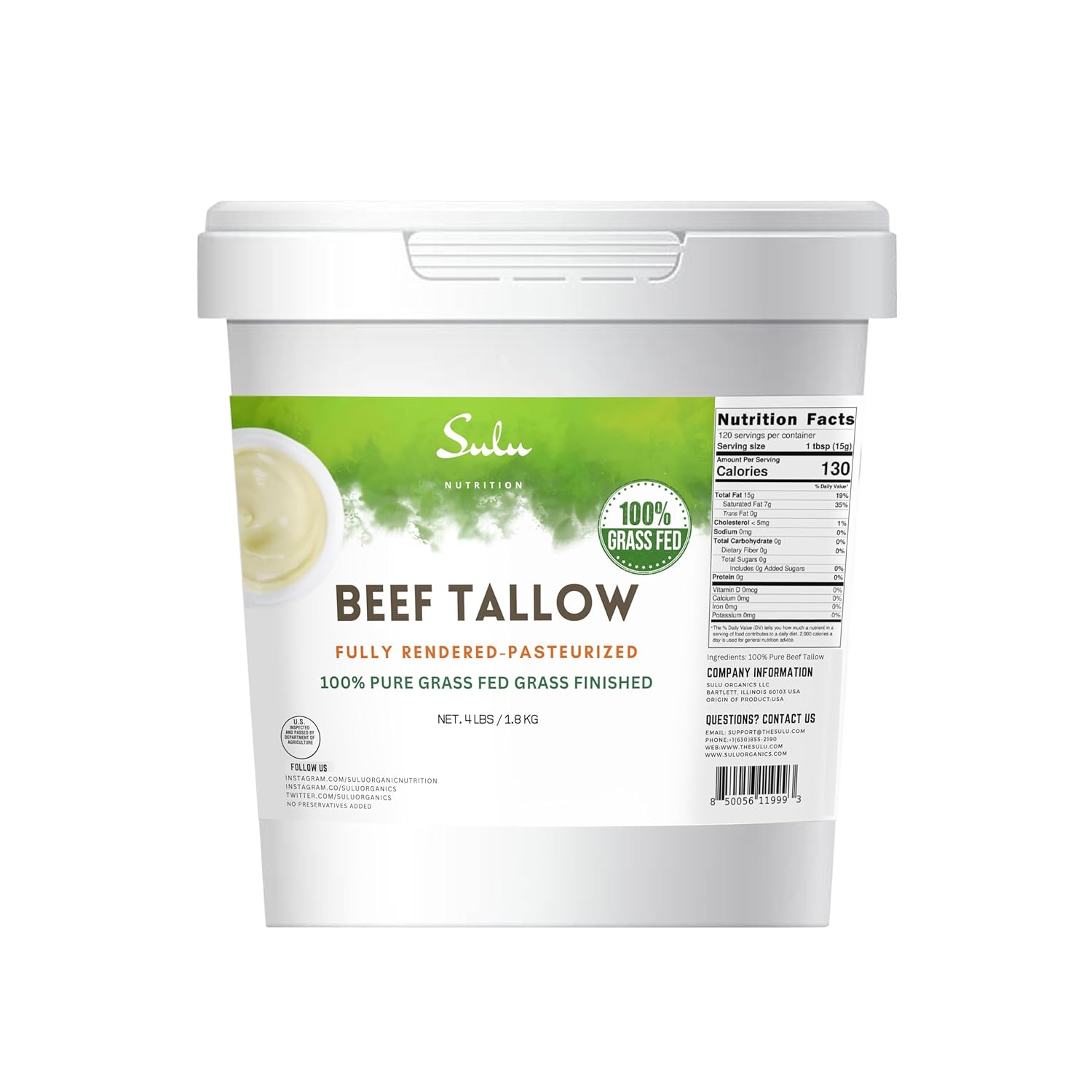
That said, I understand the discomfort. If you want to vote with your dollar against big food consolidation, the 4 lb grass-fed tallow tub is an independent option with comparable or better cooking performance. The choice is yours and there is no wrong answer. I cover the broader brand comparison in my Fatworks vs Epic post too.
What Is In The Jar
Epic Beef Tallow comes in an 11 oz glass jar. The single ingredient is grass fed beef tallow. No anti caking agents, no antioxidants like added rosemary extract, no carrier oils to keep it pourable. Just tallow.
The cattle are sourced from grass fed programs in the United States. Epic does not own the herds. The marketing language calls out 100% grass fed but does not always specify grass finished, which is the more meaningful spec for the fatty acid profile of the final product. If you care about that distinction, my grades and quality standards guide walks through what to ask for.
The rendering is clean. The jar is uniform top to bottom, no oily layer floating above harder fat, no graininess at the edges. Color is a pale cream with a faint yellow tint, which is the color you want from grass fed sources.
Texture, Smell, And Color
At room temperature the tallow is firm but not waxy. You can scoop it with a butter knife with some pressure. It softens between your fingers in about 20 seconds and melts cleanly in a hot pan.
The smell out of the jar is mild and beefy, slightly more pronounced than Fatworks but less than what you would render at home from grocery store suet. It is not a heavy smell. It does not linger in the kitchen after the lid is back on.
When you cook with it, the smell mostly disappears. The exception is steak. If you sear a ribeye in Epic, the kitchen smells like seared ribeye, and the tallow contributes to that aroma in a pleasant way. For French fries or breakfast potatoes, you mostly smell the potato.
Color in the pan when melted is a transparent gold, similar to clarified butter but with a slightly deeper hue. Cooling color is the pale cream of the original jar.
How It Fries
This is where I have spent most of my time with Epic. A few specific observations.
Smoke point. Epic runs a smoke point of about 415 degrees Fahrenheit, which is similar to most quality tallows. I have pushed it to 405 for hash browns without any acrid notes. For my temperature ranges across cooking methods, the smoke point guide has the numbers.
Reuse. This is where Epic shows its mid tier positioning. I can get three solid fry sessions out of a strained batch before the fat starts to darken. That is fewer than Fatworks at four to five, but more than the budget brands at one or two. For most home cooks, three reuses is plenty.
Steak searing. Excellent. The high saturated fat content means it does not break down at the temperature it takes to develop a real Maillard crust. I prefer Fatworks for steak because the smoke point holds a little more confidently at very high temperatures, but Epic is right there.
French fries. Good. Not the best in the field. The flavor it imparts to fries is real and pleasant, closer to old school McDonald’s than modern fast food. My McDonald’s style fry recipe works with any of the premium tallows including Epic.
Eggs. This is an underrated use case. A pat of tallow in a non stick pan, three eggs, and you get a slightly nutty, slightly beefy egg that pairs better with toast than butter does. Epic is great for this because the small jar fits in the fridge door and a teaspoon is enough.
Convenience Is The Real Pitch
Here is what Epic actually sells: you can buy it on a Tuesday at 8 PM at Whole Foods. You do not need to order anything online. You do not need to wait for shipping. You do not need to remember to add it to your grocery list a week in advance.
That convenience is genuinely valuable. The first time you decide to make tallow fries at 6 PM on a Friday and realize you do not own any tallow, Epic is the brand you find on the shelf at the closest grocery store.
The 11 oz glass jar is also a good kitchen size. It fits in the fridge door, it pours clean once you warm it slightly, and the glass means you can rinse and repurpose the jar for storing rendered fat from your own cooking.
If you do not have a Whole Foods nearby, the convenience pitch falls apart. In that case, the 4 lb tub of grass-fed tallow shipped to your door is the better value play, and Traverse Bay 32 oz is the better play if you want a bigger jar for cooking plus skincare projects.
Why Some Carnivore Folks Skip Epic
Beyond the General Mills point, there are a couple of other things that come up in the carnivore and ancestral health threads.
No grass finished specification. Epic’s label says 100% grass fed but does not always call out grass finished. Producers who do say grass finished tend to use that specific language because they know buyers in this community care about it. The absence of the phrase makes some buyers assume the worst.
No regenerative certification. Epic was founded on regenerative ranching language but the current jars do not carry a third party regenerative certification like Land to Market or Savory Institute verification. Some of the smaller producers do carry those certifications even if they do not have the retail distribution.
Price relative to spec. At about $0.85 per ounce, Epic prices similarly to Fatworks but Fatworks carries USDA Organic and Whole30 Approved while Epic does not always. For buyers who shop by certification stickers, Fatworks is the better value at similar prices.
None of these are reasons to avoid Epic. They are reasons some buyers go with smaller brands instead. If those concerns matter to you, my Brandt review covers a smaller California source with regenerative leaning practices.
DIY Rendering vs Buying Epic
People sometimes ask whether it is worth rendering your own tallow at home to skip the Epic price. I have done that for a year and now I do both.
Rendering at home costs about $4 to $6 per pound if you source suet from a local butcher. That is roughly half the per ounce price of Epic. The catch is time. A proper wet render takes an afternoon and the kitchen will smell like beef for several hours.
My current setup is to render bulk tallow from local suet once every couple of months and keep a jar of Epic in the fridge for spur of the moment cooking. The home rendered batch goes into Mason jars in the basement fridge for the long term. The Epic jar gets used for the spontaneous Tuesday night frying.
If you want to try rendering, my rendering equipment guide walks through what you actually need. The rendering safety guide covers temperature control without overspending on gear.
Where Epic Sits In The Field
The field of premium and mid premium cooking tallows breaks down something like this in my experience.
Top tier. Fatworks, Brandt, smaller regional grass finished producers. Mid tier. Epic Provisions, 4 lb grass-fed tallow tub at the better quality end of the bulk segment. Budget tier. Cornhusker Kitchen, store brand options. Bulk industrial. South Chicago Packing and similar.
Epic sits comfortably in the mid tier. It is more polished than the bulk industrial brands and less premium than Fatworks. The retail distribution makes it the most accessible product in the whole category, which is why it dominates the Whole Foods shelf.
For comparison reading, the Fatworks vs Epic head to head goes deeper, and the best cooking tallow roundup puts the field side by side.
What I Do Not Love About Epic
Three things, briefly.
Small jar. 11 oz disappears fast if you cook with tallow regularly. You will be buying another jar inside of a month at typical usage.
Price relative to spec. At $0.85 per ounce without USDA Organic or grass finished specifics on the label, Epic asks a similar price to Fatworks while providing slightly less verification. The retail availability is the offset.
Ownership story. The General Mills point is real for some buyers. The product itself is still good but the brand story has shifted from the early days.
Who Should Buy Epic
Buy it if any of these describe you.
- You shop at Whole Foods and want a tallow you can grab in person tonight
- You cook with tallow occasionally and want a small, fridge friendly jar
- You are introducing tallow to family members who like recognized retail brands
- You want to keep a backup jar in the fridge for spontaneous cooking sessions
- You want a clean glass jar you can reuse for storing rendered fat
Pass on Epic if any of these describe you.
- The General Mills ownership is a deal breaker
- You want explicit grass finished or regenerative certification
- You cook with tallow heavily and need bulk volume
- You want the lowest per ounce price for deep frying batches
- You are doing skincare DIY and need a deodorized base
Frequently Asked Questions
Is Epic beef tallow really grass-fed?
The label says 100% grass fed. The jars I have used produce the yellow tinted color and slightly more pronounced beefy aroma that grass fed tallow typically has. The label does not always specify grass finished, which is a meaningful difference if you care about omega-3 and CLA content. For more on that distinction, see my grades and quality standards guide.
Did Epic change after General Mills bought them?
General Mills acquired Epic in 2016. I started using the product in 2024 so I cannot speak to the pre acquisition formula directly. The current product is clean, well rendered, and performs well at the stove. I have not noticed quality changes across the six jars I have used.
How long does an 11 oz jar of Epic last?
If you cook with tallow two or three times a week, about three to four weeks. If you sear steaks weekly and use it for occasional eggs, about six weeks. For heavy users, plan on a jar every two to three weeks.
Can I use Epic beef tallow for skincare?
You can but I would not. It is not deodorized so the mild beefy note will come through in balms. For a skincare DIY base, Traverse Bay 32 oz is deodorized and a cleaner starting point. For pre made skincare, the Amallow Clean Cloud whipped tallow is a good light option.
How does Epic compare to Fatworks?
Closer than people often assume. Both are clean, well rendered, mid to upper tier tallows. Fatworks carries USDA Organic and Whole30 stickers, holds a slightly longer reuse window, and is independent owned. Epic has wider retail distribution and a smaller, more kitchen friendly jar. The Fatworks vs Epic comparison goes deeper.
Is Epic worth the price?
For a once a week cook with easy access to Whole Foods, yes. For a heavy user or someone without local retail access, the 4 lb grass-fed tallow tub is a better value per ounce for the same general quality tier.
Bottom Line
Epic Beef Tallow is the convenient, clean, mid premium option in the cooking tallow space. The General Mills ownership is real but the product itself is still good. The retail distribution is the strongest argument for buying it, and the strongest argument against it depends on how much that big food backing bothers you.
If you have a Whole Foods nearby and you want a small jar of clean tallow you can buy tonight, Epic is a fine choice. If you cook with tallow regularly and want better per ounce value, the 4 lb tub is a smarter pantry play with similar quality. If you want a smaller deodorized jar for skincare DIY, Traverse Bay 32 oz is the right substitute.
For the broader category before you commit, the best cooking tallow roundup is the next read.