Fatworks vs EPIC Beef Tallow: Which Grass-Fed Jar Cooks Better?
Independent reviewFatworks vs EPIC beef tallow compared: sourcing, certifications, jar size, searing, fries and baking, where each is sold, and which is the better value.

We test and research the products we recommend. If you buy through our links, we may earn a commission at no extra cost to you.
Quick Verdict
Fatworks is the better tallow; EPIC is the easier one to find in a regular grocery store. In back-to-back cooking, Fatworks tasted slightly cleaner, smoked a little less at searing heat, and gives you three more ounces per jar. EPIC’s advantage is accessibility: it sits on grocery shelves (Whole Foods and Walmart both list it online), so you can buy it on the way home. If you can plan ahead, buy Fatworks Grass-Fed Beef Tallow. If you need tallow tonight, EPIC Beef Tallow does the job. If price per ounce matters most, a 100% Pure Grass Fed Tallow 4 lbs beats both on value with comparable cooking results.
Head-to-Head Comparison
| Feature | Fatworks Premium | EPIC Beef Tallow |
|---|---|---|
| Size | 14 oz | 11 oz |
| Source | 100% grass-fed and grass-finished (per Fatworks) | Grass-fed (grass-finished not stated) |
| Smoke at searing heat | None visible at ~395F | None visible at ~390F |
| Flavor Profile | Clean, neutral, mild | Mild, slightly more “beefy” |
| Certifications | Whole30 Approved; USDA Organic on the separate Organic jar | Whole30 Approved |
| Packaging | Glass jar, metal lid | Glass jar, metal lid |
| Retail listings (Sept 2026) | Costco (2-packs), Walmart, Amazon, fatworks.com | Whole Foods, Walmart, Amazon |
| Owned By | Independent, Colorado-based | General Mills (since 2016) |
| Price Per Ounce | $$$ | $$$$ |
| Buy | Check price | Check price |
These are the two names most people encounter when they first search for cooking tallow. They share shelf space at natural grocery stores and look similar from the outside. The differences show up in the details.
Round 1: Ingredients and Sourcing
Fatworks
Single ingredient: 100% grass-fed and grass-finished beef tallow. Whole30 Approved. Fatworks sells a separate USDA Organic grass-fed jar for buyers who want the organic seal; the standard jar is grass-fed but not certified organic.
The grass-fed AND grass-finished claim is important. “Grass-fed” alone can mean the animal ate grass for part of its life before being finished on grain. Grass-finished means the animal never switched to grain. The distinction affects the fatty acid profile, including higher omega-3 and CLA levels. Our grass-fed vs. grain-fed tallow guide covers why this matters.
The organic option is the biggest differentiator between the two lineups. USDA Organic means the cattle were raised without antibiotics or synthetic hormones on certified organic pasture, verified by a third party rather than just claimed by the brand. EPIC doesn’t offer an organic tallow.
Fatworks is a Colorado-based, independently owned company focused on traditional cooking fats (tallow, lard, duck fat and more). It says on its FAQ page that it tests for phthalates, which is a manufacturer claim worth knowing about if packaging contaminants concern you.
EPIC
Single ingredient: grass-fed beef tallow. Whole30 Approved. No USDA Organic certification on the standard product.
EPIC doesn’t specify “grass-finished.” That’s not necessarily a red flag — the product is still quality tallow — but it’s a detail worth noting when comparing labels directly. You’re taking EPIC’s word for the grass-fed claim without the additional organic verification that Fatworks offers.
The ownership question: General Mills acquired EPIC Provisions in 2016. The brand started as a scrappy Austin company making meat bars and traditional fats. That origin story still dominates EPIC’s marketing, but the production decisions and pricing are now corporate.
General Mills’ distribution network is why EPIC is on every grocery shelf. That accessibility is EPIC’s biggest selling point, and it’s directly tied to the corporate ownership. If supporting independent producers matters to you, Fatworks is the straightforward choice.
Round 1 Winner: Fatworks
Stronger sourcing claims (grass-finished), an organic version for buyers who want it, and independent ownership. EPIC is fine, but Fatworks is more transparent and offers third-party verification if you pay for the organic jar.
Round 2: Texture and Kitchen Performance
Fatworks
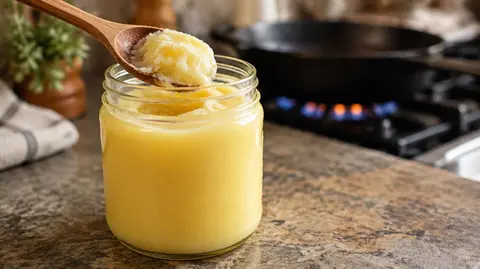
Opens as a firm, white-to-cream solid at room temperature. Clean appearance with no visible impurities, no water pockets, and no graininess. This is well-filtered tallow.
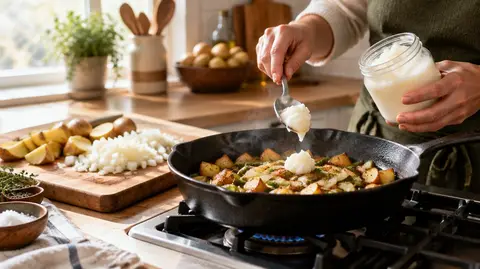
Melts steadily in a heated pan with no sputtering. At medium-high heat in a cast iron skillet, I got no visible smoke at 395F by infrared thermometer. The tallow coated the cooking surface evenly and held its position without pooling to the edges.
Fatworks avoids every quality red flag — no graininess, no water pockets, no yellowing. Our tallow color and quality guide covers what to look for in any product.
EPIC
Also opens as a firm, white-to-cream solid. Clean, well-rendered, no visible issues. EPIC’s quality control at scale is consistent.
Smoke point tested at approximately 390F, about 5 degrees below Fatworks. In practical terms, that difference is irrelevant. Both handle searing temperatures without smoke or bitterness. The only texture difference: EPIC had a very slightly more granular consistency when cold. Once melted, indistinguishable from Fatworks.
Round 2 Winner: Fatworks (barely)
Both perform well in the kitchen. Fatworks edges ahead with a marginally higher tested smoke point and slightly smoother texture when cold. Honestly, in a blind test, most cooks wouldn’t notice a difference once the tallow hits the pan.
Round 3: Cooking Results
Same test battery I use for every cooking fat. Same equipment, same cuts, back-to-back comparison.
Steak Searing
Cast iron, one tablespoon, room-temperature ribeye, 4 minutes per side.
Fatworks: Deep, even mahogany crust. The tallow contributed a clean savory note that enhanced the beef without overwhelming it.
EPIC: Very similar crust development with a slightly warmer golden-brown color. The flavor had a fractionally more pronounced beefy note. Both steaks were excellent.
Winner: Fatworks by a hair. Deeper crust color and slightly cleaner flavor profile. But an EPIC-seared steak is nothing to complain about.
French Fries
Double-fry method: 325F blanch, rest, 375F finish. Full technique in our beef tallow french fries guide.
Fatworks: Golden, crisp, classic. The tallow stayed clean through both rounds. Filtered well afterward. The fries had that nostalgic old-school fast food flavor everyone chases.
EPIC: Nearly identical results. Golden color, good crunch, clean flavor. The tallow had a touch more foam during the first fry, which is minor but noticeable if you’re paying attention. Fries tasted essentially the same as Fatworks.
The bigger difference is economics. One jar of Fatworks (14 oz) barely covers a small Dutch oven for frying. One jar of EPIC (11 oz) doesn’t even get there. You’d need 2-3 jars of either brand for a single fry session, which makes both absurdly expensive for deep frying.
If you plan to fry regularly, skip both and get a 100% Pure Grass Fed Tallow 4 lbs. It performs within 95% of both premium options at a fraction of the cost.
Winner: Tie. Same results. Same impractical economics for frying.
Eggs
Teaspoon of tallow, medium heat, scrambled eggs.
Fatworks: No smoke, no sticking, no perceptible flavor. The tallow disappeared into the eggs completely. This is what you want from a breakfast cooking fat — pure functionality.
EPIC: No smoke, no sticking. A barely-there savory note that most people wouldn’t notice unless tasting side by side with Fatworks. Not unpleasant, just slightly less invisible.
Winner: Fatworks. More neutral, which is what most people want at breakfast.
Biscuits
Cold tallow replacing butter in buttermilk biscuits, 425F for 14 minutes.
Fatworks: Excellent flaky layers. No detectable tallow flavor. The buttermilk and salt dominated. The biscuits were arguably flakier than butter versions because tallow is pure fat with no water content.
EPIC: Nearly identical results. Good layers, good rise, neutral flavor. I could not distinguish the EPIC biscuits from the Fatworks biscuits in a blind taste test, and I tried three separate times.
Winner: Tie. Genuinely indistinguishable in baking.
Round 3 Winner: Fatworks (2-0-2)
Fatworks wins on steak searing and eggs, ties on fries and biscuits. The differences are so small that most home cooks wouldn’t notice them outside of a side-by-side comparison. EPIC holds its own across every application. Our complete cooking tallow ranking shows where both fit in the broader market.
Round 4: Price and Value
This is where the comparison gets interesting, because both products are premium-priced but structured very differently.
Fatworks
14 ounces in a glass jar at premium pricing. You’re paying for grass-finished sourcing, small-batch rendering, glass packaging, and the brand name. Costco’s 2-packs and Walmart’s multipacks lower the per-jar cost if you have one nearby.
At daily cooking usage, a jar lasts about 3 weeks. That’s roughly 17 jars per year if tallow is your primary cooking fat. The annual cost is substantial.
EPIC
11 ounces in a glass jar. Per ounce, EPIC is actually MORE expensive than Fatworks. You’re getting 3 fewer ounces at a similar or slightly lower jar price. That math doesn’t work in EPIC’s favor.
At the same daily usage rate, an EPIC jar lasts about 2 weeks. That’s rapid turnover for a premium product. Annual cost is even higher than Fatworks.
What you’re paying for with EPIC is convenience. It’s the tallow you can pick up at a grocery store on a Tuesday evening without planning ahead. That convenience has real value if you’re the kind of cook who realizes they need tallow mid-recipe.
The Real Value Play
Neither of these is a good deal for everyday cooking. A 100% Pure Grass Fed Tallow 4 lbs gives you 64 ounces of quality grass-fed tallow. That’s more than four Fatworks jars or nearly six EPIC jars worth of product, at a dramatically lower per-ounce cost.
Is it USDA Organic? No. Does it cook close to Fatworks? In my experience, yes. For most home cooks, that trade-off is easy.
Round 4 Winner: Fatworks
More product per jar, a lower per-ounce cost, and warehouse-club multipacks. EPIC’s smaller jar at a similar price makes it the worst value proposition of the two. But both lose to bulk alternatives for daily cooking.
The Convenience Factor: EPIC’s Real Advantage
I’ve given Fatworks the edge in most categories, but I need to be fair about EPIC’s one overwhelming strength: you can actually find it.
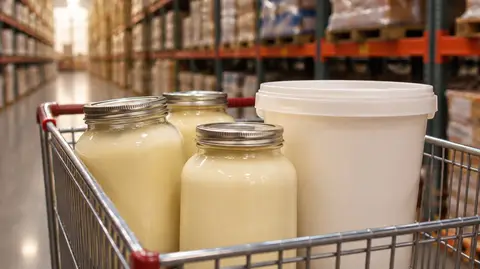
As of September 2026, EPIC Beef Tallow is listed on Whole Foods Market’s and Walmart’s websites, and it turns up at many natural and conventional grocers. Fatworks is listed on Costco’s site (grass-fed, organic and wagyu 2-packs) and Walmart’s, and sells direct at fatworks.com. In-store stock varies for both, so check your store’s app before you drive over. The where to buy beef tallow near me guide covers other local options.
For online ordering, both are equally available and ship quickly. The convenience gap only matters for in-store purchases.
If you’re the kind of cook who plans ahead and orders supplies in advance, this advantage doesn’t matter. If you’re the kind of cook who decides to make tallow fries at 5 PM on a Saturday, EPIC’s ubiquity is genuinely valuable.
Who Should Buy Which
Buy Fatworks If You:
- Want a USDA Organic option (buy the Fatworks Organic jar)
- Value independent, transparent sourcing
- Cook with tallow regularly and want the larger 14 oz size
- Prefer a neutral, clean flavor for versatile cooking
- Shop at Costco or Walmart and can grab a multipack
- Follow Whole30 or paleo and want verified compliance
Buy EPIC If You:
- Need tallow today and have a Whole Foods or well-stocked grocery store nearby
- Cook with tallow occasionally and don’t need large quantities
- Trust the Whole30 Approved label as sufficient verification
- Don’t want to order online and wait for delivery
- Already buy other EPIC products and appreciate the brand
Buy the Budget Alternative If You:
- Cook with tallow daily and volume matters
- Want grass-fed quality without premium pricing
- Plan to use tallow for frying where you need larger quantities
- Prioritize value per ounce over certifications or brand cachet
Check 100% Pure Grass Fed Tallow 4 lbs on Amazon
Final Winner
Fatworks wins 3-0-1. It beats EPIC on ingredients and sourcing, kitchen performance (barely), cooking results, and value. The only area where EPIC holds a legitimate advantage is retail availability, which I didn’t score as a round because it’s situational rather than product-quality related.
The performance gap between these two is small. If you removed the labels and had me cook with both blind, I might not pick the winner every time. Fatworks is the better product on paper and in my side-by-side results. EPIC comes very close, and it’s on more grocery shelves.
The real takeaway from this comparison isn’t which premium tallow to buy. It’s that both are overpriced for everyday cooking. A 4 lb grass-fed tallow tub delivers comparable cooking performance at a dramatically lower cost. Save the Fatworks and EPIC money for a special occasion sear, and use the bulk option for everything else.
For more on how these brands compare to the broader market, our best cooking tallow guide ranks eight brands from budget to premium. And for a deep dive into Fatworks specifically, read our complete Fatworks review.
FAQ
Is Fatworks really worth the price over EPIC?
For slightly cleaner flavor, 3 more ounces per jar, and the option of a USDA Organic jar, yes. If those factors don’t matter to you and convenience does, EPIC is perfectly acceptable. The performance difference is smaller than the price difference suggests.
Is EPIC still a good product after being acquired by General Mills?
Yes. The tallow quality is solid and consistent. The acquisition changed EPIC’s supply chain and distribution, not the product specs. Whether you want to support a General Mills brand versus an independent producer is a personal decision.
Where can I buy Fatworks and EPIC tallow?
Both are on Amazon (Fatworks, EPIC). In stores, Fatworks 2-packs are listed at Costco, and both brands are listed on Walmart’s site. EPIC is also listed at Whole Foods. Stock varies by location.
Can I use either of these for skincare?
Cooking tallow and skincare tallow have different standards. Cooking tallows are food-grade and safe, but they’re not formulated for skin application. They lack the whipped textures and complementary oils that make skincare-specific products more pleasant to use. For skin, look at purpose-made tallow balms instead.
How do I store these after opening?
Refrigerate after opening. Both last 12-18 months in the fridge. Keep the lid tight to prevent the tallow from absorbing refrigerator odors. The glass jars both brands use help with this. For complete storage guidance, see our tallow storage guide.
Why is EPIC more expensive per ounce than Fatworks?
The jar prices are similar, but EPIC’s jar holds 3 fewer ounces, so its per-ounce cost comes out higher. EPIC is positioned as a grab-and-go grocery product, not a value buy. The 11-ounce jar size keeps the sticker price approachable while the per-ounce cost stays high.
Which is better for cast iron seasoning?
Both work well for seasoning cast iron. The higher smoke point of the two (Fatworks at ~395F) means a slightly better polymerization at standard seasoning temperatures, but both create durable, effective seasoning layers. For seasoning purposes, a cheaper tallow works equally well since you’re burning it into the pan anyway.
Explore more tallow guides
Browse our collection of recipes, comparisons, reviews and DIY tutorials.
View all guidesKing Tallow is reader-supported. We research and test the products we recommend, and when you buy through links on this page we may earn a commission at no extra cost to you. See our affiliate disclosure.
Published · Last updated