EPIC Beef Tallow Review: Grass-Fed Grocery Store Tallow, Rated
Independent reviewEPIC rendered beef tallow review: what's in the 11 oz jar, how it sears and fries, the General Mills question, where to buy it, and when bulk is a better buy.

Quick verdict: EPIC rendered beef tallow is a clean, single-ingredient, grass-fed cooking fat that you can usually buy on the same trip as your groceries. It sears, roasts and bakes well. The drawbacks are value and volume: the 11 oz jar is small, it costs about the same per ounce as larger premium jars, and it runs out after one batch of deep-fried anything. Rating: 3.7 out of 5. Check the current price of EPIC Beef Tallow on Amazon.
We test and research the products we recommend. If you buy through our links, we may earn a commission at no extra cost to you.
| EPIC Beef Tallow at a glance | |
|---|---|
| Jar size | 11 oz glass jar |
| Ingredients | Beef tallow (one ingredient) |
| Sourcing claim | Grass-fed beef (label does not say grass-finished) |
| Certifications | Whole30 Approved; not USDA Organic |
| Owner | General Mills (since 2016) |
| Price tier | $ per jar, premium per ounce |
| Best for | Searing, eggs, roasting, baking, one-off recipes |
| Not great for | Deep frying, bulk use, skincare DIY |
Who Makes EPIC Tallow (and the General Mills Question)
EPIC Provisions started in Austin, Texas, in 2013. Founders Taylor Collins and Katie Forrest built the brand on meat bars and regenerative-ranching language before expanding into bone broth and rendered fats. General Mills bought EPIC in 2016, and the founders stayed on for several years after the sale.
That ownership comes up in almost every comment thread about EPIC. For part of the carnivore and ancestral-health crowd, a multinational owner is a reason to skip the jar on principle, with the worry that sourcing or formulas could shift quietly over time.
Across the six-plus jars I have bought over two years, I haven’t seen a quality change. The label still lists one ingredient and still says grass-fed. The practical upside of the corporate owner is distribution: as of September 2026, EPIC Beef Tallow is listed on both Whole Foods Market’s and Walmart’s websites, which is why it is often the only tallow on the shelf at a regular grocery store. Stock varies by location.
If you would rather buy from an independent producer, Fatworks (Colorado-based and founder-run) is the closest like-for-like jar. My Fatworks vs EPIC comparison covers that matchup in detail.
What’s in the Jar
- Size: 11 oz (312 g) glass jar with a metal lid
- Ingredients: Beef tallow. No added oils, no rosemary extract or other antioxidants
- Source: Grass-fed US beef. EPIC does not own the herds
- Certification: Whole30 Approved. No USDA Organic version at the moment
- Rendering method: Not specified on the packaging
- Storage: Shelf-stable unopened; the jar says to refrigerate after opening
The one spec worth noticing is what the label leaves out. It says grass-fed, not grass-finished. Grass-finished means the animal ate grass through slaughter; grass-fed alone can include a grain finish, and the finishing diet has the biggest effect on the fat’s omega-3 and CLA content. If that difference matters to you, the grades and quality standards guide explains what to look for, and grass-fed vs grain-fed tallow covers the fatty-acid side.
EPIC also sells a bison tallow in the same 11 oz jar. See bison tallow vs beef tallow if you are deciding between them.
Texture, Smell, and Color
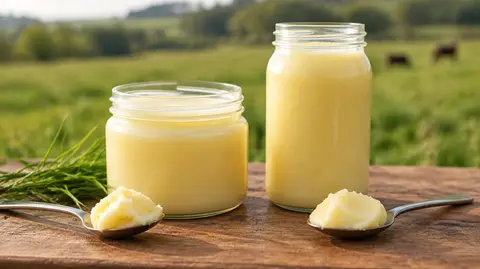
At room temperature EPIC is firm but not waxy. A butter knife goes in with some pressure, and a scoop softens between your fingers in about 20 seconds. The jar is uniform top to bottom, with no soft oily layer over harder fat and no graininess at the edges.
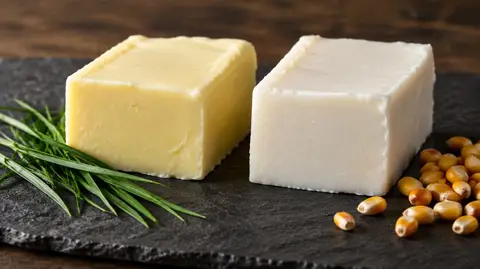
The color is pale cream with a faint yellow tint, which is typical of grass-fed fat (carotenoids from pasture). Melted, it turns a clear gold, a little darker than clarified butter.
Out of the jar it smells mildly beefy, a bit stronger than Fatworks and much milder than home-rendered grocery-store suet. The smell mostly disappears during cooking, except when you sear steak, where it adds to the aroma. Because it is not deodorized, it is not a good base for skincare projects.
How It Cooks
I use EPIC the way I use every cooking fat: searing, frying, eggs, roasting and baking in a home kitchen.
Steak searing
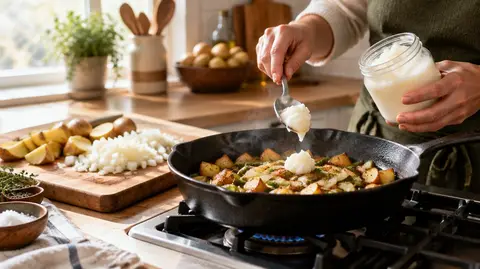
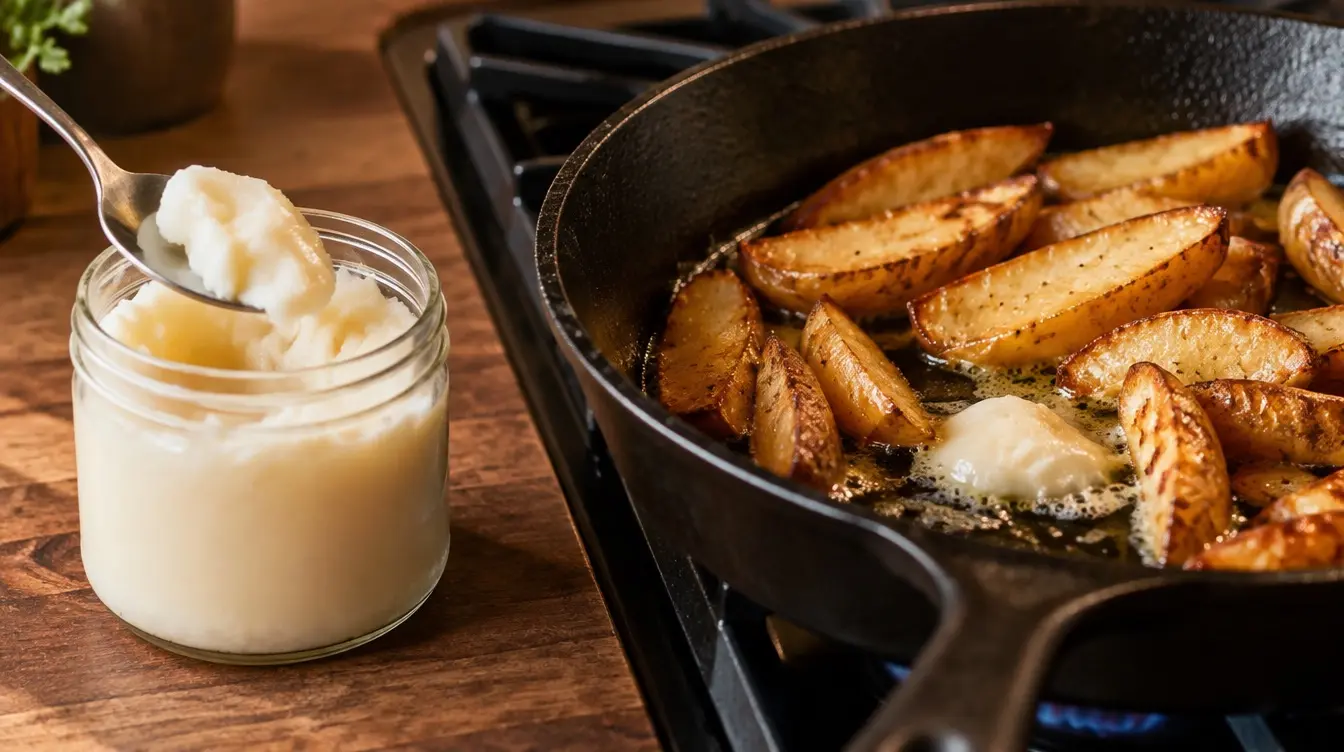
A tablespoon in a cast iron skillet over medium-high heat melts fast and coats the pan evenly. It produced an even, deep-brown crust on a New York strip with only a faint wisp of smoke near the top of the pan’s range. It is slightly beefier than Fatworks and still subtle next to butter. Tallow’s saturated fat content is why it holds up at searing temperatures; the smoke point guide has the numbers, and the beef tallow steak recipe shows the method.
French fries and deep frying
The fries are good: double-fried at 325°F and then 375°F, they came out golden and crisp, the tallow foamed very little, and the flavor was the old-school fast-food taste people want from McDonald’s-style tallow fries.
The problem is volume. A small Dutch oven needs roughly 24 to 32 oz of fat, so one batch uses two or three jars. Strained, a batch of EPIC gave me about three fry sessions before it darkened. That is fewer than Fatworks gave me and more than the cheapest tubs. For regular frying, buy a bulk tub (see best beef tallow for deep frying) and keep EPIC for small jobs. The guide on how to reuse beef tallow after frying covers straining.
Eggs, vegetables, and everyday cooking
This is where EPIC fits best. A teaspoon for eggs or a tablespoon for sautéed vegetables makes a jar last weeks, and the small jar fits in the fridge door. Scrambled eggs come out mildly rich without sticking, and Brussels sprouts tossed in melted EPIC and roasted at 425°F browned better than they do in olive oil.
Biscuits and baking
Cold EPIC tallow cut into flour in place of butter gave flaky biscuits. Tallow has no water, so the layers separate cleanly, and the flavor stayed neutral enough that the biscuits tasted like biscuits. The beef tallow baking substitution guide has the ratios.
What We Liked
- Easy to find. Whole Foods and Walmart both list it online, and it shows up at many other grocers. You can have it for dinner tonight without waiting for shipping.
- Consistent jars. Jars from different stores over several months looked, smelled and cooked the same.
- One ingredient. Nothing added to keep it soft, and nothing to preserve it.
- Whole30 Approved, which matters if you follow the program.
- Glass jar that doesn’t pick up fridge odors and can be reused for storing your own rendered fat.
What Could Be Better
- Small jar. At 11 oz, anyone who cooks with tallow several times a week will buy a new jar every few weeks.
- Value. EPIC costs about the same per ounce as larger premium jars and roughly twice as much per ounce as a 4 lb tub. Check current prices before you buy, because grocery and Amazon prices vary a lot.
- Grass-finished isn’t specified, and there is no USDA Organic or third-party regenerative certification (such as Land to Market). Some smaller producers do carry those.
- Corporate ownership is a deal-breaker for some buyers, even if it hasn’t changed the product.
Price and Value
| Tallow | Size | Price tier | Per-ounce value |
|---|---|---|---|
| EPIC Beef Tallow | 11 oz jar | $ per jar | Premium (small jar) |
| Fatworks Grass-Fed | 14 oz jar | $ per jar | Premium, slightly more per jar |
| South Chicago Packing Wagyu | 42 oz tub | $$ | Mid |
| Generic grass-fed tub | 4 lb tub | $$ | Best |
At the jar level, EPIC and Fatworks cost about the same, and Fatworks gives you three more ounces. Bulk tubs win on per-ounce cost by a wide margin. The beef tallow price guide goes through what a fair price per pound looks like by format.
Rendering your own from butcher suet costs less still, but it takes an afternoon and leaves the kitchen smelling of beef. I do both: I render bulk batches every couple of months and keep a jar of EPIC in the fridge for spur-of-the-moment cooking. The rendering equipment guide and rendering safety guide cover the DIY route.
Who Should Buy EPIC
Buy it if:
- You want tallow tonight from a store you already shop at
- You cook with tallow a few times a week, mostly for searing, eggs or roasting
- You want a small jar that fits in the fridge door, or a backup jar for spontaneous cooking
- Whole30 approval matters for your protocol
Skip it if:
- You deep fry regularly and need volume
- You want explicit grass-finished, organic or regenerative certification
- General Mills ownership is a deal-breaker
- You need a deodorized base for balms or soap (Traverse Bay is the better fit; see the Traverse Bay review)
Cheaper alternative for heavy use: a 4 lb tub of 100% grass-fed beef tallow costs much less per ounce and works for frying and everyday cooking. You give up the retail convenience and the Whole30 label.
Frequently Asked Questions
Is EPIC beef tallow really grass-fed?
The label says grass-fed, and the pale-yellow color and mild beef aroma are consistent with pasture-raised fat. The label does not say grass-finished, which is the more meaningful spec for fatty-acid content. If that matters to you, look for tallow labeled “100% grass-fed and grass-finished.”
Who owns EPIC Provisions?
General Mills has owned EPIC since 2016. The brand was founded in Austin, Texas, in 2013 by Taylor Collins and Katie Forrest.
Did EPIC tallow change after General Mills bought it?
I started using it in 2024, so I can’t compare it with the pre-acquisition product. The current jars are clean, well rendered and consistent from jar to jar.
Where can I buy EPIC beef tallow?
As of September 2026 it is listed on Whole Foods Market’s and Walmart’s websites, and it is sold on Amazon as single jars and multipacks. In-store stock varies, so check your store’s app or locator. The where to buy beef tallow near me guide covers other local options.
How long does an 11 oz jar last?
If you cook with tallow two or three times a week, about three to four weeks. For occasional searing and eggs, about six weeks. Heavy users go through a jar every two to three weeks.
How does EPIC compare to Fatworks?
They are closer than people assume. Both are clean, well-rendered, grass-fed jars with Whole30 approval. Fatworks gives you more tallow per jar, has a separate USDA Organic version, and is independently owned. EPIC is often easier to find in regular grocery stores. See Fatworks vs EPIC and the Fatworks review.
Can I use EPIC beef tallow for skincare?
You can, but it isn’t deodorized, so a faint beef note comes through in balms. For DIY skincare, a deodorized base like Traverse Bay 32 oz is a better starting point.
Bottom Line
EPIC Beef Tallow does what it says. It is a clean, single-ingredient, grass-fed fat that works reliably for searing, pan-frying, roasting and baking, and you can often buy it on a normal grocery run. The quality is good. The weak points are jar size and price per ounce, so it makes the most sense for occasional cooks and people who want tallow today.
If tallow becomes a daily fat in your kitchen, move to a bulk tub for frying and keep a small jar like EPIC for everything else. The best beef tallow for cooking roundup compares the whole field.
Check the current price of EPIC Beef Tallow (11 oz) on Amazon
Explore more tallow guides
Browse our collection of recipes, comparisons, reviews and DIY tutorials.
View all guidesKing Tallow is reader-supported. We research and test the products we recommend, and when you buy through links on this page we may earn a commission at no extra cost to you. See our affiliate disclosure.
Published · Last updated