


Beef Tallow French Fries: How to Make Crispy Tallow Fries at Home
Reader-supportedBeef tallow french fries at home: Russets, cold soak, 325F blanch, 375F finish. How much tallow each pot or fryer needs, the gear, and how to reuse the fat.

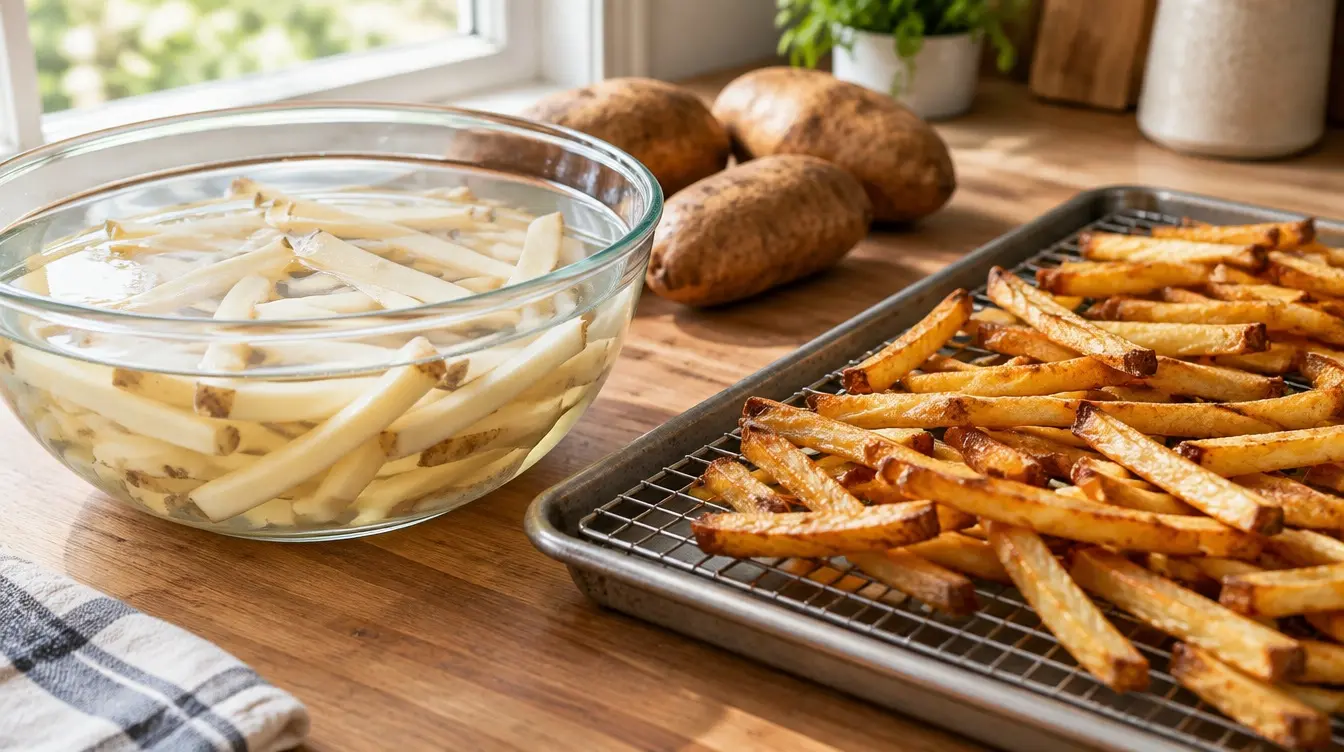
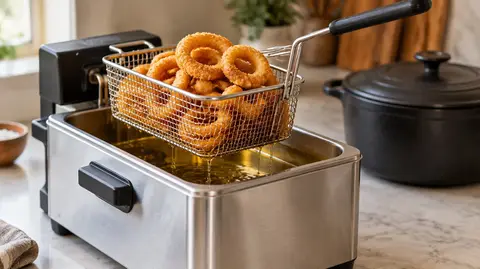
To make beef tallow french fries, cut Russet potatoes into 1/4-inch sticks, soak them in cold water for at least 30 minutes, and dry them completely. Fry them once in tallow at 325°F for 5 to 7 minutes until cooked through but pale, rest them for 10 minutes or longer, then fry again at 375°F for 2 to 4 minutes until golden. Salt them the moment they leave the fat.
That is the whole method. The rest of this guide covers how much tallow your pot or fryer needs, the gear that makes temperature control easy, and how to strain the tallow so one batch of fat covers several rounds of fries.
We test and research the products we recommend. If you buy through our links, we may earn a commission at no extra cost to you.
Beef Tallow French Fries at a Glance
| Step | Temperature | Time | What you’re after |
|---|---|---|---|
| Soak cut Russets | Cold water | 30 min to overnight | Rinse off surface starch |
| Dry | Room temp | Until no visible moisture | No spatter, no temperature crash |
| First fry (blanch) | 325°F | 5 to 7 min | Cooked through, still pale and limp |
| Rest | Room temp or fridge | 10 min to overnight | Surface dries, interior sets |
| Second fry (finish) | 375°F | 2 to 4 min | Golden, crisp shell |
| Salt | Immediately | Within seconds | Salt sticks to the hot surface |
Why Tallow Makes Better Fries
Beef tallow is rendered beef fat. By USDA figures it is roughly 50% saturated, 42% monounsaturated and 4% polyunsaturated fat. Saturated and monounsaturated fats resist oxidation better than the polyunsaturated fats that dominate soybean and corn oil, so tallow holds up well across a long frying session and through several reuses.
Its smoke point is usually cited around 400°F to 420°F, which leaves a comfortable margin above the 375°F finishing fry. The beef tallow smoke point guide covers why the number varies between batches and what lowers it.
Tallow also adds a mild savory, beefy flavor that neutral oils do not. That flavor is the reason tallow fries have a following, and it is what fast-food fries tasted like before the chains switched fats. The history of that switch is in our McDonald’s beef tallow fries article.
How Much Tallow You Need
Melted tallow weighs about 0.9 grams per milliliter, so one quart of liquid tallow is roughly 1.9 pounds. Use that to size your purchase:
| Vessel | Fat capacity | Melted tallow | Approx. weight of tallow |
|---|---|---|---|
| 6-quart Dutch oven | Fill no more than halfway | 2 to 3 quarts (1.5 to 2 inches deep in a wide pot) | 3.75 to 5.5 lb |
| Presto FryDaddy | 4 cups (per Presto) | 1 quart | About 1.9 lb |
| T-fal 3.5L fryer | 3.5 liters (per T-fal) | About 3.7 quarts | About 7 lb |
| Cuisinart 4-quart fryer | 4 quarts (per Cuisinart) | 4 quarts | About 7.5 lb |
A 4-lb tub of grass-fed tallow covers a Dutch oven or a FryDaddy with some left to top up. A 3.5 to 4-quart electric fryer needs closer to 7 or 8 pounds, which is where a bulk tub such as the Cornhusker Kitchen 7.5 lb makes more sense. The best beef tallow for deep frying guide compares bulk options by pot size, and the best deep fryer for beef tallow guide covers which electric fryers handle solid fat well.
What You Need
- About 3 pounds of Russet potatoes. Russets are high in starch and low in moisture, which gives a fluffy interior and a crisp shell. Yukon Golds work but come out creamier and less crunchy. Red and new potatoes are too waxy and turn limp.
- Beef tallow, sized from the table above.
- A heavy pot or an electric fryer. A heavy pot holds temperature when cold potatoes go in. An enameled 6-quart Lodge Dutch oven is a common choice because the cast iron keeps the fat steady and the enamel cleans up easily. If you fry often, an electric fryer with a thermostat takes the guesswork out; see the deep fryer guide.
- A clip-on frying thermometer if you use a pot. The 325°F and 375°F targets are too close to judge by eye. A digital clip model such as the ThermoPro TP509 stays in the fat the whole time, so you can see the temperature drop when a batch goes in and recover before the next one.
- A spider strainer for lifting fries in and out. A wire spider skimmer drains faster than a slotted spoon and lets you scoop a whole batch at once.
- A wire rack over a sheet pan for resting and draining.
- Fine salt. Fine sea salt or flaky kosher salt clings better than coarse crystals.
Step-by-Step Method
1. Cut the potatoes
Wash the potatoes. Peeling is optional; skin-on fries have a little more texture and look rustic. Cut into even sticks about 1/4 inch thick. Thinner shoestrings cook faster and crisp hard; 1/2-inch steak fries stay softer inside. Whatever size you choose, keep it consistent so each batch finishes at the same time. A fry cutter or mandoline helps.
2. Soak in cold water
Put the cut potatoes in a bowl of cold water and stir to release surface starch. Soak at least 30 minutes, or up to overnight in the fridge. Change the water once if it turns cloudy. Surface starch left on the potato browns unevenly and makes the outside gummy.
3. Dry thoroughly
Drain and spread the sticks on clean kitchen towels, then pat dry. Water on the potatoes makes hot fat spit and drops its temperature fast. This step matters more than most people expect.
4. Heat the tallow to 325°F
If your tallow is solid, melt it gently in the pot over medium-low heat first, then bring it to 325°F. In an electric fryer with an immersed heating element, melt the tallow on the stove and pour it in rather than melting a solid block around the element; the fryer guide explains why.
5. First fry at 325°F
Fry in small batches: about 5 to 7 ounces of potatoes per quart of fat is a good ceiling. Overloading drops the temperature, and the fries soak up fat instead of cooking. Fry for 5 to 7 minutes. The fries should turn from raw white to a faint cream color and droop when lifted. If they brown at this stage, the fat is too hot.
6. Rest
Lift the fries onto the wire rack and rest them at least 10 minutes. The interior keeps cooking from residual heat while the surface dries, which is what lets the second fry build a thin, crisp shell. You can also refrigerate blanched fries for several hours or overnight and finish them just before serving.
7. Second fry at 375°F
Bring the tallow to 375°F. Fry the blanched fries in batches for 2 to 4 minutes until deep golden. The vigorous bubbling slows as the moisture near the surface cooks off, which is a good sign they are nearly done. Let the fat recover to 375°F between batches.
8. Salt and serve
Lift onto the rack and salt immediately while the surface is still slick with hot fat. Wait 30 seconds and much of the salt slides off. Tallow fries are best within the first few minutes and still good for about 15. To hold a batch, keep them on a rack in a 200°F oven, uncovered.
Oven-Baked Tallow Fries
For a lower-effort version, toss dried potato sticks in 2 to 3 tablespoons of melted tallow and spread them in one layer on a sheet pan. Bake at 425°F (convection if you have it) for 30 to 40 minutes, flipping halfway. Crowded fries steam instead of crisp, so use two pans if needed. The result is crisp-edged and flavorful, but it does not match the crunch of the double fry.
Straining and Reusing the Tallow
Tallow can be reused several times if you strain it after each session.
- Let the fat cool until it is warm but still fully liquid. Hot fat is a burn hazard; fat that has started to solidify will not pass through a filter.
- Pour it through a fine-mesh strainer lined with grade 90 cheesecloth. For clearer fat, run it a second time through a #4 paper coffee filter set in the strainer. Small burnt potato bits left in the fat speed up breakdown on the next use.
- Store it in a covered container. It keeps longest in the fridge, where it sets into a solid block you can melt down next time. Our storage guide covers fridge and freezer timelines.
Fat used only for potatoes stays cleaner than fat used for breaded or battered foods. Many cooks get 5 to 8 potato sessions from one batch, though the real limit depends on how hot you ran it and how well you strained it. Discard it when it darkens noticeably, foams persistently, smokes at normal frying temperatures, or smells sharp or rancid. The reuse guide goes through those signs in detail, and does beef tallow go bad covers spoilage in storage.
Top up with fresh tallow as needed to keep the frying depth.
Troubleshooting
| Problem | Likely cause | Fix |
|---|---|---|
| Greasy, soft fries | Fat below temperature, or batches too big | Wait for the thermometer; fry smaller batches |
| Brown outside, raw inside | Skipped the blanch or fat too hot | Use the 325°F first fry |
| Fries stick together | Wet potatoes or fat not hot enough | Dry thoroughly; stir gently in the first minute |
| Uneven color | Mixed thicknesses | Cut evenly or use a fry cutter |
| Fat smokes below 375°F | Old, dirty, or poorly strained tallow | Strain through a coffee filter or replace |
| Salt won’t stick | Salted too late | Salt as they come out of the fat |
Frequently Asked Questions
Can I use frozen fries?
Yes. Most frozen fries are already blanched, so skip the soak and first fry. Fry them from frozen at 350°F to 375°F for 3 to 6 minutes, following the bag’s guidance, in small batches so the temperature does not crash.
Do I have to fry twice?
For standard 1/4-inch or thicker fries, yes. A single hot fry browns the outside before the inside cooks; a single low fry leaves them pale and soft. Very thin shoestrings can be cooked in one fry at about 350°F to 360°F because they cook through quickly.
Is tallow healthier than vegetable oil for fries?
Tallow is more heat-stable than oils high in polyunsaturated fat, so it forms fewer oxidation products under long frying. It is also high in saturated fat, and dietary guidelines still recommend limiting that. Our look at what nutrition science says about tallow lays out both sides. Fries are an occasional food either way.
Can I use the leftover tallow for other cooking?
Yes. Strained fry tallow works well for searing steak, frying eggs, and roasting potatoes. See searing steak in tallow and frying eggs in tallow for ideas.
Which tallow should I buy for fries?
Any clean, food-grade beef tallow works. For the pot sizes in this guide, a 4-lb grass-fed tallow is enough for a Dutch oven, while an electric fryer justifies a bulk tub. We compare brands in best beef tallow for french fries.
Further Reading
- French fries in beef tallow: the quick-reference page for tallow fries
- Deep frying with beef tallow: other foods worth frying in tallow
- Best Deep Fryer for Beef Tallow
- McDonald’s Beef Tallow Fries: History and a Copycat Recipe
- How to Render Beef Tallow at Home
- How to Filter and Strain Beef Tallow
Explore more tallow guides
Browse our collection of recipes, comparisons, reviews and DIY tutorials.
View all guidesKing Tallow is reader-supported. We research and test the products we recommend, and when you buy through links on this page we may earn a commission at no extra cost to you. See our affiliate disclosure.
Published · Last updated