Skip to content
King TallowKing Tallow
Pacific Northwest Region

Where to Buy Beef Tallow in Oregon

Buy beef tallow in Oregon at New Seasons Market, Market of Choice, and Gartner's Meats in Portland, or direct from Willamette Valley and Wallowa County ranches like Carman Ranch and Painted Hills. Expect $4 to $7 per pound for raw suet from a butcher and $13 to $18 per pound for finished grass-fed jars. Fall slaughter from late September through December is the best buying window.

Last updated May 26, 2026 by Miles Carter

Cattle ranking
23rd nationally
Head of cattle
Approximately 1.10 million head (USDA NASS 2026)
Typical $/lb
$5.50 raw suet, $14 finished retail jar
Best months
September through December
Grass-fed
Strong throughout the Willamette Valley and eastern high desert. Country Natural Beef cooperative is Oregon-headquartered.
Major cities
Portland, Salem

Why Oregon matters for beef tallow

Oregon sits 23rd in head count but holds the distinction of having birthed Country Natural Beef, one of the longest-running grass-fed cooperatives in the country. That cooperative culture trickles down to small-farm rendering and gives Portland buyers an unusually clean local supply chain.

Country Natural Beef changed the supply curve

Started in 1986 by 14 Oregon ranch families, this cooperative now spans the Pacific Northwest and Great Basin. Their model of pooled marketing for small grass-fed operations means a Wallowa County rancher with 40 head can sell tallow under a recognizable label rather than through a commodity broker. New Seasons Market carries the cooperative's beef and renderings directly.

Willamette Valley pasture is some of the best in the country

Mild wet winters and dry summers produce orchard grass, ryegrass, and white clover blends that finish cattle on forage alone. Animals from Carman Ranch (Wallowa) and the Willamette Valley small farms ship leaf fat with a deeper carotenoid color than most grass-fed product anywhere outside Patagonia.

Portland's food scene drives demand for cosmetic-grade tallow

Le Pigeon, Higgins, and Olympia Provisions buy from the same farms that supply farmers market vendors. That keeps small renderers in business and means a home buyer has a real shot at finding $16 to $20 per pound cosmetic-grade tallow from a single farm, not blended commodity product.

Eastern Oregon has open range and old rendering traditions

Harney County, Wallowa County, and the John Day River basin run cattle on millions of acres of BLM and private rangeland. Painted Hills Natural Beef (Fossil, OR) is the visible brand from this region. Locker plants in Burns, Enterprise, and Prineville handle a lot of the suet that never makes it onto retail shelves.

Regional context

Climate

Marine and Mediterranean west of the Cascades, semi-arid high desert east. Willamette Valley pasture grows October through June; eastern Oregon grazes spring through fall with hay winters.

Terrain

Coastal range, Willamette Valley floor, Cascade foothills, central Oregon plateau, Wallowa Mountains, Steens and Trout Creek country in the southeast.

Feed practices

Willamette Valley small farms run rotational grass year-round with hay supplementation December through February. Wallowa and Harney County operations graze open range spring through fall. Painted Hills runs a grass-fed, grain-finished program for consistency.

In-state rendering

Small renderers operate at the farm level and through butcher partnerships. Country Natural Beef coordinates rendering through member ranches. Industrial rendering goes through Pacific Coast Renderers in Tacoma and Baker Commodities in Kent on the WA side; in-state industrial volume is small. For cosmetic-grade work, ask for leaf fat rendered wet under 220 F.

Where to buy beef tallow in Oregon

1

Local butchers and meat markets

Gartner's Meats (Northeast Portland) is the institution. They sell rendered tallow in jars and raw suet by the pound. Old Salt Marketplace (North Portland) carries small-batch rendered tallow from their own butchery. Chop Butchery (Portland Pearl District) stocks tallow seasonally. Long's Meat Market (Eugene) is the workhorse Willamette Valley shop. Newport Avenue Market (Bend) and Primal Cuts (Bend) handle central Oregon. In eastern Oregon, Valley Meat Service (La Grande) and Carlton Farms (technically Carlton in the valley) cover the rest of the state.

2

Farmers markets

Portland Farmers Market at PSU (Saturdays year-round) is the largest. Multiple grass-fed vendors carry rendered tallow including Sweet Home Farms and Square Peg Farm. Hollywood Farmers Market (Saturdays in season) and People's Co-op Farmers Market (Wednesdays year-round) are smaller but reliable. Eugene Saturday Market and Lane County Farmers Market run April through November. Bend Farmers Market (Wednesdays in season) brings central Oregon ranches. Salem Saturday Market and Corvallis Farmers Market round out the valley circuit.

3

Ranches and direct-to-consumer

Carman Ranch (Wallowa) ships rendered tallow statewide and carries American Grassfed certification. Painted Hills Natural Beef (Fossil) is a multi-ranch program that sells finished tallow through retail and direct channels. Square Peg Farm (Forest Grove) is a Willamette Valley operation with regular Portland market presence. Sweet Briar Farms (Tillamook), Tails and Trotters (Portland charcuterie that sources locally), and Eagle Creek Ranch (Eastern Oregon) all run direct-to-consumer programs. Country Natural Beef cooperative member ranches sell through their pooled channels.

4

Specialty and natural grocers

New Seasons Market (multiple Portland metro and Salem locations) is the most consistent retail source for grass-fed tallow jars. Market of Choice (Eugene, Portland, Bend, Ashland) carries seasonal local tallow. Whole Foods locations in Portland, Bend, and Beaverton stock national brands. Food Front Cooperative (Northwest Portland) keeps small-batch local tallow. People's Food Co-op (Portland) and Alberta Cooperative Grocery round out the co-op trail. In Bend, Newport Avenue Market doubles as a butcher and grocer. In Ashland, Ashland Food Co-op carries grass-fed jars.

Reliable online options that ship to Oregon

We test and research the products we recommend. If you buy through these links we may earn a commission at no extra cost to you.

What to look for on the label

Oregon uses federal USDA grades plus an active state-level certification trail. Oregon Tilth Certified Organic and the Oregon Country Beef program are the two labels most worth knowing.

Label What it means
USDA Prime / Choice / Select Carcass marbling grade. Affects steak quality but not tallow quality in any meaningful way. Pay for Prime steaks, not for Prime suet.
100% Grass-Fed and Grass-Finished Cattle on forage from weaning to slaughter. Higher CLA, more carotenoids, deeper yellow color in the finished tallow. Carman Ranch and Country Natural Beef both carry this claim on appropriate cuts and renderings.
Oregon Tilth Certified Organic Strict organic certification covering pasture management, no synthetic inputs, no antibiotics. Square Peg Farm and several small Willamette Valley operations carry this. Indicates a clean rendering supply chain.
American Grassfed Association certified Third-party grass-fed verification with audit trail. Carman Ranch holds this. Means what it says, no grain ever, no confinement.
Country Natural Beef cooperative Not a certification, but a producer-owned cooperative label. Members are family ranches running grass-fed or hay-finished programs to a published cooperative standard. The visible label at New Seasons Market.

What it actually costs in Oregon

Oregon prices run close to Washington's and well above Midwest commodity pricing. Direct-from-ranch buys are the best value if you have flexibility on form (raw versus rendered).

Tier Per pound
Raw suet from a butcher (frozen, unrendered) $3 to $6
Conventional rendered tallow, food-grade $8 to $11
Grass-fed rendered tallow, retail jar $13 to $16
Cosmetic-grade leaf tallow, small-batch $16 to $22
Specialty grocer premium (single-farm) $18 to $25

When to buy

Oregon's slaughter rhythm follows the same fall-heavy pattern as Washington, with eastern Oregon ranches finishing in late summer and the Willamette Valley running later into December.

Spring (March to May)

Fall-rendered inventory still moves through retail. Raw suet harder to find. Good time for retail jar shopping at New Seasons or Market of Choice.

Summer (June to August)

Lowest supply, especially for raw suet. Farmers market vendors thin out their tallow stock. Pre-order from Carman Ranch or Painted Hills if you need DIY base.

Fall (September to November)

Best buying window. Eastern Oregon ranches finish in late September; Willamette Valley runs October through November. Butchers have the most suet of the year and prices ease.

Winter (December to February)

Strong supply continues through holidays. January is the quiet sweet spot for bulk DIY buys at the butcher counter.

Where to look outside Oregon

Oregon borders Washington, California, Idaho, and Nevada. The most useful cross-border options are to the north and south for retail jars and east for ranch-direct bulk.

Washington

3 hours from Portland to Seattle

PCC Community Markets and Metropolitan Market are within 3 hours of Portland. Skagit River Ranch and Sea Breeze Farm ship direct.

Try: PCC Community Markets (multiple Seattle metro locations); Skagit River Ranch (Sedro-Woolley)

Idaho

6 hours from Portland to Boise; 2 hours from Wallowa to Lewiston

Northern Idaho ranches sit close to Wallowa County and share grass-fed traditions. Alderspring Ranch in May, Idaho is the standout shipper.

Try: Alderspring Ranch (May, ID); Pilgrim's Market (Coeur d'Alene, ID)

California (Northern)

5 hours from Ashland to Redding; 8 hours to the Bay Area

Marin and Sonoma County ranches share Pacific coast grass-fed culture. Worth the drive only if you are already heading south.

Try: Marin Sun Farms (Point Reyes); Stemple Creek Ranch (Tomales)

Render it yourself

Oregon butchers will sell you raw suet cheap if you ask, especially around fall slaughter. Walk through the full home rendering method at /blog/how-to-render-beef-tallow-at-home-step-by-step-guide/, then put your finished tallow to work with the tallow soap recipe for a winter Portland kitchen project, or the tallow face cream guide for damp-climate skin support. A single pound of suet rendered well will run roughly six 4 oz cosmetic jars.

How locals cook with it in Oregon

Oregon cooking leans on foraged mushrooms, salmon, hazelnuts, and pasture-finished beef. These five dishes are where tallow earns its keep in a Pacific Northwest kitchen.

Black trumpets and chanterelles from Coast Range foraging cook beautifully in 2 tablespoons of tallow at 400 F for 8 minutes. The fat coats the gills and holds onto thyme and shallot better than butter, which scorches at that temperature.

Pinto beans, smoked tallow, onion, garlic, and a beef knuckle simmered six hours. This is the eastern Oregon and Walla Walla ranch standard. Render 2 tablespoons of tallow in the pot bottom, sweat aromatics, add soaked beans and 6 cups water, simmer at 200 F.

Hazelnut producers cluster around the Willamette Valley. Skin-on raw filberts fried in 1 inch of tallow at 350 F for 4 minutes hit a savory roasted profile that dry-roasting cannot match. Salt off-heat with smoked paprika.

Render 1 tablespoon of king salmon belly fat into 3 tablespoons of warm tallow. Brush onto a tri-tip or hanger steak before high-heat grilling. The blend bastes the surface and adds umami depth from the fish fat.

Substitute half the butter in a standard pie crust with chilled cosmetic-grade tallow. The dough flakes harder and stays crisp under the wet marionberry filling. Cut tallow to pea size, ice water, no sugar.

Local & Regional Brands

Country Natural Beef

Carman Ranch

Painted Hills Natural Beef

Oregon Sourcing Tips

  • Portland has excellent farmers markets
  • Eastern Oregon has many grass-fed operations
  • Gartner's Meats is a Portland institution
  • Look for Country Natural Beef (Oregon-based cooperative)

Major Cities in Oregon

Portland Salem Eugene Bend Medford

These cities typically have the best selection of local butchers, farmers markets, and specialty stores carrying beef tallow.

Frequently asked questions

Where in Portland can I buy beef tallow without ordering ahead?
Gartner's Meats in Northeast Portland is the most reliable walk-in. They keep rendered tallow jars on shelf and raw suet in the case most of the year. New Seasons Market stocks Country Natural Beef and Fatworks jars across all Portland-area locations. Market of Choice and Whole Foods also keep retail jars. For small-batch cosmetic-grade, the Portland Farmers Market at PSU on Saturdays is the highest-density option for finding multiple small renderers in one trip.
How much does grass-fed beef tallow cost in Oregon?
Retail jars at New Seasons and Market of Choice run $13 to $16 per pound. Small-batch cosmetic-grade tallow from Carman Ranch or Square Peg Farm sits at $16 to $22 per pound. Raw suet you render yourself is $3 to $6 per pound at the butcher counter with a 60% to 70% yield. Bulk direct from a Country Natural Beef member ranch can drop retail-equivalent pricing by 20% to 30%.
Is Carman Ranch tallow worth the price?
For skincare applications, yes. Carman Ranch is American Grassfed Association certified, runs cattle on Wallowa County pasture, and renders leaf fat at low heat for a pale, mild final product. The CLA and carotenoid content reads higher than commodity grass-fed. For deep-fry cooking, the commodity grass-fed tier at $13 to $14 per pound is functionally equivalent.
What is Country Natural Beef and why does it matter for tallow?
Country Natural Beef is an Oregon-headquartered cooperative of family ranches running grass-fed or hay-finished programs to a shared standard. Members pool marketing and rendering, which means small ranches that could not otherwise reach Portland retail end up on New Seasons shelves under one label. For a buyer, it is a shortcut to traceable grass-fed tallow without having to vet every farm individually.
Can I get tallow at the Portland Farmers Market?
Yes. The PSU Saturday market has multiple vendors carrying rendered tallow, including Sweet Home Farms and Square Peg Farm. The smaller Hollywood and People's markets also have at least one rendered tallow vendor most weeks. Bring a cooler in summer. Most vendors sell 8 oz or 12 oz jars at $13 to $16 per jar.
Where can I buy tallow in Eugene?
Market of Choice has multiple Eugene locations and stocks grass-fed tallow jars consistently. Long's Meat Market handles raw suet by the pound, call ahead. Lane County Farmers Market (Tuesdays and Saturdays April through November) brings several grass-fed producers from the southern Willamette Valley. Sundance Natural Foods is the local co-op option.
Where can I buy tallow in Bend?
Newport Avenue Market in Bend doubles as butcher and grocer and keeps rendered tallow. Primal Cuts handles raw suet. Bend Farmers Market on Wednesdays in season brings central Oregon ranches. Whole Foods Bend stocks national brands. For ranch-direct, Eagle Creek Ranch and several Country Natural Beef members operate within an hour of town.
Is Oregon tallow grass-fed by default?
Not by default. Painted Hills runs grass-fed, grain-finished. Country Natural Beef varies by member ranch. Carman Ranch and Square Peg Farm are 100% grass-fed and grass-finished. Read the label or ask the farmer. The phrase that matters is grass-finished, not just grass-fed. Color is a hint: grass-finished tallow is pale yellow from carotenoids.
What is the best month to buy tallow in Oregon?
September through December. Eastern Oregon ranches finish in late September; Willamette Valley operations run October through November. Butchers have the most suet of the year during this window and prices ease 10% to 15% versus summer. January is the quietest counter-buy month if you want to stock for a year of DIY skincare.
Does Painted Hills sell tallow direct?
Painted Hills Natural Beef sells primarily through retail partners and restaurants rather than a robust direct-to-consumer tallow channel. Their tallow shows up at New Seasons and Whole Foods under the Painted Hills label seasonally. For consistent direct ordering, Carman Ranch and Country Natural Beef cooperative members are easier paths.
Can I freeze tallow from New Seasons?
Yes. Tallow freezes well for up to a year at 0 F with no quality loss. Keep it in the original jar or transfer to a vacuum-sealed bag. Thaw in the fridge overnight before opening. Refreezing once is fine; multiple cycles will accelerate oxidation. This is a common strategy for Portland buyers who want to stock fall-rendered tallow through summer.
Where do I buy bulk tallow for soap-making in Oregon?
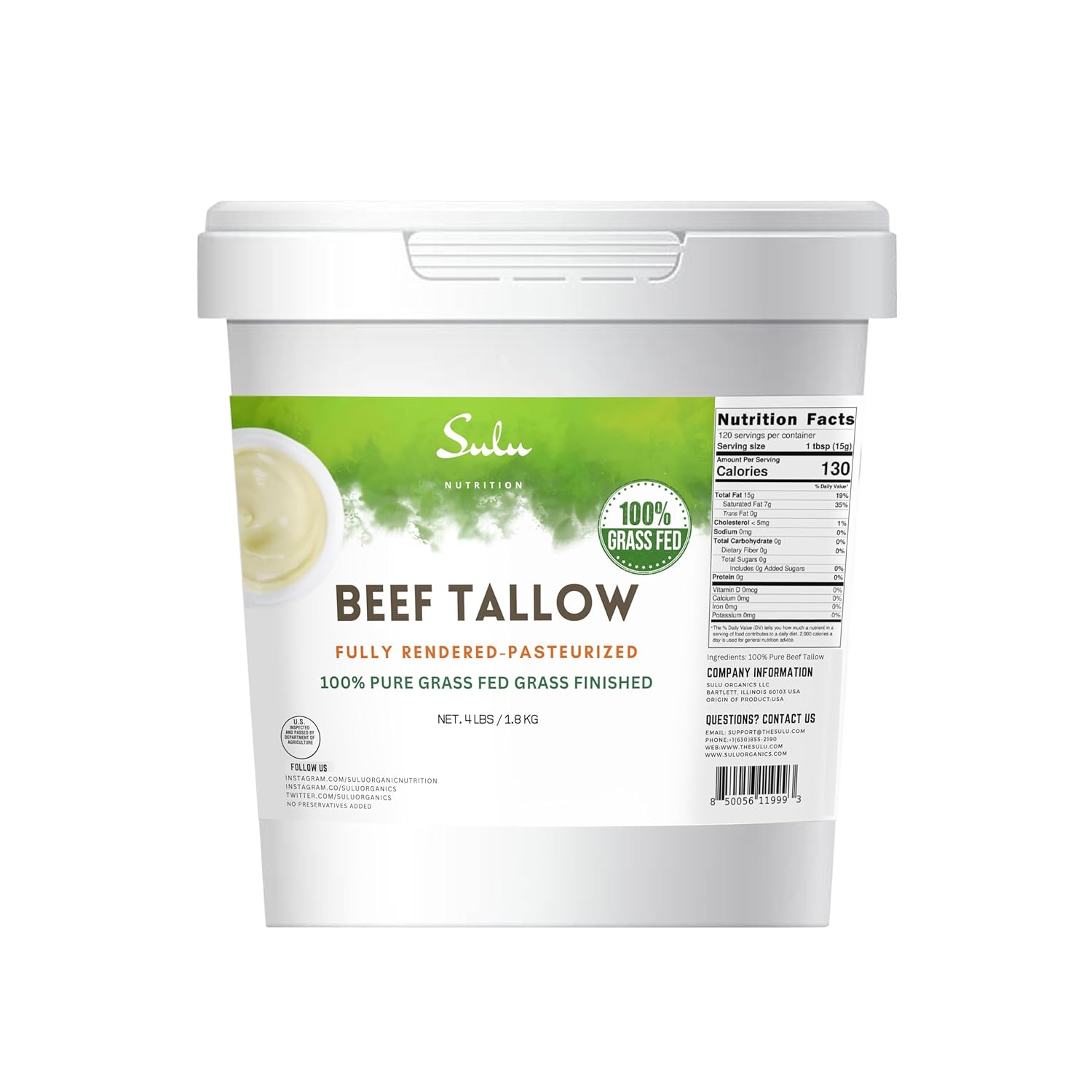
Call Carman Ranch or contact a Country Natural Beef cooperative member directly. Pricing for 5 to 25 pound orders drops 20% to 30% versus retail jar pricing. Painted Hills handles wholesale for larger orders. For online bulk that ships fast, the [100% Pure Grass-Fed Beef Tallow (4 lbs)](https://amzn.to/3Q3UUp9) is the most efficient starting point and works as a clean soap-making base.
Why is Portland tallow more expensive than Texas tallow?
Smaller herd size, higher land costs, more direct-to-consumer rendering, and a market that pays for grass-finished certification. Oregon has roughly 1.1 million head; Texas has more than 12 million. The per-pound economics favor scale and Oregon trades scale for traceability.
Are there tallow CSAs in Oregon?
Several beef CSAs include suet or rendered tallow in shares. Carman Ranch, Square Peg Farm, and Eagle Creek Ranch all run versions of this. Country Natural Beef cooperative members sometimes pool CSA shipments. Expect $12 to $14 per pound CSA pricing for tallow, between butcher commodity and small-batch retail.
How does Willamette Valley tallow taste different from eastern Oregon tallow?
Willamette Valley pasture is richer year-round, producing tallow with a deeper yellow tint and a slightly grassier scent. Eastern Oregon range tallow runs paler and milder because the cattle eat more sage and bunchgrass and finish on hay for part of the year. For cooking, both work; for cosmetics, the milder eastern profile sometimes wins for sensitive skin.

Sources

  1. [1] USDA NASS Cattle Inventory 2026, Oregon State Summary Read source →
  2. [2] Oregon Department of Agriculture, Livestock Programs Read source →
  3. [3] Country Natural Beef Cooperative Read source →
  4. [4] Oregon Tilth Certified Organic, Producer Directory Read source →
  5. [5] OSU Extension, Small Farms Program Read source →