Skip to content
King TallowKing Tallow
Pacific Northwest Region

Where to Buy Beef Tallow in Washington

Buy beef tallow in Washington at PCC Community Markets, Metropolitan Market, and Rain Shadow Meats in the Seattle metro, or direct from grass-fed operations on the Skagit Valley, Olympic Peninsula, and east of the Cascades. Expect $4 to $7 per pound for raw suet from a butcher, $12 to $18 per pound for finished cosmetic-grade jars. Best sourcing window runs October through January after fall slaughter.

Last updated May 26, 2026 by Miles Carter

Cattle ranking
22nd nationally
Head of cattle
Approximately 1.10 million head (USDA NASS 2026)
Typical $/lb
$5.50 raw suet at butcher counter, $14 finished retail jar
Best months
October through January (post-fall slaughter)
Grass-fed
Strong west of the Cascades, very strong on small Skagit and Olympic farms; eastern Washington skews to finished beef and feedlot programs.
Major cities
Seattle, Spokane

Why Washington matters for beef tallow

Washington sits 22nd in head count but punches above its weight on the cosmetic and culinary side of tallow. Seattle, Bellingham, and Bainbridge buyers will pay for grass-finished product, which pulls small farms into rendering as a real line item rather than a byproduct.

Two distinct cattle economies in one state

West of the Cascades runs on wet pasture, small herds, and direct-to-consumer sales. East of the Cascades runs on bigger feedlot programs around Pasco, Sunnyside, and Moses Lake. The western side is where you find pasture-finished suet by the bucket; the eastern side is where Tyson's Wallula plant sits, so industrial-grade tallow leaves the state by tanker truck.

Farm-to-table demand prices in quality

Seattle restaurants like Westward, Canlis, and The Walrus and the Carpenter buy from the same Skagit and Olympic farms that home cooks can order from. That keeps the supply chain short and the rendering practices clean. Cosmetic-grade jars under labels like Fat of the Land or small Etsy renderers in Olympia trade at $15 to $20 per pound.

Wet climate makes leaf-fat preservation matter

Western Washington humidity sits above 70% most of the year, so unrendered suet spoils fast. Local butchers freeze leaf fat in 2 to 5 pound vacuum packs the same day it leaves the carcass. Ask for frozen if you want clean rendering at home; ask for already rendered if you want a ready-to-cook jar.

Strong grass-fed certification network

American Grassfed Association membership is concentrated in the PNW. Washington State Department of Agriculture also runs a Salmon Safe and Food Alliance certification trail that several tallow-producing farms carry. Look for those labels at the farmers market.

Regional context

Climate

Marine west of the Cascades, semi-arid east. Western herds finish on rye, orchard grass, and white clover from March through October; eastern herds graze sagebrush and irrigated alfalfa.

Terrain

Coastal valleys, Puget lowlands, Cascade foothills, Columbia Plateau, Palouse rolling wheat-and-cattle country. Skagit and Snohomish floodplain pasture is the densest small-herd region.

Feed practices

Small farms run rotational pasture year-round with hay supplementation December through February. Mid-size programs (Painted Hills extends into eastern WA) hay-finish in winter. Large industrial finishing happens at Wallula and Pasco feedlots on corn distillers and silage.

In-state rendering

Most rendering happens at the farm or butcher level for the direct-to-consumer market. Industrial rendering goes through Baker Commodities (Kent) and Darling Ingredients (Tacoma) for biofuel and pet food, not retail. For a clean white cosmetic-grade tallow, ask for leaf fat rendered wet at low heat under 220 F.

Where to buy beef tallow in Washington

1

Local butchers and meat markets

Rain Shadow Meats (Capitol Hill and Pioneer Square, Seattle) keeps frozen leaf fat behind the counter and will render it for a $4 per pound fee on request. Bavarian Meats (Pike Place) carries rendered tallow in 12 oz jars seasonally. Don and Joe's Meats (Pike Place) sells suet by the pound, call ahead Tuesday for Wednesday pickup. Olsen Meats (Stanwood) and Sehome Meats (Bellingham) are the workhorse Skagit-area shops. In Spokane, Sonnenberg's Market and Egger's Better Meats handle suet by request.

2

Farmers markets

University District Farmers Market (Seattle, year-round Saturdays) hosts Sea Breeze Farm and Skagit River Ranch, both of whom carry rendered tallow. Ballard Farmers Market (Sundays) is the second-best Seattle option. Olympia Farmers Market runs April through December with several Olympic Peninsula vendors. Spokane Farmers Market (Wednesdays and Saturdays in season) has Lazy R Ranch and Tolstoy Farms. Bellingham Farmers Market (Saturdays April through December) is small but most vendors will bring tallow if you ask one week ahead.

3

Ranches and direct-to-consumer

Skagit River Ranch (Sedro-Woolley) sells rendered tallow online and at Seattle markets, certified organic and 100% grass-fed. Thundering Hooves (Walla Walla) ships statewide via their CSA program. Sea Breeze Farm (Vashon Island) does small-batch tallow and dry-aged beef. Carlton Farm (Olympic Peninsula area) and Crown S Ranch (Methow Valley) sell direct shares that include suet. For larger volume, contact Country Natural Beef cooperative (operates in eastern WA and OR) for member-direct orders.

4

Specialty and natural grocers

PCC Community Markets (16 locations across King and Snohomish counties) is the most consistent retail source for grass-fed tallow jars, usually Fatworks or US Wellness Meats brands. Metropolitan Market (Seattle area) and Town & Country Markets (Bainbridge, Mill Creek, Shoreline, Ballard) stock seasonal local jars. Whole Foods Westlake and Roosevelt carry national brands. Central Co-op (Capitol Hill and Tacoma) keeps small-batch local tallow. Marlene's Market (Federal Way, Tacoma) and Huckleberry's (Spokane) round out the natural grocer trail.

5

Online when local fails

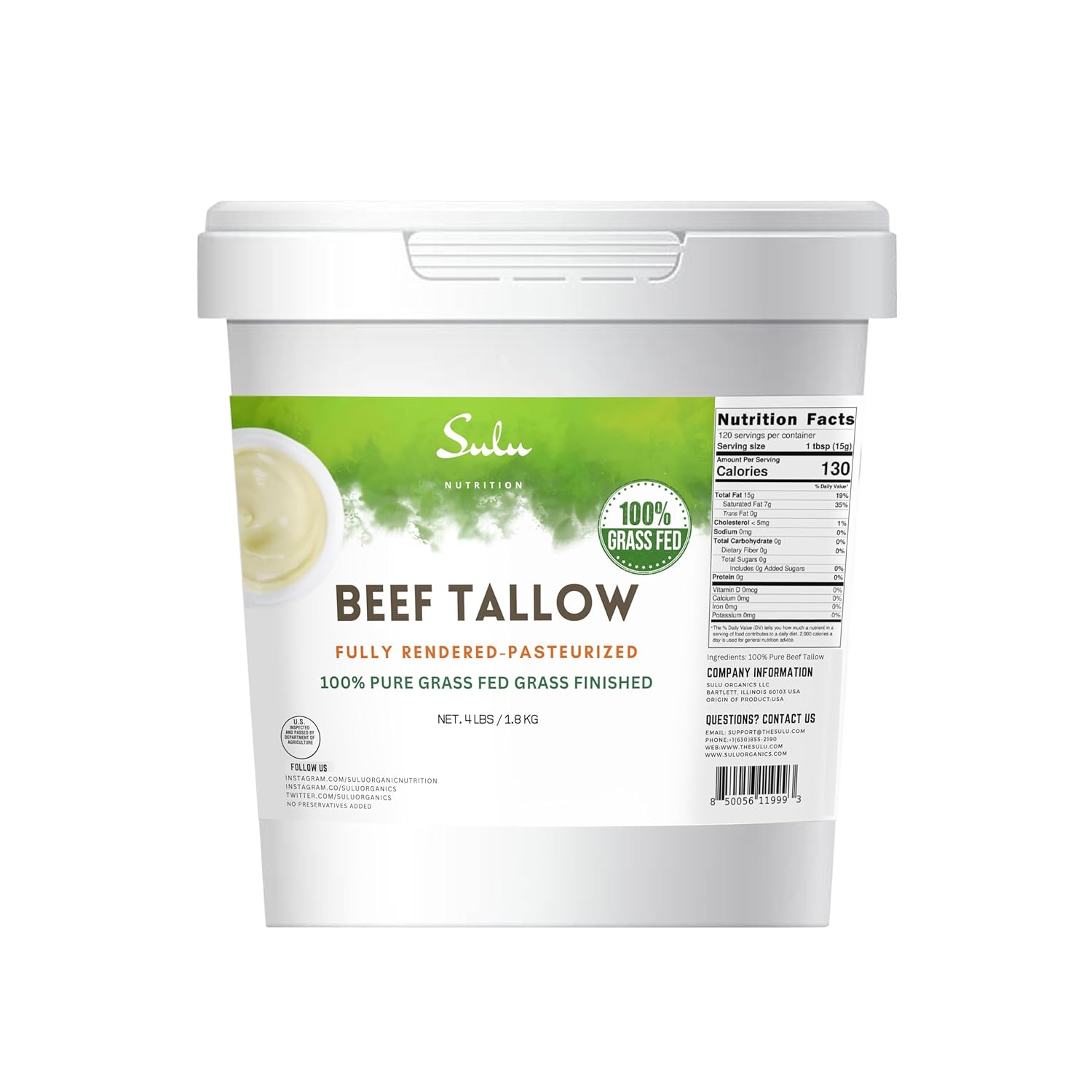
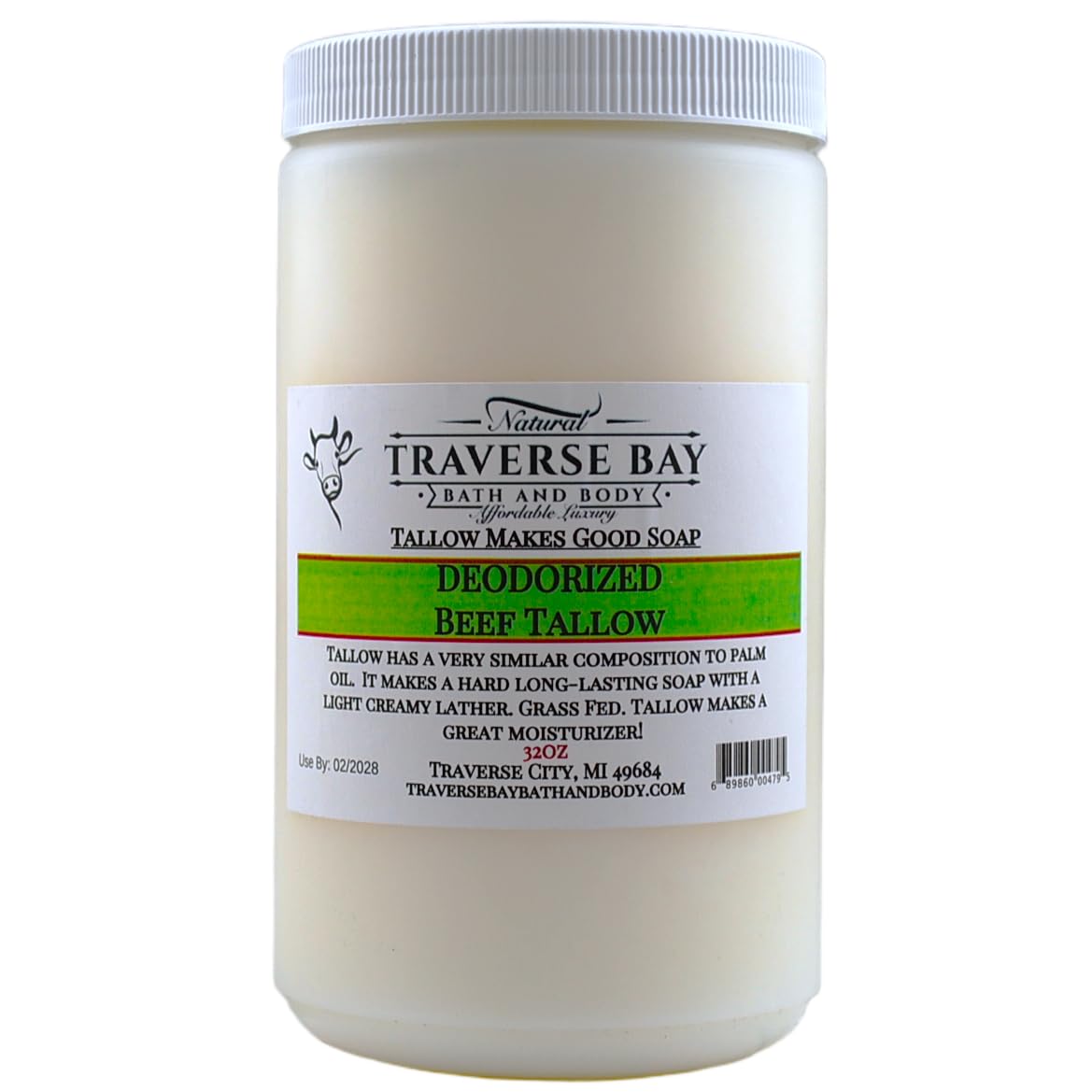
If you cannot make it to a butcher or market, the 100% Pure Grass-Fed Beef Tallow (4 lbs) jar ships nationally and is the best general-purpose cooking and DIY base. For a budget bulk option, Traverse Bay Farms (32 oz) is deodorized and good for soap and candle batches where you want a neutral starting fat.

Reliable online options that ship to Washington

We test and research the products we recommend. If you buy through these links we may earn a commission at no extra cost to you.

What to look for on the label

Washington labels follow federal USDA grades plus state-level marketing programs. Knowing which sticker matters for tallow specifically saves money at the counter.

Label What it means
USDA Prime / Choice / Select These are carcass grades, not fat grades. Prime carries the most intramuscular fat but tallow yield comes from leaf and kidney fat, which is similar across grades. Pay the Prime premium for steak, not for suet.
100% Grass-Fed and Grass-Finished Cattle ate only forage from weaning to slaughter. Tallow from these animals has 2 to 3 times the conjugated linoleic acid (CLA) and a deeper yellow tint from carotenoids. Skagit River Ranch and Thundering Hooves both carry this claim.
American Grassfed Association (AGA) certified Third-party verified version of the grass-fed claim. Carries a real audit trail. Several Washington farms hold this certification including Skagit River Ranch.
Salmon Safe certified Washington-specific watershed protection certification administered through Stewardship Partners. Indicates the farm manages runoff to protect salmon habitat. Not a tallow quality indicator on its own but it correlates with low chemical input pasture.
Food Alliance certified Sustainable agriculture certification covering soil, water, animal welfare, and labor. Found on several Olympic Peninsula and Skagit operations. A reasonable proxy for clean rendering practices.

What it actually costs in Washington

Tallow prices in Washington run higher than the national average because of small-herd economics and Seattle metro buying power. Expect to pay 20% to 30% more than equivalent quality in Texas or Nebraska.

Tier Per pound
Raw suet from a butcher (frozen, unrendered) $3 to $6
Conventional rendered tallow, food-grade $8 to $11
Grass-fed rendered tallow, retail jar $12 to $16
Cosmetic-grade leaf tallow, small-batch $16 to $22
Specialty grocer premium (rare offerings) $18 to $25

When to buy

Cattle in Washington follow a fall-slaughter rhythm. Plan your big buy for late October through January if you want the freshest leaf fat at the lowest price.

Spring (March to May)

Tallow from the previous fall's slaughter is still in cold storage. Prices steady, supply thinning. Good time to buy finished jars; harder to get fresh suet.

Summer (June to August)

Lowest supply of the year. Farmers market vendors may sell out. Order ahead from Skagit River Ranch or Sea Breeze for summer DIY batches.

Fall (September to November)

Best sourcing window. Pasture-finished cattle slaughter peaks October and November. Butchers have the most leaf fat of the year. Prices dip 10% to 15%.

Winter (December to February)

Strong supply continues. Holiday cooking demand bumps retail jar prices up slightly. Best time for raw suet at the butcher counter; January is the quiet sweet spot.

Where to look outside Washington

Washington shares a porous border with Oregon and Idaho for cattle and rendered product. If you cannot find what you need in state, these neighbors are worth the drive.

Oregon

3 hours from Seattle to Portland

New Seasons Market and Gartner's Meats in Portland carry grass-fed tallow consistently. Carman Ranch (Wallowa) ships statewide if you cannot drive.

Try: Gartner's Meats (Northeast Portland) and New Seasons Market locations

Idaho

5 hours from Spokane to Boise; 1.5 hours from Spokane to Coeur d'Alene

Northern Idaho ranches sell direct at the Coeur d'Alene Farmers Market and at Pilgrim's Market. Useful for Spokane-area buyers.

Try: Alderspring Ranch (May, ID) ships rendered tallow; Pilgrim's Market in Coeur d'Alene stocks regional jars

British Columbia (cross-border note)

2 hours from Bellingham to Vancouver

Not an option for tallow specifically because of meat import rules. Mentioned only so you do not waste a Saturday driving north.

Render it yourself

If you have a butcher willing to sell raw suet, render at home for the cleanest, cheapest cosmetic-grade tallow you can get. The full method is at /blog/how-to-render-beef-tallow-at-home-step-by-step-guide/. Plan on $3 to $6 per pound of suet and a 60% to 70% yield of finished tallow. From there, the tallow soap recipe is a strong winter project, and the tallow face cream walkthrough turns one pound of suet into about six 4 oz jars worth of finished moisturizer.

How locals cook with it in Washington

Pacific Northwest cooking puts tallow into seafood, foraged mushrooms, and high-heat searing. These are the dishes Washington cooks reach for first.

Fall foragers around Olympic National Forest pull chanterelles by the bucket. A high-heat sear in 2 tablespoons of tallow at 400 F gives a crust that butter cannot match because tallow holds its structure above the smoke point of butterfat. Finish with sea salt and thyme.

Render 1 tablespoon of salmon belly fat into 3 tablespoons of warm tallow. Brush onto a sockeye fillet before cedar-plank grilling. The blended fat keeps the surface from drying through the slow heat of the plank and adds a savory depth that straight salmon oil does not.

Russets from Skagit and Whatcom county farms fry crisper in tallow than in seed oil because the saturated fat resists breakdown at 375 F. Two tablespoons per pan, 8 minutes undisturbed, flip once. Salt off-heat to keep the crust.

Pinto beans simmered with smoked tallow, onions, garlic, and a knuckle of beef. This is the Walla Walla and Pendleton ranch standard. Soak beans overnight, render 2 tablespoons of tallow in the bottom of the pot before adding aromatics, then a 6 hour low simmer.

Substitute 50% tallow for butter in a standard pie crust. The result flakes harder and stays crisp under a wet fruit filling longer. Use chilled cosmetic-grade tallow cut to pea-sized pieces, ice water, no sugar in the crust.

Local & Regional Brands

Rain Shadow Meats

Thundering Hooves

Sea Breeze Farm

Washington Sourcing Tips

  • Pike Place Market has local meat vendors
  • Eastern Washington has many cattle ranches
  • Seattle has excellent butcher shops
  • Look for Washington State Beef Commission certified

Major Cities in Washington

Seattle Spokane Tacoma Vancouver Bellevue

These cities typically have the best selection of local butchers, farmers markets, and specialty stores carrying beef tallow.

Frequently asked questions

Where in Seattle can I buy beef tallow today without ordering ahead?
PCC Community Markets stocks jarred grass-fed tallow at most of their 16 locations and is the most reliable walk-in option. Metropolitan Market, Whole Foods Westlake, and Town & Country also keep retail jars on shelf. Pike Place Market vendors like Bavarian Meats sometimes have rendered tallow but supply is inconsistent. If you want raw suet rather than rendered, Rain Shadow Meats on Capitol Hill keeps frozen leaf fat behind the counter most of the year and can sell you a pound on the spot.
How much does grass-fed beef tallow cost in Washington?
Retail jars at PCC and Metropolitan Market run $12 to $16 per pound. Cosmetic-grade small-batch tallow from Skagit River Ranch or Sea Breeze Farm sits at $16 to $22 per pound. Raw suet you render yourself runs $3 to $6 per pound at the butcher counter, with a 60% to 70% yield. Plan on roughly $25 finished cost per pound at the high end if you buy small-batch grass-finished, half that if you render your own.
Is tallow from Skagit River Ranch worth the price?
If you are using tallow on your face or in skincare, yes. Skagit River Ranch is certified organic and 100% grass-fed, which means higher CLA and carotenoid content than commodity tallow. The leaf fat is rendered low and slow, producing a pale ivory final product with no off-smell. For deep-fry cooking, the price gap is harder to justify; commodity grass-fed tallow at $12 per pound works just as well in the pan.
Can I get tallow at Pike Place Market?
Sometimes. Bavarian Meats stocks jarred rendered tallow seasonally. Don and Joe's Meats sells raw suet by the pound if you call ahead, usually Tuesday for Wednesday pickup. Supply is not consistent enough to walk in and count on it being there, especially in summer. Order ahead by phone is the right play at Pike Place.
What is the best month to buy beef tallow in Washington?
October through January. Pasture-finished cattle slaughter peaks in fall, which puts the most leaf fat into butcher and ranch supply chains. Prices for raw suet drop 10% to 15% versus summer. January is the quietest month at butcher counters and an excellent window for bulk DIY batches if you want to stock a year's worth of skincare base.
Does Polyface-style regenerative tallow exist in Washington?
Yes, several farms run rotational grazing similar to Polyface methods. Skagit River Ranch is the closest analog on the west side. Crown S Ranch in the Methow Valley uses similar daily-paddock moves. Thundering Hooves in Walla Walla runs pasture-finished beef under a holistic management program. None are at Polyface scale but the principles are the same and the tallow quality reflects it.
Where can I buy tallow in Spokane?
Huckleberry's Natural Market and Main Market Co-op carry retail jars. Egger's Better Meats and Sonnenberg's Market handle raw suet on order. The Spokane Farmers Market on Wednesdays and Saturdays in season brings Lazy R Ranch and Tolstoy Farms, both of whom sell rendered tallow at the market. For direct-to-consumer ranch buying, Lazy R is the most convenient pickup if you can drive to Cheney.
Is Washington tallow grass-fed or grain-finished by default?
It depends entirely on the farm. Small Skagit, Olympic, and Methow operations are typically 100% grass-fed and grass-finished. Mid-size programs like Painted Hills are grass-fed but grain-finished. Industrial product from Wallula and Pasco feedlots is grain-finished and rarely makes it to retail jars under its own name. Read the label or ask the farmer; the words to look for are grass-finished, not just grass-fed.
Can I freeze tallow I buy at PCC or Metropolitan Market?
Yes. Tallow freezes well for up to a year at 0 F with no loss of texture or flavor. Keep it in the original jar with the lid sealed, or transfer to a vacuum-sealed bag if you want to save freezer space. Thaw in the refrigerator overnight before opening. Refreezing once is fine; multiple freeze-thaw cycles will accelerate oxidation.
How do I know if my Washington tallow is actually grass-fed?
Look for the American Grassfed Association seal, a 100% grass-fed and grass-finished claim on the label, or a Salmon Safe or Food Alliance certification that ties back to a verifiable farm. Color is a weaker but useful tip: grass-finished tallow runs pale yellow from carotenoids, grain-finished is paper white. If you can call the farm and they answer the question with a feeding protocol, that is the best signal.
Are there any tallow CSAs in Washington?
Several beef CSAs include suet or rendered tallow in their shares. Skagit River Ranch, Sea Breeze Farm, and Crown S Ranch all run versions of this. Thundering Hooves ships beef CSA boxes statewide and will add rendered tallow on request. CSA pricing typically lands at $12 to $14 per pound for tallow, which sits between butcher commodity and small-batch retail.
What about Costco or Trader Joe's in Washington?
Costco does not stock retail jarred beef tallow in Washington warehouses on a consistent basis, though they occasionally rotate it in. Trader Joe's does not carry beef tallow under their store brand. Your reliable retail trail in WA is PCC, Metropolitan Market, Town & Country, Whole Foods, and Central Co-op.
Can I buy tallow on Bainbridge Island or the Olympic Peninsula?
Yes. Town & Country Markets in Bainbridge stocks retail jars. Several Olympic Peninsula small farms sell direct at the Port Townsend Farmers Market on Saturdays in season. Carlton Farm and Marrowstone Island producers rotate through the local market circuit. The Bainbridge Island Farmers Market on Saturdays runs April through October.
Why is Washington tallow more expensive than Texas tallow?
Smaller herd size, higher land costs, more direct-to-consumer sales, and a buying public that pays for grass-finished and certified product. Texas has 12 million head of cattle and Washington has 1.1 million; per-pound economics favor scale. Washington trades scale for traceability, which is what you are paying for at the $15 to $20 per pound tier.
Where can I source bulk tallow for soap-making in Washington?
For 5 to 25 pound batches, call Skagit River Ranch or Thundering Hooves directly and order rendered or unrendered suet by the bucket. Pricing drops 20% to 30% versus retail jar pricing. Sea Breeze Farm runs smaller batches but will take wholesale orders. If you are running a commercial soap operation, the [100% Pure Grass-Fed Beef Tallow (4 lbs)](https://amzn.to/3Q3UUp9) is the most efficient online bulk base for getting started.

Sources

  1. [1] USDA NASS Cattle Inventory 2026, Washington State Summary Read source →
  2. [2] Washington State Department of Agriculture, Livestock Programs Read source →
  3. [3] American Grassfed Association, Certified Producer Directory Read source →
  4. [4] WSU Extension, Western Washington Small Farms Program Read source →
  5. [5] Salmon Safe Certification, Stewardship Partners Read source →

More Pacific Northwest States