


Is Beef Tallow Good for You? Breaking Down the Health Claims
Reader-supportedHonest, sourced look at beef tallow health claims. Cardiovascular evidence, skin barrier benefits, CLA, satiety, choline gaps, and what the science actually says.


This post contains affiliate links. We may earn a commission if you purchase through these links, at no extra cost to you.
Important note before we start. This post is a layperson’s look at the published nutrition and dermatology literature on beef tallow. I am not a doctor, dietitian, or dermatologist. Nothing here is medical advice. If you have cardiovascular disease, gallbladder issues, a history of disordered eating, or any other condition that interacts with dietary fat, talk to a clinician before making changes to your diet based on internet posts. With that out of the way.
Tallow has been having a moment, and the claims have run ahead of the evidence in places. I want to walk through what is actually defensible from the published literature, what is preliminary but interesting, and what is straight marketing that I would not lean on. I will cite the papers by author and year so you can pull them yourself.
I will tell you up front where I land. Tallow is a fine cooking fat. It probably belongs in the pantry of most people who do not have a specific medical reason to avoid saturated fat. It is not a superfood, and a few of the claims you see in the wellness corner of the internet are oversold. The truth is more boring and more interesting than either the panic-saturated-fat camp or the tallow-cures-everything camp would have you believe.
Claim 1: Tallow Is Good for Your Skin Barrier (Well Supported)
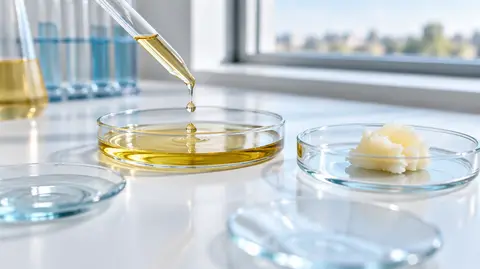
This is the strongest claim and the one with the most direct mechanistic support. Beef tallow’s lipid profile is structurally similar to human sebum. The fatty acid composition (high in palmitic, oleic, and stearic acids) overlaps significantly with the composition of the lipids that human skin produces naturally. Topical tallow penetrates the stratum corneum and supports barrier function in a way that plant-derived oils do not, primarily because the structure matches what the skin already recognizes.
The mechanism here is well established in dermatology. Topical lipids that match endogenous skin lipids improve barrier function. This is why ceramide creams work for eczema, why petrolatum is the gold-standard occlusive in clinical dermatology, and why tallow tends to perform well in anecdotal eczema and dry-skin reports.
The published clinical trials on tallow specifically are limited, because nobody has run a big randomized trial. The mechanistic case is strong enough that I am comfortable saying topical tallow as a moisturizer for dry, eczema-prone, or barrier-compromised skin is a defensible choice.
The tallow for skincare explainer goes deeper on this mechanism if you want the longer version.
Claim 2: Tallow Is Better for Your Heart Than Seed Oils (Mixed, Slowly Shifting)
This is where the conversation gets complicated, and where most online debates go off the rails.
The mainstream guidance from the 1980s through the early 2010s was that saturated fat raises LDL cholesterol, LDL cholesterol drives atherosclerosis, and so saturated fat is cardiovascularly harmful. The recommended replacement was polyunsaturated fat from seed oils (corn, soybean, sunflower, safflower).
The 2010s and 2020s have produced a meaningful walk-back of that position. Three papers worth knowing about:
Ramsden et al. 2016, BMJ. This was a reanalysis of the Sydney Diet-Heart Study, an old randomized trial that had been used to support the saturated-fat-replacement guidance. Ramsden’s team recovered the original data and reanalyzed it. The men who replaced animal fat with safflower oil (linoleic acid) had higher all-cause mortality and higher cardiovascular mortality than the men who continued eating animal fat. The original analysis had not reported this because of how the endpoints were classified.
This does not prove that tallow is cardioprotective. It does prove that the specific evidence base for switching from animal fat to seed oils was weaker than it was sold as.
Astrup et al. 2020, Journal of the American College of Cardiology. This was a broad review of the saturated-fat-and-cardiovascular-disease evidence by a group of clinicians and researchers. Their conclusion was that the saturated-fat-cardiovascular link is much weaker than the 1980s consensus held, particularly when saturated fat replaces refined carbohydrates rather than displacing polyunsaturated fats. They argued that the singular focus on saturated fat had diverted attention from more meaningful dietary drivers of cardiovascular risk (refined carbs, trans fats, excess calories).
This is also not a “saturated fat is health food” paper. It is a “saturated fat is not the villain of the story” paper.
Dehghan et al. 2017 (PURE study), Lancet. A large multi-country prospective cohort showing that high carbohydrate intake was associated with higher mortality and total fat intake (including saturated fat) was associated with lower mortality, in a sample of over 135,000 people across 18 countries. The PURE study is observational and has the usual confounding issues, but it adds to the case that the saturated-fat-mortality link is weaker than guidelines have suggested.
Where does this leave tallow? My read is that tallow as a cooking fat, replacing seed oils, is at worst neutral for cardiovascular risk and at best slightly beneficial, particularly in a low-carbohydrate eating pattern. The strongest defensible position is that the seed-oil replacement strategy from 1985 was based on weaker evidence than was acknowledged at the time, and that swapping tallow back in is not the cardiovascular risk it was once portrayed as.
If you have a personal or family history of cardiovascular disease, talk to your clinician. The general-population evidence is not the same as the high-risk-individual evidence.
Claim 3: Tallow Increases Satiety vs Seed Oils (Reasonably Supported)
This one is reasonably supported by the satiety and food-intake literature. Diets higher in saturated fat and animal protein generally produce greater short-term satiety than isocaloric diets higher in carbohydrate or polyunsaturated plant oils. The mechanism likely involves cholecystokinin release, gastric emptying rate, and the way protein and fat together produce a stronger satiety signal than either does alone, particularly when you are eating tallow with meat rather than seed oils with grains.
In practice, this is the most reliably reported subjective effect when people switch from seed-oil-cooked foods to tallow-cooked foods. People say they are less hungry between meals. They eat less without trying. They drop weight without intentional calorie restriction.
I have experienced this myself, and the satiety effect is one of the practical reasons tallow is easier to stick with on keto or carnivore than seed-oil-based fats. The published evidence supports the subjective reports.
Claim 4: CLA in Grass-Fed Tallow Has Anticancer and Anti-Inflammatory Effects (Preliminary)
Conjugated linoleic acid (CLA) is a naturally occurring fatty acid found in higher concentrations in grass-fed ruminant fat. The animal-model literature on CLA has been promising. Rodent studies have shown antitumor effects, anti-inflammatory effects, and body composition effects. Belury’s 2002 review in Annual Review of Nutrition is the standard reference.
The human trial evidence is weaker. Some small trials have shown body composition effects (modest fat loss, modest lean mass preservation). The anticancer findings have not translated well into human populations. The anti-inflammatory effects are inconsistent.
The CLA dose required to produce effects in human trials (typically 3 to 6 grams per day) is far above what you can get from tallow alone, even at high intake. A tablespoon of grass-fed tallow provides somewhere in the 130 to 280 milligram range. So the realistic position is that the CLA in tallow is a small bonus, not a therapeutic intervention.
If you saw a YouTube video claiming tallow prevents cancer because of CLA, that is overselling preliminary evidence. The honest version is that grass-fed tallow contains more CLA than grain-fed, the CLA evidence in animals is interesting, and the human translation is unsettled.
Claim 5: Tallow Fixes Choline Deficiency (Wrong)
This one is genuinely wrong. Tallow contains negligible choline. If you are eating tallow as a major calorie source on carnivore or keto and you are not eating eggs, liver, or organ meats, you can develop a choline deficiency. Tallow does not protect against this.
Choline is required for liver function, neurotransmitter synthesis, and methylation. The recommended adult intake is 425 to 550 milligrams per day. The richest dietary sources are egg yolks (about 150 mg per yolk), beef liver (about 350 mg per 3 oz), and other organ meats.
If you are eating carnivore-style with tallow as your primary added fat, you need to also be eating yolks or liver. The “all I need is meat and tallow” framing skips this requirement and the consequences (fatty liver, brain fog) can show up after months on the diet.
I see this gap in the carnivore wellness content often and it is worth flagging. Tallow is a fat. It is not an organ meat replacement.
Claim 6: Tallow’s High Smoke Point Makes It Safer Than Seed Oils for High Heat (Solid)
Polyunsaturated fats oxidize at cooking temperatures. The breakdown products include aldehydes (4-HNE, malondialdehyde) that have been implicated in cellular oxidative stress. The vulnerability scales with the number of double bonds in the fatty acid. Saturated fats have zero double bonds and are oxidation-resistant. Monounsaturated fats have one. Polyunsaturated fats have two or more.
Tallow is about 50% saturated and 39% monounsaturated, with only about 3 to 4% polyunsaturated content. This means tallow heated to frying temperatures produces dramatically less oxidative breakdown product than soybean oil heated to the same temperature.
This is the technical argument behind the “switch to tallow for deep frying” position, and it is well supported. Repeatedly heated seed oils in restaurant fryers produce measurable amounts of harmful oxidation products. Repeatedly heated tallow does not, to anywhere near the same extent.
For a deeper dive on smoke point and high-heat behavior, the smoke point guide goes into the actual numbers.
Claim 7: Tallow Is a Source of Fat-Soluble Vitamins (Modest)
Grass-fed tallow contains small amounts of vitamins A, D, E, and K2. The exact amounts vary by feeding system and rendering temperature. The numbers are nontrivial but they are not at the level where you should be relying on tallow as your primary source.
For vitamin K2 specifically, the menaquinone-4 (MK-4) form in animal fats is bioavailable and useful. Grass-fed tallow has meaningfully more than grain-fed. But the absolute amounts are modest. Egg yolks, hard cheese, and natto are richer sources if you are specifically chasing K2.
Treat the fat-soluble vitamins as a bonus, not a primary reason to eat tallow.
What I Actually Believe After Reading the Literature
Here is the practical position I land on after going through this material.
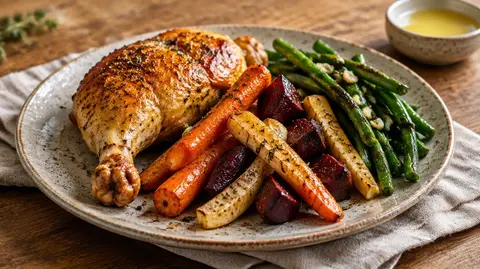
Tallow is a fine cooking fat for most adults. The cardiovascular concern was overstated in the 1980s and is slowly being corrected in the more recent literature. The high smoke point and low polyunsaturated content make it a better high-heat cooking fat than seed oils, full stop. The satiety effect is real. The skin benefits are mechanistically well-supported.
The marketing claims to discount: tallow cures cancer (oversold from preliminary CLA evidence), tallow prevents choline deficiency (it does not, eat yolks and liver), tallow is a complete superfood (it is a useful saturated fat, not a magic ingredient).
The position to defend: tallow is a useful, calorically dense cooking fat with a good fatty acid profile for high-heat applications and a reasonable place in a balanced eating pattern. Grass-finished is meaningfully better than grain-finished on the micronutrient side. The cardiovascular risk-reduction marketing some brands use is going beyond what the literature supports for a general population, but the cardiovascular harm narrative from the 1980s does not survive recent scrutiny either.
If you want to try tallow, the 4-pound grass-fed bucket is the easiest first purchase. For a smaller, neutral-tasting jar for daily eating, the Traverse Bay 32 oz is the budget pick.
Frequently Asked Questions
Will eating tallow daily raise my cholesterol?
It can raise LDL modestly in some people, particularly those who are LDL hyper-responders to saturated fat. The effect varies by individual genetics (APOE status, particularly), background diet, and total caloric intake. If you are concerned, get a lipid panel before starting daily tallow consumption and a second one 90 days in. Real data from your own body beats internet speculation.
Is tallow okay for people with high cholesterol?
This is a question for your doctor. Generally, individuals with established cardiovascular disease or familial hypercholesterolemia have stricter saturated fat guidance for reasons that the recent literature does not fully overturn. The general-population walk-back of saturated fat does not apply identically to high-risk individuals.
Is there enough evidence to recommend tallow over olive oil?
No. Olive oil has strong long-term cardiovascular data (the Mediterranean diet literature, PREDIMED trial). Tallow does not have an evidence base of comparable depth. The best position is that both are reasonable cooking fats and each has applications where it shines. Olive oil for low-to-moderate-heat and finishing, tallow for high-heat and deep frying.
Does the rendering process create harmful compounds?
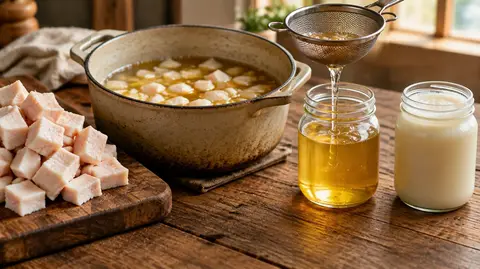
Properly done rendering at 200 to 250F does not create meaningful amounts of harmful oxidation products. Industrial rendering at very high temperatures or with re-used fat can. Look for “low-temperature rendered” or “small-batch” on the label if this concerns you.
Is tallow safe for pregnancy?
Generally yes, as part of a balanced diet. Pregnancy-specific nutrient needs (choline, iron, folate) are not adequately met by tallow alone, and pregnant women should eat tallow within a varied diet that includes yolks, organ meats, leafy greens, and fish. Talk to your OB about your specific nutrition plan.
Does grass-fed tallow have significantly more nutrients than grain-fed?
It has more of some things (CLA, K2, beta-carotene, slightly better omega-6 to omega-3 ratio) and the same amount of others (calories, saturated fat backbone). The grass-fed premium is real but it is not the difference between health food and junk. Both are usable cooking fats. Grass-fed is the better daily-eating choice; both work fine for cooking.
Bottom Line
Beef tallow is a reasonable cooking fat with a defensible place in most adult diets. The strongest health claims (skin barrier support, high-heat cooking safety, satiety) are well-supported. The cardiovascular fear has been walked back in the recent literature, with caveats for high-risk individuals. The marketing claims around CLA, anticancer effects, and superfood status outrun the human evidence.
Use tallow as a cooking fat. Buy grass-finished if you can afford the premium. Do not use it as a replacement for the nutrients in organ meats, yolks, and vegetables. Talk to your clinician if you have any underlying cardiovascular or metabolic condition.
If you want to start, the 4-pound grass-fed bucket is the practical first purchase. For more on the science, the nutrition science overview and the keto-carnivore diet evidence are worth the read. For the skin claim, the tallow for skincare science post goes into the dermatology research. For the broader cooking-fat context, the tallow versus butter for cooking and benefits comeback posts cover the practical side.
Explore more tallow guides
Browse our collection of recipes, comparisons, reviews and DIY tutorials.
View all guidesKing Tallow is reader-supported. We research and test the products we recommend, and when you buy through links on this page we may earn a commission at no extra cost to you. See our affiliate disclosure.
Published