
Beef Tallow for Rosacea: What the Evidence Says
Reader-supportedWhat the evidence says about beef tallow for rosacea. Pathology, patch testing, application tips, what to avoid, and when to see a dermatologist.

This post contains affiliate links. We may earn a commission if you purchase through these links, at no extra cost to you.
Medical disclaimer: This post is for informational purposes only and is not medical advice. Rosacea is a chronic inflammatory skin condition that requires medical management. Topical recommendations here are based on published literature and reader experience, not on clinical trials in rosacea patients. If you have rosacea, especially papulopustular or ocular variants, see a board-certified dermatologist. Patch test any new product before broader use.
Rosacea is the condition I get the most cautious questions about. Readers write in asking whether tallow will help, whether it will trigger a flare, whether it is safe to use at all. The honest answer is that some people with rosacea tolerate tallow very well, and a meaningful minority do not. What separates the two groups comes down to which tallow product, how it is applied, and whether the rosacea is in a stable or active phase.
This post covers the pathology, the case for cautious use, the case for skipping it entirely, and the specific application rules that make the difference between a calming experience and a flare. If you have rosacea, read this whole post before you try a jar.
What Rosacea Actually Is
Rosacea is not a single condition. It is a cluster of related skin presentations that share inflammatory and vascular features. The four recognized subtypes are erythematotelangiectatic (persistent flushing and visible blood vessels), papulopustular (acne-like bumps and pustules), phymatous (thickening of the skin, often on the nose), and ocular (affecting the eyes and eyelids).
Three things drive most of what rosacea sufferers experience:
- Vascular reactivity. The small blood vessels in rosacea-prone skin dilate easily in response to triggers like heat, alcohol, spicy food, stress, and sun. This is what produces the persistent redness and flushing.
- Barrier dysfunction. Rosacea-prone skin tends to have a weaker stratum corneum and higher transepidermal water loss than healthy skin. The barrier is more permeable to irritants and more reactive to topical ingredients.
- Demodex involvement. The skin mite Demodex folliculorum lives in everyone’s pores, but populations are elevated in rosacea sufferers and may contribute to the inflammatory cascade, particularly in papulopustular rosacea.
Understanding those three drivers explains why some rosacea patients do well with tallow and others do not. Tallow can support barrier repair, which addresses the second driver. It does nothing for vascular reactivity, and it could potentially feed Demodex populations in the third driver if the formulation is not appropriate.
For broader context on the condition, the tallow for rosacea overview covers the use case in more detail.
Why Some Rosacea Sufferers Tolerate Tallow Well
The case for cautious tallow use in rosacea comes down to barrier repair.
A weakened skin barrier is part of what makes rosacea-prone skin so reactive in the first place. When the stratum corneum is thin and permeable, common topical ingredients reach the deeper inflammatory cells of the skin more easily, and the response is exaggerated. Strengthening that barrier reduces the reactivity over time. Tallow, with a fatty acid profile close to human sebum, contributes to barrier function in the same way it does for healthy skin.
There are three additional reasons rosacea sufferers sometimes report tolerating tallow well:
- No fragrance. Properly formulated unscented tallow balms contain no essential oils, no synthetic fragrance, and no botanical extracts. Fragrance is one of the most common rosacea triggers, and removing it from the routine is often the first thing a dermatologist will recommend.
- No actives. There are no acids, no retinoids, no exfoliants, no vitamin C. Just lipids. For a skin condition that flares in response to topical actives, a no-actives moisturizer is a real advantage.
- No emulsifiers or preservatives. A minimal tallow balm has nothing in it that needs to be stabilized chemically. The fewer ingredients, the fewer potential triggers.
If your rosacea is in the erythematotelangiectatic category and your barrier is the main issue, a minimal-ingredient tallow balm can be part of a calming routine. Some readers report visible improvement in surface texture and reduced reactivity within four to six weeks.
That is the optimistic case. There are real caveats.
Why Some Rosacea Sufferers Do Not Tolerate Tallow
The cautious case rests on three concerns.
Demodex and lipid feeding. Demodex mites feed on sebum and skin lipids. A heavy occlusive application of tallow on rosacea-prone skin, particularly papulopustular rosacea, could theoretically feed mite populations and worsen the condition. The published literature on this specific interaction is limited, but the mechanism is plausible enough that it shows up in dermatology discussions. Papulopustular rosacea is the subtype where this concern carries the most weight.
Heat and vascular reactivity. Tallow is normally applied by warming a small amount between fingertips. For rosacea-prone skin, heat is a trigger. The act of rubbing a balm vigorously into facial skin can produce enough warmth to start a flush, which is the opposite of what you want from a moisturizer.
Occlusion in active flares. During an active flare, the skin is inflamed and the barrier is at its most reactive. Adding a heavy occlusive layer over inflamed skin can sometimes trap heat and worsen the flare. The same product that calms stable rosacea can aggravate active rosacea.
The takeaway is not that tallow is bad for rosacea. It is that the application protocol matters more for rosacea than for any other use case.
The Patch Test Protocol for Rosacea
If you have rosacea and want to try tallow, the patch test protocol is non-negotiable. This is the protocol I send people who write in:
- Choose the right product. Start with the most minimal formulation available. Terra Lotus Unscented is two ingredients, grass-fed tallow and olive oil. No essential oils, no extracts. Santa Cruz Paleo is three ingredients with raw honey, which adds humectant action and very mild antimicrobial activity. Either one is a reasonable starting point.
- Pick a quiet phase. Do not start a new topical during a flare. Wait until your skin has been stable for at least a week. Starting during a flare confounds the test and increases the risk of a bad reaction.
- Apply to a small area. Use a pea-sized amount on the inside of your forearm. Leave it for forty-eight hours, monitoring for redness, itching, or any local reaction. If clear, move to a small area behind the ear for another forty-eight hours.
- Progress to a small facial test patch. Apply a thin layer to a one-inch area near the jawline. Wait three full days. Monitor for any change in baseline redness, new bumps, or increased reactivity.
- Only after that, expand to broader facial application. Even then, start with night use only for the first two weeks and watch for any pattern of morning-after redness.
This is slower than the patch test protocol I recommend for healthy skin, and that is the point. Rosacea-prone skin gives you less margin for error.
Application Rules for Rosacea-Prone Skin
If you have cleared the patch test and want to use tallow as part of your routine, four rules make the difference.
Use only unscented. No essential oils. No lavender, no rose, no rosemary. Even traditionally calming essential oils are common rosacea triggers. The unscented version of any balm is the only one to consider. Skip the lavender version and any other scented balm.
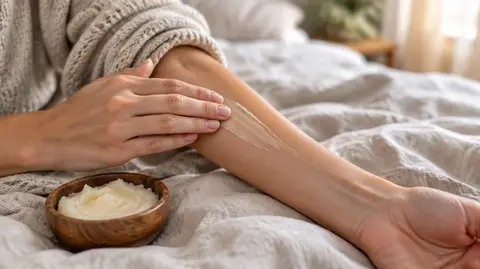
Apply on damp post-cleanse skin only. After washing your face with a gentle non-stripping cleanser, while the skin is still slightly damp, apply a rice-grain-sized amount with a clean fingertip. The dampness lets the balm spread thin without friction. Do not apply to dry skin and do not rub vigorously.
Do not warm between hands. This is the rule most rosacea-prone tallow users get wrong. The standard advice for healthy skin is to warm a small amount between fingertips before application. For rosacea, that heat is a trigger. Apply at room temperature and let your body heat finish the melt on the skin itself.
Pat, do not rub. Use a patting motion to distribute the balm. Friction generates heat. Heat triggers flushing. The application should be slow and gentle. If you finish a tallow application and your skin feels warm, you applied it wrong.
For broader skincare context on minimal-ingredient routines, my unscented tallow roundup for sensitive skin covers the products that fit the rosacea criteria.
What to Avoid
Specific products and ingredients to avoid in a rosacea routine:
- Scented tallow balms. Any version with essential oils. This includes “natural” scent blends, single-note essential oils, and botanical infusions.
- Heavy occlusive balms on active flares. Save heavy formulas like Vanman’s for body application during quiet phases. Do not apply to a flaring face.
- Combination products with actives. If a balm contains anything beyond tallow and a base oil, treat it as a higher risk and patch test even more rigorously.
- Warm or hot application. No microwaving the jar, no rubbing between hands, no application after a hot shower while skin is flushed.
- Reapplication during the day in warm environments. Apply at night when skin is at baseline temperature, not midday after sun exposure or exercise.
When to See a Dermatologist
Tallow is not a treatment for rosacea. It is a barrier-support moisturizer that some rosacea sufferers tolerate as part of a broader routine. The actual treatments for rosacea are medical.
See a dermatologist if:
- You have papulopustular rosacea with active bumps or pustules. This subtype usually responds well to prescription topical metronidazole, ivermectin, or azelaic acid, and prescription oral antibiotics for moderate to severe cases.
- You have rapidly worsening symptoms or new symptoms appearing.
- You have any eye involvement, including dryness, irritation, or redness. Ocular rosacea is a medical issue that needs evaluation.
- Your flares are persistent despite trigger avoidance and a stable routine.
- Over-the-counter products are not maintaining stability.
A dermatologist can identify your rosacea subtype, prescribe targeted treatment, and tell you whether tallow is a reasonable adjunct or whether it should be off the table entirely for your specific case. That conversation is worth having before you spend money on jars.
Frequently Asked Questions
Can I use beef tallow if I have rosacea?
Some rosacea sufferers tolerate minimal-ingredient unscented tallow balms well as part of a barrier-repair routine. Others do not. Patch test rigorously, start with the most minimal formulation, avoid all scented products, and consult a dermatologist before starting any new topical, especially during a flare.
Which tallow balm is safest for rosacea?
Terra Lotus Unscented is the two-ingredient option. Santa Cruz Paleo is the three-ingredient option that adds raw honey. Both are reasonable starting points. Avoid any scented balm and any balm with botanical extracts or essential oils.
Will tallow trigger a rosacea flare?
It can, depending on the formulation, application method, and current state of your skin. Scented balms, warm application, and use during active flares all raise the risk. Unscented minimal balms, room-temperature application, and use during quiet phases reduce the risk. Patch test before broader use.
Does tallow help with rosacea redness?
Tallow does not reduce vascular reactivity, which is the main driver of rosacea redness. It can support the skin barrier, which over time may reduce reactivity to topical triggers. The visible redness from active rosacea is a medical issue and tallow is not a treatment for it.
Should I avoid honey in a rosacea balm?
Honey itself is not a known rosacea trigger and the antimicrobial activity in raw honey could theoretically be helpful. That said, any new ingredient is a new variable for reactive skin. If you have not tolerated honey-containing products before, start with a pure unscented balm like Terra Lotus before introducing a honey variant.
Can I use tallow during a rosacea flare?
I would not. During an active flare the skin is inflamed and the barrier is at its most reactive. Adding a heavy occlusive layer can trap heat and worsen the flare. Wait until skin has been stable for at least a week before starting or reintroducing a tallow balm. Manage active flares with whatever your dermatologist has prescribed.
Bottom Line
Beef tallow for rosacea is a cautious yes for some patients and a clear no for others. The difference comes down to the product, the application, and the state of the skin.
If you have stable, non-papulopustular rosacea, a minimal-ingredient unscented balm like Terra Lotus Unscented or Santa Cruz Paleo can be part of a barrier-repair routine, applied at room temperature on damp post-cleanse skin with a patting motion. No scent. No heat. No application during a flare.
If you have papulopustular rosacea, active flares, or ocular involvement, talk to a dermatologist before adding any topical. The treatments that actually work for those subtypes are prescription, and tallow is at best an adjunct, not a primary therapy.
The honest summary is that tallow is one possible piece of a rosacea routine, not a cure, and it earns its place only when the application protocol is followed carefully.
Explore more tallow guides
Browse our collection of recipes, comparisons, reviews and DIY tutorials.
View all guidesKing Tallow is reader-supported. We research and test the products we recommend, and when you buy through links on this page we may earn a commission at no extra cost to you. See our affiliate disclosure.
This article is for general information and is not medical advice. Patch test new skincare and talk to a dermatologist or doctor about persistent skin conditions.
Published