

Does Tallow Clog Pores? Best Beef Tallow for Acne-Prone Skin
Independent reviewDoes tallow clog pores? Beef tallow's comedogenic rating and why it's shaky, what its fatty acids mean for acne, a jawline patch test, and lowest-risk picks.

We test and research the products we recommend. If you buy through our links, we may earn a commission at no extra cost to you.
Short answer: Tallow can clog pores in some people, and nobody can promise it won’t clog yours. The “2 out of 5” comedogenic rating you see everywhere comes from old rabbit-ear tests that predict human breakouts poorly. Tallow’s fatty acid mix is roughly 40% oleic acid and only about 3% linoleic acid, and that’s not the profile you’d pick for acne-prone skin. If you still want to try it, choose a short-ingredient, fragrance-free balm without olive or coconut oil, and patch test it on your jawline for two to four weeks first.
Tallow has no role as an acne treatment. Some acne-prone people tolerate it as a moisturizer, and for others the rich, occlusive film makes breakouts worse. This page lays out what the evidence says, which products carry the least risk, and how to test without wrecking your skin.
Lowest-Risk Tallow Picks for Acne-Prone Skin
| Product | Ingredients (per label) | Olive/coconut oil? | Added scent? | Texture | Price |
|---|---|---|---|---|---|
| Santa Cruz Paleo | Grass-fed tallow, beeswax, honey | No | No | Firm | $$ |
| Organic Tallow Skin (4 oz) | Organic grass-fed tallow, raw honey | No | No | Medium-thick | $ |
| Amallow Unscented | Grass-fed tallow, sweet almond oil | No | No | Whipped, light | $$ |
| Terra Lotus Unscented | Organic tallow, raw honey, olive oil | Olive oil | No | Medium | $$ |
| Vanman’s | Tallow, raw honey, beeswax, olive oil | Olive oil | No | Dense | $$$ |
The first three are the ones we’d consider for breakout-prone skin. Terra Lotus and Vanman’s are good balms, but both list olive oil, which many acne-prone people prefer to avoid (see below).
Does Tallow Clog Pores?
It depends on your skin, and there’s no clinical answer. Here’s what’s actually known.
1. There are no human trials of tallow and acne
We aren’t aware of any controlled trial that has tested beef tallow, or a tallow balm, on acne-prone human skin. Claims that tallow is “non-comedogenic” or “clears acne” rest on reasoning from its chemistry, not on outcome data. Our broader review, is tallow good for skin?, covers the same gap for other skin claims.
2. The fatty acid profile is a yellow flag for acne
USDA FoodData Central lists beef tallow at about 42 g monounsaturated fat per 100 g, most of it oleic acid, and about 3 g linoleic acid. (For the full breakdown, see our tallow fatty acid profile.) Two lines of research make that mix worth noticing:
- Low linoleic acid is linked to acne. Downing and colleagues found that the skin-surface lipids of acne patients contain unusually low linoleic acid (“Essential fatty acids and acne,” Journal of the American Academy of Dermatology, 1986). In a small follow-up, topical linoleic acid reduced the size of microcomedones over one month (Letawe et al., Clinical and Experimental Dermatology, 1998). Tallow supplies very little linoleic acid.
- Oleic acid disrupts the skin barrier. Oleic acid is used in formulations as a penetration enhancer because it loosens the skin’s lipid layers. A 2017 review of topical oils (Lin, Zhong, and Santiago, International Journal of Molecular Sciences) summarizes evidence that oleic-rich oils like olive oil disrupt the barrier, while linoleic-rich oils like sunflower tend to preserve it. That review studied plant oils, not tallow, but tallow’s oleic content sits in the same range.
None of this proves tallow causes acne. It does mean the “tallow matches your sebum, so it can’t clog pores” pitch skips over the parts of the chemistry that point the other way. Human sebum is also a mix of triglycerides, wax esters, and squalene, and its main 16-carbon fatty acid, sapienic acid, is unique to humans and not found in tallow (Picardo et al., Dermato-Endocrinology, 2009).
3. Beef tallow’s comedogenic rating is shaky
The comedogenic scale runs from 0 (unlikely to clog pores) to 5 (very likely). Tallow is usually listed at 2, sometimes 2 to 3. The trouble is where these numbers come from:
- The scale grew out of rabbit-ear assays popularized by Kligman and Mills (“Acne cosmetica,” Archives of Dermatology, 1972) and expanded by Fulton (“Comedogenicity and irritancy of commonly used ingredients in skin care products,” Journal of the Society of Cosmetic Chemists, 1989).
- Rabbit ear skin is more reactive than human facial skin, and the tests usually used pure, undiluted ingredients.
- A re-evaluation by Draelos and DiNardo (Journal of the American Academy of Dermatology, 2006) concluded that the rabbit model over-predicts comedogenicity and that finished products should be tested on human skin.
- Published ratings for the same ingredient vary from source to source, and many online tables don’t cite any test at all.
Read a “2” as a rough hint about relative risk. Our standalone explainer on beef tallow’s comedogenic rating compares the numbers for tallow and common oils.
4. Occlusives can trap things
Tallow is solid at room temperature and forms a film on skin. That’s what makes it a good moisturizer for dry skin. On skin that already makes plenty of oil, an extra occlusive layer is more likely to feel heavy and may add to congestion.
Bottom line on “is beef tallow non-comedogenic?”: Nobody has shown that it is. Some acne-prone people use it without trouble, and some break out. The only way to know is a careful test on your own skin.
Who Should Skip Tallow
- Active inflammatory or cystic acne. See a dermatologist. Proven treatments (benzoyl peroxide, adapalene and other retinoids, azelaic acid, prescription options) matter far more than your moisturizer. A light, non-oily, fragrance-free moisturizer is usually the easier match.
- Very oily skin. A water-based gel moisturizer usually suits you better.
- Suspected fungal acne (Malassezia folliculitis): small, uniform, itchy bumps, often on the forehead, chest, or back. The yeast feeds on skin lipids, and rich oils and balms are commonly advised against. Get it diagnosed.
- Allergy to tree nuts (Amallow contains sweet almond oil) or bee products (Santa Cruz Paleo, Vanman’s, Organic Tallow Skin, and Terra Lotus contain honey and/or beeswax).
The Lowest-Risk Tallow Products for Acne-Prone Skin
1. Santa Cruz Paleo: Fewest Variables
The label lists three ingredients: grass-fed beef tallow, beeswax, and honey. There are no carrier oils and no essential oils, so if you react, the list of suspects is short.
In our original two-week trial on combination skin with a history of jawline breakouts, we saw no new blemishes and the dry cheek patches settled. That’s one person’s result, not evidence it will work for you.
Drawbacks: The firm texture needs warming and more rubbing to spread, which isn’t ideal on irritated skin. The jar is small. Beeswax adds more occlusion.
Best for: A controlled test of whether tallow itself suits your skin.
2. Organic Tallow Skin (4 oz): Two-Ingredient Budget Option
Organic grass-fed tallow and raw honey, nothing else. There’s no beeswax or carrier oil, so this is the closest thing to “just tallow” in our lineup, and it’s the least expensive per ounce.
Drawbacks: It’s thicker than whipped balms and takes longer to settle. Raw honey is a possible (uncommon) allergen.
Best for: Acne-prone people who want the simplest possible formula at a lower price.
3. Amallow Unscented: Lightest Texture
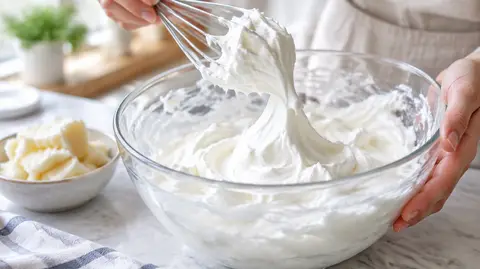
This is grass-fed tallow whipped with sweet almond oil. The whipped texture spreads in a thinner layer than a dense balm, which makes it easier to use a small amount. Sweet almond oil is usually listed around 2 on the same shaky comedogenic scale.
In our original testing, one small whitehead appeared in the first week, within that tester’s normal pattern, and nothing followed in week two.
Drawbacks: Adds a second fat (almond oil), so it’s a less clean test of tallow alone. Rules out anyone with a tree nut allergy.
Best for: Someone who has already tolerated a plain tallow balm and wants something lighter for daily use.
What About Terra Lotus and Vanman’s?
Both are well-made balms that we recommend elsewhere, including for sensitive skin. For acne-prone skin, though, both include olive oil. Olive oil is oleic-rich, often rated around 2 to 4 comedogenic depending on the source, and was shown to weaken the skin barrier in adults in a small trial (Danby et al., Pediatric Dermatology, 2013). If you’re breakout-prone, start with one of the three above.
Ingredients to Watch in Tallow Balms
| Ingredient | Typical comedogenic rating (varies by source) | Notes for acne-prone skin |
|---|---|---|
| Beef tallow | 2 (sometimes 2-3) | No human data; oleic-rich, low linoleic |
| Olive oil | 2-4 | Oleic-rich; barrier disruption shown in adults |
| Coconut oil | 4 | Commonly flagged; common in DIY recipes |
| Cocoa butter | 4 | Often listed high |
| Sweet almond oil | 2 | Tree nut allergen |
| Jojoba oil | 2 | Liquid wax ester, often better tolerated |
| Shea butter | 0-2 | Usually well tolerated |
| Beeswax | 0-2 | Adds occlusion; propolis traces can be an allergen |
| Honey | Not usually rated | Humectant; rare allergen |
| Essential oils | Not comedogenic, but irritating | Contact irritation can look like breakouts |
Use this table to rank relative risk. It can’t predict how your own skin will respond.
How to Patch Test Tallow on Acne-Prone Skin
The American Academy of Dermatology’s general advice for testing a new product is to apply it to a small spot on the inner arm twice a day for 7 to 10 days. For acne-prone skin, add a facial stage, because the arm doesn’t tell you anything about pores.
- Arm test (7-10 days). Apply a small amount twice a day to a quarter-sized spot on the inner arm or elbow crease. Redness, itching, or bumps mean stop.
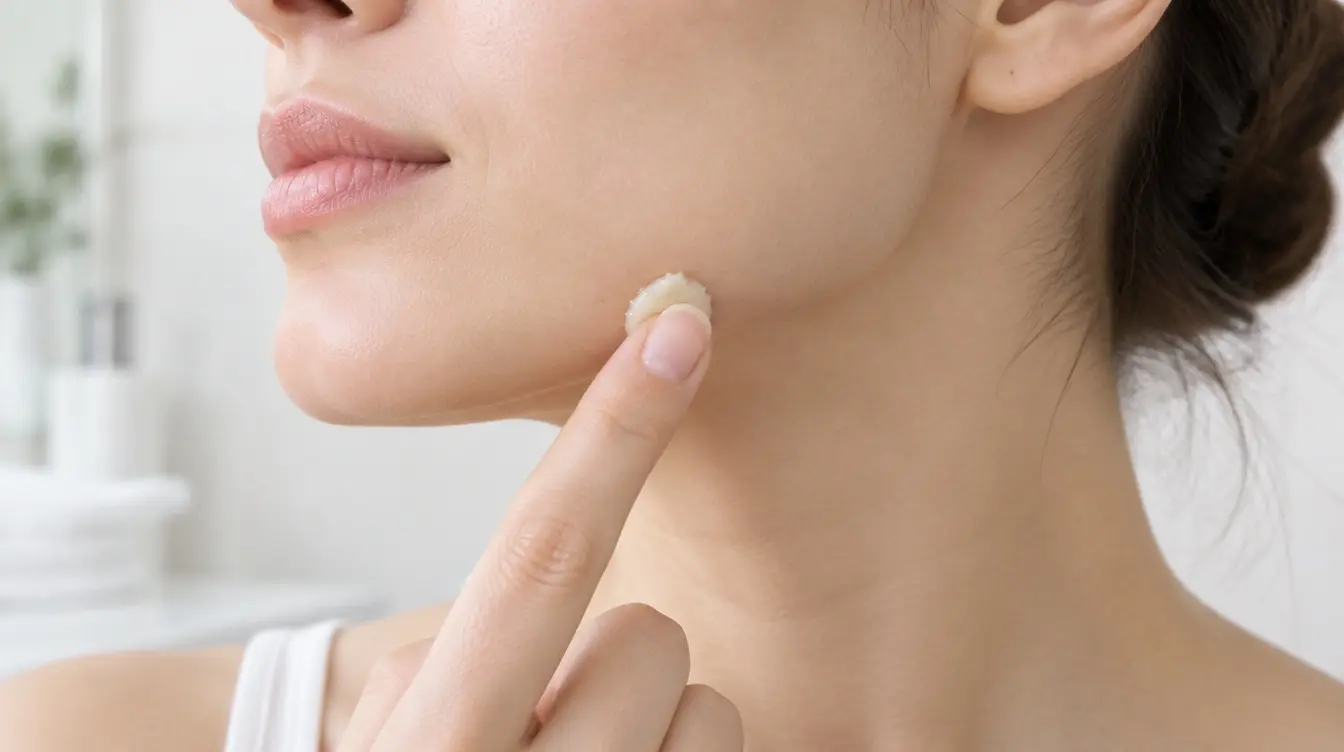
- Jawline test (2-4 weeks). Apply a thin layer once a day, at night, to one small area of your jawline or chin, wherever you usually break out. Comedones take weeks to form, so a few days isn’t enough.
- Compare sides. Leave the matching spot on the other side untreated. New bumps on the treated side only point to the product.
- Expand slowly. If both stages pass, move to one cheek, then the whole face, and keep it to nighttime at first.
While testing:
- Change one product at a time. Don’t start a new cleanser or active at the same time.
- Use less than you think. A rice-grain to pea-sized amount covers the face.
- Apply to slightly damp skin so it spreads thin.
- Scoop with a clean spatula instead of dipping fingers in the jar.
“Purging” or breakout? Purging is a term for the temporary flare some people get when starting an ingredient that speeds cell turnover, like a retinoid. Tallow doesn’t do that: USDA lists no vitamin A in beef tallow. New bumps after starting a tallow balm are more likely a reaction to the balm than a purge. If they appear in places you don’t usually break out, stop.
Frequently Asked Questions
What is beef tallow’s comedogenic rating?
It’s usually listed as 2 out of 5, sometimes 2 to 3. Those figures trace back to rabbit-ear testing that overstates or misstates human results, and sources don’t agree. There’s no human data specific to tallow.
Is there such a thing as non-comedogenic beef tallow?
No product can honestly promise that. Processing (deodorizing, filtering) changes smell and color, not the fatty acid profile. A balm without olive or coconut oil and without fragrance lowers the number of extra variables, but the tallow itself is the same fat.
Will beef tallow make my oily skin oilier?
It adds a layer of fat, so it often feels that way. The idea that tallow “tells your skin to make less oil” isn’t supported by evidence. If you’re oily, a light water-based moisturizer is usually the better fit.
Can I use tallow with my acne medications?
Retinoids and benzoyl peroxide can dry the skin, and some people use a thin layer of a bland moisturizer on the dry areas. Apply the medication first and let it absorb. Check with your dermatologist before adding tallow to a prescription routine, and use it only on dry areas rather than on active breakouts.
Should I put tallow on active pimples?
No. Keep it off inflamed spots.
Is grass-fed tallow less comedogenic?
There’s no evidence either way. Grass-fed beef fat has somewhat more omega-3 and CLA than grain-fed (Daley et al., Nutrition Journal, 2010), but both are still mostly oleic, palmitic, and stearic acid.
What’s the best-rated beef tallow for the face if I’m acne-prone?
We don’t use Amazon ratings, and they don’t measure breakouts anyway. On ingredients alone, Santa Cruz Paleo and Organic Tallow Skin have the fewest variables. For a broader face-product comparison, see our tested tallow face moisturizers.
Bottom Line
Tallow is a heavy, oleic-rich moisturizer with no human acne data behind it and a comedogenic rating built on rabbit ears. Some acne-prone people tolerate it. Many would do better with a light, non-oily moisturizer.
If you want to try it:
- Start with Santa Cruz Paleo or Organic Tallow Skin, the shortest ingredient lists with no olive oil and no fragrance.
- Move to Amallow Unscented only after a plain tallow has passed a jawline test.
- Test for two to four weeks on one small area before using it on your whole face.
- If you have active inflammatory or cystic acne, see a dermatologist first.
For general guidance on using tallow on skin, see our complete beef tallow for skin guide and the tallow for acne overview.
Explore more tallow guides
Browse our collection of recipes, comparisons, reviews and DIY tutorials.
View all guidesKing Tallow is reader-supported. We research and test the products we recommend, and when you buy through links on this page we may earn a commission at no extra cost to you. See our affiliate disclosure.
This article is for general information and is not medical advice. Patch test new skincare and talk to a dermatologist or doctor about persistent skin conditions.
Published · Last updated