
Best Tallow for Eczema: 7 Balms Compared, Fragrance-Free Picks First
Independent reviewBest tallow for eczema-prone skin: 7 balms compared by ingredients and scent, with what the evidence supports, how to use it, and when to see a doctor.

We test and research the products we recommend. If you buy through our links, we may earn a commission at no extra cost to you.
Short answer: If you want to try tallow on eczema-prone skin, pick a fragrance-free balm with a short ingredient list. Our first choices are Organic Tallow Skin (tallow and raw honey) and Santa Cruz Paleo (tallow, beeswax, honey). Tallow works as a thick, occlusive moisturizer, and regular moisturizing is a core part of eczema care. No study has tested tallow for eczema, though, and it doesn’t replace treatment from your doctor.
Eczema (atopic dermatitis) is a long-term inflammatory skin condition with a weakened skin barrier. Moisturizers don’t cure it. They help keep the barrier in better shape between flares and ease dryness and itch. Tallow is one option in that category. Its main advantages are that it contains no water, needs no preservatives, and can come with very few ingredients. Its drawbacks are that it’s heavy, has no clinical data, and some balms add essential oils or olive oil that can make eczema worse.
Best Tallow for Eczema: Comparison
| Product | Ingredients (per label) | Added scent | Texture | Best for | Eczema notes | Price |
|---|---|---|---|---|---|---|
| Organic Tallow Skin (4 oz) | Organic grass-fed tallow, raw honey | None | Medium-thick | Body, most people’s first try | Two ingredients | $ |
| Santa Cruz Paleo | Grass-fed tallow, beeswax, honey | None | Firm | Hands, cracked patches | Beeswax holds it on skin | $$ |
| Amallow Unscented | Grass-fed tallow, sweet almond oil | None | Whipped, light | Face | Tree nut allergen | $$ |
| Terra Lotus Unscented | Organic tallow, raw honey, olive oil | None | Medium | Maintenance between flares | Contains olive oil | $$ |
| Vanman’s | Tallow, raw honey, beeswax, olive oil | None | Dense | Very dry hands and feet | Contains olive oil | $$$ |
| Ancestral Haven | Grass-fed tallow, beeswax, jojoba oil, essential oils | Herbal-rose | Medium | Not for flares | Scented | $$ |
| Amallow Clean Cloud | Tallow, sweet almond oil, essential oils | Essential oils | Whipped | Not for flares | Scented | $$ |
We rank the unscented, olive-oil-free options first. The reasons are below.
Does Tallow Help Eczema? What the Evidence Supports
What’s well supported: moisturizing. The American Academy of Dermatology’s 2023 guideline for adult atopic dermatitis (Sidbury et al., Journal of the American Academy of Dermatology) recommends moisturizers as part of standard care. Emollients reduce water loss and dryness and can reduce how much medicated cream people need. That’s the category tallow belongs to.
What isn’t: tallow specifically. We aren’t aware of any clinical trial that has tested beef tallow on eczema. Everything written about tallow for eczema, including this page, reasons from what the fat is made of, not from outcome data. Our longer write-up, beef tallow for eczema: the evidence, goes through it in detail.
What tallow actually is. Beef tallow is mostly triglycerides of oleic, palmitic, and stearic acid. On skin, it acts mainly as an occlusive, a film that slows water loss. The skin barrier’s own lipids are a different mix: mostly ceramides, cholesterol, and free fatty acids. Barrier-repair research (Man, Feingold, Thornfeldt, and Elias, Journal of Investigative Dermatology, 1996) found that these three need to be supplied together, and that incomplete mixes can slow recovery. Tallow supplies no ceramides, so the realistic picture is a protective layer over a barrier that repairs itself underneath.
How it compares to other occlusives. Petrolatum is the benchmark occlusive. A review in Clinical Medicine & Research (Purnamawati et al., 2017) notes that petrolatum cuts water loss by more than 98%, compared with roughly 20 to 30% for lanolin, mineral oil, and silicones. Tallow hasn’t been measured the same way. It’s a reasonable choice if you prefer a single-source animal fat to petroleum products, but it hasn’t been shown to beat a plain ointment.
Where tallow has a real edge: Anhydrous balms (no water) don’t need preservatives, and preservatives are a known cause of contact allergy. A two- or three-ingredient balm also leaves fewer things for damaged skin to react to.
Where it can backfire:
- Fragrance and essential oils. Fragrance, including “natural” essential oils like lavender and tea tree, is one of the most common causes of allergic contact dermatitis. On eczema skin, that can look exactly like a flare.
- Olive oil. In a small trial in adults, olive oil weakened the skin barrier and caused mild redness, while sunflower oil didn’t (Danby et al., Pediatric Dermatology, 2013). Two of the balms on this list include olive oil.
- Bee products. Beeswax can carry traces of propolis, a recognized contact allergen. Raw honey isn’t sterilized the way medical-grade wound honey is, so keep honey balms off broken, weeping, or infected skin.
The 7 Tallow Balms, Ranked for Eczema-Prone Skin
1. Organic Tallow Skin (4 oz): Best Overall for Eczema-Prone Skin
The label lists two ingredients: organic grass-fed tallow and raw honey. It has no fragrance, carrier oils, or beeswax. It’s the simplest formula here and the least expensive per ounce. That matters because eczema care means using moisturizer generously and often.
What we liked:
- Two ingredients, unscented
- The 4 oz jar makes generous use affordable
- Thick enough to stay on dry patches
What could be better:
- Feels greasy for a while after you apply it
- Raw honey means you should keep it off open or weeping skin
Who it’s for: People with body eczema who want a plain balm they can use generously.
2. Santa Cruz Paleo: Best for Hands and Cracked Patches
Grass-fed tallow, beeswax, and honey. Beeswax makes it firm, so it stays on hands through handwashing and light activity longer than softer balms do. That helps with knuckle and finger eczema.
What we liked:
- Three ingredients, no added scent
- Firm texture holds on hands
What could be better:
- Has to be warmed before it spreads
- Small jar for whole-body use
- Skip it if you react to propolis or bee products
Who it’s for: Hand eczema, and anyone who needs a balm that stays in place.
3. Amallow Unscented: Best for Facial Eczema
Grass-fed tallow whipped with sweet almond oil. The whipped texture spreads without dragging on tender skin and feels lighter on the face than a dense balm. There’s no added fragrance.
What we liked:
- Light, whipped texture for the face
- Unscented
What could be better:
- Sweet almond oil rules it out for tree nut allergy
- Not heavy enough for badly cracked body skin
- Part of the jar volume is air
Who it’s for: Dry, eczema-prone facial skin. For breakout-prone faces, read does tallow clog pores? first.
4. Terra Lotus Unscented: Maintenance Between Flares
Organic tallow, raw honey, and olive oil, with no added scent. It’s a pleasant daily balm. We moved it down because of the olive oil. If your eczema is well controlled and you’ve used olive-oil products without trouble, it’s a reasonable daily moisturizer. If you’re mid-flare, start with the options above.
Who it’s for: People whose eczema is quiet and who tolerate olive oil.
5. Vanman’s: Very Dry Hands and Feet
Tallow, raw honey, beeswax, and olive oil. It’s dense and heavy, so it works best on thick-skinned, very dry areas like heels and the backs of hands. It can be sticky at first. Olive oil is on the label, so the same caution applies as for Terra Lotus.
Who it’s for: Rough, dry hands and feet in people who tolerate olive oil. Keep it off open cracks.
6. Ancestral Haven Herbal Rose: Not for Flares
Grass-fed tallow, beeswax, and jojoba oil, scented with steam-distilled herbal-rose essential oils, in a large 5 oz jar. It’s a nice everyday balm for normal skin, but the scent puts it last in line for eczema. Use it only on skin that’s clear, and only if you already know you tolerate botanical fragrances.
7. Amallow Clean Cloud: Not for Flares
Same whipped tallow and sweet almond oil base as Amallow Unscented, plus an essential oil blend for scent. If you like the Amallow texture, buy the unscented version for eczema-prone skin.
Why Fragrance-Free Matters So Much for Eczema
- Essential oils are concentrated plant extracts. Linalool and limonene, found in lavender and citrus oils, form stronger allergens as they oxidize in the jar.
- “Natural fragrance” is still fragrance. Skin reacts to the chemical whatever its source.
- Allergic reactions can take days to show up, so it’s easy to blame the eczema instead of the product.
For a full lineup of unscented, short-ingredient tallow balms, see the best tallow balm for sensitive skin.
How to Use Tallow on Eczema-Prone Skin
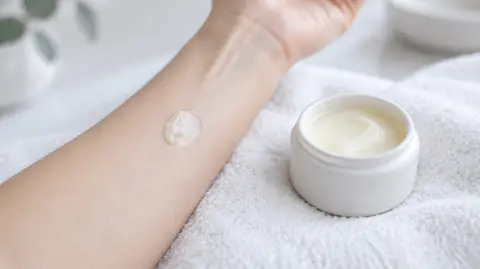
Patch test first. Apply a small amount to a quarter-sized spot of intact skin on the inner arm twice a day for 7 to 10 days. That’s the American Academy of Dermatology’s general advice for new products. No redness or itch means you can move on to larger areas.
Soak and seal. After a lukewarm (not hot) bath or shower, pat the skin until it’s just damp and apply the balm within a few minutes. The balm holds in the water that’s already in the skin. Dermatologists recommend the same technique with any occlusive moisturizer.
Layer with your prescriptions, not instead of them. If you use a topical steroid or other prescription, apply it first as directed, let it absorb, then apply the balm over it on the areas your doctor advises. Ask your dermatologist about timing.
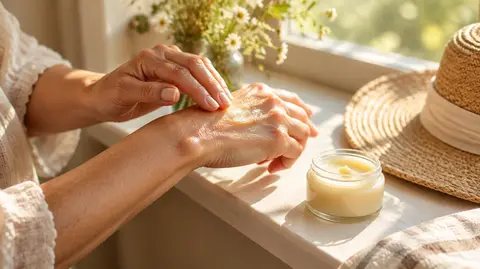
Press, don’t rub. Warm the balm between your palms and press it on. Friction irritates inflamed skin.
Keep the jar clean. Scoop with a clean spatula, especially if your skin is cracked.
Keep it off: weeping, crusted, or infected skin, and deep open cracks.
For how tallow fits into eczema care more broadly, see tallow for eczema.
When to See a Doctor
Tallow is a moisturizer with no proven medicinal effect. See a doctor or dermatologist if:
- Skin is weeping, crusting yellow, hot, spreading, or painful (possible infection)
- There are clusters of painful blisters or punched-out sores, especially on the face (a rare but urgent herpes infection called eczema herpeticum)
- Eczema is keeping you or your child awake, or isn’t controlled with moisturizers and over-the-counter care
- Eczema is around the eyes
- You’re thinking about stopping a prescribed medicine
Frequently Asked Questions
Is beef tallow safe for eczema?
For many people, a plain, unscented tallow balm is well tolerated, but there’s no clinical safety data specific to eczema. Choose a short ingredient list with no fragrance, patch test first, and stop if itching or redness increases.
Can tallow cure eczema?
No. Eczema is a chronic condition. Moisturizers, tallow included, can reduce dryness and help the skin between flares. They don’t cure it or replace medical treatment.
Is tallow better than CeraVe or Vaseline for eczema?
There’s no head-to-head evidence. Ceramide creams supply ceramides, which tallow doesn’t. Petrolatum is the most effective, most studied occlusive. Tallow suits people who want a single-ingredient animal fat and have no problem with it. It isn’t a proven upgrade.
How often should I apply tallow to eczema?
Moisturizers work best used often: at least twice a day, after bathing, and after handwashing for hand eczema.
Is grass-fed tallow better for eczema?
Grass-fed beef fat contains somewhat more omega-3 and CLA than grain-fed (Daley et al., Nutrition Journal, 2010). No one has shown that this changes how it performs on eczema. Short ingredients and no fragrance matter more.
Can I use tallow on my baby’s eczema?
Talk to your pediatrician first, especially for infants under six months. If you get the go-ahead, choose an unscented product and patch test. Our guide to tallow for baby skin covers the details.
Can I use tallow with my prescription eczema cream?
Usually yes, as a moisturizer layered after the medication has absorbed. Confirm the order and timing with your prescriber.
Bottom Line
Moisturizing is a core part of eczema care, and a plain tallow balm is one way to do it. The evidence for tallow specifically is missing, so choose on ingredients:
- First try: Organic Tallow Skin, two ingredients, unscented, generous jar.
- Hands and cracked patches: Santa Cruz Paleo, firm and stays on.
- Face: Amallow Unscented, light and whipped (not for tree nut allergy).
Skip scented balms during flares, be careful with olive-oil formulas, and see a doctor for anything infected, weeping, or not improving. For the science behind tallow on skin, read our complete beef tallow for skin guide.
Explore more tallow guides
Browse our collection of recipes, comparisons, reviews and DIY tutorials.
View all guidesKing Tallow is reader-supported. We research and test the products we recommend, and when you buy through links on this page we may earn a commission at no extra cost to you. See our affiliate disclosure.
This article is for general information and is not medical advice. Patch test new skincare and talk to a dermatologist or doctor about persistent skin conditions.
Published · Last updated