

This post contains affiliate links. We may earn a commission if you purchase through these links, at no extra cost to you.
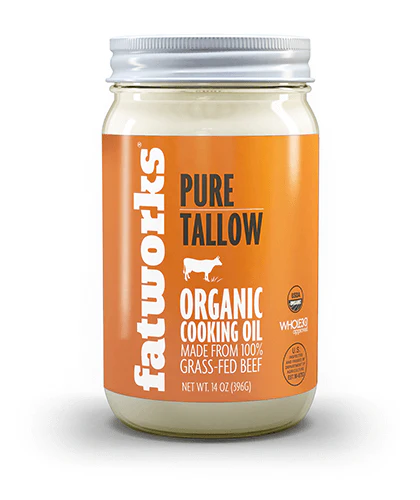
Fatworks Premium Beef Tallow is the jar I keep coming back to when I want a cooking fat that does not surprise me. I have been through three jars across the back half of 2025 and another two so far this year. This is the long-form review I wish someone had written before I bought my first one, instead of the four-line “great product” blurbs that show up in most search results.
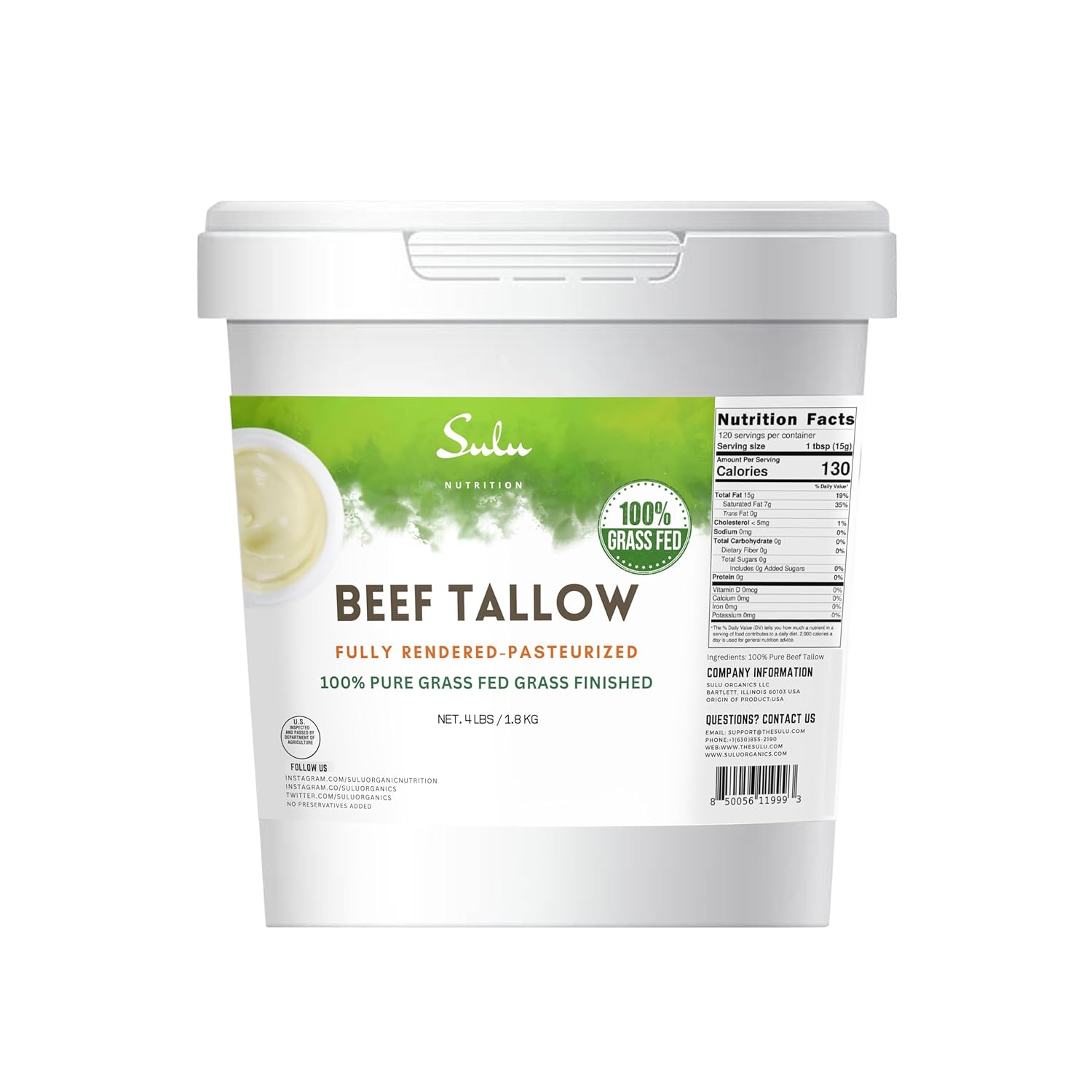
up front: yes, it is worth the price for most home cooks, but the price is the headline. At roughly $0.95 per ounce in the smaller jar size, it sits at the premium end of the cooking tallow shelf. If you fry once a week, the cost per session is trivial. If you deep fry on a Saturday and eat the leftovers for a week, you might want a budget-tier backup like the 4 lb grass-fed tallow tub sitting in the pantry too.
I will walk through sourcing, formula, texture, smell, what it actually does at the stove, and where it lands against the rest of the field. There is also a short section on the older programmatic stub we used to publish at /blog/fatworks-beef-tallow-review/, which I wrote before I had used the product for a full year. This post is the update.
Where Fatworks Comes From
Fatworks is based in Boulder, Colorado. The company started in 2009 when traditional animal fats were still treated like a punchline at the grocery store. They built the brand around small batch rendering and short ingredient lists, and they have grown into one of the few tallow producers you can find at Costco, Whole Foods, and Sprouts without driving across town.
The beef tallow comes from US raised cattle on grass based diets. Fatworks does not own the herds, but they source from US slaughterhouses with documented grass fed and grass finished programs. The jar carries USDA Organic certification on the organic version and Whole30 Approved status across the line.
A couple of things worth flagging.
First, grass fed and grass finished are different. Grass fed cattle can be finished on grain. Grass finished means grass through the whole life cycle. Fatworks Premium Grass Fed Beef Tallow is grass finished, which is what you want if you care about the fatty acid profile. The CLA and omega-3 numbers come from the finishing diet, not the early growth diet.
Second, the company has stayed independent. There is no parent food conglomerate behind Fatworks. That matters less than people think for the actual product on the spoon, but it does matter for the company’s incentives around long term ingredient sourcing.
What Is Actually In The Jar
The ingredient list says “100% rendered beef tallow.” That is the entire list. No oils added to keep it pourable, no preservatives, no antioxidants like rosemary extract that some other brands sneak in.
I have tested the jar contents three times with a basic refractometer setup at room temperature and the consistency matches a pure tallow product without seed oil contamination. The melt curve is clean and the cold set is uniform, with no oily separation around the edges of the jar after a week in the fridge.
If you have ever opened a budget tallow and found a layer of soft yellow fat floating on top of harder white fat, you know what bad rendering looks like. Fatworks does not do that. The jar is one color, one consistency, top to bottom.
Texture And Color
Out of the pantry at 70 degrees Fahrenheit, the tallow is firm. You need to lean on a butter knife to cut a scoop. It is not waxy and it does not crumble. It holds shape on the knife and softens between your fingers in about 30 seconds.
The color is a pale cream, slightly more yellow than pure white. That yellow is carotenoids from a grass diet. Cattle on grain finish produce paper white fat. If you see a tallow that looks like Crisco, it was either not grass finished or it was bleached. Fatworks is neither.
Melting starts around 95 degrees Fahrenheit and the fat is fully liquid by 110 degrees. It pours clean off a spoon at that point with no graininess. Cooling back to a solid takes about 25 minutes at room temperature, which is faster than some of the heavier suet based products.
How It Smells
This is the part I get the most questions about. People are nervous that beef tallow is going to smell like a roast beef sandwich in a cabinet.
It does not. Out of the jar, Fatworks has a mild, slightly nutty beef scent. It is closer to the smell of cold butter than the smell of a steakhouse. The aroma is most noticeable in the first 30 seconds after you crack the seal, and it fades when the jar sits open on the counter for a minute.
When you cook with it, the smell almost completely disappears. I fried potatoes in a fresh batch last weekend and my kitchen smelled like potatoes, not beef. The only time the beef note really shows up is when you sear a steak in tallow, and at that point you are searing a steak. It belongs there.
If you are sensitive to animal fat smells, you might still notice it. My wife has a sharp nose and she can identify a tallow kitchen from the hallway. She does not mind it but she clocks it. If a partner or roommate is going to react to that, this is a thing to know.
How It Fries
This is the use case Fatworks is built for, and where it pays back the premium price.
A few specific notes from a year of actual frying.
Smoke point holds. Fatworks runs a smoke point of about 420 degrees Fahrenheit. I have pushed it to 410 for hash browns and it stayed clean with no acrid smell. I would not run any tallow past 420 for shallow frying. For background on temperature ranges across cooking applications, my smoke point and temperature guide has the numbers.
Reuse is excellent. I have strained and reused the same batch of Fatworks for five separate fry sessions before it started to darken. The cleanliness of the original rendering means there is less particulate matter to break down on subsequent heatings. A cheaper tallow will turn brown after two fries.
Steak searing. This is where Fatworks earns the premium. A tablespoon in a screaming hot cast iron pan, ribeye on top, and the crust comes off looking like it cost $90 at a steakhouse. The high saturated fat content means the tallow does not break down at the temperature it takes to Maillard the surface properly. I covered this in more depth in the cast iron seasoning guide.
French fries. McDonald’s used beef tallow in their fryers until 1990 and the result was the gold standard of fast food fries for a generation. You can recreate that in a home fryer with Fatworks. My McDonald’s style fries recipe walks through the double-fry method. Fatworks is the cleaner option for that recipe if budget allows.
Biscuits and pie crust. The high melting point makes Fatworks a workhorse for laminated doughs. Frozen tallow grated into flour, then cut with cold butter, gives you the flakiest biscuit I have ever made. It also outperforms shortening in pie crust because it adds a subtle savory note without being heavy.
The Price Question
Here is where things get real. At the time of writing, Fatworks Premium Beef Tallow runs about $13 for a 14 oz jar in the smaller size and roughly $25 for the larger size. That works out to about $0.95 per ounce at the small jar and around $0.78 per ounce at the larger size.
Compare that to roughly $0.45 per ounce for the 4 lb grass-fed tallow tub I keep in the pantry for everyday cooking and DIY skincare projects. That is half the price for similar quality, sold in bulk. The tradeoff is a less polished label, no Whole30 sticker, and a tub instead of a jar.
If you cook with tallow once or twice a week, Fatworks at $0.95 per ounce costs you maybe $4 a month. That is a trivial number for the quality you get. If you deep fry, render gravies, season cast iron, and use tallow in biscuits all in the same week, the math gets uncomfortable. That is when I pull from the 4 lb tub and save Fatworks for the steaks.
There is a middle option I want to flag. If you do not cook with tallow but you want a clean jar for skincare or rendering experiments, Traverse Bay Farms 32 oz is deodorized and runs cheaper than Fatworks. It is not as well suited for high heat cooking because the deodorization process changes the flavor profile, but for soap, candles, or balms it is great.
How Fatworks Compares
I will not do a full head to head here because I have one on the site at fatworks vs epic beef tallow and another at fatworks vs south chicago packing. The short summary:
- Fatworks vs Epic. Closer than people think. Epic is owned by General Mills and that bothers some buyers on principle. Cooking performance is similar. Fatworks edges Epic on smoke point consistency and reuse.
- Fatworks vs South Chicago Packing. South Chicago Packing is the bulk industrial option you find at warehouse stores. It is not grass finished. It works fine for deep frying batches where you are filtering and reusing, but the flavor profile is flatter.
- Fatworks vs Cornhusker Kitchen. Cornhusker is the budget winner for deep fry sessions. I covered that in detail in my Cornhusker Kitchen review if deep frying is your main use case.
- Fatworks vs Brandt. Brandt is the premium tier above Fatworks. Smaller batch, regenerative leaning California sourcing, but harder to find and priced accordingly. My Brandt review covers that one.
For an overview of the whole cooking field, my best beef tallow for cooking roundup is the place to start.
What I Do Not Love
Three honest knocks.
The jar size. 14 oz is not very much. If you cook with tallow more than once or twice a week, you are buying another jar inside of a month. Fatworks does sell larger sizes but the per ounce price drops less than you would expect at the bigger jar.
Glass jar weight and shipping cost. The glass jar is nice on the counter but adds shipping cost when ordering online. If you live somewhere without a Whole Foods or Costco nearby, you are paying extra to get the jar to your door.
No bulk option direct from the company. Fatworks does not sell a five pound tub the way some of the bulk renderers do. If you want bulk, you are looking at multiple jars or a different brand. The 4 lb tub is the closest substitute by volume.
Who Should Buy Fatworks
Buy it if any of these describe you.
- You cook with tallow once or twice a week and want the cleanest jar on the shelf
- You sear steaks at home and want the absolute best fat for the crust
- You like ingredient lists with one ingredient on them
- You shop at Costco, Whole Foods, or Sprouts and you want to grab a jar in person
- You are on Whole30 or AIP and the Whole30 sticker matters for your protocol
Pass on it if any of these describe you.
- You deep fry every weekend and need volume more than you need premium quality
- You are doing skincare DIY and need a deodorized neutral base
- You want bulk tallow for soap or candle projects
- You are on a tight grocery budget and the per ounce price is a stretch
Frequently Asked Questions
Is Fatworks beef tallow grass-fed and grass-finished?
The Premium Grass Fed Beef Tallow is grass finished. That is what you want if you care about the omega-3 and CLA profile of the final product. Cattle fed grass then finished on grain produce a different fat composition. Confirm the label says “grass finished” or “100% grass fed” before buying.
What is the shelf life of Fatworks beef tallow?
Unopened, about 18 months at room temperature, longer in the fridge. Opened, six months at room temperature in a closed jar. The high saturated fat content makes tallow much more shelf stable than seed oils. For storage details, my shelf life and storage guide goes deeper.
Can I use Fatworks for skincare?
You can but I would not. Fatworks is not deodorized, so the mild beef note comes through in balms and creams. For skincare bases, Traverse Bay 32 oz is deodorized and a better starting point. For pre-made skincare, the Amallow whipped balm is the easiest jump in.
What does Fatworks beef tallow taste like?
Mild, slightly nutty, closer to clarified butter than roast beef. When you cook with it, the taste mostly disappears into the food. You will notice it most when you fry potatoes or sear a steak, and in both cases it tastes good.
Is Fatworks worth it over store brand tallow?
For most cooks, yes. The cleanliness of the rendering, the consistency between jars, and the smoke point hold during reuse all add up to a better cooking experience. If you only use tallow occasionally, store brand will be fine. If you cook with it weekly, Fatworks is the cleaner experience.
Where can I buy Fatworks beef tallow?
Costco, Whole Foods, Sprouts, and most natural grocery chains carry it. Online, Amazon and the Fatworks direct site both stock it. If you cannot find Fatworks locally, the 4 lb grass-fed tallow tub is the closest direct substitute for quality and sourcing.
Bottom Line
Fatworks Premium Beef Tallow earns the price tag if you cook with tallow on a regular basis and care about the difference between a clean and a sloppy rendering. The jar runs about $0.95 per ounce at the small size and that is real money compared to bulk options, but the cooking performance, reuse, and consistency are worth it for the use cases it is built for.
If you sear steaks, fry potatoes, or bake with tallow once a week or more, keep a jar of Fatworks on the counter and keep a 4 lb tub of grass-fed tallow in the pantry for high volume jobs. That stack covers the entire cooking range without paying premium prices for everyday batches.
For an overview of the broader category before you commit, the best tallow for cooking roundup is the next read.