Tallow vs Butter for Skin: Which Is Better for Your Face?
Independent reviewTallow's palmitoleic acid biomimics human sebum. Butter brings tradition and lactose. Texture, absorption, allergies, and which fat wins for daily face care.

This post contains affiliate links. We may earn a commission if you purchase through these links, at no extra cost to you.
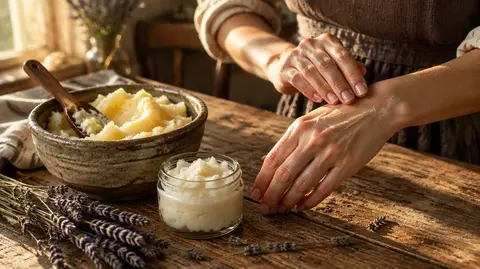
A friend’s grandmother in Punjab used to rub a fingertip of ghee into her face every night before bed. She lived to 94 and her skin always looked younger than her age. I have heard similar stories from a Russian friend whose mother used butter on chapped winter cheeks, and from a Texas rancher who patted rendered beef tallow on his wife’s hands every winter for thirty years.
Animal fat skincare is not new. Tallow and butter are the two most common animal-fat options people consider for face care, and they have meaningful differences once you get past the broad category.
This post compares them on the things that actually matter when you are choosing a fat to put on your face. Fatty acid match to human skin. Texture and absorption. Allergy and irritation risk. Cultural and historical use. And what I would actually tell you to use for your face if you came over and asked.
Why Animal Fats Work on Skin at All
The fat under your skin and the fat your sebaceous glands produce is not olive oil or coconut oil. Human sebum is mostly triglycerides, wax esters, and squalene. The triglycerides break down on the skin surface into free fatty acids, the most abundant of which is palmitoleic acid.
Plant oils do not contain palmitoleic acid in any meaningful quantity. The mammalian fats that do are tallow, lard, butter, and ghee. Of those, beef tallow is the highest in palmitoleic acid at around 2 to 4% by weight. Butter and ghee sit lower, around 1 to 2%. Lard sits in between.
Palmitoleic acid is not just a number on a lab sheet. It is the specific monounsaturated fatty acid that human skin recognizes as belonging there. That recognition is the reason an animal fat absorbs into skin in a way that a plant oil does not, and the reason tallow specifically does so well as a moisturizer.
This is the headline difference. Tallow is a closer biochemical match to your skin than butter is. The gap is not enormous, but it is real and it shows up in how the product behaves on the skin.
The Fatty Acid Profile Side by Side
To be specific, here is the rough breakdown.
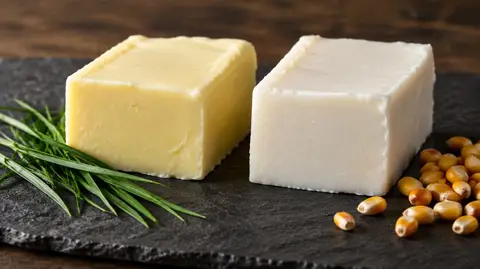
Beef tallow is approximately 50% saturated, 42% monounsaturated, and 4% polyunsaturated. The standout for skin is palmitoleic acid at 2 to 4%, plus a fairly even mix of stearic, palmitic, and oleic acids that mimic sebum.
Butter is approximately 63% saturated, 26% monounsaturated, and 4% polyunsaturated. Butter brings a lot of short-chain saturated fats like butyric and caproic acid, which tallow does not contain. Butter has less palmitoleic acid than tallow but more total saturated fat.
Ghee is butter with the milk solids removed. The fatty acid profile is almost identical to butter, but the lactose, casein, and water have been cooked out. Ghee is what most Indian and Ayurvedic skincare traditions actually use, not raw butter.
The numbers suggest tallow as the closer skin match. The traditions suggest both work. The traditions are not wrong, but the mechanism is different.
The Lactose and Casein Question
This is where butter loses ground for some people and not others.
Butter contains lactose and casein. Both are dairy allergens. If you have a true dairy allergy or strong sensitivity, putting butter on your face is going to give you a reaction. Hives, redness, itching, sometimes contact dermatitis. The reaction may be milder than eating it, but it is real and I have watched a couple friends find out the hard way.
Ghee removes most of the milk solids in the clarification process. Trace amounts of casein and lactose can remain depending on how thoroughly the ghee was made. Most people with mild lactose intolerance tolerate ghee fine on skin. People with severe casein allergy still need to be careful.
Tallow contains zero dairy compounds. There is no lactose. There is no casein. The animal source is the same broad category (mammalian fat) but the biology is different. People who break out from butter often do fine with tallow.
This single fact moves a lot of the day-to-day choice for me. If a friend asks which to try first and they have any dairy sensitivity history, tallow is the obvious first stop. If they do not, both are on the table.
Texture and Absorption Hands-On
I have used both on my face. Here is what I have actually noticed.
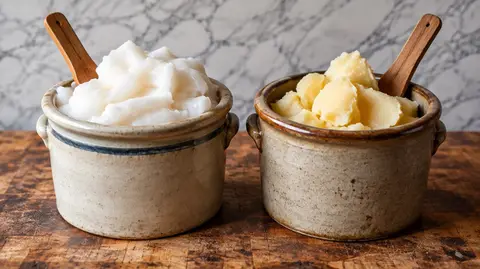
Tallow texture. A solid block at room temperature that softens to a soft pasty consistency when warmed between fingers. Spreads cleanly. Absorbs into skin in 5 to 10 minutes for a normal application. Leaves the skin feeling slightly conditioned rather than coated. Cosmetic-grade whipped tallow balms feel almost identical to a high-end face moisturizer.
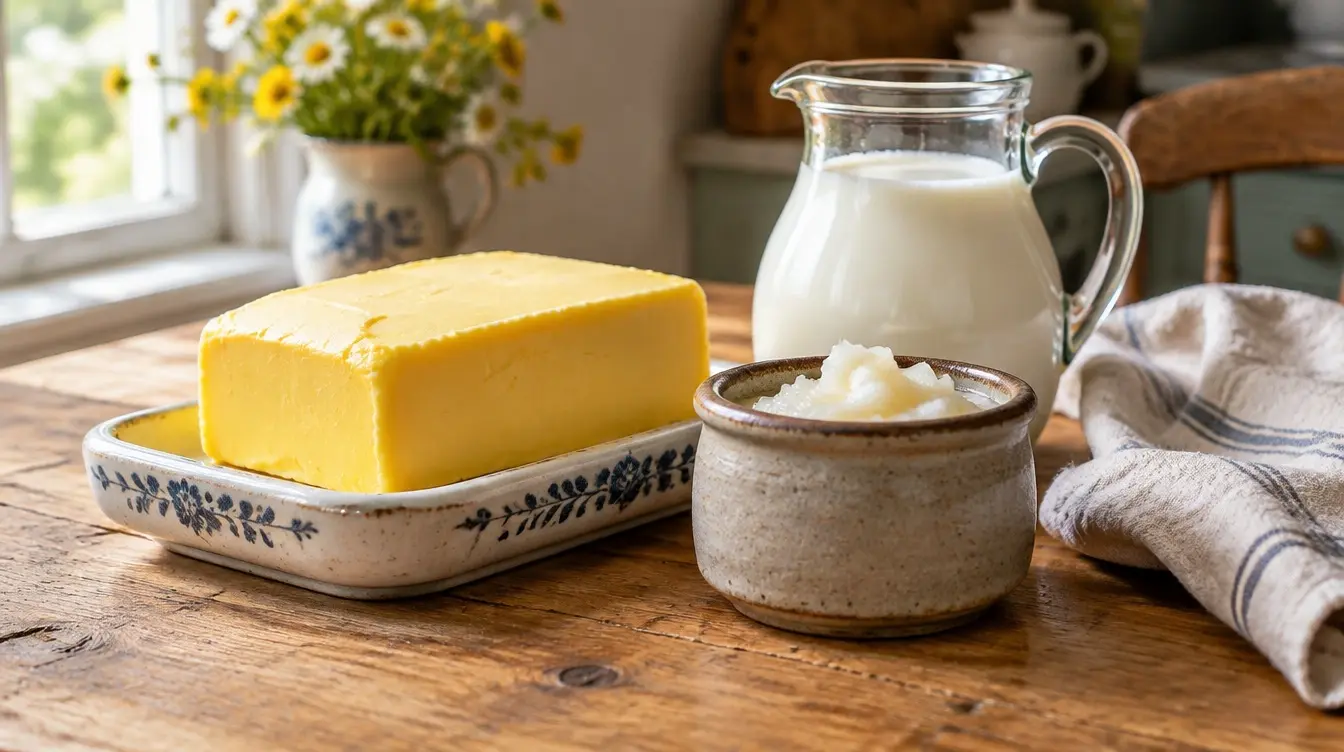
Butter texture. Soft at room temperature. Spreads easily. Absorbs more slowly than tallow. Leaves a noticeable greasy film for 15 to 20 minutes before the saturated fats fully sink in. The film is not unpleasant. It just means butter is more of a nighttime product than a morning product.
Ghee texture. Liquid to soft solid depending on temperature. Even slower absorption than butter because of the higher saturated fat content. The Ayurvedic protocols generally call for ghee at night, often as a thin overnight mask, exactly because it sits on the skin longer.
For daily morning face care, tallow wins on absorption. For overnight intensive treatment, butter or ghee can actually win because the slower absorption gives you a sustained moisture seal.
What Each Is Actually Good For
I want to be useful here, not aphoristic. Here is the real-world breakdown.
Tallow is the better choice for:
- Daily face moisturizer under a sunscreen or makeup.
- People with dairy allergies or sensitivities.
- Acne-prone skin that needs sebum-mimicking hydration rather than a heavy plant-oil barrier.
- DIY balms, salves, and body butters where you want a long shelf life.
- Eczema and very dry patch treatment.
Butter or ghee is the better choice for:
- Overnight intensive moisture treatments.
- Dry winter cheeks and chapped lips on an emergency basis.
- People in cultures where it is already part of the routine and works.
- Cooking applications where you would also like an emergency hand fat.
There is some overlap. A person with normal skin and no dairy sensitivity can use either and get good results. The bigger choice for most people comes down to which one fits their existing routine, their absorption preference, and their allergy history.
Cost and Convenience
A pound of grass-fed tallow rendered or bought costs roughly $8 to $20 depending on quality and source. A pound of high-quality grass-fed butter costs roughly $7 to $12. A pound of ghee costs roughly $15 to $30 because of the clarification process.
For skincare-volume use, both are dirt cheap per ounce compared to a department-store moisturizer. A 1 oz jar of finished tallow balm runs $15 to $30 retail. The same dollar gets you 4 to 8 ounces of homemade DIY balm from raw tallow.
My usual setup is to keep a base of rendered or store-bought tallow for both cooking and skincare. The grass-fed 4 lb tallow is what I use for both jobs. The deodorized Traverse Bay 32 oz is what I use specifically when I want a neutral base for a face balm experiment. For finished balms I do not feel like making, Amallow Unscented Whipped Tallow Balm and Terra Lotus Organic Unscented Tallow Balm are the daily rotation. There is more on choosing between brands at /tallow-for/face/ and the best tallow face creams roundup.
The Cultural Story Matters
Butter and ghee skincare is older than written history. Cleopatra reportedly bathed in goat milk and butter. Vedic texts from over 3,000 years ago describe ghee as a panchakarma element for skin. Russian and Northern European traditions use butter on chapped winter skin. These are not bad traditions.
Tallow skincare is also old, but it has a thinner written record. Plains Indigenous traditions in North America used buffalo and beef tallow as a sunscreen and skin protectant. European tallow-and-honey balms were common before petroleum jelly displaced them in the late 1800s. The modern tallow skincare moment is a revival, not a brand-new idea.
Both fats are time-tested. The interesting question is whether the biochemistry now suggests one is a closer match for everyday use, and the palmitoleic acid evidence does point that way for tallow.
A Quick Word on Patch Testing
This is worth saying clearly. Both tallow and butter can cause reactions in some people. Tallow can carry trace allergens depending on the cattle and the rendering process. Butter contains the dairy compounds I already mentioned. Some people react to the smell, even if not the chemistry.
Patch test both. Inside of the elbow, dime-sized amount, 24 hours, check for redness or itching. If you pass the patch test, expand to one cheek for three days. If you pass that, you are clear to use the product daily.
If you have eczema, see the beef tallow for eczema evidence post. If you have acne-prone skin, the best beef tallow for acne-prone skin guide covers comedogenic ratings in detail. For comparison comparisons across more options, /compare/butter/ lays out tallow vs butter in a structured format.
Frequently Asked Questions
Is butter or tallow better for dry winter skin?
For severe dryness like cracked cheeks or knuckles in single-digit cold, butter and ghee actually have a small edge because the slower absorption creates a sustained moisture seal overnight. For everyday winter moisturizing under makeup or shaving, tallow wins on absorption and finish. Many people use both, ghee at night, tallow in the morning.
Can I use unsalted butter from the grocery store on my face?
Technically yes for a single use, but unsalted butter contains added water (around 16% by weight) which can introduce bacteria once exposed to skin and air. It is also not stable on a counter for long. If you want to try butter skincare seriously, use ghee or a balm built around clarified butter rather than raw butter.
Is tallow safe for sensitive or acne-prone skin?
In most cases, yes. Tallow has a low comedogenic rating, especially compared to coconut oil. The palmitoleic acid content matches sebum, which means it does not signal the skin to overproduce oil. The exception is anyone allergic to beef proteins, which is rare but real. Patch test first.
Does butter have vitamin K2 that tallow does not?
Grass-fed butter and ghee are particularly rich in vitamin K2 (specifically MK-4). Tallow contains some K2 too, but butter is higher per gram. For skin specifically, K2 has a smaller documented role than vitamin A. The difference matters more for internal use than topical.
What about ghee specifically for under-eye dryness?
Ghee is a traditional Ayurvedic ingredient for under-eye and lip area, applied as a thin layer at night. The slow absorption and high saturated fat content make it well-suited to thin, delicate skin. It is greasier than a typical eye cream, but the effect overnight is real. The closest tallow equivalent is a light whipped balm like Amallow Clean Cloud Whipped Tallow, which is what I use under my own eyes.
Can I mix tallow and butter or tallow and ghee?
Yes, and it can be a useful balm formula. A 70/30 tallow-to-ghee blend gives you tallow’s absorption with ghee’s overnight cushion. Melt both at low heat, whip when partially set. The shelf life is closer to the lower-shelf-life ingredient, so 4 to 6 months refrigerated rather than the year-plus of pure tallow.
Bottom Line
Tallow and butter are both legitimate animal-fat skincare options with long histories and real mechanisms. Tallow is the closer fatty-acid match to human sebum, absorbs faster, and is dairy-free. Butter and ghee bring a different texture profile, an older written tradition, and a slower overnight feel that some people prefer for nighttime use.
For most people, especially anyone with dairy sensitivity or acne-prone skin, tallow is the better default for daily face care. Butter and ghee earn a spot in the overnight or emergency-dryness category.
If you want a finished tallow balm without the DIY work, Amallow Unscented is the daily face balm I have used longer than any other product. Terra Lotus Organic Unscented is what I recommend for sensitive skin, and Santa Cruz Paleo Beef Tallow Moisturizer is the three-ingredient minimalist pick. For a DIY base, the grass-fed 4 lb block covers both cooking and skincare from one jar.
Explore more tallow guides
Browse our collection of recipes, comparisons, reviews and DIY tutorials.
View all guidesKing Tallow is reader-supported. We research and test the products we recommend, and when you buy through links on this page we may earn a commission at no extra cost to you. See our affiliate disclosure.
This article is for general information and is not medical advice. Patch test new skincare and talk to a dermatologist or doctor about persistent skin conditions.
Published