Pork Tallow vs Beef Tallow: What's the Difference and Which to Use?
Independent reviewPork tallow (technically lard) vs beef tallow: fatty acid profiles, smoke points, flavor, traditional uses, and when each fat wins in the kitchen and beyond.

This post contains affiliate links. We may earn a commission if you purchase through these links, at no extra cost to you.
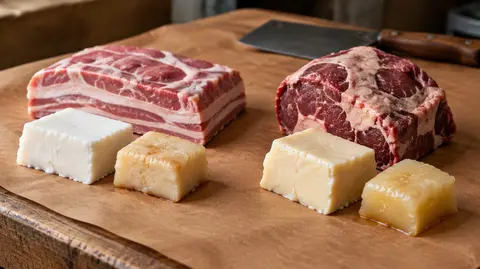
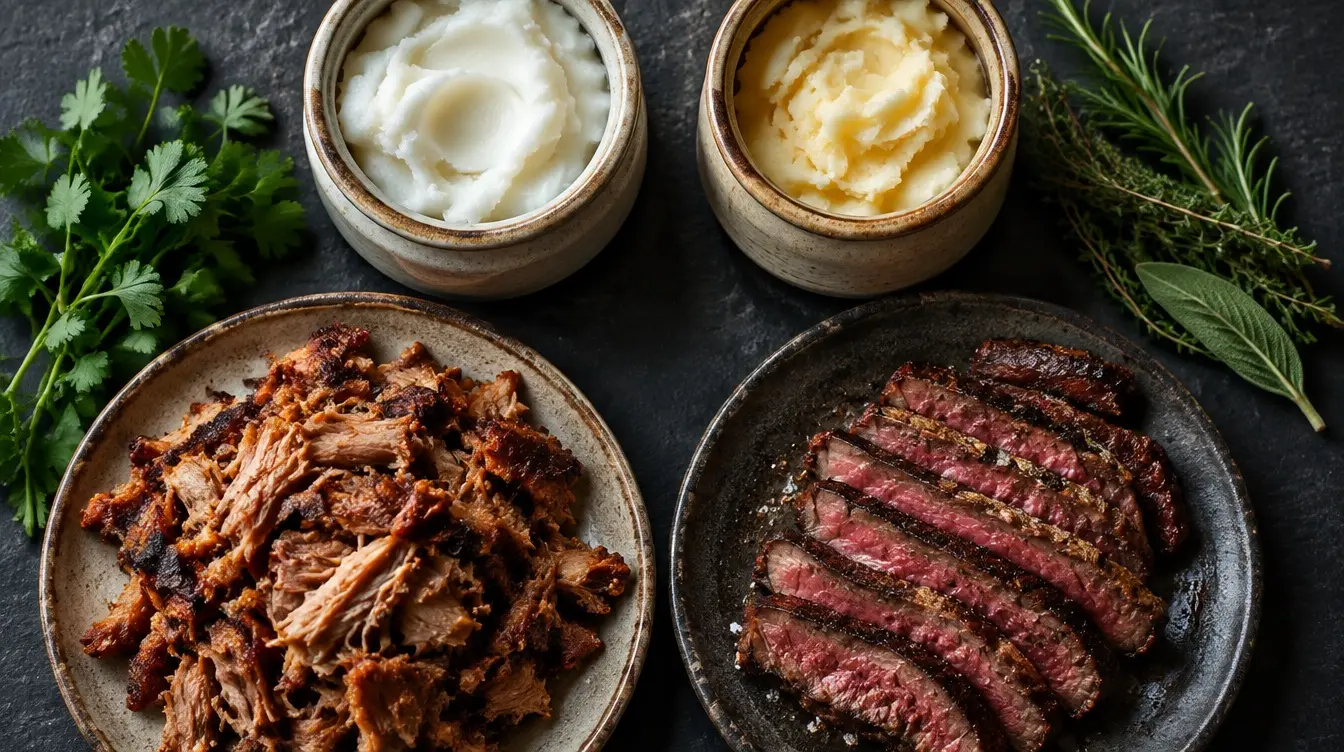
I get the “pork tallow vs beef tallow” question almost every week on email, and the honest answer starts with a vocabulary fix. There is no such thing as pork tallow in any traditional butchery or rendering manual I have ever read. The word people are reaching for is lard. Tallow, strictly speaking, refers to the rendered fat of ruminants, which means beef and mutton. When somebody says pork tallow, they almost always mean rendered pork fat, which is lard.
I am not going to be a snob about this. The two fats overlap in plenty of useful ways, and modern home cooks are using the words how they want to use them. But the difference matters because the two fats behave very differently in a pan, and they also build different flavors, smoke points, and crusts. If you grab the wrong one for a steak sear or a pie crust, you will notice.
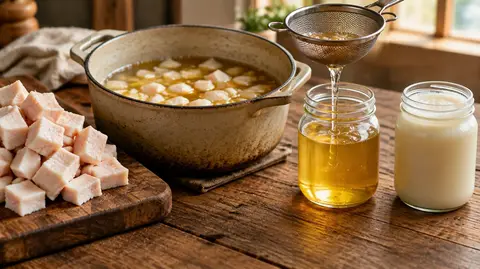
This is the long-form comparison I wish I had when I started rendering my own fat. If you want the deeper kitchen-only breakdown of beef tallow and lard side by side, the beef tallow vs pork lard deep comparison goes harder on the cooking applications. This post zooms out to cover sourcing, chemistry, traditional uses, and a few non-kitchen applications.
Definitions and the Vocabulary Problem
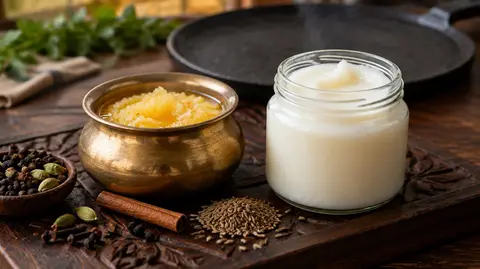
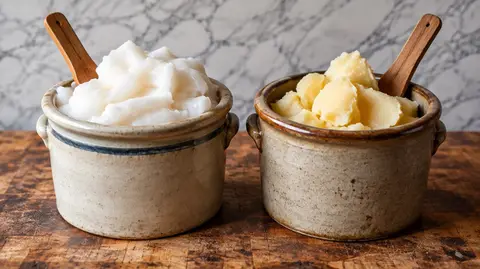
Tallow, in the traditional sense, is rendered ruminant fat. Beef tallow is the most common kind you will find at a butcher or in a rendering plant. Mutton tallow exists and is still used in some industrial applications and specialty soapmaking. The defining traits of tallow are a high melting point (around 113 to 122 degrees Fahrenheit for beef) and a hard, waxy texture at room temperature.
Lard is rendered pork fat. The defining traits of lard are a lower melting point (around 95 to 113 degrees Fahrenheit), a softer texture, and a much higher proportion of unsaturated fat than tallow. Leaf lard, which comes from the visceral fat around the kidneys, is the highest grade and the one bakers reach for because it has almost no porky flavor and a slightly grainy crystalline structure that makes flaky pastry.
When people online say pork tallow they usually mean back fat or fatback rendered hard, which sits closer to a regular lard than to anything beef-derived. I will use lard for the rest of this post because that is what it is.
Fatty Acid Profiles
This is where the two fats actually diverge, and it has practical consequences for both cooking and skincare.
Beef tallow runs about 50 to 55 percent saturated fat, 40 to 45 percent monounsaturated fat, and 3 to 4 percent polyunsaturated fat. The dominant saturated fatty acids are palmitic acid (around 26 percent) and stearic acid (around 19 percent). The dominant monounsaturated fatty acid is oleic acid, the same one that gives olive oil its profile, sitting around 36 to 43 percent.
Lard runs about 39 to 41 percent saturated fat, 45 to 50 percent monounsaturated fat, and 11 to 12 percent polyunsaturated fat. Palmitic acid sits around 24 percent, stearic acid around 14 percent. Oleic acid is the dominant fatty acid at around 44 percent. The big difference is the polyunsaturated load. Lard carries roughly three times as much linoleic acid as tallow does.
What this means in practical terms: tallow is harder, more shelf-stable, and has a higher smoke point. Lard is softer, slightly less stable to heat and oxygen, but still very stable compared to seed oils. For frying, tallow holds up longer through repeated heating cycles. For pastry, lard’s softer crystal structure is exactly what you want.
If the linoleic acid difference matters to you for dietary reasons, the gap is real but it is also smaller than the gap between either animal fat and any seed oil. Soybean oil is around 51 percent linoleic acid. Sunflower oil sits at around 65 percent. Lard at 11 percent is still in a different universe.
Smoke Points and Heat Performance
Beef tallow has a smoke point around 400 to 420 degrees Fahrenheit depending on how clean the render is and whether it has been refined. That is enough headroom for any home fry, deep fry, or pan sear. Steakhouses run tallow at 350 to 375 in a fryer for hours and the fat holds up. The old McDonald’s beef-tallow fries used a tallow blend and got changed out far less often than the seed oil that replaced them.
Lard has a smoke point around 370 to 400 degrees depending on the cut and the render quality. Leaf lard is on the higher end. Back lard is on the lower end. For most pan cooking that is plenty, but for hard deep-frying at sustained 375 you will degrade lard faster than tallow.
For a real test, I have done side-by-side French fry batches in both fats. Tallow gives a crisper exterior, holds heat better when you drop a cold basket in, and recovers temperature faster. Lard gives a slightly more golden color and a softer crust. Both beat seed oil for flavor.
For high heat searing I reach for grass-fed beef tallow every time. For pie crust and biscuits I reach for leaf lard. They are different tools.
Flavor
This is the part most people are not ready for. Tallow tastes like beef. Not in a punch-you-in-the-face way, but if you fry potatoes in it you can taste the beef in the background. It is the flavor that made fast-food fries famous in the 1970s.
Lard tastes mild to neutral when rendered well from leaf or back fat. There is a slight savory note but no real pork flavor in a properly rendered lard. This is why traditional bakers used it without complaint in sweet pastries. A leaf-lard pie crust does not taste like bacon.
For frying eggs in the morning, lard is the gentler choice. For searing a steak or roasting potatoes that need a meaty backbone, tallow wins.
If you have only ever cooked with seed oils, both of these will taste richer to you for the first month. That is not seasoning. That is the simple fact that a real fat has flavor and an industrial oil mostly does not.
Traditional Uses
Tallow is the historical fat of the British Isles, Northern Europe, and the cattle-raising parts of the Americas. The traditional uses go past the kitchen.
- Frying and roasting meat
- Yorkshire pudding (proper Yorkshire requires beef drippings)
- Pemmican (the indigenous preserved-meat staple)
- Candle making (the original household candle before paraffin)
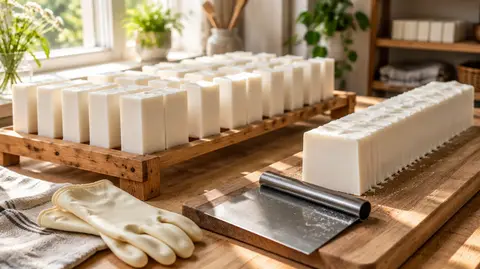
- Hard bar soap (tallow gives the bar its hardness and lather longevity)
- Leather conditioning and waterproofing
- Lubricating cast iron, wagon axles, and machinery
Lard is the historical fat of Southern and Central Europe, China, Mexico, and most of the Americas south of the cattle belt.
- Pie crust, biscuits, and laminated pastry
- Tamale dough (manteca)
- Refried beans and Mexican rice
- Chinese savory pastries
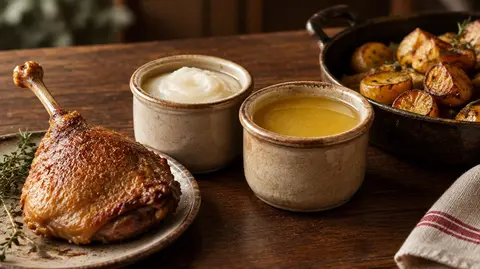
- Confit (yes, traditionally goose fat or duck fat, but pork lard works)
- Sausage binding (a small amount keeps mixtures juicy)
- Soap, especially softer bars and laundry soap
There is a regional logic here. Cattle countries used tallow. Pig countries used lard. Both cultures saved every scrap of fat for the kitchen, the workshop, and the medicine cabinet.
Sourcing
For tallow, grass-fed is worth the small premium. Pasture-raised beef has a slightly different fatty acid profile (a little more conjugated linoleic acid, a little better omega-3 to omega-6 ratio) and the rendered fat is a clean, pale yellow when fully refined. The grass-fed 4-pound bucket is the workhorse I keep in the pantry. For a smaller jar that doubles for skincare, Traverse Bay 32 oz is the deodorized neutral option.
For lard, the gap between grocery-store lard (often hydrogenated and shelf-stable in ways no traditional cook would recognize) and freshly rendered leaf lard from a butcher is enormous. If you cannot find leaf lard, ask your local butcher for back fat and render it yourself. The rendering guide walks through the wet method, which works just as well for pork.
When Each One Wins
Use tallow for:
- High-heat frying and deep frying
- Steak searing in cast iron
- Roasting potatoes and root vegetables
- Yorkshire pudding and savory popovers
- Hard bar soap making
- Leather conditioning and waterproofing
- Tallow candles
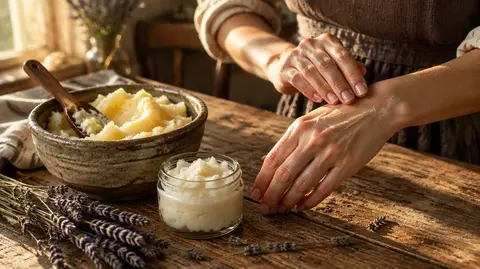
- Skincare balms and salves for normal to dry skin
Use lard for:
- Pie crust, biscuits, and laminated dough
- Tortillas and tamales
- Refried beans
- Lower-heat pan frying eggs and pancakes
- Sausage and pâté binding
- Softer bar soap for sensitive skin
There is a middle band where either one will work fine. Roasting a chicken? Either. Sauteing onions for a soup base? Either. Frying chicken cutlets at 350? Either.
The mistake to avoid is treating them as interchangeable for tasks where the chemistry matters. A pie crust made with all-tallow will be too hard and short. A steak seared in lard will not give you the same crust. Picking the right fat for the right job is half of traditional cooking.
Storage and Shelf Life
Tallow is more shelf-stable. A jar of fully rendered tallow can sit at room temperature for six months or more without going rancid, assuming you keep it covered and dry. In the fridge it goes a year easy. In the freezer it goes indefinitely.
Lard is shelf-stable for about a month at room temperature in a sealed jar, and three to four months in the fridge. The higher polyunsaturated content means it oxidizes faster. If you render a big batch, freeze half of it in muffin tins so you can pull single portions as needed.
Neither one needs refrigeration if you are going to use the jar within a few weeks. Both benefit from being kept dark, dry, and away from heat.
Frequently Asked Questions
Is pork tallow the same as lard?
Yes, in practice. Tallow is technically rendered ruminant fat (beef, mutton). When people say pork tallow they mean rendered pork fat, which is lard. The terminology is loose online, but if you ask a butcher for pork tallow they will hand you lard.
Which is healthier, lard or beef tallow?
Both are real animal fats with traditional use histories thousands of years long. Tallow is slightly higher in saturated fat and slightly lower in polyunsaturated fat. Lard is slightly higher in oleic acid. Neither one causes heart disease the way mid-20th-century guidelines claimed (the 2020 JACC review by Astrup and colleagues laid that argument to rest). Pick by use case and personal taste.
Can I substitute lard for tallow in soap making?
Yes, with adjustments. The SAP values differ (tallow is 0.140 NaOH, lard is 0.138 NaOH) and lard will give you a slightly softer bar with creamier lather. Always run any swap through SoapCalc before you pour. The tallow soap guide covers SAP calculation in detail.
Why do my fries taste better in tallow than in lard?
Tallow has more beef-flavor compounds and a higher smoke point, which means more Maillard browning before the fat starts to break down. That combination is what gave old McDonald’s fries their reputation. Lard fries are great. Tallow fries are unforgettable.
Can I render pork fat the same way I render beef fat?
Yes. Wet rendering with a small amount of water at low temperature works for both. Pork renders faster because the melting point is lower, so cut the heat earlier. The rendering walkthrough applies to either fat with minor adjustments.
Bottom Line
Pork tallow is lard. Beef tallow is beef tallow. They are different fats with different uses, and the right answer depends on what you are cooking. For high heat, frying, searing, soapmaking, and skincare, tallow is the workhorse. For pastry, tortillas, tamales, and softer baked goods, lard is the right tool. Stock both if you have the freezer space. If you have to pick one and you do a lot of fryer cooking and skincare, start with a 4-pound grass-fed tallow and add lard later when you start baking pies.
Explore more tallow guides
Browse our collection of recipes, comparisons, reviews and DIY tutorials.
View all guidesKing Tallow is reader-supported. We research and test the products we recommend, and when you buy through links on this page we may earn a commission at no extra cost to you. See our affiliate disclosure.
Published