Tallow Types Explained: Beef, Lamb, Pork, and Deer Compared
Reader-supportedBeef, lamb, mutton, pork, deer, bison, and goat tallow compared. Fatty acid profiles, melt points, traditional uses, and which one fits your kitchen or skin.

This post contains affiliate links. We may earn a commission if you purchase through these links, at no extra cost to you.
I get the same email two or three times a month. Someone went to a farmers market, came home with two pounds of lamb fat or a small jar of deer suet from a hunter friend, and now they want to know if it works the same way as beef tallow.
The honest answer is that all rendered animal fats share a basic playbook (saturated and monounsaturated fatty acids, fat-soluble vitamins, similar smoke points) but the differences between them are big enough that they cook differently, smell differently, and behave differently on skin.
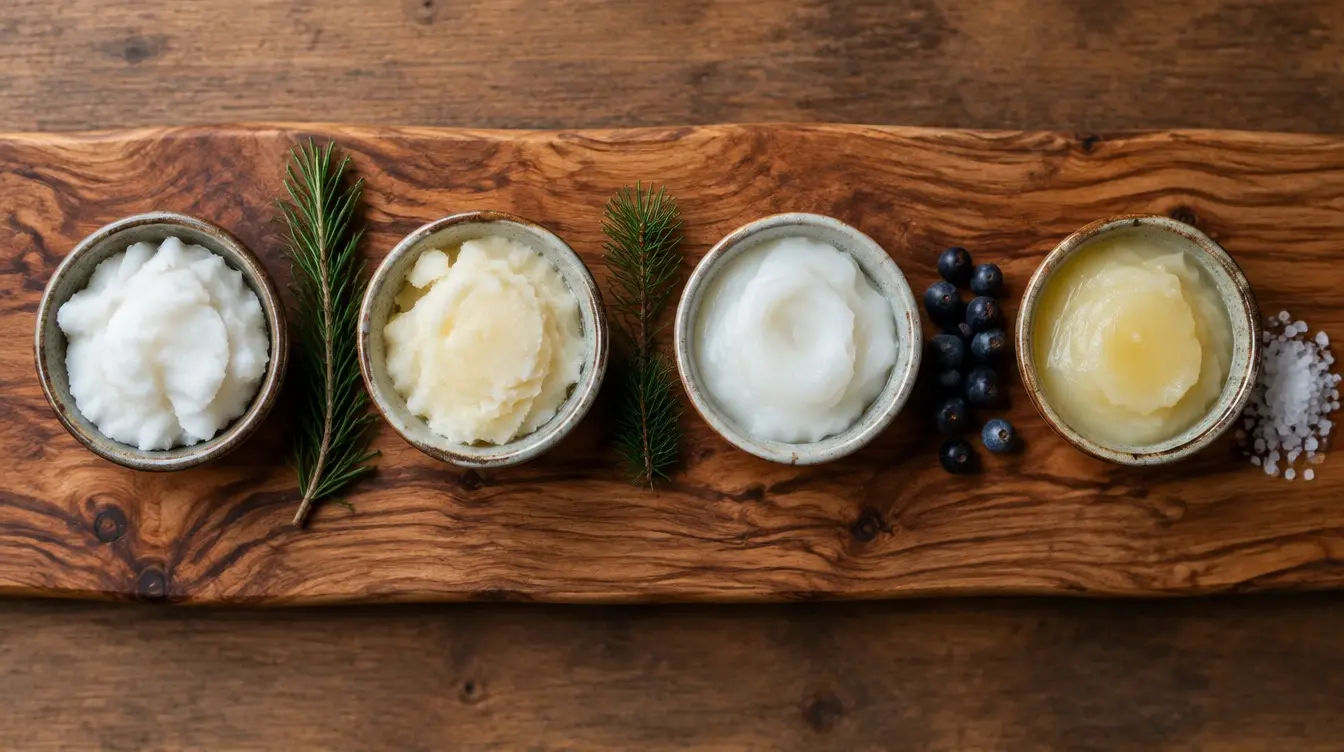
This is the long version of that email. Beef, lamb, mutton, pork, deer, bison, and goat. What each one is, what it tastes like, what it does on your face, and where to actually find it.
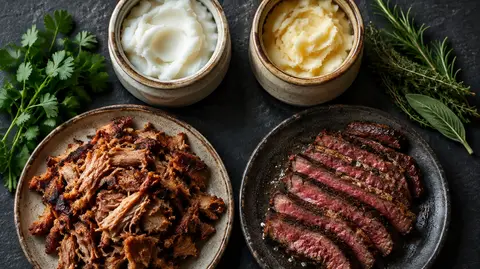
Beef Tallow: The Default
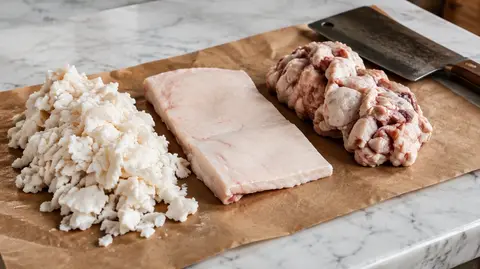
Beef tallow is the rendered fat of cattle, usually from the suet (the hard fat around the kidneys and loin) or trim fat from the cuts. It runs roughly 45 to 50 percent saturated fat, with palmitic acid and stearic acid making up most of the saturated portion, and oleic acid handling the monounsaturated side at around 35 to 40 percent.
Melt point sits around 105 to 113 degrees Fahrenheit. Smoke point for refined beef tallow lands around 400 degrees Fahrenheit, which makes it one of the higher-heat-tolerant animal fats. Color runs from pale ivory to soft yellow depending on the cattle’s diet (grass-fed tallow is more yellow due to beta-carotene).
Flavor is the reason beef tallow won the modern kitchen. Rendered clean, it has almost no taste at neutral temperatures and develops a mild beefy savoriness when heated past 350 degrees. McDonald’s used beef tallow in their fries until 1990 because the flavor was unmatched.
For skin, beef tallow is the default for the same reason it is the default for cooking: balanced fatty acid profile, low comedogenic rating (around 2 out of 5), and presence of palmitoleic acid in a small but meaningful amount.
Where to buy: nearly everywhere now. Specialty grocers, butcher shops, and online. For a clean cooking-grade jar, 100% Pure Grass-Fed Beef Tallow is what I keep on hand. For a budget DIY base, Traverse Bay Farms 32 oz is solid.
Traditional uses: deep frying, pastry, candle making, soap, leather conditioner, balms, lubricant for cast iron.
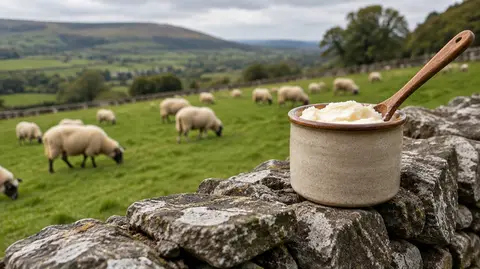
Lamb Tallow: The Mediterranean Pick
Lamb tallow is rendered fat from sheep under one year old. It is firmer and waxier than beef tallow at room temperature, with a melt point around 110 to 120 degrees Fahrenheit, and a distinctive flavor that some people find pleasantly grassy and others find sharply gamey.
The fatty acid profile is interesting. Lamb tallow is high in stearic acid (around 18 to 22 percent) and contains meaningful amounts of conjugated linoleic acid (CLA), which research has connected to inflammation modulation. Grass-fed lamb tallow has the highest CLA content of any common rendered fat.
Smoke point is slightly lower than beef, around 370 to 380 degrees Fahrenheit. That makes it better suited to roasting vegetables and finishing dishes than to deep frying.
Flavor matters here more than with beef. If you grew up eating lamb, the scent of rendering lamb fat is comforting. If you did not, it can be a wall. The smell does not fade much in the rendered product. Use lamb tallow where you want that flavor: roasting potatoes for shepherd’s pie, glazing carrots for a Sunday lamb roast, finishing a Middle Eastern grain bowl.
For skin, lamb tallow is occasionally used in traditional Middle Eastern and Greek skincare. The firmer texture makes it a good base for solid balms and stick formats. The flavor concern carries over to scent though, and most commercial skincare brands do not use lamb fat for this reason.
Where to buy: butchers who break down whole lambs, halal markets, Mediterranean grocers, some online ranches. Harder to find than beef but not rare.
Traditional uses: Middle Eastern cooking (especially kebab fat blends), British suet puddings, Greek roasting, soap making, traditional candle making.
Mutton Tallow: The Older Cousin
Mutton is sheep over one year old, sometimes over two or three. Mutton tallow is what lamb tallow becomes when the animal lived longer.
It is firmer than lamb tallow, has a higher melt point (around 120 to 125 degrees Fahrenheit), and carries a much stronger gamey flavor. The fatty acid profile is similar to lamb but with slightly more saturated content overall.
Mutton tallow was the everyday cooking fat across most of the British Isles, parts of Australia, and rural Spain until the 20th century. It is rare in modern American kitchens because mutton itself is rare. Most US sheep are slaughtered young.
For cooking, mutton tallow can dominate dishes if you are not used to it. For skincare, the firmness is a feature: traditional cobblers used mutton tallow as a leather conditioner because it stays solid in any reasonable storage temperature, and it absorbs into leather without softening the structure. Some traditional barbershops still use mutton tallow in shaving soap for the same reason.
Where to buy: very hard to find in the US. Specialty butchers, Australian and British importers, hunters who process mature sheep.
Traditional uses: leather conditioning, traditional shaving soap, candles, working-class British and Irish cooking.
Pork Tallow (Lard): The Soft One
Pork tallow is more commonly called lard. Technically it is still rendered fat, and the same chemistry applies, but the trade has settled on “lard” for pork and “tallow” for ruminants (cows, sheep, deer).
Lard is softer than beef tallow at room temperature with a melt point around 95 to 105 degrees Fahrenheit. The fatty acid profile leans more heavily on oleic acid (around 45 percent) and less on saturated fat. Smoke point is around 370 degrees Fahrenheit for leaf lard, lower for back fat.
The category split inside lard matters more than the category split between animal fats. Leaf lard (from around the kidneys) renders snow-white, scentless, and creamy. Back fat lard renders softer, off-white, with a barnyard scent. Hydrogenated grocery store lard is something different entirely and not what most people mean when they say lard.
For cooking, leaf lard is the king of pie crust. The lower saturated fat content creates flakier layers than butter or beef tallow. It is also the traditional fat for biscuits, refried beans, and Filipino lechon kawali.
For skin, lard has a higher comedogenic rating (around 4 out of 5) which makes it less ideal for acne-prone skin, but it absorbs faster and feels lighter than beef tallow. I went deeper on this comparison in pork tallow (lard) vs beef tallow for skin.
Where to buy: leaf lard is sold by farmers and small-batch renderers. Most grocery store lard is hydrogenated and not what you want.
Traditional uses: pastry, baking, Mexican and Southern cooking, traditional cold cream, soap.
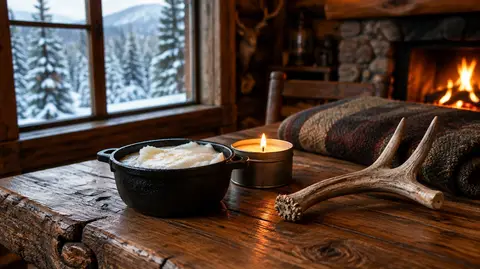
Deer Tallow: The Hunter’s Fat
Deer (venison) tallow is rendered from the fat of white-tailed deer, mule deer, or other cervids. It is the firmest and hardest of all common animal fats, with a melt point above 125 degrees Fahrenheit, and an off-white color that stays opaque even when warm.
The fatty acid profile is very saturated (around 50 percent or higher), low in monounsaturated fat, and almost no polyunsaturated content. This makes it extremely shelf-stable. Renderers from the 1800s used deer tallow for candles specifically because it held its shape in summer heat better than beef.
Smoke point is roughly 375 degrees Fahrenheit, though deer tallow’s strong flavor limits its use in cooking. Most hunters do not render deer fat at all. They strip it during butchering because the gamey, sometimes bitter flavor of deer fat ruins the leaner meat. The fat that does get rendered tends to come from kidney fat (suet), which renders cleanest.
For skincare, deer tallow is a niche but legitimate choice for stick balms, traditional salves, and lip balms where you want a very firm format that does not melt in a pocket. The drawback is yield: deer carry far less fat than cattle, so even a full doe produces only a pound or two of usable suet.
Where to buy: almost exclusively from hunters or hunting cooperatives. Some specialty online retailers carry small jars.
Traditional uses: candles (historically), tanning leather, traditional medicine, stick balms.
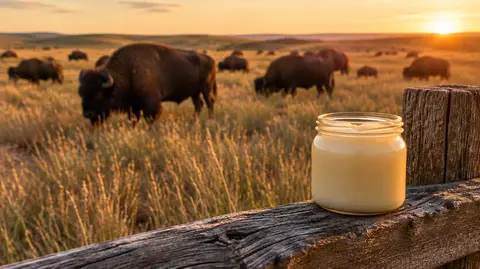
Bison Tallow: The Lean Premium
Bison tallow is rendered fat from American bison (buffalo). It runs leaner than beef tallow overall because bison carry less fat by body weight, but the fat they do have renders into a high-quality, slightly milder product than beef.
Fatty acid profile is close to beef tallow with slightly more omega-3 content (due to grass diet on most bison ranches) and a slightly higher CLA content. Smoke point is around 400 degrees Fahrenheit. Color tends pale yellow to golden.
Flavor is milder and sweeter than beef tallow. Many chefs prefer bison tallow for finishing steaks of any kind, not just bison. For skincare, the slightly lighter feel and absence of any strong scent make it a premium option, but the price (typically $15 to $30 per pound) limits the audience.
Where to buy: bison ranches, online specialty retailers, some Whole Foods locations. More expensive than beef but easier to find than mutton or deer.
Traditional uses: pemmican (Plains Native American food preservation), high-heat cooking, gourmet skincare.
Goat Tallow: The Underrated Option
Goat tallow is rendered fat from goats, most often from kidney fat (suet) or trim fat. It is firm at room temperature, has a melt point around 115 to 120 degrees Fahrenheit, and a flavor that sits between lamb and beef in intensity. Less gamey than lamb, slightly stronger than beef.
The fatty acid profile is similar to lamb tallow with comparable CLA content. Smoke point is around 380 degrees Fahrenheit.
Goat tallow is common in West African, Caribbean, and South Asian cooking. In the US it is rare, mostly because the US goat population is small and most of it is dairy. The meat goats slaughtered for halal and ethnic markets are the main source of goat suet.
For skincare, goat tallow is sometimes used in traditional soaps in regions where goats are the main livestock. The firmness makes it good for solid bar soap. Goat milk soap is more common than goat tallow soap in modern markets.
Where to buy: halal markets, Caribbean grocers, some ethnic butchers. Very limited online supply in the US.
Traditional uses: African and Caribbean cooking, traditional soap, halal-specific applications.
Quick Comparison Table
Here is the side-by-side I wish I had when I started rendering different fats.
| Tallow | Melt Point | Smoke Point | Saturated Fat | Flavor | Skincare Use |
|---|---|---|---|---|---|
| Beef | 105-113°F | 400°F | 45-50% | Mild, beefy when heated | Excellent (default) |
| Lamb | 110-120°F | 375°F | 48-52% | Distinctive, grassy | Good (firm balms) |
| Mutton | 120-125°F | 370°F | 50-55% | Strong, gamey | Specialty (leather, shave) |
| Pork (Lard) | 95-105°F | 370°F | 40-42% | Mild to neutral | Good (acne caution) |
| Deer | 125-130°F | 375°F | 50-55% | Strong, sometimes bitter | Niche (stick balms) |
| Bison | 105-115°F | 400°F | 45-48% | Mild, slightly sweet | Excellent (premium) |
| Goat | 115-120°F | 380°F | 48-52% | Moderate, less gamey than lamb | Good (traditional soap) |
These are averages. Diet, age, and which part of the animal the fat came from all shift these numbers.
Which Tallow Should You Actually Buy?
For most readers, beef tallow is the answer. It is the easiest to source, the most balanced, the best researched, and the most flexible across cooking and skincare. If you only want one jar in your house, make it beef.
For Middle Eastern or British traditional cooking, source lamb tallow. The flavor is the point.
For pastry and baking, leaf lard is irreplaceable. Pies, biscuits, and refried beans need it.
For hunters, deer suet is a free byproduct of butchering. Render it into stick balms or lip balms where the firmness is a feature.
For premium skincare and high-heat finishing, bison tallow is worth the price if you can find it.
For traditional bar soap with a goat connection, goat tallow is a meaningful choice.
If you want a deeper read on individual animal pages, the writeups at /tallow/lamb/, /tallow/bison/, /tallow/deer/, and /tallow/pork/ go further into rendering, sourcing, and use cases. The skincare angle by condition lives at /tallow-for/eczema/, /tallow-for/dry-skin/, and /tallow-for/acne/.
How Rendering Differs by Animal
A practical note on rendering. The basic process (low heat, dice the fat, melt, strain) works for all of these. The differences are timing and yield.
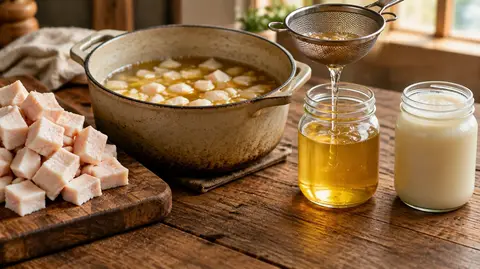
Beef and bison suet render in 4 to 6 hours at low heat. Yield is around 60 to 65 percent by weight from clean suet, less from trim fat.
Lamb and goat suet render faster (2 to 4 hours) due to softer fat structure. Yield is similar to beef.
Pork leaf fat renders fastest of all (1 to 3 hours) and yields the highest percentage. Back fat takes longer and yields less clean product.
Deer suet is the hardest to render. It melts at higher temperatures and the cellular structure resists breaking down. Plan on 6 to 8 hours at low heat, and expect lower yields (around 50 percent) because of the connective tissue content.
If you want the full rendering protocol with yields and temperatures, I broke that down in the beef tallow yield calculator.
Frequently Asked Questions
Are all tallows interchangeable in recipes?
Not exactly. The flavor differences matter in cooking, and the texture differences matter in skincare. You can usually substitute one for another in a pinch, but the result will be different. Beef tallow is the most flexible substitute across the most use cases.
What is the healthiest tallow?
For cooking, grass-fed beef tallow and grass-fed lamb tallow have the most favorable fatty acid profiles (higher CLA, better omega-3 to omega-6 ratio). For skincare, the comedogenic load matters more than the macronutrient profile.
Does mutton tallow work for soap?
Yes, and it was historically one of the most common soap fats in Britain and Ireland. It produces a firm bar with good lather. The flavor concern does not carry over to soap, since soap-making chemistry breaks down the original fat structure.
Can I render multiple animal fats together?
Yes. Mixed-animal tallow blends were the norm in butcher shops for centuries. The result is a fat with intermediate properties. The only caution is that flavor intensity blends too, so a 50/50 beef and lamb tallow will taste mildly of both.
What about chicken or duck fat?
Schmaltz (rendered chicken fat) and duck fat are technically not tallows. The poultry-fat category is significantly higher in polyunsaturated fat, has a much lower smoke point (around 375 degrees Fahrenheit), and behaves differently in cooking and skincare. I would not lump them in with the ruminant tallows above.
Where can I buy lamb or goat tallow online?
Specialty ranchers and direct-to-consumer farm marketplaces are your best bet. Most Amazon-stocked tallow is beef. For lamb, a butcher or halal market is usually faster than searching online.
Bottom Line
Every common rendered animal fat works for cooking and skincare. The differences are flavor, texture, firmness, and sourcing. Beef tallow is the right default because it is the most flexible and most available. The others are worth exploring when you have a specific reason: cultural cooking, hunting yield, premium skincare, or a traditional recipe you want to honor.
If you are starting fresh, grab Grass-Fed Beef Tallow and learn that fat first. Branch out once you know how a good beef tallow renders, cooks, and feels on skin. Everything else is a variation on the same theme.
Explore more tallow guides
Browse our collection of recipes, comparisons, reviews and DIY tutorials.
View all guidesKing Tallow is reader-supported. We research and test the products we recommend, and when you buy through links on this page we may earn a commission at no extra cost to you. See our affiliate disclosure.
Published