White vs Yellow Beef Tallow: Which Is Better and Why?
Independent reviewColor reflects the diet of the cattle. Yellow tallow signals grass and carotenoids, white means grain or deodorizing. Here is when each matters and when it does not.

This post contains affiliate links. We may earn a commission if you purchase through these links, at no extra cost to you.
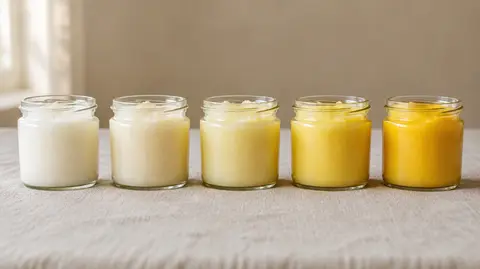
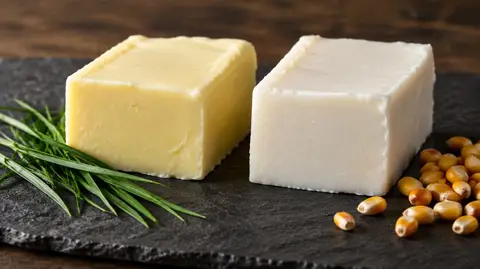
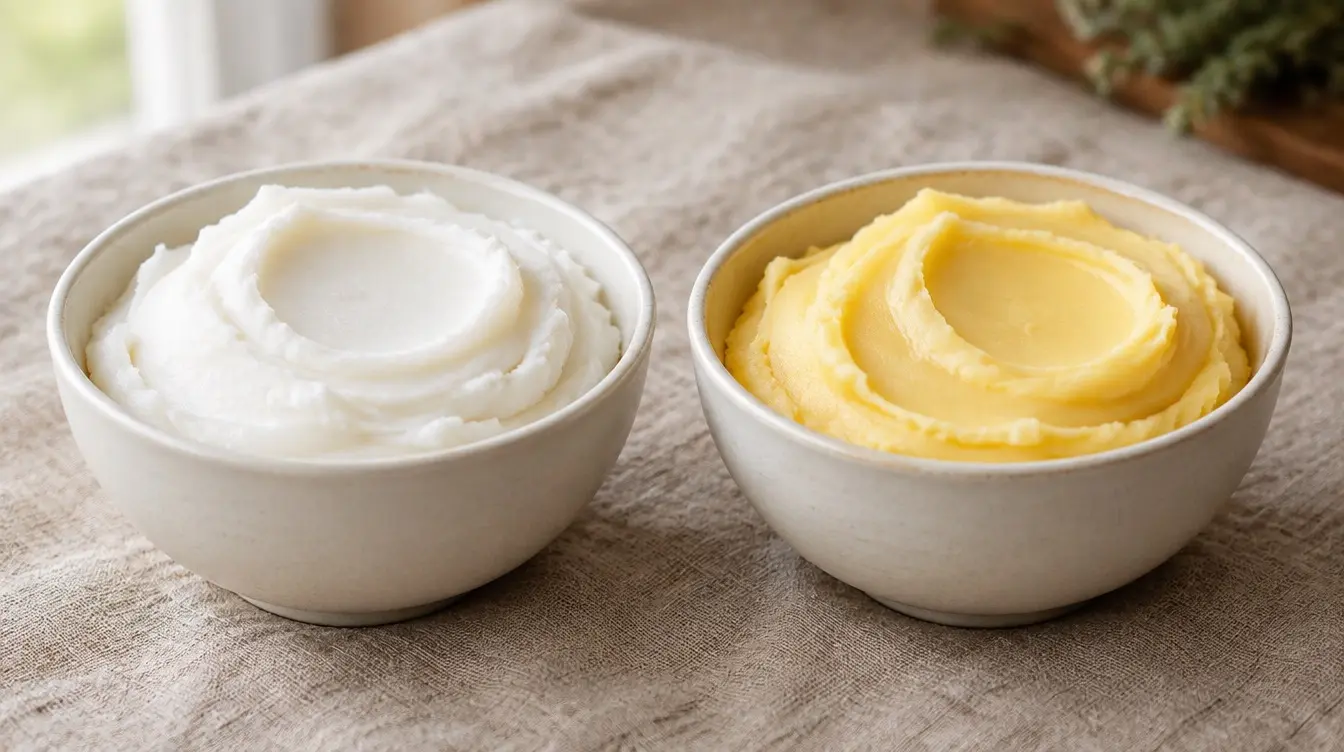
I rendered two batches of beef tallow last spring from two different sources. One came out the color of unsalted butter. The other came out closer to old ivory soap. Same kitchen, same method, same Sunday afternoon. The only difference was what the cattle had been eating.
If you have ever wondered why a jar from one brand is canary yellow and another is snow white, the answer is sitting in the pasture. Color is not a quality test. It is a diet test, with a bit of processing layered on top.
This post is the plain-English version of why your tallow looks the way it looks, when the color actually matters, and when it just means you bought tallow from a different cow than your neighbor did.
The One-Sentence Answer
Yellow tallow comes from cattle that ate fresh forage. White tallow comes from cattle that finished on grain, or from edible tallow that has been heavily deodorized for cosmetic use. Both are real beef tallow. Neither is better in the abstract.
The interesting part is what falls out of that fact when you start cooking or making balms.
Why Color Reflects Diet
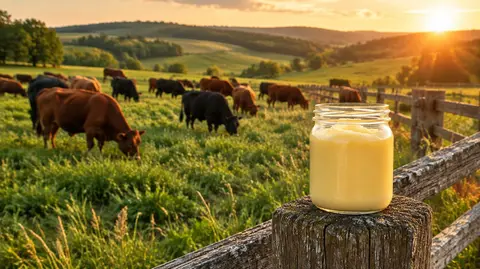
The yellow in beef fat is beta-carotene. Cattle eating fresh grass and pasture forage take in large amounts of beta-carotene from the plants. Some of it converts to vitamin A in the body. The rest gets stored in body fat, including the suet around the kidneys and the trim around the muscles. That stored beta-carotene is fat-soluble and visible as a yellow tint.
When you render that fat, the carotenoids stay in the finished tallow. Lightly rendered grass-finished suet often comes out the color of a ripe Bosc pear or a Bulgarian feta. Heavily filtered and deodorized grass-fed tallow comes out closer to a pale lemon, because some of the carotenoids drop out during processing but most of them survive.
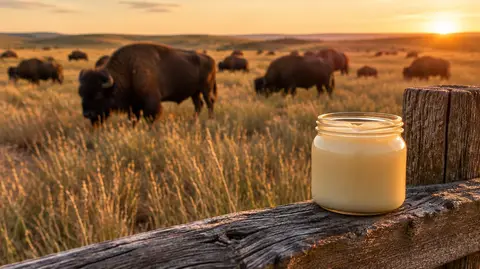
Grain-finished cattle eat dried corn, barley, or distiller’s grains for the last few months of their lives. Those feeds have almost no carotenoids. The fat that gets deposited during the grain-finishing window is a much cleaner white. Even a cow that lived most of its life on pasture but finished 90 days on grain will produce visibly whiter tallow than a cow that finished on grass right up to the end.
The carotenoid content also drops over time in storage. A jar of yellow grass-fed tallow that sits in light for a year fades a bit. The fat is still good. The visible pigment just has a half-life.
The Nutritional Side: What Actually Differs
Beta-carotene is a provitamin A carotenoid. Your body converts some of it to retinol depending on need. So yes, yellow tallow brings a bit of vitamin A precursor that white tallow does not. That is real and measurable.
Two grass-fed tallow studies I keep coming back to put the difference at roughly 5 to 15 micrograms of beta-carotene per gram of yellow grass-finished tallow, versus near-zero in grain-finished. A tablespoon of grass-finished tallow on this measure is contributing somewhere between 1% and 4% of an average daily vitamin A requirement, depending on conversion. Useful, not a megadose.
Grass-finished tallow also tends to bring more conjugated linoleic acid (CLA), more omega-3 fatty acids in absolute terms, and more vitamin E. The differences are not enormous compared to eating other vitamin-A-rich foods, but if you cook with tallow daily they add up over a year.
White grain-finished tallow brings none of that carotenoid bonus. What it brings is a more neutral flavor and a smoother visual presentation, which has its own value.
Cooking: When Color Does and Does Not Matter
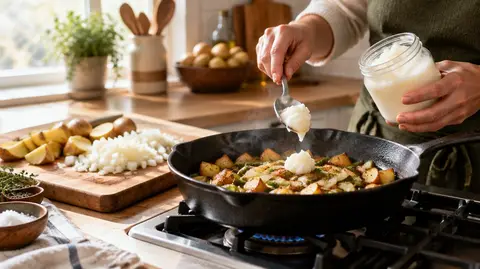
Honestly, in most home cooking, the color does not change the result. A yellow tallow scrambled-egg pan does not taste meaningfully different from a white tallow scrambled-egg pan. The flavor difference between grass and grain comes through more in slow searing and steak finishing than in fast eggs or fried potatoes.
Where color matters is presentation and pairing.
Yellow tallow has a more pronounced beef-and-grass aroma. It cooks darker. It is the right fat for hash browns, roast beef finishing, smashed potatoes with herbs, and any dish where you want a noticeably savory profile. I prefer yellow for steak fat because the carotenoid notes amplify the grass-finished beef flavor.
White tallow has a milder, more neutral flavor and a cleaner appearance. It is the right fat for delicate pan-fries, biscuits and pastry, fried fish, and anything where you do not want the fat to compete with what you are cooking. White tallow in a cast iron is also slightly less likely to leave a strong residual aroma in the pan.
Both fry french fries beautifully. The McDonald’s-era beef tallow fries used a mix that landed visually on the pale side, but the actual frying performance is the same. If you are deep-frying at home with one of the better fryer-friendly brands, the color question is mostly cosmetic.
For an everyday cooking jar I default to 100% Pure Grass-Fed Beef Tallow (4 lbs), which comes out a soft pale yellow and works in everything from eggs to roasts. For a deodorized neutral white that I keep for balm-making and pastry, the Traverse Bay Farms Beef Tallow (32 oz) is the jar I keep restocking.
Skincare: A Real Practical Difference
Color matters more in skincare than in cooking, because the fat is sitting on someone’s face.
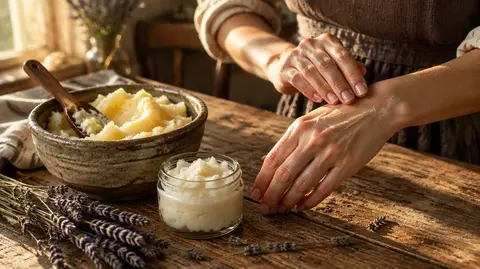
White tallow in a balm gives a neutral, almost cosmetic-bottle appearance. People who are skeptical of natural products often find a snow-white tallow balm more approachable. White tallow also pairs cleanly with essential oils for scented balms, because the visual base does not compete.
Yellow tallow in a balm has a faint butter-ish color in the jar that some people find off-putting and others find reassuring. The pigment also tints the skin very faintly after application, which is invisible on most skin tones but worth knowing if you are using it on a wedding-day morning.
The vitamin A content of yellow tallow does have a skincare angle. Retinol is the gold-standard ingredient for skin cell turnover. Vitamin A precursors from beta-carotene are weaker in mechanism but real. People with reactive skin who cannot tolerate over-the-counter retinol sometimes do well with yellow grass-finished tallow as a gentler entry into vitamin A skincare.
That said, the cleanest cosmetic-grade tallow balms I keep returning to are all on the whiter end of the spectrum because of deodorizing. Amallow Unscented Whipped Tallow Balm, Terra Lotus Organic Unscented Tallow Balm, and Santa Cruz Paleo Beef Tallow Moisturizer all sit cream-to-white in the jar. If you want a slightly yellower balm with a herbal-rose scent, Ancestral Haven Herbal Rose Tallow Balm comes through a little warmer in tone.
For the deeper version of the skincare angle, the beef tallow for skincare explainer and the best grass-fed beef tallow for skincare cover the choice in more depth.
What Color Cannot Tell You
This is the trap. A lot of online tallow advice treats color as a quality signal. It is not.
A pale yellow tallow can be Prime grade or it can be a lower-grade fat that just happens to come from grass-finished cattle. A snow-white tallow can be Prime grade deodorized cosmetic stock or it can be heavily processed industrial fat. Color is necessary information about the diet of the animal. It is not sufficient information about the quality of the fat.
The signals that actually correlate with quality are these. A clean, faintly beefy smell. A consistent color from edge to center with no yellow ring around the inside of the jar. A smooth surface with no sticky film. A clean snap when you tap a cold spoon against the set fat. Those four things matter more than what the color is.
For the deeper read on color and texture as quality signals together, the beef tallow color guide covers the full reading. The companion post on how to identify high-quality beef tallow goes through it all hands-on.
A Quick Note on Yellow That Means Trouble
Not all yellow tallow is grass-finished and healthy. There is a different kind of yellow that means the fat has started to oxidize.
The difference is where the yellow lives. A grass-finished yellow is uniform from edge to center, top to bottom. The whole block or the whole jar is the same color, which might be soft lemon or as deep as a stick of European butter.
An oxidation yellow is concentrated. The ring around the inside of the glass is darker than the rest. The top surface is darker than what is underneath. You scoop into the fat and the inside is whiter than the outside.
If you are seeing concentrated yellow, especially with a sticky surface or a faint crayon smell, that is rancidity, not grass. There is more on this in the rancid beef tallow guide and the shelf life and storage post.
So Which Should You Buy?
The honest answer is: both, for different reasons.
Buy yellow grass-finished tallow if:
- You want the carotenoid and vitamin A boost.
- You cook a lot of beef-forward and roast-forward dishes.
- You want the maximum nutritional value per tablespoon.
- You make skincare balms and you do not mind a faintly cream-colored finish.
Buy white tallow (grain-finished or deodorized cosmetic-grade) if:
- You want a neutral cooking fat that does not push beef flavor.
- You bake biscuits, pastry, or fry delicate proteins.
- You make scented balms and want the cleanest visual base.
- You are giving the product to someone who is skeptical of natural products and presentation matters.
I personally keep both on the shelf. A yellow grass-finished jar for cooking. A deodorized whiter jar for balm experiments. They cost about the same per ounce within the same quality tier and they cover different jobs without much overlap.
Frequently Asked Questions
Is yellow tallow more nutritious than white tallow?
Marginally. Yellow tallow contains beta-carotene, vitamin E, and trace CLA at modestly higher levels than white grain-finished tallow. The differences are real but small per tablespoon. If you cook with tallow daily, the cumulative effect adds up. If you use a teaspoon on the occasional steak, the difference is academic.
Why is my homemade tallow whiter than the grass-fed jar I bought?
A couple of reasons. If your suet came from a grain-finished or mixed-feed cow, the fat will be whiter at the source. If you rendered hot and long, some carotenoids fade. And if your fat was filtered through a tight coffee filter that pulled out fine particles, the visual appearance shifts whiter. None of those are problems.
Does color affect the smoke point?
No. Smoke point in beef tallow is driven by free fatty acid content and impurities, not by color. A clean white tallow and a clean yellow tallow at the same processing grade will smoke at the same temperature. There is more on smoke point in the beef tallow smoke point guide.
Does the yellow color fade over time?
Yes. Beta-carotene is photosensitive and degrades with exposure to light and oxygen. A yellow jar stored in a sunny pantry for a year will lose a noticeable amount of pigment. Stored in a dark cupboard or the fridge, the color holds much longer. The nutritional change is real but small compared to the visual change.
Can I tell grass-fed from grain-fed just by looking?
You can make an educated guess. Strong yellow strongly suggests grass-finished. Snow white strongly suggests grain-finished or heavy deodorizing. Anything in between is unclear. The label is more reliable than the color.
Is white tallow somehow processed with chemicals?
Not necessarily. Edible white tallow from grain-finished cattle is naturally that color. Cosmetic-grade white tallow has been steam-deodorized to remove volatile aromatics, which is a physical process rather than a chemical one. Industrial tallow can involve more aggressive refining, but that product is not what reputable consumer brands sell. For more on the processing categories, see the beef tallow grades and quality post.
Bottom Line
White vs yellow beef tallow is mostly a story about what the cow ate and how the fat was processed afterward. Yellow signals grass and carotenoids. White signals grain or deodorizing for cosmetic use. Both can be high quality. Both can be low quality. Color alone is not the quality test.
For cooking, yellow grass-finished tallow brings a stronger beef profile and a small but real nutritional edge. For skincare and pastry, white deodorized tallow gives a cleaner, more neutral base. Most home kitchens benefit from having one of each.
My everyday cooking jar is the grass-fed 4 lb tallow. My DIY and balm-making base is the Traverse Bay 32 oz. If you want a finished, ready-to-use balm, Amallow Unscented is the daily face balm I keep coming back to. Pick by the job, not the color.
Explore more tallow guides
Browse our collection of recipes, comparisons, reviews and DIY tutorials.
View all guidesKing Tallow is reader-supported. We research and test the products we recommend, and when you buy through links on this page we may earn a commission at no extra cost to you. See our affiliate disclosure.
Published