

Best Beef Tallow for Carnivore and Keto Diets: What to Buy and How Much to Eat
Independent reviewThe best beef tallow for carnivore and keto: grass-finished, single-ingredient picks in bulk sizes, daily fat math, storage, and simple fat bomb recipes.

This post contains affiliate links. We may earn a commission if you purchase through these links, at no extra cost to you.
The best beef tallow for a carnivore or keto diet is a single-ingredient, grass-fed (ideally grass-finished) tallow bought in a size you will actually get through: a 4 lb grass-fed tub for most people, US Wellness Meats’ grass-finished pails if you want the strictest sourcing in bulk, and Fatworks Organic if you want a certified organic jar. Tallow has zero carbohydrates, is roughly 50% saturated and 42% monounsaturated fat, and is very low in polyunsaturated fat, which is why it is a staple fat on both diets.
I have eaten a mostly-carnivore diet for about two years, and on a normal day I get through three to four tablespoons of tallow: some in coffee, some to cook eggs, some stirred into broth, and whatever renders off a steak. That changes what to look for. A pretty 14 oz jar is a nice gift, but at that rate it is gone in a week.
Carnivore and Keto Tallow Picks
| Tallow | Size | Grass-fed | Why it fits | Price tier |
|---|---|---|---|---|
| 100% Pure Grass-Fed Beef Tallow | 4 lb tub | Yes | Best value for daily eating and cooking | $$ |
| US Wellness Meats Beef Tallow | 1.7 lb, 1 gal, 5 gal pails; 14 oz jars | Grass-fed and grass-finished (per brand) | Strictest sourcing in bulk | $$-$$$ |
| Fatworks Organic Grass-Fed Beef Tallow | 14 oz jar | Organic, grass-finished | Certified organic, Whole30 Approved | $ |
| Cornhusker Kitchen Beef Tallow Tub | 1.5 lb tub | No | Low-cost starter tub | $ |
| South Chicago Packing Wagyu Tallow | 42 oz tub | Wagyu | Richest flavor, higher monounsaturated fat | $$ |
Check current price on each listing.
What to Look For in Carnivore and Keto Tallow
One ingredient
Pure tallow has one ingredient: beef tallow. Its saturated fat structure is naturally stable, so it does not need preservatives. Some brands add rosemary extract as a natural antioxidant, which is harmless. If you see BHA, BHT, “natural flavor,” or added vegetable oil, choose a different jar; you are eating this every day.
Grass-fed vs grass-finished
Grass-fed cattle may be moved to grain for the last few months before slaughter. Grass-finished cattle eat grass and forage their whole lives. Grass-finished fat tends to be yellower, from beta-carotene, and studies of grass-finished beef report higher conjugated linoleic acid (CLA) and omega-3 levels than grain-finished beef. The absolute amounts in tallow are still small. If you eat tallow by the spoonful, it is a reasonable reason to pay more. On the label, look for “100% grass-fed and grass-finished”; if it says only “grass-fed,” check the brand’s sourcing page. Our grass-fed vs grain-fed tallow guide covers the differences.
A flavor you can eat plain
For searing a steak, a beefy tallow is an asset. For a spoonful in coffee or broth, milder is easier to live with. Carefully rendered, low-temperature tallow keeps a mild beef note; harshly rendered tallow tastes like cold drippings. Grain-finished tallow is usually milder than grass-finished.
A size that matches your intake
At three tablespoons a day you eat about 1.5 fl oz of tallow, or a little over 3 lb a month. At that rate a 4 lb tub lasts about five to six weeks, and 14 oz jars become an expensive habit.
The Picks in Detail
1. 100% Pure Grass-Fed Beef Tallow (4 lb): Best Overall
This is the tub that lives in my fridge, and the one I have repurchased most. It is grass-fed with no additives, and the texture has been consistent across tubs. The scent is mild and beefy when warm and barely noticeable when cold. At my intake it lasts a little over a month. I have tried smaller premium jars that cost more per ounce and could not tell them apart in coffee or broth.
It also handles every cooking job on the diet: eggs, searing, pan-frying, roasting, and deep frying. Our full review of the 4 lb tub has more detail.
2. US Wellness Meats Beef Tallow: Best Grass-Finished Bulk
US Wellness Meats is a long-running grass-fed meat company that sells tallow direct in small pails, 1-gallon “premium triple filtered” pails, 5-gallon buckets, and 14 oz jars. It describes its tallow as 100% grass-fed and grass-finished, which is the sourcing many carnivore eaters want. It is not on Amazon, so compare the delivered price including shipping. See our US Wellness Meats tallow review.
3. Fatworks Organic Grass-Fed Beef Tallow: Best Certified Organic
Fatworks Organic carries the USDA Organic seal, is described by the company as rendered from organic grass-fed, grass-finished suet, and is Whole30 Approved. The 14 oz glass jar is small at carnivore volumes, but it is a good counter jar alongside a bulk tub, and Costco has sold it in two-jar packs. More in our Fatworks review and organic beef tallow guide.
4. Cornhusker Kitchen Beef Tallow Tub (1.5 lb): Best Starter Tub
If you are still testing the diet and do not want to commit to 4 lb, a 1.5 lb tub is a lower-cost way to start. It is not grass-fed, so it is milder, which some people prefer while getting used to eating more fat. When you are ready for volume, Cornhusker’s 7.5 lb grass-fed tub is the step up. See our Cornhusker Kitchen review.
5. South Chicago Packing Wagyu Tallow (42 oz): Best for Flavor
Wagyu tallow is higher in monounsaturated fat and tastes richer and more buttery. For carnivore eaters who build meals around steak, it makes a noticeable difference in the pan. It costs more per ounce than the tubs above. See best wagyu beef tallow.
Tallow Nutrition for Keto and Carnivore
One tablespoon (about 12.8 g) of beef tallow contains, per USDA data:
| Nutrient | Amount |
|---|---|
| Calories | 115 |
| Total fat | 12.8 g |
| Saturated fat | 6.4 g |
| Monounsaturated fat | 5.4 g |
| Polyunsaturated fat | 0.5 g |
| Carbohydrates | 0 g |
| Protein | 0 g |
Tallow also contains small amounts of fat-soluble vitamins, mainly vitamin E, with trace vitamins A, D, and K. Grass-finished tallow tends to carry somewhat more of these, but tallow is not a major vitamin source; organ meats, eggs, and fatty fish contribute far more. Our beef tallow nutrition facts page has the full table, and is beef tallow healthy covers the research, including the ongoing debate about saturated fat.
How Much Tallow Do You Need Per Day?
On keto
A standard ketogenic diet gets about 70-80% of calories from fat. On 2,000 calories, that is roughly 155-178 g of fat a day. If tallow supplies half of that and meat, eggs, and butter supply the rest, you would eat about six to seven tablespoons of tallow a day, and a 4 lb tub would last one person about three weeks.
On carnivore
Most carnivore eaters aim for roughly equal grams of fat and protein or more fat than protein. How much tallow you add depends on your cuts: ribeye and pork belly need little extra, while sirloin, chicken breast, or 90/10 ground beef need a lot. Very high protein with too little fat can cause nausea and fatigue, so lean-meat days are where tallow earns its place.
I run three to four tablespoons a day at 175 pounds with a moderate training schedule. Many people land between two and five.
Ramping up
If you are new to eating this much fat, increase slowly. Jumping to several tablespoons a day can cause digestive upset for some people. Start around a teaspoon to a tablespoon a day and add a little each week. If you have a gallbladder condition or other digestive issues, talk to your doctor before making a large dietary change.
How to Use Tallow Every Day
Eggs. Two or three eggs in a tablespoon of tallow is the simplest breakfast on either diet.
Searing steak. Heat a tablespoon in cast iron until it shimmers, sear, then pour the pan fat over the steak. See our tallow steak recipe.
Bone broth. Stir a tablespoon into a mug of hot broth. It is how I break a fast on days I skip breakfast.
Coffee. Blend a teaspoon to a tablespoon of melted tallow into black coffee. It is divisive; I prefer my fat in food.
Lean ground beef. Melt a tablespoon or two of tallow in the pan before browning 90/10 or 93/7 beef.
Roasted marrow bones. Toss bones in melted tallow and roast at 400°F for about 20 minutes.
Our how to eat beef tallow daily guide has more ideas.
Tallow Fat Bombs and Pemmican
Classic tallow fat bombs (keto)
- 1/2 cup beef tallow, melted
- 2 tablespoons cocoa butter or coconut oil
- 1 tablespoon unsweetened cocoa powder
- Pinch of sea salt
Melt the tallow and cocoa butter over low heat, stir in cocoa and salt, pour into silicone mini-muffin molds, and refrigerate about 2 hours until solid. Keep refrigerated.
Carnivore tallow bites
- 1/2 cup beef tallow, melted
- 2 tablespoons finely chopped crispy bacon
- 1/4 teaspoon sea salt
Stir together, pour into molds, and refrigerate until solid. Keep refrigerated and eat within about two weeks.
Simple pemmican
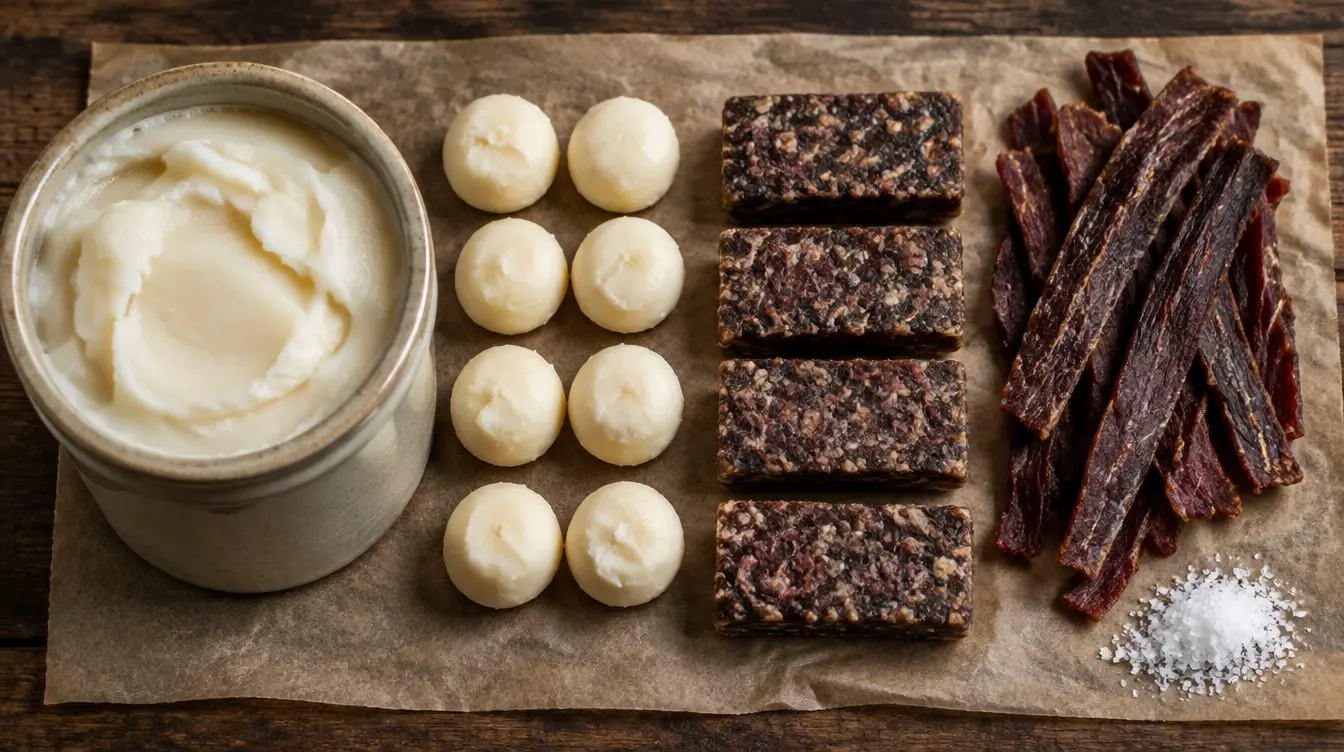
Grind dried beef into a powder, mix with an equal volume of melted tallow, salt to taste, and press into a container or roll into balls. Pemmican is a traditional food of Indigenous peoples of North America and is useful for hiking and travel. Keep it cool and dry; refrigerate for longer storage.
Storage for a Month’s Supply
Tallow does not need refrigeration, but I refrigerate the bulk tub once it is opened and move about a week’s worth into a small jar on the counter so it stays soft enough to scoop. If you buy several tubs to save on shipping, freeze the extras and thaw the next one in the fridge.
Stored sealed, cool, and dark, tallow keeps six to twelve months at room temperature and longer in the fridge. Rancid tallow smells sharp, like crayons or old cardboard; discard it. See how to store beef tallow and how to tell if tallow is rancid.
Common Mistakes
Buying jars at tub-level consumption. At several tablespoons a day, small jars cost far more per month than a 4 lb tub.
Overheating. Keep cooking temperatures below about 400°F. Tallow is stable, but burnt fat tastes bad and produces unwanted compounds.
Using only one fat. Rotating tallow with butter, ghee, lard, and the fat in the meat itself gives more variety. See beef tallow vs butter.
Adding fat too fast. Build up gradually.
Frequently Asked Questions
Is beef tallow keto-friendly?
Yes. It has zero carbohydrates and is almost entirely fat: about 115 calories and 12.8 g of fat per tablespoon. See is beef tallow keto friendly.
Can tallow kick you out of ketosis?
No. It contains no carbohydrates. If weight loss is your goal, the calories still count.
How much tallow per day on carnivore?
Most people land between two and five tablespoons of added tallow a day, depending on body size, activity, and how fatty their meat is. Start low and adjust.
Is tallow better than butter for keto?
Both work. Tallow is better for high-heat cooking and usually cheaper at volume; butter has more flavor for finishing and contains small amounts of butyrate. Many keto kitchens keep both.
Is store-bought tallow safe to eat without cooking?
Yes, if it is food-grade tallow that has been properly rendered and stored. Rendering heats the fat well above temperatures that kill bacteria. The main risk is rancidity from old or poorly stored tallow, so smell it first. Buy tallow sold as a food product; some deodorized tallows are marketed for soap making.
Can I render my own tallow?
Yes, and it is usually cheapest if your butcher sells suet inexpensively. I render a couple of batches a year and buy the rest because rendering a large batch takes most of a day. See our rendering guide.
Bottom Line
For daily carnivore or keto eating, buy the 4 lb grass-fed tub. If grass-finished sourcing matters most, order a pail from US Wellness Meats; if you want certified organic, keep a jar of Fatworks Organic on the counter. For more on the diet itself, read our beef tallow on a carnivore diet guide and tallow for keto and carnivore diets. For bulk options beyond the diet, see best bulk beef tallow.
Explore more tallow guides
Browse our collection of recipes, comparisons, reviews and DIY tutorials.
View all guidesKing Tallow is reader-supported. We research and test the products we recommend, and when you buy through links on this page we may earn a commission at no extra cost to you. See our affiliate disclosure.
Published · Last updated