
Beef Tallow for Hair: Scalp, Ends, Tallow Shampoo Bars, and How to Wash It Out
Reader-supportedBeef tallow for hair: what it can do for dry ends and frizz, why it can worsen dandruff, how tallow shampoo bars work, and how to wash tallow out of hair.

This post contains affiliate links. We may earn a commission if you purchase through these links, at no extra cost to you.
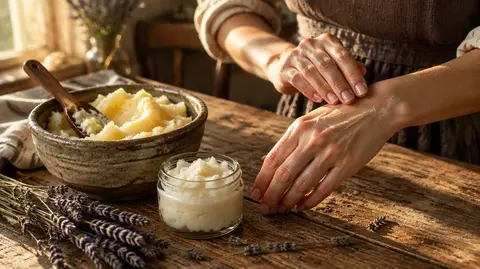
Beef tallow can work on hair as a conditioning fat for dry ends, frizz, and coarse beards, and it’s the base of many “tallow shampoo” soap bars. It is not a proven hair-growth treatment, and it can make dandruff worse, because the yeast behind dandruff feeds on scalp oils. Use a small amount on the lengths and ends, or as a pre-wash treatment you shampoo out, and keep it off a flaky, itchy scalp.
There are no clinical trials of tallow on human hair. What follows is built from what’s known about hair fibers, scalp biology, and soap chemistry, with the evidence limits stated as we go.
What Tallow Can and Can’t Do for Hair
| Use | Reasonable? | What the evidence supports |
|---|---|---|
| Smoothing dry ends and frizz | Yes, in small amounts | Oils coat the hair surface and reduce friction; no tallow-specific studies |
| Pre-wash treatment for dry, coarse hair | Yes | Pre-wash oiling is well studied for coconut oil; tallow is untested |
| Beard softening | Yes | Same surface-conditioning logic; common use in beard balms |
| Styling hold (pomade) | Yes | Solid fats plus wax give light hold |
| Dry, tight scalp (no flakes) | Maybe | Occlusive fats reduce water loss; test a small area |
| Dandruff or seborrheic dermatitis | No | Scalp oils fuel the yeast involved; oleic acid can trigger flaking |
| Hair growth or thinning | No evidence | No studies; see a dermatologist for hair loss |
| Tallow shampoo bars | Depends on your water and hair | They are soap; alkaline pH can roughen hair |
Beef Tallow for Dry Ends and Frizz
Hair ends are the oldest part of the strand. After months of brushing, heat, and washing, the cuticle (the outer layer of overlapping cells) gets rough, and rough hair tangles, frizzes, and breaks more easily. Any conditioning fat helps by filling in and smoothing that surface, which lowers friction between strands.
Tallow does this job the way other solid fats and butters do. It’s roughly half saturated fat (mostly palmitic and stearic acid) and about 40% oleic acid, so it’s solid at room temperature and melts on contact with warm fingers. Our fatty acid profile guide has the full breakdown.
What about deeper conditioning? The best-known hair oil study, Rele and Mohile (Journal of Cosmetic Science, 2003), compared coconut, sunflower, and mineral oil. Only coconut oil reduced protein loss from hair when used as a pre-wash or post-wash treatment. The authors attributed this to lauric acid, a short, straight fatty acid with an affinity for hair protein that lets it penetrate the fiber. Sunflower oil, built mainly on longer C18 fatty acids, didn’t show the same effect. Tallow is built mainly on C16 and C18 fatty acids, so the best guess is that it acts as a surface coating rather than penetrating the hair shaft. That still helps with frizz and feel. It just isn’t evidence of repair.
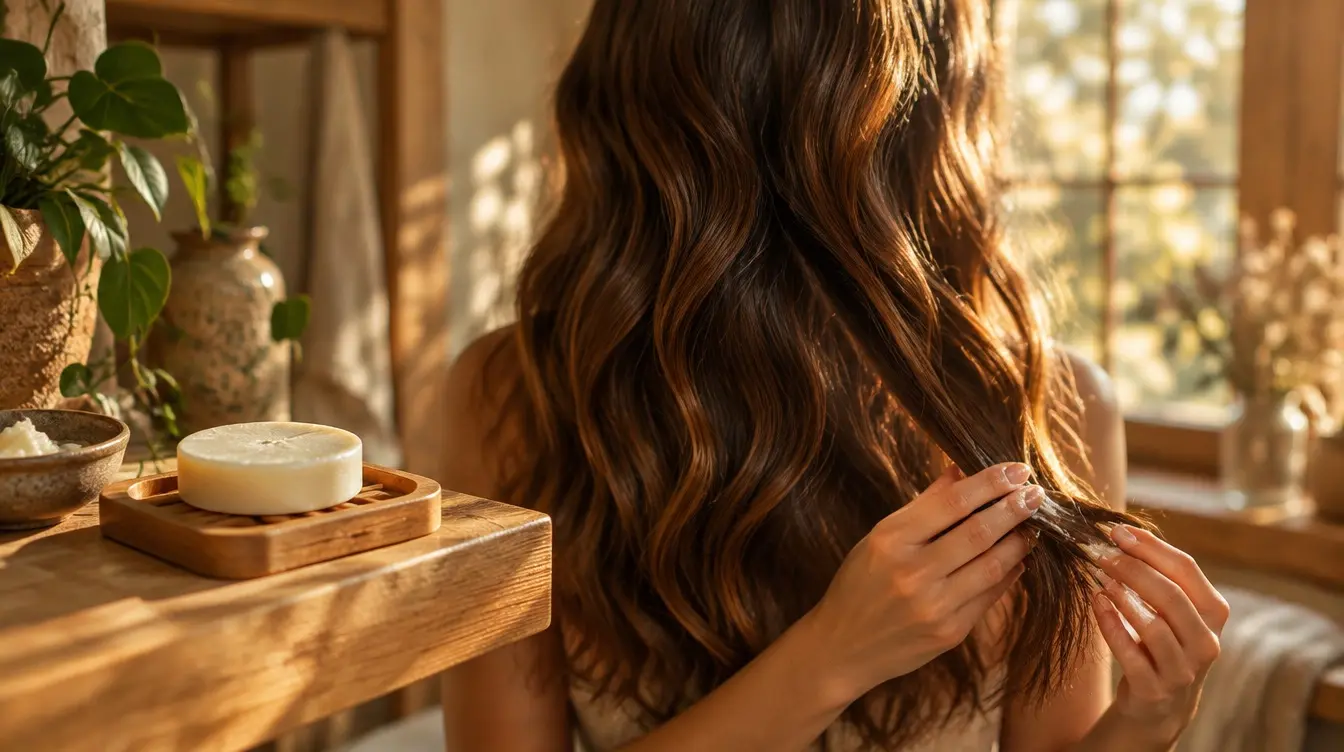
How much to use: melt an amount the size of a grain of rice between your palms and smooth it over the last few inches of dry hair. Fine hair needs less; thick, curly, or coily hair can take more. Too much looks greasy and is hard to wash out.
Beef Tallow on the Scalp: Dry Scalp vs. Dandruff
This is where most tallow-for-hair advice goes wrong, because “flaky scalp” covers two different problems.
Dry scalp looks like small, white, dry flakes, often worse in winter or after harsh shampoos, with tightness but little redness or oiliness. An occlusive fat can help here the same way it helps dry skin elsewhere: by slowing water loss. A small amount massaged into dry patches before washing is a reasonable experiment.
Dandruff and seborrheic dermatitis usually look like larger, yellowish or greasy flakes, often with itching and redness, sometimes on eyebrows and beside the nose too. These are linked to Malassezia, a yeast that lives on oily skin and can’t make its own fats. It feeds on scalp oils. A study in the Journal of Investigative Dermatology Symposium Proceedings (DeAngelis et al., 2005) described how the yeast breaks down sebum triglycerides into irritating free fatty acids, and found that applying oleic acid alone produced dandruff-like flaking in people prone to dandruff, but not in others.
Tallow is mostly triglycerides and about 40% oleic acid. Putting it on a dandruff-prone scalp is adding more of the thing the yeast feeds on. If your flakes are greasy or itchy, skip tallow on the scalp and use a shampoo with an evidence-backed anti-dandruff active: ketoconazole, zinc pyrithione, selenium sulfide, or ciclopirox. If an over-the-counter shampoo doesn’t clear it in a few weeks, see a dermatologist, since psoriasis and other conditions can look similar.
Does Beef Tallow Help Hair Growth?
There’s no evidence that it does. You’ll see tallow hair products marketed for growth, sometimes because tallow contains fat-soluble vitamins. The amounts are small (USDA lists beef tallow with little vitamin A and only modest vitamin E), and no study has tested tallow on hair growth or thinning in people.
Treatments with clinical evidence for common hair loss include topical minoxidil and, for some people, prescription options. Sudden shedding, patchy loss, or thinning at a young age are worth a visit to a dermatologist, since thyroid problems, iron deficiency, and autoimmune conditions can be the cause.
What tallow can do is reduce breakage on dry, brittle lengths, which can make hair look fuller over time because fewer ends snap off. That’s conditioning, not growth.
How to Use Beef Tallow on Hair
Method 1: Pre-wash treatment (the easiest to wash out)
- Melt about a teaspoon of tallow (more for long or thick hair) between your palms, or soften it in a small dish over warm water.
- Work it through dry hair from mid-length to ends. Keep it off the scalp if you get dandruff.
- Leave it on for 20 to 60 minutes. Some people leave it overnight with an old pillowcase.
- Shampoo it out using the method in the washing section below.
This is the same approach as traditional hair oiling. Because the fat goes on before shampoo, you get the smoothing effect without leftover grease.
Method 2: Leave-in for ends
After washing and drying, smooth a rice-grain amount over the ends. This is best for thick, curly, coily, or very dry hair. Fine or straight hair usually looks weighed down.
Method 3: Pomade and styling
Tallow plus beeswax makes a light-hold pomade. Our tallow hair pomade guide covers ratios. Expect more shine and less hold than a commercial wax.
Tallow Hair Conditioner Recipe (Pre-Wash Mask)
This is a simple mask for dry, coarse lengths. It is a pre-wash treatment, not a rinse-out conditioner that replaces your regular one.
- 1 tablespoon beef tallow (a deodorized or well-rendered tallow smells less; the 100% Pure Grass-Fed Beef Tallow, 4 lb and Traverse Bay Deodorized, 32 oz are both sold for DIY use)
- 1 teaspoon jojoba or olive oil, to keep it soft at room temperature
- Optional: a few drops of rosemary essential oil for scent (patch test first; essential oils can irritate the scalp)
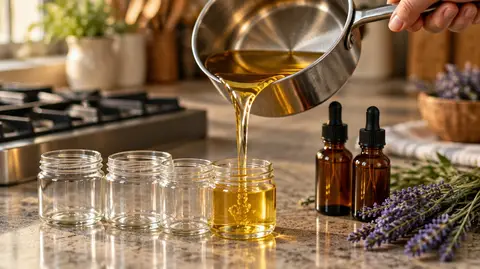
Melt the tallow gently, stir in the liquid oil, and let it cool until soft. Apply to dry lengths as in Method 1, leave for 30 minutes, then shampoo out. It keeps for a few months in a cool cupboard. For a whipped version you can also use on skin, see our tallow balm DIY recipe.
How to Wash Tallow Out of Hair
Tallow is solid at room temperature, so it can cling to hair if you rinse with water first. The fix is to let shampoo emulsify it before water dilutes the shampoo.
- Apply shampoo to dry, oiled hair before you get it wet. Work it in so it mixes with the fat.
- Add a little warm water and lather. Warm water keeps the tallow soft.
- Rinse, then shampoo a second time. The first wash lifts most of the fat; the second removes the residue.
- Condition the ends as usual if your hair feels stripped.
If hair still feels coated, you used too much. Halve the amount next time.
Tallow Shampoo Bars: What They Are and Who They Suit
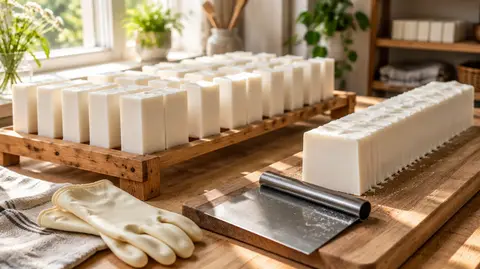
A “tallow shampoo bar” is usually soap: tallow reacted with lye (sodium hydroxide) to make sodium tallowate, often blended with other oils. Tallow makes a hard, long-lasting bar with a creamy lather, which is why it’s a traditional soap fat. Our tallow soap guide explains the chemistry.
The trade-off is pH. True soap is alkaline, typically around pH 9 to 10. A review in the International Journal of Trichology (Gavazzoni Dias et al., 2014) noted that alkaline washing products increase the negative electrical charge on hair fibers, which raises friction between strands and can lead to cuticle damage and frizz. The scalp itself sits around pH 5.5.
Hard water makes it worse. Soap reacts with calcium and magnesium in hard water to form soap scum, which can leave hair dull, sticky, or waxy.
The common fixes:
- Acidic rinse: a diluted apple cider vinegar rinse (roughly one to two tablespoons in a cup of water) after washing lowers pH and helps remove soap film.
- Syndet bars: some shampoo bars use synthetic, milder surfactants instead of soap and are formulated at a lower pH. Check the ingredient list. If sodium tallowate or “saponified tallow” is near the top, it’s a soap bar. If you see names like sodium cocoyl isethionate, it’s a syndet.
Who does well with tallow shampoo bars: people with soft water, short hair, beards, or oily scalps that tolerate cleansing well. People with long, color-treated, or very fine hair, or hard water, often find liquid shampoo easier.
Tallow shampoo bars to consider
- Buffalo Gal MSM + Tallow Shampoo Bar, Unscented. The listing describes it as pH balanced, sulfate-free, silicone-free, and plastic-free. The listing also uses “hair growth” language; as covered above, there’s no evidence tallow grows hair. The same brand sells an MSM + Tallow Shampoo & Conditioner Bar Set, which is the better pick if you want a conditioner bar too.
- Big Crazy Buffalo Natural Tallow Shampoo Bar. Listed as fragrance-free, sulfate- and silicone-free, 3.5 oz.
- Ancestral Secret Travel Hygiene Kit. Per the listing, a tallow soap bar, a shampoo bar, and a conditioner bar in one kit. Useful for travel or as a gift; our tallow skincare gift guide has more ideas in that vein.
Read the full ingredient list on any bar before buying so you know whether it’s soap or syndet.
Beard Crossover: Tallow for Beards
Beard hair is coarse, and the skin under it gets dry and itchy, especially in the first months of growth. Tallow suits both: a small amount softens the hair and moisturizes the skin underneath. Beard balms usually combine tallow with beeswax for light hold and a liquid oil for spread.
- Bronmans Beef Tallow Beard Butter, 4 oz: a tallow-based beard butter.
- Earth Wave All-Natural Tallow Beard Balm: tallow with shea butter, coconut oil, and argan oil per the listing, described as a light hold for short to medium beards.
The same dandruff caution applies to beards. If the skin under your beard has greasy, yellowish flakes, that’s often seborrheic dermatitis, and adding oils can make it worse. Our tallow beard balm guide compares options and includes a DIY recipe, and the best beef tallow for men roundup covers face products.
Who Should Skip Tallow on Hair
- Dandruff or seborrheic dermatitis: keep it off the scalp.
- Fine, flat, or oily hair: it usually weighs hair down. Try ends only, in tiny amounts, or skip it.
- Scalp psoriasis or unexplained hair loss: see a dermatologist first.
- Anyone who avoids beef: shea butter does a similar job.
Frequently Asked Questions
Is beef tallow good for your hair?
It can be good for dry ends, frizz, and coarse beards as a conditioning fat. It isn’t proven to grow hair, and it can worsen dandruff.
Can you use tallow as a leave-in conditioner?
Yes, in very small amounts on the ends of dry, thick, or curly hair. Keep it off the roots and scalp.
Does tallow shampoo work?
Tallow shampoo bars are soap, and they do clean hair. Because soap is alkaline, some people find their hair feels rough or waxy, especially in hard water. An acidic rinse or a syndet bar usually fixes that.
How do I get tallow out of my hair?
Put shampoo on dry hair first, lather with a little warm water, rinse, and shampoo again.
Is tallow better than coconut oil for hair?
There’s no study comparing them. Coconut oil has published evidence for reducing protein loss when used before washing. Tallow likely works more as a surface coating. Both can reduce frizz.
Bottom Line
Beef tallow is a reasonable conditioning fat for dry ends, frizz, and beards, and a traditional soap fat for shampoo bars. Use it sparingly, before washing or on the ends, and wash it out with shampoo on dry hair. Keep it off a dandruff-prone scalp, and don’t expect it to grow hair. For using tallow on the rest of your body, start with our complete guide to beef tallow for skin, and if you spend time outdoors, read why tallow isn’t a sunscreen.
Explore more tallow guides
Browse our collection of recipes, comparisons, reviews and DIY tutorials.
View all guidesKing Tallow is reader-supported. We research and test the products we recommend, and when you buy through links on this page we may earn a commission at no extra cost to you. See our affiliate disclosure.
This article is for general information and is not medical advice. Patch test new skincare and talk to a dermatologist or doctor about persistent skin conditions.
Published