Beef Tallow Roast Potatoes: The Secret to Perfect Crunch
Reader-supportedBritish-style roast potatoes in beef tallow. Par-boil, rough up the edges, hot tallow in a 425F oven, 45 minutes. The crunch you remember from a proper Sunday roast.
This post contains affiliate links. We may earn a commission if you purchase through these links, at no extra cost to you.
I learned to make proper roast potatoes from a British friend who looked at my first attempt, took the pan out of my hands, and rebooted the whole project. Two hours later we had potatoes with a glass-shattering crust on the outside and a fluffy, almost steamed interior. That was the day I retired the olive oil pan-roast and started doing it the way it has been done in British kitchens for hundreds of years.
The secret is not the potato variety. It is not the oven temperature. It is the combination of three moves done in order. Par-boil hard, rough up the edges, and pour the potatoes into pre-heated tallow on a screaming-hot tray. Miss any one of those and you get diner potatoes. Get all three right and you get the real thing.
Why Tallow Is the Right Fat
Tallow is the traditional fat for roast potatoes in the UK for a reason. It melts cleanly, it does not break down at the 425F to 450F oven temperatures you need for proper browning, and the flavor it carries is exactly what most people unconsciously associate with a Sunday roast.
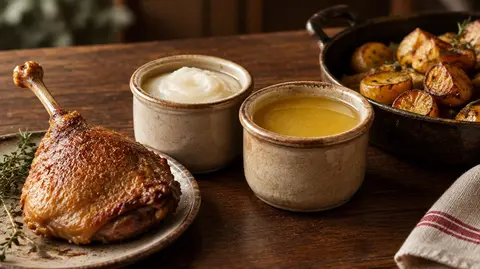
Olive oil works, sort of, but it does not crisp the same way. It sits on the surface of the potato and gives you a sheen rather than a crust. Vegetable oil works for crunch but tastes like nothing. Duck fat is the only real competitor, and it costs four times what tallow does for a result that, in my blind testing with people I trust, is indistinguishable from a good tallow roastie.
The fat needs to be hot when the potato hits it. That is the move people skip. A cold pan with cold tallow and cold potatoes will give you a soft, oily potato. A 425F pan with smoking-hot tallow will give you a crust that crackles when you press a fork into it.
If you want a deeper dive into temperature behavior for roasting and high-heat cooking, the frying temperatures piece covers the math. For the broader case for tallow over olive oil specifically, the tallow vs olive oil comparison is the one I send to skeptics.
What You Need
- Two pounds of starchy potatoes, ideally Yukon Gold or Russet
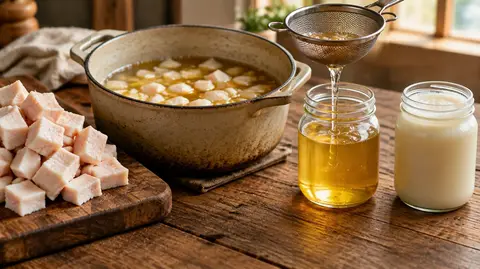
- About a half cup of beef tallow
- Kosher salt, freshly ground black pepper
- A heavy-bottomed roasting pan or a half sheet pan with a rim
- A large pot for parboiling
- A colander
- An oven that actually hits 425F (test with a thermometer if you have not)
For the tallow, I use 100% Pure Grass-Fed Beef Tallow (4 lbs) because a single bag covers most of my Sunday cooking for two months. If you want a smaller jar to test the method first, Traverse Bay Farms (32 oz) is the budget option.
Variety matters more than people think. Waxy potatoes like red potatoes or new potatoes will not roughen up properly. The starch content is too low. Yukon Gold is the easiest cross-over because it has enough starch to fluff and enough density to hold shape. Russet is the most dramatic. King Edward, Maris Piper, and Desiree are the British classics, in case you have access to them.
The Method, Step by Step
This takes about an hour and fifteen minutes start to finish, but the active time is maybe twenty minutes. The rest is the oven doing the work.
Step 1: Cut and salt the parboil water
Peel the potatoes. Cut them into pieces about the size of a small lemon. Two-inch chunks, more or less. Smaller pieces will not have enough interior to fluff. Larger pieces will not crisp evenly.
Put the cut potatoes in a large pot. Cover them with cold water by an inch. Add a generous tablespoon of salt to the water. This is not for seasoning. It is to season the surface of the potato and to slightly firm the exterior so it can survive the rough-up step.
Step 2: Hard parboil
Bring the water to a rolling boil. Once boiling, reduce slightly to a steady simmer. Cook the potatoes for 10 to 12 minutes from the moment the water hits the boil.
You want them past al dente but not falling apart. The test is to slide a paring knife into one. It should slip in with mild resistance, the way it would go into a perfectly cooked carrot. If the knife meets a hard core, give it another two minutes. If the potato breaks in half when you lift it, you have gone too far. That batch will still work but the rough-up will be more aggressive than ideal.
Step 3: Drain and steam-dry
Drain the potatoes in a colander. Let them sit in the colander for two or three minutes. You want them steaming off the surface moisture. Wet potatoes will fight the fat instead of accepting it. They will also splatter when they hit the hot pan, which is dangerous and annoying.
Step 4: Rough up the edges
This is the most important step in the entire recipe. The roughed-up edges are where the crust forms.
Return the drained potatoes to the empty hot pot. Put the lid on. Hold the pot with both hands and give it a hard shake, five or six times. Open the lid. The surface of the potatoes should look fluffy and scuffed, with little fibrous edges sticking up.
If they are not roughed enough, shake again. Some people use a fork to gently scrape the surface. I prefer the shake because it is faster and gives me a more uneven texture, which produces a better crust.
Step 5: Preheat the tallow in the oven
Set the oven to 425F. Put a half sheet pan or a heavy roasting pan into the oven while it preheats. Add the tallow to the cold pan before putting it in. About a half cup, give or take. Enough to cover the bottom in a quarter-inch layer.
Let the pan heat with the oven. By the time the oven hits temperature, the tallow will be fully melted and shimmering and the pan will be screaming hot.
This is the move most home cooks skip. They put cold tallow on cold potatoes in a cold pan and wonder why the result is greasy. The pre-heat is non-negotiable.
Step 6: Carefully add the potatoes
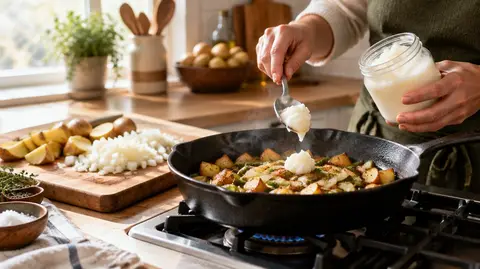
Pull the pan out of the oven onto the stovetop. Carefully add the parboiled, roughed potatoes. They will sizzle hard. That is what you want.
Turn each potato to coat in the hot fat. Use tongs or a spoon. Make sure each piece has fat on every face. Arrange them so they are not touching. Crowded potatoes will steam each other instead of crisping.
If you do not have a pan big enough to hold the batch without crowding, use two pans. Crowding is the second most common reason for soft, disappointing roasties.
Step 7: Roast for 45 minutes, turning twice
Slide the pan back into the oven. Roast for 15 minutes. Pull the pan, flip each potato with tongs. Roast another 15 minutes. Pull, flip again. Roast a final 10 to 15 minutes.
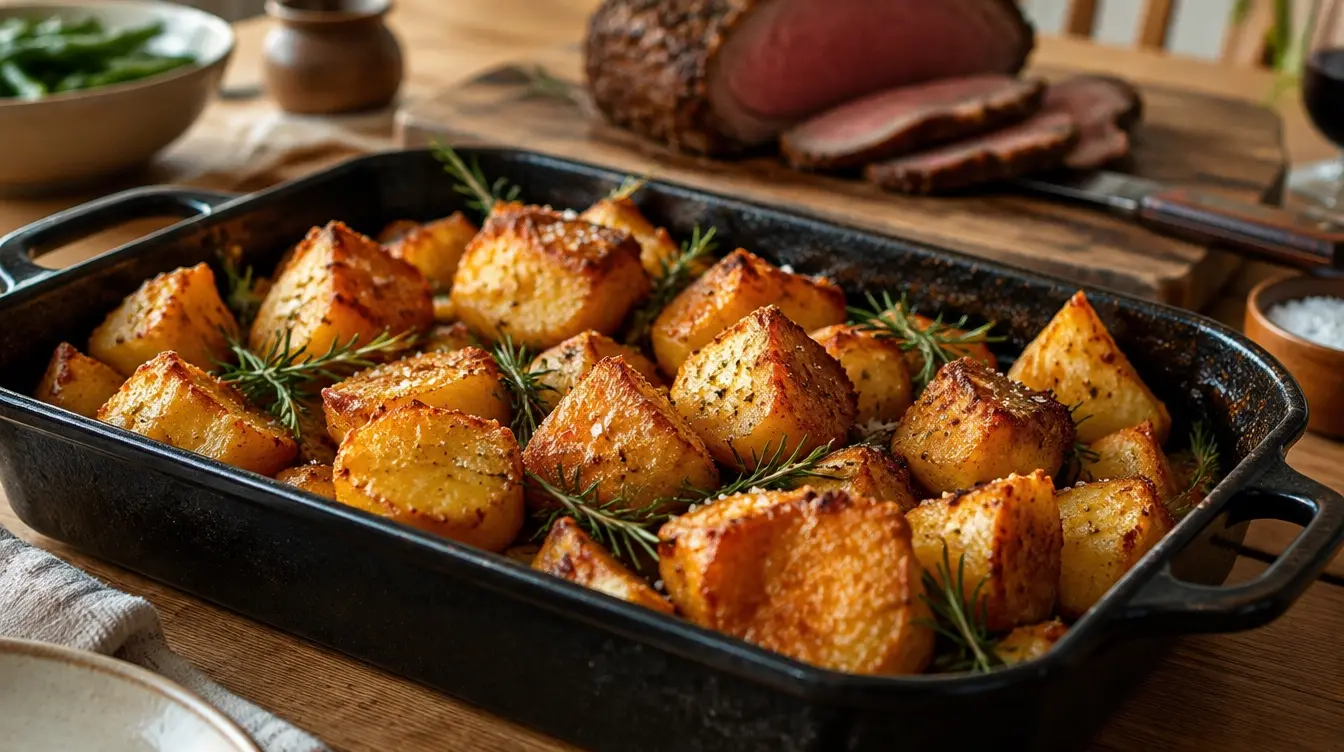
Total time in the oven: 40 to 45 minutes. You are looking for a deep, even golden brown on every face. The potatoes should rattle on the pan like dice when you shake it, which is the audible sign that the surface has crusted hard.
Step 8: Drain, salt, serve
Move the potatoes to a wire rack or a plate lined with paper towels for one minute. Hit them with kosher salt while they are still hot. The salt will stick to the slightly oily surface and pull a tiny bit of moisture out, which keeps the crust crisp for longer.
Serve immediately. Roast potatoes are best in the first ten minutes out of the oven. They are fine after that but the crust softens fast under its own steam.
For more on cooking technique specific to potatoes, our potato cooking page has the variety guide and pan setup in detail.
Mistakes That Wreck Roast Potatoes
Using waxy potatoes. New potatoes, red potatoes, and fingerlings will not roughen properly. They produce smooth, oily roasted potatoes that taste fine but lack the crust this method is built for.
Skipping the rough-up. A smooth-edged parboiled potato will not crisp. The fluffy starch on the surface is the crust ingredient. Without the rough-up, no crust.
Cold tallow on cold pan. The fat needs to be at 425F or close to it when the potato lands. Cold fat soaks into the potato instead of crisping the surface.
Crowding the pan. If the potatoes touch, they steam each other. Use two pans rather than crowding one.
Forgetting to flip. Roasted potatoes do not self-flip. If you leave them on one side the whole time, you get one crispy face and three soft ones. Two flips during the cook is the minimum.
Salting too early. If you add salt before the potatoes go in the oven, the salt pulls moisture out at the wrong time and the crust is harder to form. Salt at the end.
Using rancid tallow. If your fat smells off, replace it. The bad tallow troubleshooting piece covers what to look for. Roasties are not the place to test sketchy fat.
Variations
For extra flavor, add unpeeled garlic cloves and a few sprigs of rosemary to the pan during the final 15 minutes of roasting. Sooner and the garlic burns and the rosemary scorches.
For a heavier-coated crust, dust the par-boiled potatoes with a tablespoon of flour after the rough-up. The flour fries crisp and adds a second layer of texture.
For a more savory result, replace half the tallow with the rendered fat from a roast beef. Pure rendered dripping is the British classic. The dripping vs tallow comparison covers the difference.
For sheet pan dinners, scatter root vegetables around the potatoes during the final flip. Parsnips and carrots in particular love this treatment.
Frequently Asked Questions
Can I parboil ahead and finish later?
Yes. Parboil and rough up in the morning, store covered in the fridge for up to 24 hours, then roast at dinner time. The rough edges will dry out slightly in the fridge, which actually improves the crust.
What if my pan is not heavy?
A light sheet pan will warp at 425F under the weight of two pounds of potatoes. Use a heavy roasting pan, a cast iron skillet, or stack two sheet pans together. Warping is annoying but not fatal. The potatoes still come out fine.
Can I freeze leftover roast potatoes?
Yes. Spread them on a sheet pan in a single layer, freeze for two hours, then transfer to a bag. Reheat at 425F for 12 to 15 minutes on a hot pan with a little fresh tallow. They will not be quite as good as fresh but they are dramatically better than reheated microwave potatoes.
Will the tallow give the potatoes a beefy flavor?
Faintly. The dominant flavors are roasted starch and salt. The tallow adds a savory richness that most people read as “depth” rather than “beef.” Blind testers usually cannot identify the fat directly.
Why not use duck fat?
You can. Duck fat is excellent for roast potatoes and is the other traditional choice. The flavor is a touch lighter. The price is significantly higher. I use duck fat once a year. I use tallow every other week.
How many potatoes per person?
For a side dish, plan on six to eight ounces of raw potato per person. For a main-attraction roastie alongside a smaller protein, plan on twelve ounces. They shrink during roasting and people eat more than they expect.
Bottom Line
Roast potatoes in tallow are not a hack or a substitution. They are the original British roastie, and the method has not changed in two centuries because it works. Par-boil hard, rough up the edges, drop them onto pre-heated tallow at 425F, flip twice, salt at the end.
Start with a single batch using Traverse Bay Farms 32 oz tallow and a bag of Yukon Golds. If they come out the way I have described, the 4 lb tub is the obvious next purchase for the household that wants to eat this way regularly.
Explore more tallow guides
Browse our collection of recipes, comparisons, reviews and DIY tutorials.
View all guidesKing Tallow is reader-supported. We research and test the products we recommend, and when you buy through links on this page we may earn a commission at no extra cost to you. See our affiliate disclosure.
Published