
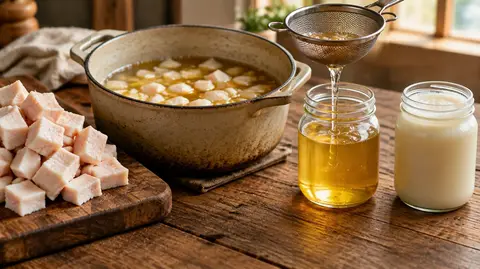

Beef Tallow vs Duck Fat: Flavor, Cost, and Best Uses Compared
Independent reviewDuck fat runs $15 to $25 per pound vs tallow at $6 to $12. Confit and roast potato kings vs high-heat workhorse. When the premium is worth it and when it isn't.

This post contains affiliate links. We may earn a commission if you purchase through these links, at no extra cost to you.
The first time I roasted potatoes in duck fat I understood why French country cooking refuses to die. Crisp on every edge, golden the way a Sunday photograph would draw a roast potato, with a savory background I had never gotten from any other fat. I made them again the next week with beef tallow. They were also great. They were different.
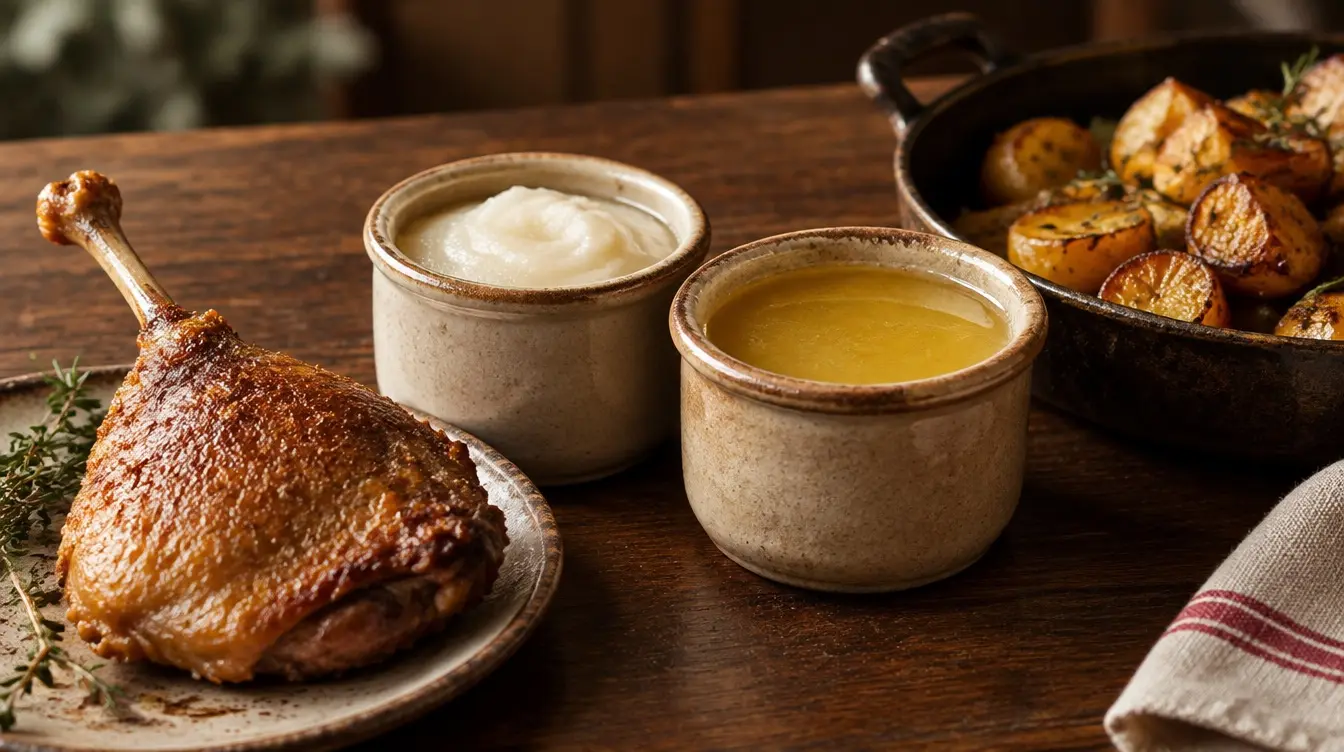
That difference is the whole post. Duck fat and beef tallow are both animal fats, both at the premium end of the cooking-fat lineup, both shelf-stable enough to sit in your fridge for months. They overlap and they do not. Pick the wrong one for the dish and you have not ruined dinner, but you have left flavor on the table.
I want to give you the practical version. The flavor difference, the cost gap, the dishes each one wins, and the cases where the duck fat premium is worth paying and the cases where tallow is the smarter call.
The Quick Snapshot
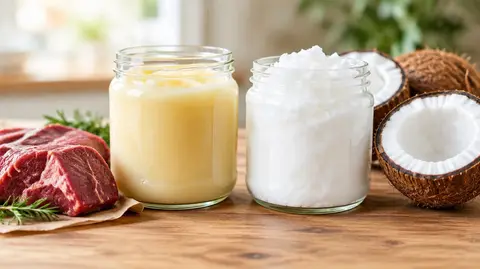
Beef tallow runs about $6 to $12 per pound for quality grass-fed product. Duck fat runs $15 to $25 per pound for the same quality tier. That is a 2x to 3x premium for duck fat, and the premium is real but not always justified.
Tallow has a beef-and-roast flavor and a smoke point around 400°F. Duck fat has a poultry-leaning, slightly sweet, herbal-friendly flavor and a smoke point around 375°F.
Both are roughly 35-50% saturated, 40-50% monounsaturated, and 4-10% polyunsaturated. Duck fat actually has a slightly higher monounsaturated percentage than tallow, which is one reason it spreads so beautifully on roasted vegetables and creates that crisp-but-tender finish.
The biggest practical difference is the flavor. Tallow tastes like beef. Duck fat tastes like duck. Both work better on the foods that pair naturally with their source animal.
Where Duck Fat Wins
There are dishes where duck fat is genuinely better than anything else, and a home cook should know what they are.
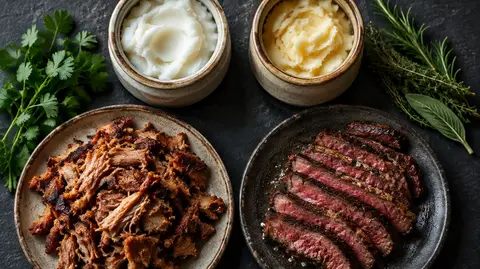
Confit. This is the dish duck fat was made for. Slow cooking duck legs, garlic, or shallots at low temperature, fully submerged in fat for hours, then storing them in the same fat for weeks. The result is meat that falls off the bone with a herbal, poultry-rich flavor profile. Tallow can be used for confit (try it on beef short ribs sometime), but for poultry, duck fat is the right answer.
Roast potatoes, the high-end version. Yukon golds parboiled, fluffed, then tossed in melted duck fat and roasted at 425°F until shattering-crisp. The duck fat browns the surfaces in a way that creates more visible crispy edges per square inch than any other fat I have tried. Tallow is excellent. Duck fat is unreal.
Sauteed vegetables with poultry. Mushrooms, leeks, brussels sprouts, asparagus, all served alongside roast chicken or turkey. The poultry-leaning notes of duck fat tie the plate together. Tallow would shift the flavor toward beef and break the harmony.
Egg yolk pasta. Tossed at the end with duck fat and grated cheese, this is one of the most addictive simple pasta dishes you can make. The duck fat enriches without competing.
Hash browns and roesti for special occasions. Same logic as roast potatoes, slightly different texture goal.
The shortlist of duck fat killer apps is real and worth the premium. But it is shorter than the marketing implies.
Where Tallow Wins
Tallow has its own set of dishes where it not only equals duck fat but actually beats it.
Steak finishing and pan-searing beef. A tablespoon of beef tallow basted over a finishing ribeye is one of the great moves in home steak cookery. Duck fat works, but the flavor compass points away from the beef. Tallow doubles down on what is already there.
French fries. This is the historic king of tallow applications. McDonald’s fries were tallow-cooked through 1990 for a reason. The beef-fat depth on fried potato is a flavor combination that came out of millennia of refinement. Duck fat fries are good. Tallow fries are iconic. The McDonald’s-style fries recipe has the full method, and the best beef tallow for french fries roundup covers brands.
High-heat cast iron and wok work. The 400°F smoke point of tallow versus 375°F for duck fat is a real practical advantage. Stir-fries, smashed burgers, blackened proteins, and anything in a screaming-hot pan benefits from the extra headroom.
Long-fry sessions where reuse matters. Tallow is the more economical fat for repeat frying. A $30 4 lb block of tallow filtered between sessions can fry 8 to 15 times. A $40 1 lb tub of duck fat costs more per batch and degrades faster at frying temperatures.
Savory baking. Biscuits with gravy, savory hand pies, beef pot pie crust. Tallow’s flavor profile is the right pair. Duck fat would shift the dish into a confused middle ground.
Daily cooking. Eggs in the morning, vegetables at dinner, the seasoning fat on cast iron between cooks. The cost-per-use of tallow makes it the everyday workhorse. Duck fat is the special-occasion fat.
For the broader tallow context, see /compare/duck-fat/ for the structured side-by-side and /tallow/duck/ for the focused page.
The Cost Math Honestly
Let me put real numbers on this so it is useful.
If you cook with fat 5 times a week and average a tablespoon per use, you are using roughly 2 ounces of fat a week, or 100 to 120 ounces a year. That is about 7 pounds of fat over a year of regular home cooking.
At $8 per pound for tallow, that year of cooking costs around $56. At $20 per pound for duck fat, the same year costs around $140.
The $84 difference is real money. For a home cook who values the duck fat flavor in every dish, the premium is fine. For a home cook who only really wants duck fat for confit and special-occasion roast potatoes, paying duck fat prices for daily egg cooking is wasteful.
My setup for the last three years has been tallow as the daily fat and a small tub of duck fat reserved for the dishes that actually need it. That keeps the annual fat bill closer to $70 with the duck fat moments still available when I want them.
The grass-fed 4 lb tallow handles the everyday role for me. For duck fat specifically, I usually buy a 12 oz tub from a specialty grocery or a butcher and let it last me through six to eight serious roast-potato dinners.
Nutrition: A Closer Look Than You Might Expect
Both fats sit in the same broad category of saturated-fat-dominant animal cooking fats, but the specifics differ.
Beef tallow: Roughly 50% saturated, 42% monounsaturated, 4% polyunsaturated. High in stearic and palmitic acids. About 2-4% palmitoleic acid. Trace conjugated linoleic acid (CLA) from grass-finished sources. Vitamin D3, vitamin K2, vitamin E, vitamin A precursors.
Duck fat: Roughly 33% saturated, 50% monounsaturated, 13% polyunsaturated. High in oleic acid (the same fatty acid that dominates olive oil). Lower CLA than grass-fed tallow. Lower fat-soluble vitamin content than grass-finished tallow.
The higher monounsaturated content of duck fat is sometimes pitched as a heart-health advantage. The evidence is mixed. The higher polyunsaturated content of duck fat is sometimes pitched as the opposite. Also mixed.
For practical home cooking purposes, the nutritional difference between the two fats is small compared to the difference between either animal fat and a refined seed oil. Pick by flavor and use case, not nutrition.
For more on the nutrition side, see the beef tallow nutrition facts complete guide and the beef tallow calories and macros breakdown.
Shelf Life and Storage
Both fats keep well, but the specifics differ.
Tallow, sealed in glass in a cool dark pantry, lasts 12 to 18 months. Refrigerated, up to 2 years. Frozen, 3+ years.
Duck fat lasts 6 to 9 months in a sealed container in the pantry. Refrigerated, up to a year. Frozen, up to 2 years.
The shorter shelf life on duck fat comes from the higher polyunsaturated fraction, which oxidizes faster than tallow’s mostly saturated profile. This is one more practical reason to keep tallow as the everyday fat and duck fat as the special-occasion fat. The duck fat tub will not languish forgotten if you only buy what you will use in three months.
For storage best practices, see the beef tallow shelf life and storage guide and the rancid tallow detection post.
A Few Specific Pairings I Have Tried
This is the field-tested part. Things I have actually cooked side by side.
Roast carrots. Duck fat wins. The sweetness of the carrot pairs cleanly with the slightly sweeter duck fat profile.
Roast brussels sprouts. Toss-up. Tallow gives them a beefier, almost smoky finish. Duck fat gives them herbal complexity. Depends on the rest of the meal.
Roast chicken. Duck fat for the skin baste. Tallow under the skin if you are stuffing herb butter (tallow holds up at the higher under-skin temperatures).
Fried eggs. Tallow. Duck fat is fine but feels like overkill for breakfast.
Smashed burgers. Tallow without question. The 400°F smoke point and the beef flavor reinforcement are the whole point.
Confit garlic. Either works. I have done it both ways. Duck fat is the traditional answer, tallow is the more economical answer, and at the table you cannot easily tell.
Salmon, seared. Neither. Use butter or olive oil. Both tallow and duck fat fight the fish.
Frequently Asked Questions
Can I substitute duck fat for tallow 1:1 in recipes?
For most recipes, yes. The smoke points are close enough that high-heat cooking translates. The flavor will shift toward duck/poultry notes. Be careful with recipes that depend on tallow’s higher saturated structure (some pie crusts, savory pastry) where duck fat will give a softer texture.
Can I substitute tallow for duck fat 1:1?
Same answer in reverse. For confit and roast potatoes the flavor profile will shift toward beef. For most other applications the swap is clean.
Is duck fat healthier than beef tallow?
Probably similar. Duck fat has more monounsaturated fat, tallow has more saturated fat. Both are stable animal fats with real fat-soluble vitamin content. Grass-finished tallow has a small edge on CLA and vitamin K2. Pasture-raised duck fat has a small edge on oleic acid. The differences are not large enough to drive the buying decision.
Why is duck fat so much more expensive?
Yield and supply chain. A cow produces 15 to 30 pounds of edible fat. A duck produces a few ounces. The processing infrastructure for duck fat is also much smaller and more specialty-driven than beef. Premium pricing reflects scarcity more than quality.
Can I save duck fat from a roasted duck dinner and use it later?
Absolutely. This is the traditional French way. Strain the rendered fat through a fine sieve, refrigerate or freeze, use within 3 to 6 months. A 4 pound roasted duck yields roughly 1.5 to 2 cups of usable fat, which is enough for two to three serious roast-potato dinners. This is the cheapest path to duck fat cooking.
What is the best tallow brand for someone who is used to duck fat?
A clean, mild, grass-finished tallow comes closest to duck fat’s clean profile. The grass-fed 4 lb tallow and the deodorized Traverse Bay 32 oz are both mild enough that duck fat fans tend to be impressed by the flavor. Both work well in roast potato applications where you want tallow’s economics with a cleaner finish.
Bottom Line
Beef tallow and duck fat are both animal fats with real cooking value, but they live in different price tiers and play different roles. Duck fat is the special-occasion fat for confit, premium roast potatoes, and dishes that lean herbal or poultry-pairing. Beef tallow is the everyday workhorse for high-heat cooking, fries, steak finishing, and savory baking.
The cost difference is real. Tallow at $6 to $12 per pound makes it the daily cooking fat. Duck fat at $15 to $25 per pound makes it the dinner-party fat. Most home cooks benefit from keeping both, with tallow as the everyday jar and a smaller tub of duck fat reserved for the dishes where it actually earns its premium.
For the everyday tallow, the grass-fed 4 lb block is what I keep on the counter year-round. For a milder, deodorized cooking and baking tallow, the Traverse Bay 32 oz is the reliable second jar. Duck fat I buy in 12 oz tubs at the butcher when I am about to roast something special. That setup has covered every cooking situation in three years without an upgrade.
Explore more tallow guides
Browse our collection of recipes, comparisons, reviews and DIY tutorials.
View all guidesKing Tallow is reader-supported. We research and test the products we recommend, and when you buy through links on this page we may earn a commission at no extra cost to you. See our affiliate disclosure.
Published