Beef Tallow vs Shortening: Which Is Better for Baking and Frying?
Independent reviewCrisco's hydrogenation history, the trans-fat reformulation, and why beef tallow is the traditional substitute. Baking, frying, and flavor trade-offs.

This post contains affiliate links. We may earn a commission if you purchase through these links, at no extra cost to you.
My grandmother used Crisco for her pie crust her entire life. It is the fat I grew up associating with biscuits, pecan pie, and fried chicken. She also used beef tallow for hash browns and bacon-grease for collards. Those choices were not random. Each fat got the job it was best at.
The modern conversation has flipped that order. Beef tallow is having a comeback and Crisco-style vegetable shortening is on the defensive. The reasons are partly about flavor and partly about a decade-long argument over hydrogenation and trans fats.
This post is what I wish someone had given me when I started replacing shortening with tallow in my own kitchen. The history of why shortening exists, what changed in 2007, the trade-offs in actual baking and frying, and where each fat still earns its keep.
A Quick History You Need for the Rest
Crisco launched in 1911 as the first mass-market hydrogenated vegetable shortening. The product was a chemistry breakthrough. By forcing hydrogen gas through liquid cottonseed oil under pressure with a nickel catalyst, food chemists turned a cheap oil into a stable, scoopable, beef-tallow-like solid.
The pitch to American home cooks was direct. Cheaper than lard. Cheaper than butter. Cheaper than tallow. Vegetarian-friendly. Shelf-stable for years. The Procter and Gamble marketing campaign, which included some of the first branded cookbooks in American history, displaced lard and tallow in roughly two generations.
That hydrogenation process had a side effect that nobody understood until the 1990s. It produces trans fatty acids, the molecules now linked to cardiovascular disease in a way that even saturated fats are not. By the early 2000s, the FDA required trans fats to be disclosed on nutrition labels, and in 2007 Crisco reformulated its shortening to remove most of the trans fats.
The reformulation was a partial hydrogenation switched to a full hydrogenation or interesterification process. The result was a shortening with much lower trans fats but a different texture and behavior than the original Crisco that two generations of grandmothers had baked with.
A lot of pie crust tradition went sideways in 2007. The Crisco of your grandmother is not chemically identical to the Crisco at the grocery store today. That is part of why home bakers started looking back at tallow.
What Shortening Actually Is Now
Modern vegetable shortening is mostly fully hydrogenated soybean oil or palm oil, sometimes interesterified with liquid soybean oil to get a usable solid texture. The trans fat content is below the 0.5g per serving threshold that allows a “0g trans fat” label, but the saturated fat content is high (around 25% of calories) and the fat is still industrially processed.
There is nothing inherently dangerous about the current formulation. It is not the 1980s product. But it is not a traditional fat by any reasonable definition, and the people who switched back to tallow generally did so for one of three reasons. Better flavor. A more traditional ingredient list. Or distrust of the industrial seed oil supply chain.
If you are happy with modern shortening, you are not putting yourself in danger. If you want to try a fat closer to what was used in 1900, tallow is the obvious place to go.
Beef Tallow as a Shortening Substitute
The 1:1 swap. One cup of shortening equals one cup of beef tallow in nearly every recipe I have run through. Both are solid at room temperature, both melt at similar temperatures (tallow at 105-110°F, shortening at 117°F), and both bring the same broad role: a solid fat that creates structure in baked goods and a stable fat for frying.
The differences show up in three places.
Flavor. Tallow has a beef-and-roast flavor. Shortening is essentially flavorless. For pie crusts and biscuits, the tallow flavor is a feature when you want it (savory hand pies, beef pot pie, biscuits with sausage gravy) and a bug when you do not (lemon meringue, fruit galettes, sweet pastries). Cosmetic-grade deodorized tallow narrows the gap, but a faint beefy backbone usually remains.
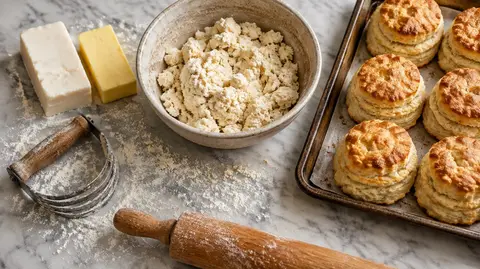
Texture. Shortening produces a slightly more tender, more flaky baked good than tallow in a head-to-head test. This is mostly because shortening contains tiny entrained air bubbles from the hydrogenation process. Those bubbles act as leaveners. Tallow does not have them. A tallow biscuit will be slightly less puffed and slightly more rustic than a shortening biscuit. Some people prefer that. Some do not.
Browning. Tallow browns better at frying temperatures. The Maillard reaction with the trace meat compounds in tallow produces deeper color and richer flavor on fried foods. Shortening is more neutral and lets the food itself dominate.
Baking: The Real Trade-Off
I have made pie crust both ways, side by side, three times.
The Crisco crust is technically a little flakier and a little more tender. The all-tallow crust is more flavorful, more golden, and slightly more rustic. The blend (half tallow, half butter) is what I make for actual dinner now.
For biscuits, the tallow biscuit is rich and savory in a way that pairs beautifully with sausage gravy and a fried egg. The shortening biscuit is taller and lighter. Both have their place. Tallow wins for Sunday breakfast biscuits. Shortening wins for tea biscuits with strawberry jam.
For cookies, tallow is genuinely interesting in chocolate chip and oatmeal raisin recipes where the slight beefy undertone reads as warm caramel. It is wrong in lemon ricotta cookies and most spongy or cake-style cookies. I would not use it.
For pastry dough used in dessert (apple turnovers, peach hand pies, fruit galettes), I default to butter or a butter-and-tallow blend. Pure tallow shifts the flavor more savory than the fruit can balance.
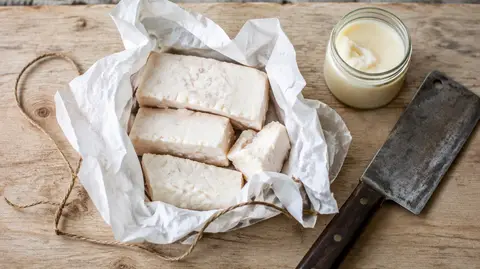
If you want to experiment with tallow baking, start with biscuits and savory pie crusts. The win-rate is highest there. The neutral-flavored deodorized Traverse Bay Farms Beef Tallow (32 oz) is the jar I use for any baking application where I want tallow’s structure without the strongest beefy notes. For richer savory baking the grass-fed 4 lb block is what I keep on the counter.
Frying: Tallow Wins Most Tests
This is where tallow has a more clear-cut advantage. Frying performance comes down to smoke point, stability under heat, and flavor.
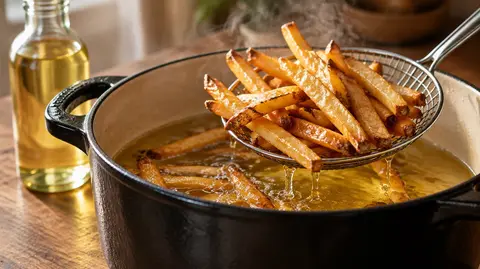
Smoke point. Beef tallow smokes around 400°F. Modern vegetable shortening smokes around 360-370°F. The 30-40 degree difference is real and matters for frying applications that need temperatures above 365°F, which includes most of the McDonald’s-style french fry recipes and good fried chicken.
Stability. Tallow is roughly 50% saturated fat, which is the most heat-stable fatty acid class. Shortening varies more depending on which oil and which processing, but is generally less stable than tallow at high heat over multiple fry cycles. Tallow can be filtered and reused 3 to 6 times before it needs replacing. Shortening can usually do 2 to 4 cycles.
Flavor. This is the kicker. McDonald’s french fries before 1990 were fried in beef tallow. The reason those fries became iconic was that beef tallow imparts a faint umami-like depth to fried potatoes that no neutral oil can match. McDonald’s switched to vegetable oil under pressure from the same trans-fat concerns I mentioned earlier, and a lot of people have spent the last 30 years trying to replicate the original recipe at home. The answer is tallow.
For french fries specifically, see the McDonald’s-style fries recipe and the best beef tallow for french fries roundup. For broader frying applications, the beef tallow for frying temperatures guide and smoke point and temperature guide have the details.
Cost Comparison
Modern vegetable shortening runs about $3 to $5 per pound at most grocery stores. Beef tallow runs about $6 to $12 per pound for quality grass-fed product, less if you render your own from suet at $2 to $4 a pound raw.
The cost gap is real but smaller than people assume. A pound of tallow makes the same amount of biscuits as a pound of shortening. The per-batch cost difference is usually under a dollar.
Where tallow wins on economics over a year of cooking is the reuse factor for frying. A 4 lb block of tallow that can fry 3 batches of fries before filtering and another 3 after stretches further than 4 lb of shortening that can only do 4 batches total. By the third batch, the tallow has already paid back its premium.
The grass-fed 4 lb tallow at the typical price works out to roughly the same per-frying-session cost as fresh shortening once you factor in reuse.
Where Shortening Still Earns Its Keep
I do not want to be too one-sided about this. There are specific cases where modern shortening is the right call.
Wedding cake or commercial-style buttercream. Shortening-based buttercream holds shape at room temperature better than butter or tallow buttercream. Pastry chefs use it for that reason. There is no good tallow equivalent.
Vegetarian or vegan baking. Tallow is not on the menu. Shortening is plant-based. For vegan biscuits and pie crust, modern shortening is the working option.
Ultra-flaky cookie textures. The entrained air bubbles in shortening produce a tender, crumbly cookie texture that tallow cannot quite replicate. For specific cookie recipes built around that texture, shortening is the right tool.
Frosting and royal icing. Same logic as the buttercream. Shortening provides stable structure that holds up at room temperature.
If your baking is mostly in those categories, the case for switching to tallow is weak. If your baking is biscuits, savory pies, fries, and pan-fried foods, the case is strong.
For the full breakdown of tallow versus other common cooking fats, see /compare/shortening/ for the structured comparison. The companion posts on beef tallow vs butter, beef tallow vs lard, and beef tallow vs ghee round out the picture.
Frequently Asked Questions
Is modern Crisco actually unhealthy?
The current Crisco formulation no longer contains the partially hydrogenated oils that produced trans fats in the original product. It is high in saturated fat from full hydrogenation, but the trans fat content is below the FDA disclosure threshold. It is not a health food. It is not the cardiovascular hazard the original 1980s product was. Whether you want it in your kitchen is more about ingredient philosophy than acute risk.
Can I substitute tallow for shortening 1:1 in any recipe?
Yes for most recipes. The exceptions are recipes that depend on shortening’s air-bubble structure (some cookie textures, certain frostings) where the swap will give a denser result. Most pie crusts, biscuits, and savory pastries take the 1:1 swap cleanly.
Will my pie crust taste like beef if I use tallow?
A faint backbone, yes, especially with non-deodorized tallow. For sweet fruit pies, blend tallow with butter at 50/50 to keep the flake without overwhelming the fruit. For savory pot pies and hand pies, the full beef flavor is a feature.
Does tallow have a longer shelf life than shortening?
Unopened, no. Modern shortening can sit in a pantry for years. Tallow needs cool dark storage for 12 to 18 months before quality drops. Once opened, the gap narrows. Refrigerated tallow lasts about as long as opened shortening, and both can be frozen for years.
Can I use leftover frying tallow for baking?
Once. Filtered carefully through fine mesh or a coffee filter, used frying tallow makes excellent fries-flavored biscuits or savory pie crust. After two frying sessions, the breakdown products start to affect baked goods more than fried ones because the flavor is more concentrated and not masked by frying-temperature aromas.
What is the best beef tallow brand for replacing Crisco in baking?
A deodorized cosmetic-grade or food-grade tallow gives the cleanest baking results. The Traverse Bay 32 oz is sold deodorized and works well for pie crust and biscuits where you want tallow’s structural benefits without a strong beef note. For richer savory baking, the grass-fed 4 lb tallow is the standard pick.
Bottom Line
Beef tallow and modern vegetable shortening are both solid fats with similar baking and frying roles, but they come from very different places. Shortening is a hydrogenated industrial oil product reformulated in 2007 to address trans-fat concerns. Tallow is a traditional rendered animal fat that has been used in kitchens for centuries.
For frying, tallow wins on smoke point, stability, reuse cycles, and the unique flavor it imparts to fried potatoes and chicken. For baking, the answer depends on what you are making. Savory pies, biscuits with gravy, and rustic crusts favor tallow. Sweet fruit pies, vegan recipes, and structure-dependent cookies favor shortening or a tallow-butter blend.
If you are testing the switch, start with frying first. The win-rate is highest. A grass-fed 4 lb tallow block covers both your frying and most of your baking from a single jar, and the deodorized Traverse Bay 32 oz is the right second jar specifically for baking where you want less beef flavor in the finished product.
Explore more tallow guides
Browse our collection of recipes, comparisons, reviews and DIY tutorials.
View all guidesKing Tallow is reader-supported. We research and test the products we recommend, and when you buy through links on this page we may earn a commission at no extra cost to you. See our affiliate disclosure.
Published